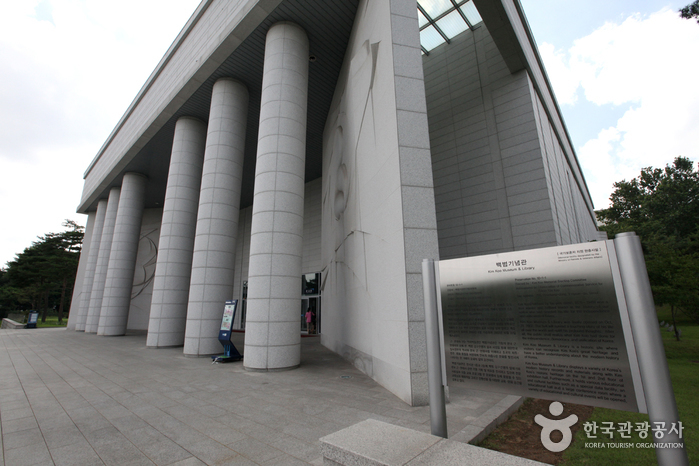
Kim Koo Museum & Library (백범김구기념관)
3.7Km 2022-08-30
26, Imjeong-ro, Yongsan-gu, Seoul
+82-2-799-3400
Kim Koo Museum & Library was built in Yongsan-gu, Seoul to commemorate Baekbeom Kim Koo (1876-1949), a highly respected Korean independence activist. It opened on October 22, 2002 to commemorate Kim Koo's efforts and achievements in Korean history. The main hall is comprised of two floors, exhibiting relics related to his entire life. A statue of a seated Kim Koo is situated in the central space of the first hall.
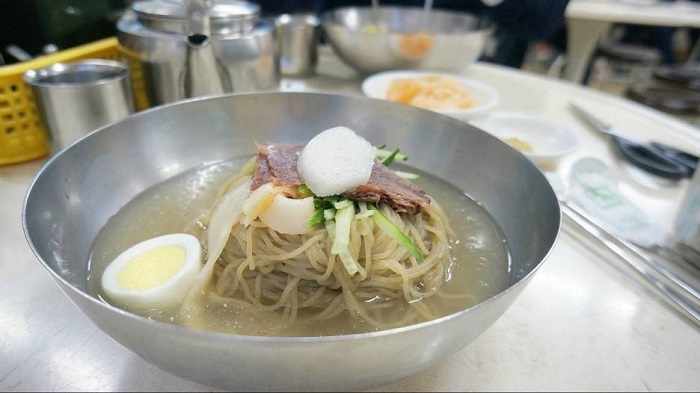
Eulmildae Pyeongyang Naengmyeon (을밀대평양냉면)
3.7Km 2024-03-19
24, Sungmun-gil, Mapo-gu, Seoul
+82-2-717-1922
Eulmildae Pyeongyang Naengmyeon has been specializing in pyeongyang naengmyeon (pyeongyang cold buckwheat noodles) for 50 years. The restaurant is named after the Ulmildae Pavilion in Pyongyang Castle. The buckwheat noodles are made by pressing the dough and pulling it out, giving them a savory flavor and aroma. The restaurant focuses on mullaengmyeon (cold buckwheat noodles) and bibim naengmyeon (spicy buckwheat noodles). Patrons have the option to delectable dishes such as nokdu jeon (mung bean pancake), mandu, boiled pork slices, beef brisket soup and rice.
![Olive Young - Sookmyung Women’s Univ. Branch [Tax Refund Shop] (올리브영 숙대)](http://tong.visitkorea.or.kr/cms/resource/25/2889625_image2_1.jpg)
Olive Young - Sookmyung Women’s Univ. Branch [Tax Refund Shop] (올리브영 숙대)
3.7Km 2024-04-18
19, Cheongpa-ro 45-gil, Yongsan-gu, Seoul
-
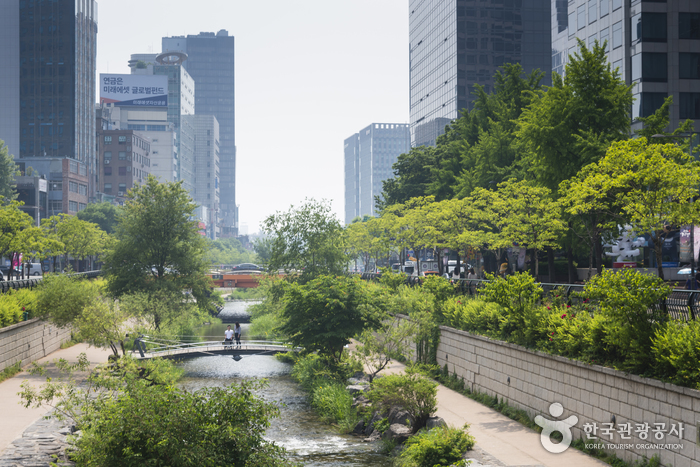
Cheonggyecheon Stream (청계천)
3.8Km 2024-05-16
Changsin-dong, Jongno-gu, Seoul
+82-2-2290-7111
Cheonggye Plaza was built on Sejong-ro Street, where Cheonggyecheon Stream begins. It was built between Dong-A Ilbo, the starting point of the Cheonggyecheon Stream restoration, and Sindap Railroad Bridge, with a length of 160 meters, a x_width of 50 meters, and a total area of 6,962 meters squared. The plaza is decorated with fountains, waterfalls, and walking paths. It was created as a place for meetings, harmony, peace, and unification, to celebrate the significance of the restoration of Cheonggyecheon Stream. A miniaturized version of Cheonggyecheon Stream is displayed here, providing an overview of the restored stream. There are also interpretive panels about the 22 bridges that cross Cheonggyecheon stream. Fountains of various shapes create beautiful scenery. Cheonggyecheon Stream is accessible from the square through stairs on the left and Cheonggye Trail on the right. There is also an 18-meter tunnel on the Cheonggye Trail, providing a unique experience for citizens entering Cheonggyecheon Stream from the plaza. After constructing Cheonggyecheon Plaza, the Seoul Metropolitan Government made it a car-free street on public holidays so that the plaza, waterside area, and streets could be used as cultural spaces for citizens to relax. A spectacular sight is created by three-color lights illuminating the fountains and a two-tiered waterfall coming down from a x_height of four meters. Palseokdam, made of eight stones from eight provinces in Korea, was laid along the waterfall's sides.
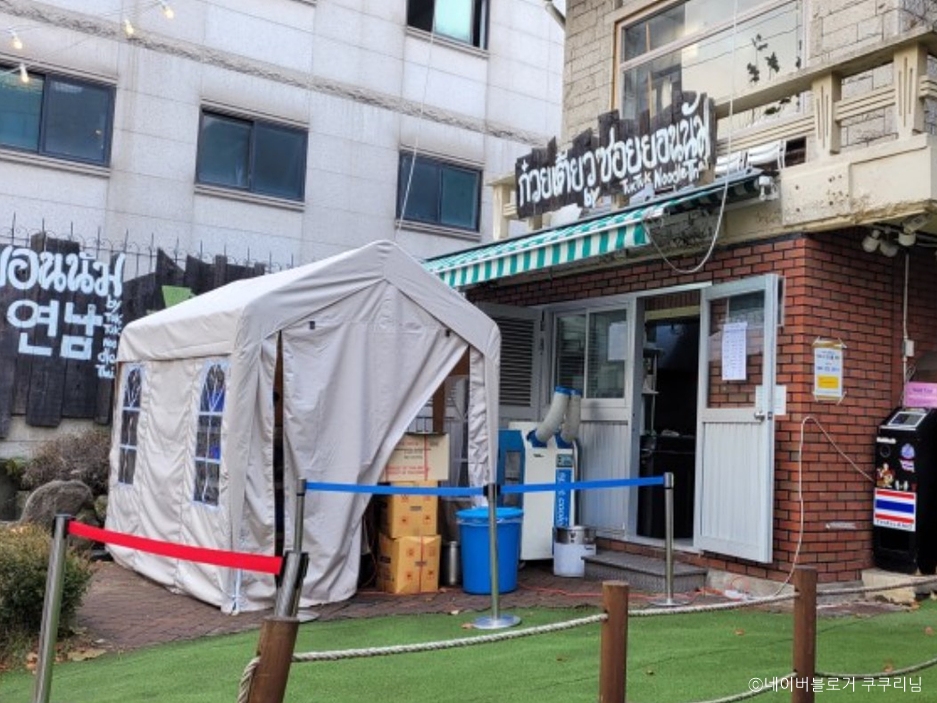
Soi Yeonnam (소이연남)
3.8Km 2024-02-22
1F, 267 Donggyo-ro, Mapo-gu, Seoul
Soi Yeonnam is a rice noodle specialty restaurant where you can experience the atmosphere of Thailand. The signature dish is the flavorful and rich sogogi ssalguksu (beef noodle soup). Other popular dishes include soi popia (spring roll), which is fried with shrimp, pork, mushrooms, tom yam ssalguksu (tom yum noodle), and som tam (green papaya salad). It's so famous that people line up to eat there, and it's beloved by both locals and tourists alike.
![Mary Jane [Tax Refund Shop] (메리제인)](http://tong.visitkorea.or.kr/cms/resource/33/2878733_image2_1.jpg)
![CheongKwanJang - Dongdaemun Market Branch [Tax Refund Shop] (정관장 동대문시장)](http://tong.visitkorea.or.kr/cms/resource/33/2878233_image2_1.jpg)
CheongKwanJang - Dongdaemun Market Branch [Tax Refund Shop] (정관장 동대문시장)
3.8Km 2024-04-19
252, Jong-ro, Jongno-gu, Seoul
-
![Olive Young - Changcheon Branch [Tax Refund Shop] (올리브영 창천)](http://tong.visitkorea.or.kr/cms/resource/64/2889364_image2_1.jpg)
Olive Young - Changcheon Branch [Tax Refund Shop] (올리브영 창천)
3.8Km 2024-04-18
17, Sinchon-ro, Seodaemun-gu, Seoul
-
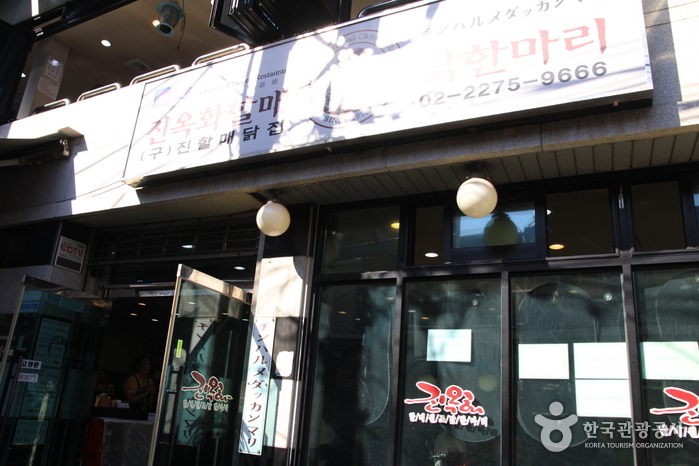
Jinokhwa Halmae Wonjo Dakhanmari (진옥화할매원조닭한마리)
3.8Km 2024-03-04
18 Jong-ro 40ga-gil, Jongno-gu, Seoul
+82-2-2275-9666
Jinokhwa Halmae Wonjo Dakhanmari is a renowned restaurant located in the alley of whole chicken soup near Dongdaemun Market, operating since 1978. Its specialty is dakhanmari (whole chicken soup), a whole chicken boiled in savory and rich broth. Adding finely chopped green onions enhances its refreshing flavor. The chewy rice cakes dipped in the seasoned sauce are also delightful. Additionally, it's customary to enjoy the remaining broth by mixing it with seasoning sauce and noodles, creating a delicious kalguksu (noodle soup).
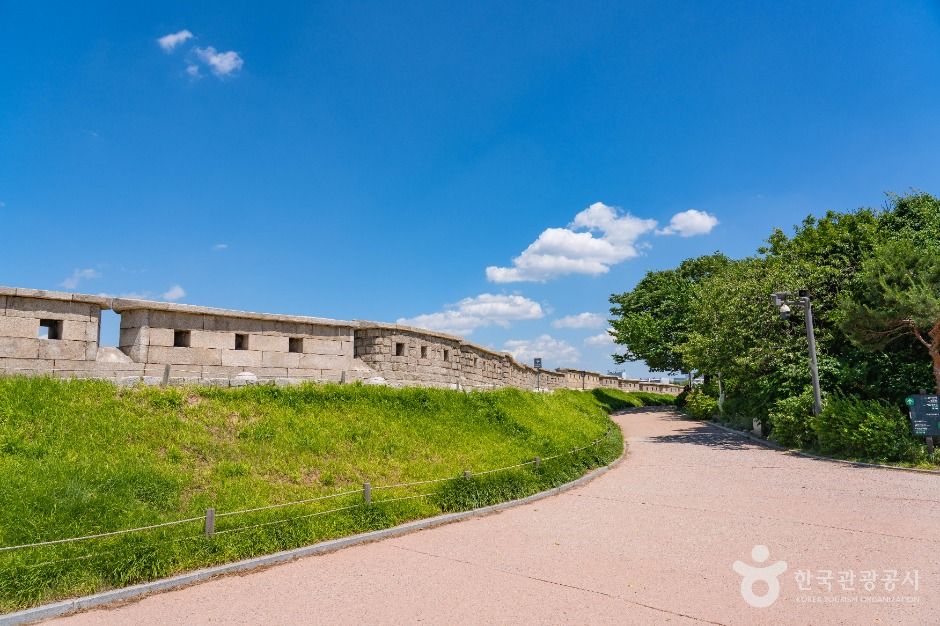
Naksan Park (낙산공원)
3.8Km 2025-12-16
41 Naksan-gil, Jongno-gu, Seoul
+82-2-743-7985
Naksan Mountain (alt. 125 meters) is one of the four inner mountains of Seoul, and can be accessed by following the road leading to the mountain entrance from Daehangno and Dongdaemun. It was also called Naktasan Mountain, which can be translated to Camel Mountain, because the terrain resembled a camel's back. It also had another name, Taraksan Mountain, “tarak” meaning fermented milk, because there was a royal ranch in the area that supplied milk to the palace. After the 1960s, the original appearance of Naksan Mountain disappeared due to apartments and dense housing, and the Seoul Metropolitan Government established a restoration plan. As part of this plan, a park project was carried out, and it opened Naksan Park in July 2002. Currently, Naksan Park has established itself as a resting place for citizens to feel the beautiful atmosphere of Hanyangdoseong, or the Seoul City Wall, and green forests. It has gained much popularity as a place for seeing the most beautiful night view in Seoul.
◎ Travel Information to Discover Hallyu’s Charm - Netflix Series "KPop Demon Hunters (2025)"
The fortress walls at Naksan Park served as the backdrop for Rumi and Jinu’s conversation in the Netflix series "KPop Demon Hunters." The view of the walls and the cityscape beyond adds to the unique atmosphere of the show, and visiting Naksan Park in person offers an expansive and memorable view of Seoul’s city center.
 English
 한국어
한국어 日本語
日本語 中文(简体)
 Deutsch
 Français
 Español
 Русский


