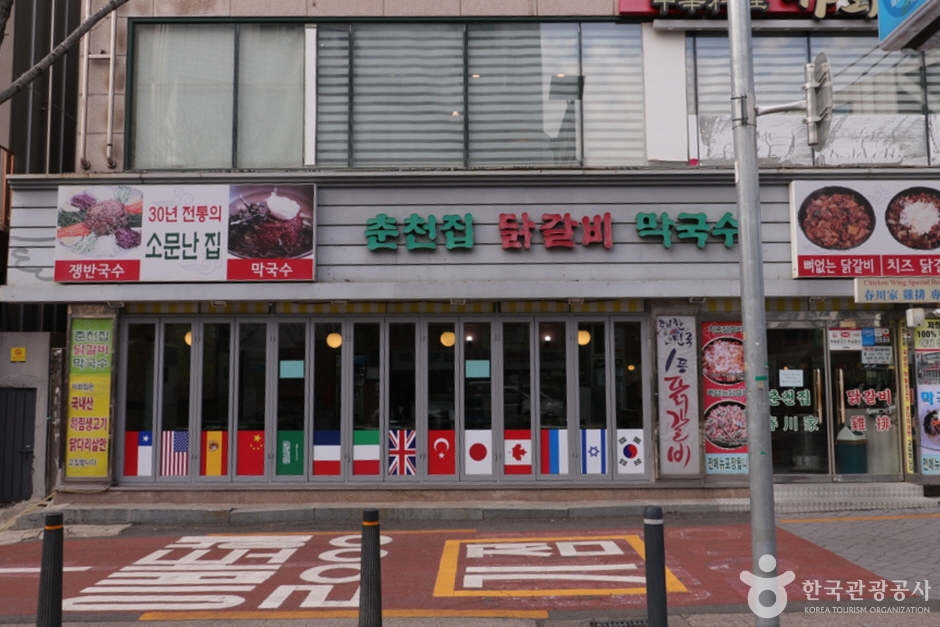
Chuncheonjip Dakgalbi Makguksu (춘천집닭갈비막국수)
3.1Km 2024-03-20
1, Yonsei-ro 5ga-gil, Seodaemun-gu, Seoul
+82-2-325-2361
Located near Shinchon station, Chuncheonjip Dakgalbi Makguksu’s most popular dish is Dakgalbi, which is prepared by marinating boneless chicken in spicy red pepper paste and stir-frying it with various ingredients in a large cast iron pan. Patrons have the option to ppyeo eomneun dakgalbi (spicy stir-fried boneless chicken), cheese dakgalbi (spicy stir-fried chicken and cheese), and maeundakgalbi (spicy stir-fried chicken) as preferred. For an extra tasty treat, one can add an assortment of noodles and vegetables to the chicken as it cooks. After fhinishing the chicken, ordering rice to stir-fry in the pan to soak up the extra flavorful sauce is a must-try.
![CheongKwanJang [Tax Refund Shop] (정관장)](http://tong.visitkorea.or.kr/cms/resource/26/2891126_image2_1.jpg)
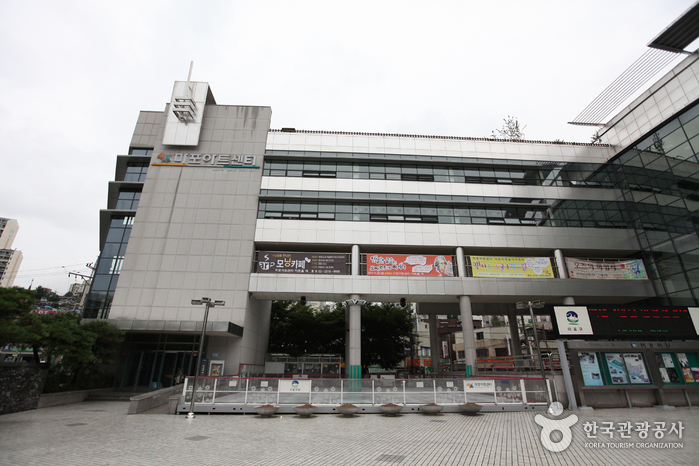
Mapo Art Center (마포아트센터)
3.1Km 2021-03-19
28, Daeheung-ro 20-gil, Mapo-gu, Seoul
+82-2-3274-8500
Mapo Art Center is an innovative cultural art space near college campuses including Hongik, Sinchon and Seogang area. Art Hall Mac, operated by Mapo Art Center is a fascinating performance hall used for a wide range of cultural events. The art hall boasts a stunning exterior as well as finely-appointed facilities that allow the audience to enjoy a diverse genre of performances. The art hall consists of two sections of Play Mac (for smaller performances like puppet shows, solo concerts and children’s performances) and Gallery Mac (where visitors engage in interactive programs). The center also has diverse leisure facilities such as a swimming pool, gym, fitness center, golf club as well as a training center.
Other amenities available include a powder room, multi-purpose hall, training room, playpen, and Sky Park.
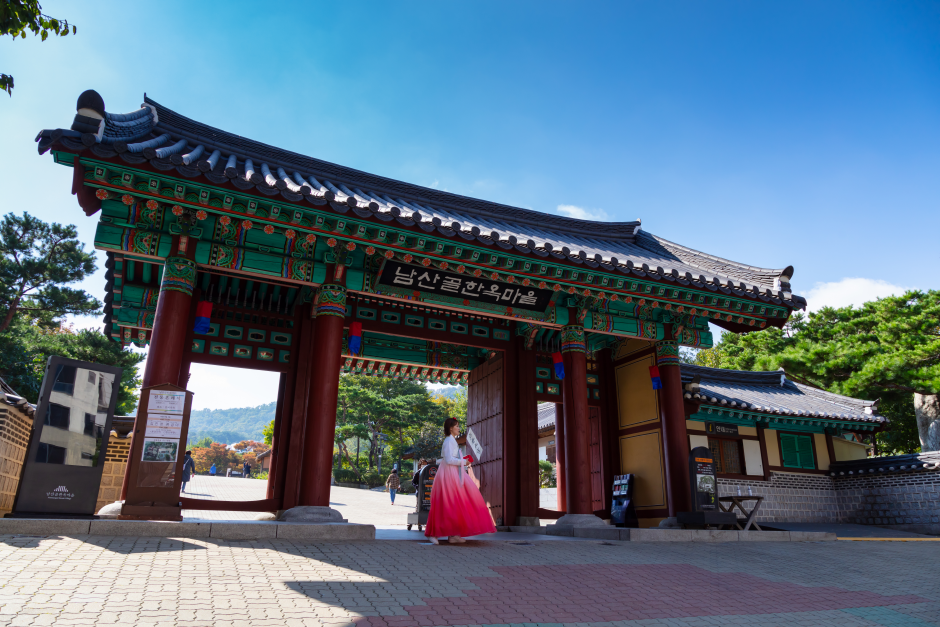
Namsangol Hanok Village (남산골한옥마을)
3.1Km 2025-07-14
28 Toegye-ro 34-gil, Jung-gu, Seoul
Namsangol Hanok Village opened in 1998 on the northern side of Namsan Mountain in the center of the capital. This village has five restored hanok (traditional Korean house) premises, a pavilion, a traditional garden, a performance art stage, and a time capsule plaza, making it a perfect spot for locals and tourists to take a leisure walk. Upon entering from the front gate, visitors will get a taste of Korea's traditional life while escaping from bustling city life. The traditional garden with its pavilion and old houses creates a peaceful ambiance before the forested Namsan Mountain. A time capsule commemorating Seoul’s 600th anniversary was buried in 1994 at the highest point of the village and is scheduled to be reopened 400 years later in 2394.
The five hanok premises at Namsangol Hanok Village once belonged to aristocrats and government officials of the Joseon dynasty. Each house was originally located in a different neighborhood, but they were all moved to this area and restored to their original form. The houses were rebuilt using their original materials, except for one house, where the materials were too old and deteriorated to be reused. The premises were carefully restored and replicated according to their original form to depict the owners’ social class and personality. These buildings are now used as an exhibit to portray the living environment during the Joseon dynasty and as a venue for educational and cultural programs for children and tourists.
Some of the unique programs and activities to participate in include wearing hanbok, folding hanji (traditional Korean paper), writing in Korean, traditional tea ceremony, traditional etiquette school, and herbal medicine experience. There are also taekwondo demonstrations and other various performances held around the village. Visitors can also try traditional games such as yunnori (traditional board game), or understand more about the area through a guided tour.
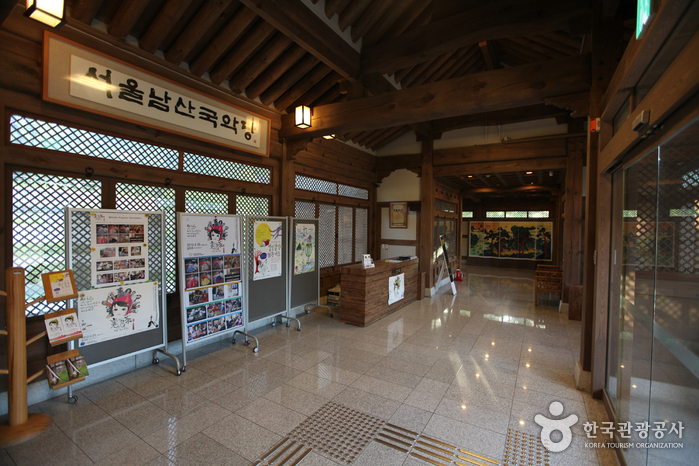
Seoul Namsan Gugakdang (서울 남산국악당)
3.1Km 2021-08-02
28, Toegye-ro 34-gil, Jung-gu, Seoul
+82-2-2261-0500
Seoul Namsan Gukakdang was established by Seoul Metropolitan Government as a representative traditional art-centered performance hall in 2007. It is comprised of one ground and two basement levels. The performance hall is located on the basement floor with 300 seats, equipped with facilities that deliver pansori sounds and gayageum music to every seat. Visitors can make a reservation at the Namsangol Hanok Village website.

JaneDMCKorea (주)제인디엠씨코리아)
3.1Km 2025-10-23
(4th Floor), 51 Mallijae-ro, Mapo-gu, Seoul
Jane DMC Korea is an inbound travel agency and international patient recruitment organization established in 2006. Headquartered in Seoul, with branch offices in Busan, Indonesia, and India, the company develops and sells programs for international clients in 40 countries while also attracting international patients.
Woo Lae Oak (우래옥)
3.1Km 2024-03-07
62-29 Changgyeonggung-ro, Jung-gu, Seoul
+82-2-2265-0151
Woo Lae Oak is a Pyeongyang naengmyeon (Pyeongyang cold buckwheat noodles) restaurant established in 1949. Its signature dish is the Pyeongyang naengmyeon, known for their clean and light broth. Alongside the onmyeon (warm noodles), they also serve bulgogi, which complements the warm broth perfectly. The restaurant is renowned to the extent that customers often line up to dine, and it was selected for the Michelin Guide 2023.
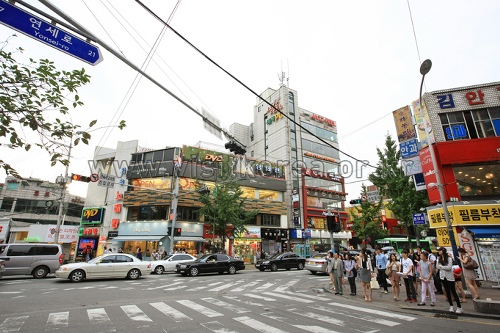
Yeonsero (Yonsei University Street) (연세로)
3.1Km 2022-10-25
Area of Yeonse-ro, Sedaemun-gu, Seoul
+82-2-120
This road takes you from Sinchon Subway Station right to Yonsei University. Like branching tree roots, the numerous side streets diverge off the main road. In 1999 Yonsei College Street was designated as “The Road One Wants to Walk.” Since then, this famous street has been improved upon even more, placed on tourist maps and promoted by businesses. A visitor to this area can eat at a plethora of restaurants, coffee shops and stores. In the afternoon hours, you can also enjoy the taste of small food stands that line the sidewalks.
![CheongKwanJang - Jongno 4(sa)-ga Branch [Tax Refund Shop] (정관장 종로4가)](http://tong.visitkorea.or.kr/cms/resource/92/2878192_image2_1.jpg)
CheongKwanJang - Jongno 4(sa)-ga Branch [Tax Refund Shop] (정관장 종로4가)
3.1Km 2024-04-22
Gwangnim Bldg., 195, Jong-ro, Jongno-gu, Seoul
-
Seoul Hyochang Park (서울 효창공원)
3.2Km 2024-07-09
177-18 Hyochangwon-ro, Yongsan-gu, Seoul
+82-2-2199-7608
Hyochang Park covers 122,245 square meters spanning across Hyochang-dong and Cheongpa 2-dong. It is a historic landmark that once contained several royal tombs, and was known at that time as Hyochangwon. The cemeteries that were originally located in Hyochangwon belonged to Crown Prince Munhyo, King Jeongjo’s first son who died at the age of five; Royal Noble Consort Uibin of the Seong Clan, King Jeongjo’s royal concubine and Crown Prince Munhyo’s mother; Royal Noble Consort Sugui of the Park Clan, King Sunjo’s royal concubine; and her daughter Princess Yeongon. The royal tombs were moved to Seooreung Tombs in the waning months of the Japanese colonial period. The Japanese empire began the development of Hyochangwon into a park in 1924, and the Japanese governor-general officially assigned the site as a park in 1940.
Presently, several of Korea’s greatest leaders are buried in Hyochang Park. The remains mostly belong to independence activists including Yoon Bong-gil, Lee Bong-chang, and Baek Jeong-gi, whose graves are collectively known as Samuisa Tomb. A statue of Lee Bong-chang has been built in the graveyard. Among the other patriotic martyrs who are interred in the park are Kim Gu and some of the key figures of the provisional government such as Lee Dong-nyeong, Cha I-seok, and Cho Seong-hwan. An ancestral shrine named Uiyeolsa has been built along the main gate and holds the portraits of the deceased independence activists.
 English
 한국어
한국어 日本語
日本語 中文(简体)
 Deutsch
 Français
 Español
 Русский


