![Chaumet - Lotte Avenuel Branch [Tax Refund Shop] (쇼메 롯데에비뉴엘점)](http://tong.visitkorea.or.kr/cms/resource/65/2890465_image2_1.jpg)
Chaumet - Lotte Avenuel Branch [Tax Refund Shop] (쇼메 롯데에비뉴엘점)
1.7Km 2024-04-23
3F, 73, Namdaemun-ro, Jung-gu, Seoul
-
![MyungBo Inc - Lotte Avenuel Branch [Tax Refund Shop] (명보아이앤씨 에비뉴엘)](http://tong.visitkorea.or.kr/cms/resource/62/3314562_image2_1.jpg)
MyungBo Inc - Lotte Avenuel Branch [Tax Refund Shop] (명보아이앤씨 에비뉴엘)
1.7Km 2024-06-27
73, Namdaemun-ro, Jung-gu, Seoul
-
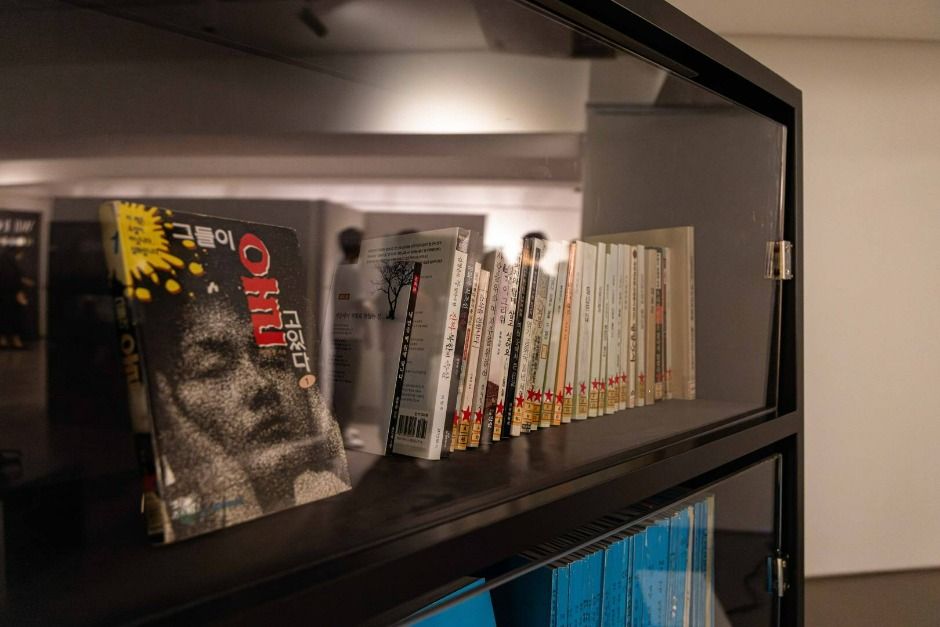
NKDB North Korean Human Rights Exhibition Hall (북한인권전시실)
1.7Km 2025-11-13
393 Samil-daero, Jongno-gu, Seoul
The NKDB North Korean Human Rights Exhibition Hall is a permanent exhibition space dedicated to North Korean human rights. Although it is a small space, it resonates deeply and serves as a "dark tourism" site that records and testifies to the ongoing reality of human rights violations in North Korea. The North Korean Human Rights Information Center (NKDB), which operates this exhibition hall, is the organization that collects and archives the most extensive records of human rights concerning North Korean residents in the world. The testimonies and records presented here represent a living history, a story unfolding in the present, unavailable elsewhere. Through donated North Korean artifacts, including these records, visitors can glimpse the present-day North Korea and encounter artwork by North Korean defectors.

Lemon Mart - Myeong-dong Branch [Tax Refund Shop] (레몬마트 명동)
1.7Km 2024-04-17
1F, 45, Myeongdong 9-gil, Jung-gu, Seoul
-
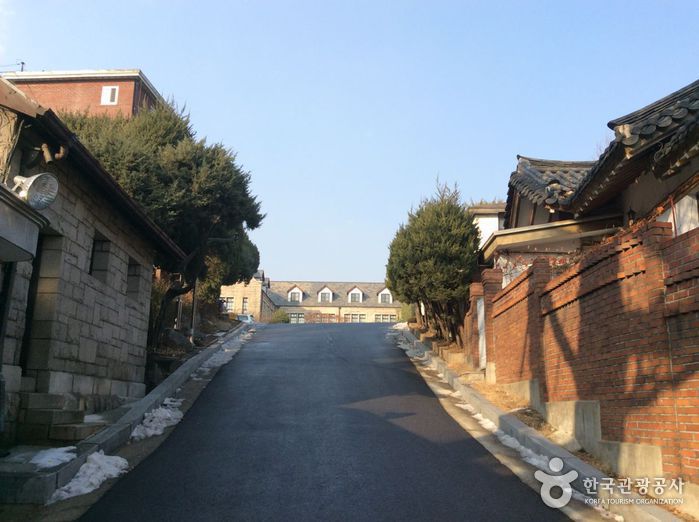
Choong Ang High School (중앙고등학교)
1.7Km 2025-10-23
164 Changdeokgung-gil, Jongno-gu, Seoul
+82-2-742-1321
Choong Ang High School is located in Jong-ro near Samcheongdong-gil. It was built to educate the public at the beginning of the 20th century. The school’s main building was reconstructed in 1937 after the original two-story brick house was destroyed in 1934. The main building situated in front of the main gate is a two-story H-shaped granite stone building in Gothic style, with a four-story tower in the middle.
The school holds historical significance because it was designed by Park Dong Jin, one of Korea's first modern architects and the designer of Korea University’s main building, library, and the Chosun Ilbo Newspaper Company building. The main building of Choong Ang High School is designated as Historic Site No. 281. Many national leaders were educated at the gothic building during the grim period when Korea was trying to escape Japanese colonial rule.
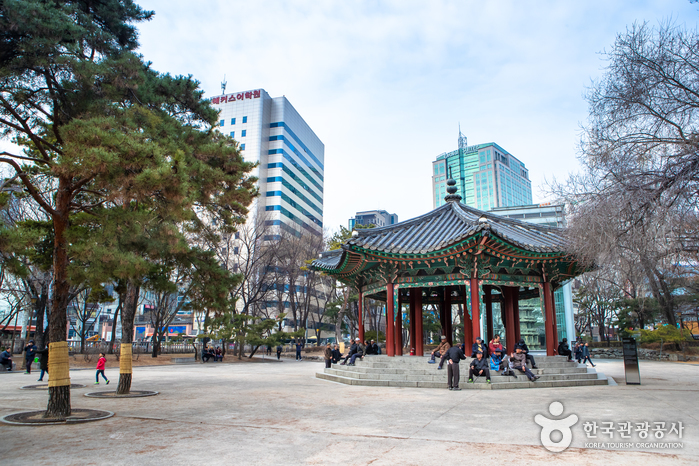
Tapgol Park (탑골공원)
1.7Km 2024-03-04
99, Jong-ro, Jongno-gu, Seoul
+82-2-731-0534
Tapgol Park is the first modern park in Seoul. Having been the site of the Buddhist temple of Wongaksa Temple since 1467, the land was turned into a park in 1897. The park has a significant presence in Korean history, being the place where the March 1 Independence Movement began in 1919. One can find historical sites that hearken back to the struggle, such as the Palgakjeong Pavilion, the center of the movement; cultural heritage sites such as the Ten-story Stone Pagoda of Wongaksa Temple Site and the Stele for the Construction of Daewongaksa Temple at Wongaksa Temple Site; and monuments such as the independence movement relief plate, murals, the statue of Son Byeong-hee, and the statue of Han Yong-un.
![Gugus - Myeong-dong Branch [Tax Refund Shop] (구구스 롯데 명동점)](http://tong.visitkorea.or.kr/cms/resource/86/2878586_image2_1.jpg)
Gugus - Myeong-dong Branch [Tax Refund Shop] (구구스 롯데 명동점)
1.7Km 2024-04-23
11, Namdaemun-ro 7-gil, Jung-gu, Seoul
-
ILMIRI Gold Jjimdak Myeongdong (일미리금계찜닭 명동)
1.7Km 2024-03-11
40, Myeongdong 3-gil, Jung-gu, Seoul
+82-2-3789-0220
Located in front of Exit 5 of euljiro 1(il)-ga station, ILMIRI Gold Jjimdak is a restaurant specializing in jjimdak (braised chicken). Their signature dish is the cheese jjimdak (braised chicken and cheese) set menu, which is topped with plenty of mozzarella cheese. The set comes with egg rice (or scorched rice) and glass noodles. The steamed chicken, which has a sweet and not spicy flavor, comes in two varieties, boneless or bone-in, and is served with side dishes such as clear radish water kimchi and kimchi cabbage.
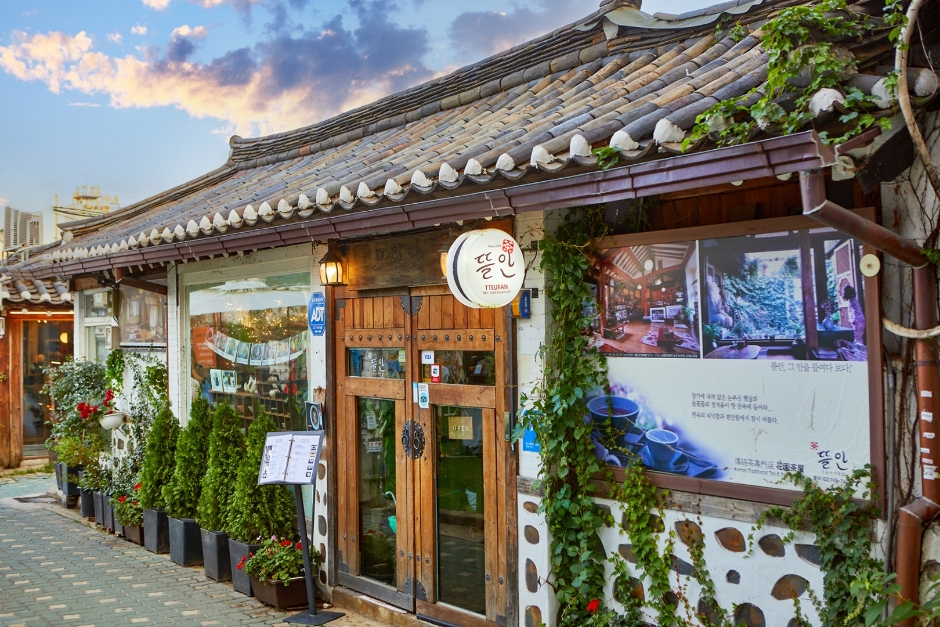
Tteulan Teahouse (뜰안)
1.7Km 2024-12-10
Tteulan Teahouse is a cafe that really allows one to feel the tradition and flair of Korea. Tteulan has two entrances: one facing the wide alley and the other facing the smaller one. The smaller entrance is decorated like a garden, so it feels as if one is stepping into a land of fairy-tales. The café has a floor seating tables with traditional items like gadari soban (a table with legs that curve like a dog's legs), and jogakbo (a textile woven from several pieces of scrap cloth), all of which add to the traditional Korean aesthetic. The menu features ssanghwacha (medicinal herb tea known to help the immune system), a favorite among middle-aged and elderly Koreans; omija tea (omija is a tart berry that grows in East Asia known to be good for lung and bronchial health and boosts immunity); citrus tea (usually made with yuzu which is rich in vitamin C and said to help mitigate fatigue); and pour-over coffee. Traditional desserts include mugwort rice cake (rice cake with mugwort added for herbal flavor, best enjoyed with malt syrup), pumpkin rice cake, and roasted grain powder (a nutritious beverage made with a variety of powdered grain). It can be hard to find seating in the afternoon, so visitors are advised to avoid these hours if they seek to enjoy their drink in peace.
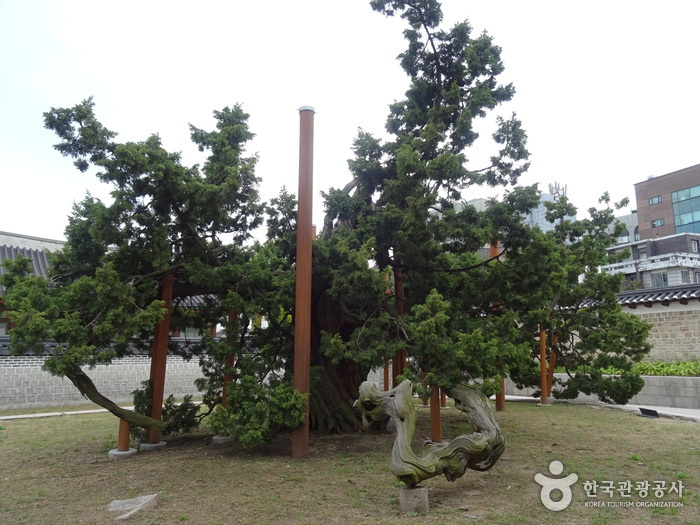
Hyangnamu Tree in Changdeokgung Palace (창덕궁 향나무)
1.7Km 2025-01-13
99, Yulgok-ro, Jongno-gu, Seoul
+82-2-3668-2300
Hyangnamu or 'Aromatic Tree' in Changdeokgung Palace is estimated to be about 700 years old, meaning it had likely been planted before the palace was built. It stands 12m in x_height, measures 5.9m in girth around the roots, and has branches spreading in all four directions. It is designated and protected as a National Natural Monument.
 English
 한국어
한국어 日本語
日本語 中文(简体)
 Deutsch
 Français
 Español
 Русский


