![National Museum of Modern and Contemporary Art, Seoul [MMCA Seoul] (국립현대미술관 서울관)](http://tong.visitkorea.or.kr/cms/resource/00/2991500_image2_1.jpg)
National Museum of Modern and Contemporary Art, Seoul [MMCA Seoul] (국립현대미술관 서울관)
942.3M 2023-06-23
30, Samcheong-ro, Jongno-gu, Seoul
+82-2-3701-9500
The National Museum of Modern and Contemporary Art, Seoul (MMCA Seoul) opened in 2013 as a city venue of the MMCA, which opened in 1986 in Gwacheon. The museum site was where many of Korea’s historical and political developments were achieved, both during the Joseon dynasty and after the Korean War. The Seoul venue of MMCA stands out from other museums through its use of Korea’s traditional architectural concept of "madang," a spacious courtyard where people can come and gather to socialize. The exterior of the building stands in harmony with the surrounding landscape. Inside, the museum is equipped with many facilities, including a reference center, project gallery theater, and multipurpose hall. MMCA Seoul strives to accommodate every mode of new artistic endeavor and to communicate with the public.
![Seoul Papyrus [Tax Refund Shop] (서울파피루스)](http://tong.visitkorea.or.kr/cms/resource/74/2878574_image2_1.jpg)

Cheonggye Pharmacy - Cheonggyecheon Branch [Tax Refund Shop] (청계약국 청계천)
952.8M 2024-04-17
14, Cheonggyecheon-ro, Jung-gu, Seoul
-
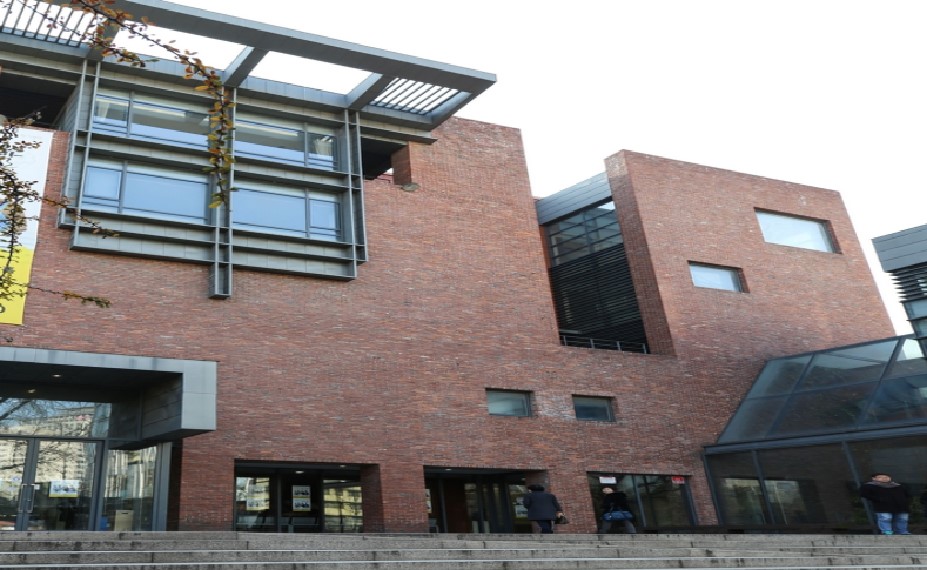
Ewha Centennial Hall (이화여고100주년기념관)
957.3M 2024-02-20
26 Jeongdong-gil, Jung-gu, Seoul
Ewha Centennial Hall is a multimedia education center located next to Ewha Girls' High School. Spanning underground and five above-ground floors, it features a gallery, a cafe, music rooms, individual practice rooms, and audio-visual rooms. The Hwaham Hall on the first and second floors is utilized for performances such as musicals and concerts, as well as educational events.
Jeongdong Theater (국립 정동극장)
968.4M 2024-06-19
43 Jeongdong-gil, Jung-gu, Seoul
+82-2-751-1500
Jeongdong Theater is located along Deoksugung Stone Wall Path and serves as a cultural hub for local citizens. Opened in 1995, Jeongdong Theater is historically significant as it was established to restitute the legacy of Wongaksa, the first modern theater in Korea. Jeongdong Theater features numerous critically-acclaimed productions, such as “Traditional Art Performance,” “Masters Exhibition,” and “Art Frontier,” as well as programs like “Art Stage at Noon” that are geared toward the general public. As a result, Jeongdong Theater has become one of Korea's representative traditional arts performance theaters and was designated as a Seoul Future Heritage in 2015.
The theater successfully held the performance “Miso” in 2010, featuring the traditional musical "Love Songs from Chunhyang," written and created by Jeongdong Theater. The musical attracted many international visitors from all over the world, passing on Korean cultural values and beauty, as well as gaining the attention of critics worldwide. In addition, the theater also produced "The 2nd Story of Miso: Baebijang-jeon," offering a modern interpretation of the fundamental values found in Korea's culture and art.
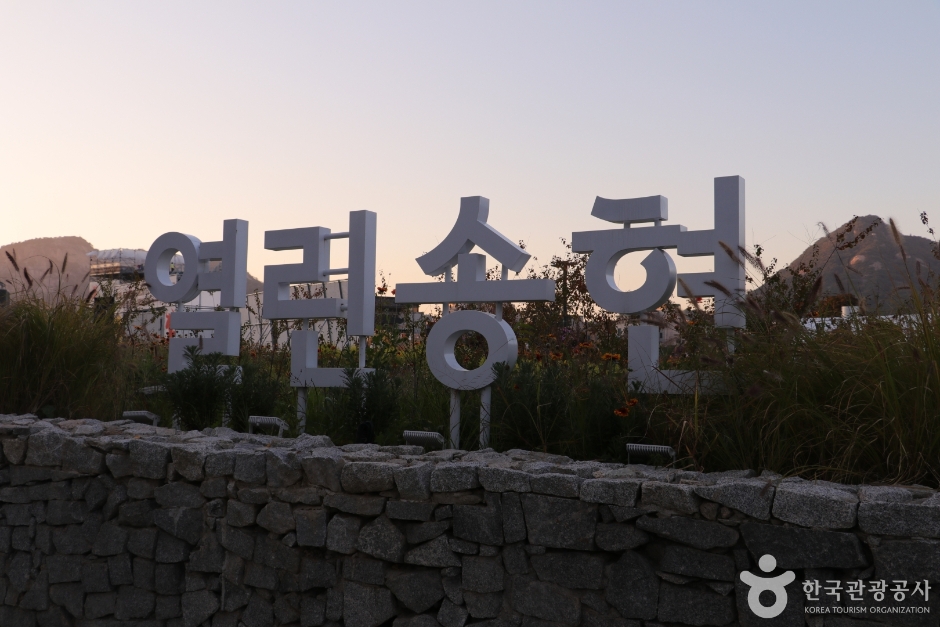
Songhyeon Green Plaza (열린송현 녹지광장)
983.3M 2025-11-11
Songhyeon-dong, Jongno-gu, Seoul
Songhyeon Green Plaza, located between Gyeongbokgung Palace and Jongno, is a space for culture and rest. The site was formerly used as housing for Shiksan Bank during Japanese rule. After Korea’s liberation, it served as a residence for the US Embassy and military personnel. Later in 1997, it was returned to the Korean government but remained unused for years. In 2022, the ownership was transferred to the Korean House and Land Corporation and then to the Seoul Metropolitan Government, which redeveloped it into a green plaza and opened it to the public. Upon entering the plaza, visitors are greeted by a spacious lawn adorned with flowers during the blooming season. The plaza is connected to the nearby tourist attractions through shortcuts cutting through it, including Cheong Wa Dae (Blue House), Gwanghwamun Plaza, Insa-dong, and Bukchon Hanok Village.
Jogyesa Temple (조계사(서울))
987.2M 2024-10-25
55 Ujeongguk-ro, Jongno-gu, Seoul
As the main temple as well as the district head temple of the Jogye order in Seoul, Jogyesa Temple is the center of Korean Buddhism. The temple was built in the late 14th century during the Goryeo period but was completely destroyed in a fire. It was rebuilt under the name of Gakwangsa Temple in 1910 with the effort of many respectful monks, namely Han Yong-un and Lee Hee-gwang. The temple was given a role as the head temple of Korea’s Buddhism and renamed to Tegosa Temple in 1936. In 1954, a purification drive took place to eliminate Japanese influence and revive traditional Buddhism, which established the present day Jogyesa Temple as a result.
Jogyesa Temple plays an important role in Korean Buddhism as the head temple of the Jogye order. Jogyesa Temple’s Dharma Hall serves as the main venue for several Buddhist events, holding rituals, lectures, ceremonies, and other events all year long. The annual lantern festival in celebration of Buddha's birthday also takes place at this temple.
 English
 한국어
한국어 日本語
日本語 中文(简体)
 Deutsch
 Français
 Español
 Русский


