![Eyedentity - Anam Branch [Tax Refund Shop] (아이덴티티 안암)](http://tong.visitkorea.or.kr/cms/resource/24/2889624_image2_1.jpg)
Eyedentity - Anam Branch [Tax Refund Shop] (아이덴티티 안암)
4.9Km 2024-04-18
1F, 92-1, Goryeodae-ro, Seongbuk-gu, Seoul
-
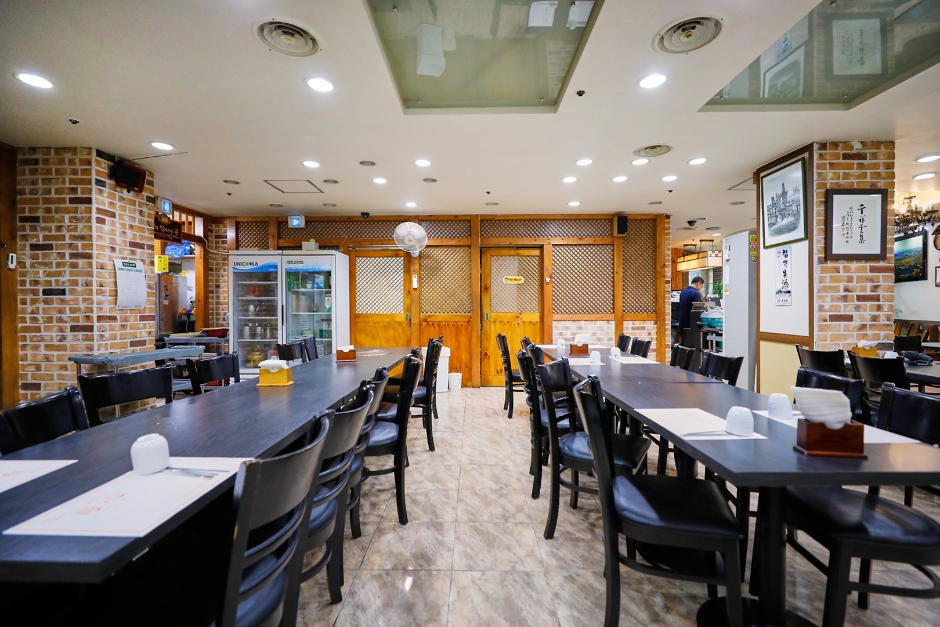
Mosim (모심)
4.9Km 2025-05-20
8 Gaeunsa-gil, Seongbuk-gu, Seoul
Mosim is a Korean table d’hote restaurant that offers a variety of menus to choose from depending on the kind of dishes and the number of side dishes. The set menu, which includes main dishes, such as hwangtae gui (grilled dried pollack) and galbitang (galbi soup), and side dishes, such as salad, japchae, and seasoned vegetables, is plentiful in amount and variety enough to fill the table. There are menu items that can be enjoyed individually, such as samgyetang, bibimbap, and yukgaejang (spicy beef soup). The restaurant’s menu comprises nutritious dishes that soothe one's tired mind and body. The restaurant has private rooms that can accommodate 4, 8, 12, 16, 20, 24, and 30 people, so it is a good option for guests seeking a quiet meal with the family or group gatherings.

Jeong’s Family (정스패밀리)
4.9Km 2025-03-15
16 , Hyochangwon-ro 8-gil, Yongsan-gu, Seoul
+82-10-6332-2043
Jeong's Family is a foreigner-only guesthouse in Hanseong Han River Apartments in Yongsan-gu, Seoul. The apartment building is in a quiet residential area and has a fine view over the Han River and the riverside Hangang Park - which is a great place for walking or cycling. The two rooms are furnished with laptop PCs. Guests will recieve a welcome drink when they check-in, and a simple breakfast and dinner are provided upon prior reservation. The guesthouse is close to the airport bus stop, and convenient for public transport to tourist hotspots such as Gangnam, Hongdae, and Myeong-dong. There’s a key deposit system in operation.
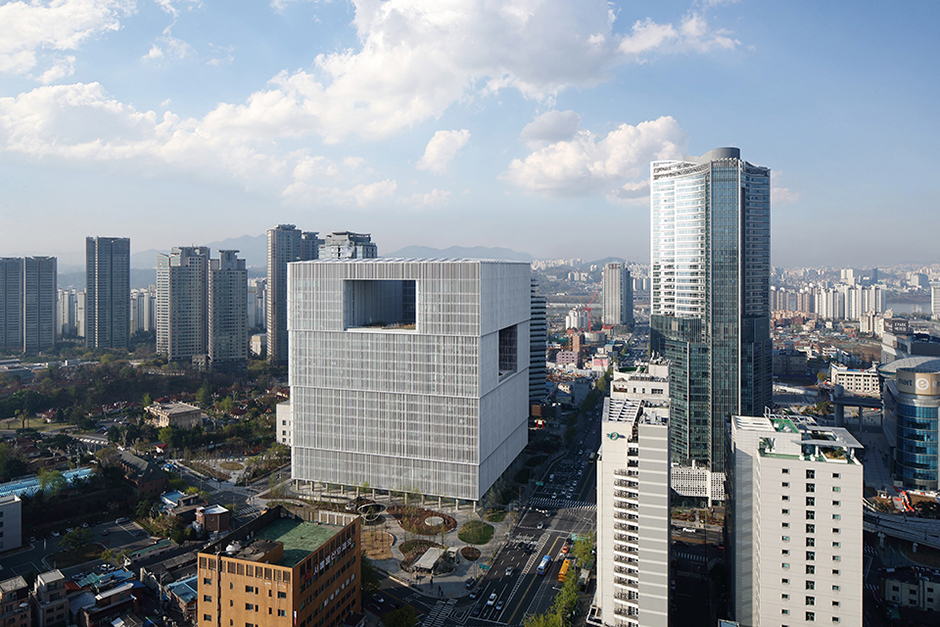
Amorepacific Museum of Art (아모레퍼시픽미술관)
4.9Km 2024-12-31
100 Hangang-daero, Yongsan-gu, Seoul
Amorepacific Museum of Art, located in Yongsan-gu, Seoul, was originally a museum exhibiting artworks collected by the late Seo Seong-hwan, the founder of Amorepacific, but later changed its name to Amorepacific Museum of Art, or APMA, in 2009 and has since been operating as an art exhibition hall. The mission upon its foundation was seeking to be "a space where beauty in the midst of daily lives is discovered" and communicating with the public. In accordance with this objective, the museum collects, researches, and exhibits Korean ancient art and both Korean and international contemporary art while, also, aiding researchers, scholars, and young artists. The underground exhibition hall hosts diverse exhibits encompassing ancient art, contemporary art, and Korean art. The 1st floor of the "Atrium," an enormous space that continues from the 1st to 3rd floors, features the museum lobby, a museum shop, an exhibition space called "APMA Cabinet" and apLAP, which is a library of art exhibition brochures from around the world. The art museum is located on the 1st floor of the new Amorepacific headquarters building, a famous work of architectural beauty of Yongsan designed after white porcelain.
![Stylenanda - Hongdae Branch [Tax Refund Shop] (스타일난다 홍대)](http://tong.visitkorea.or.kr/cms/resource/86/2888386_image2_1.jpg)
Stylenanda - Hongdae Branch [Tax Refund Shop] (스타일난다 홍대)
4.9Km 2024-04-17
23, Wausan-ro 29da-gil, Mapo-gu, Seoul
-
![Colors Optical Store - Hongdae Branch [Tax Refund Shop] (컬러스안경 홍대)](http://tong.visitkorea.or.kr/cms/resource/18/2889618_image2_1.jpg)
Colors Optical Store - Hongdae Branch [Tax Refund Shop] (컬러스안경 홍대)
4.9Km 2024-04-23
B2F, 124, Singomae-ro, Giheung-gu, Yongin-si, Gyeonggi-do
-
Soon Chun Hyang University Hospital Seoul (순천향대학교 부속 서울병원)
4.9Km 2025-10-23
59 Daesagwan-ro, Yongsan-gu, Seoul
Soonchunhyang University Hospital Seoul has established a systematic and dedicated system for international patients covering all stages from pre-entry processes to departure and aftercare. Based on the medical records provided by the patient, we consult with the medical staff of each specialty to come up with an estimated treatment plan and costs to help patients prepare for their treatment in Korea. Our dedicated outpatient and inpatient teams provide expert medical interpretation, guidance, and integrated appointment management to ensure prompt and organized medical care for international patients throughout their stay. Complete with spacious and comfortable rooms, the International Ward is staffed by coordinators and a nursing team reserved for international patients. Multidisciplinary care with organized systems, state-of-the-art medical equipment, and top-notch medical staff ensure accurate diagnosis and the best treatment outcomes possible.
![Daiso - Hongdae Branch (No. 2) [Tax Refund Shop] (다이소 홍대2호)](http://tong.visitkorea.or.kr/cms/resource/94/2888394_image2_1.jpg)
Daiso - Hongdae Branch (No. 2) [Tax Refund Shop] (다이소 홍대2호)
4.9Km 2024-04-22
182, Yanghwa-ro, Mapo-gu, Seoul
-
GS25 - Hongdae Donggyo Branch [Tax Refund Shop] (GS25홍대동교점)
4.9Km 2024-06-26
21, Yanghwa-ro 21-gil, Mapo-gu, Seoul
-
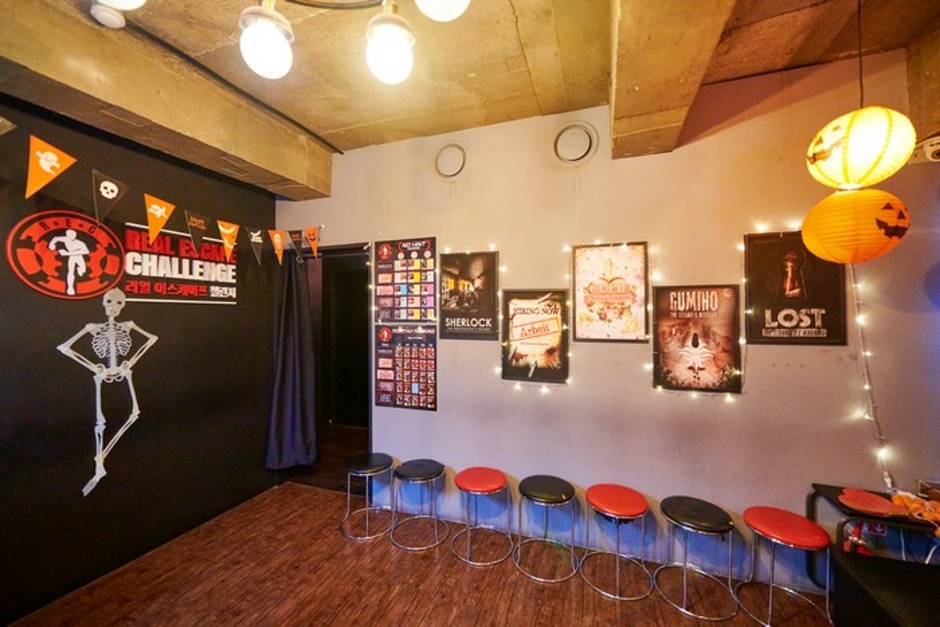
Real Escape Challenge (리얼 이스케이프 챌린지)
4.9Km 2025-11-05
21, Wausan-ro 27-gil, Mapo-gu, Seoul
Thrilling Escape Café
Depending on the theme, you can enjoy a thrill-based game where you have to escape from a room within a time limit. Celebrities such as Lovelyz Mijoo also enjoy visiting. The theme changes periodically and each room is marked in English, and a guide service for foreigners is also provided. It is 100% reservation-based.
 English
 한국어
한국어 日本語
日本語 中文(简体)
 Deutsch
 Français
 Español
 Русский


