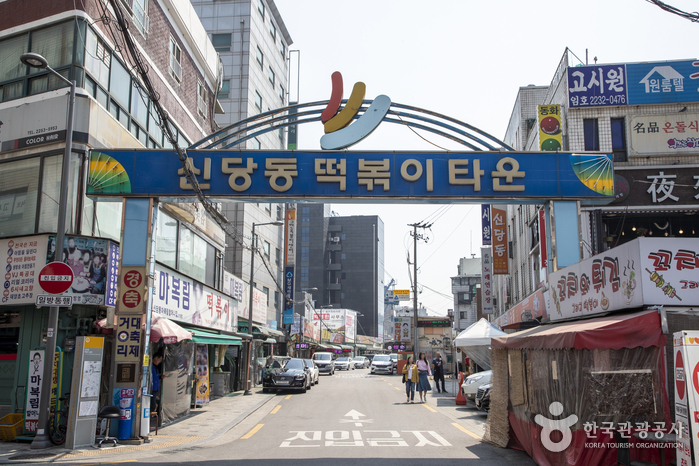
Sindang-dong Tteokbokki Town (신당동떡볶이골목)
2.6Km 2022-10-25
10-18, Dasan-ro 33-gil, Jung-gu, Seoul
+82-2-2236-9135
Sindang-dongTteokbokki Town started in the late '70s, although the alley did not become famous until the '80s. At that time, each restaurant had its own DJ booth, with the image of the "cool DJ" who played the music becoming a symbol of Sindang-dong Tteokbokki Town. In addition, this period also marked the prime time of high school baseball where students would crowd the streets on days when Duksoo Commercial High School and Sunrin Commercial High School (now Sunrin Internet High School) played against one another. Although these high school students have aged, they continue to visit the area, reliving their youth and continuing to indulge in the specialty tteokbokki.
However, some claim the history of this alley began in the 1950s. The owner of Mabongnim Halmeoni Tteokbokki restaurant says tteokbokki was being sold as early as 1953 as the area used to be home to Donga Theater and she sold tteokbokki, corn and potatoes to those visiting the theater. At first, tteokbokki was simply made with gochujang (red chili paste) but as time went by, cooks decided the dish could be more than just a snack. By adding ingredients like eggs, cellophane noodles, fish cakes, instant noodles and more recently squid, prawn and cheese, tteokbokki can be made more delicious and turns this beloved snack into a full meal.

Gyeongnidan Street (경리단길)
2.6Km 2023-01-18
Itaewon-dong, Yongsan-gu, Seoul
Gyeongnidan Street refers to the 937-meter-long road from the main gate of MND Financial Management Corps to Grand Hyatt Seoul as well as all of the nearby streets and alleys. It is called Gyeongnidan Street because the Korean army's central finance corps, or Gyeongnidan in Korean, used to be located here, and has gained fame for presenting a different vibe than that of Itaewon despite being part of Itaewon-dong. Gyeongnidan Street is an area of culture and youth where people are able to enjoy diverse and special cuisine and dishes at unique restaurants and cafes. Although it resembles a typical neighborhood of Seoul, it features foreigners who have come from many different places around the globe living in natural harmony with Korean locals, which exudes a unique, exotic atmosphere. It is fun to walk along the various streets and alleys to discover novel and sophisticated shops.
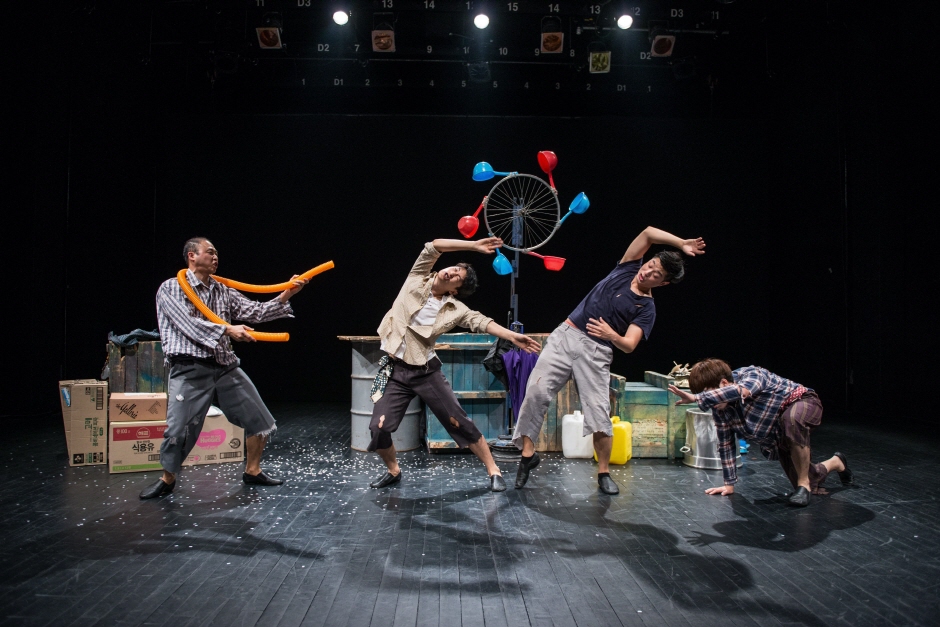
D. Festa: Daehakro Street Performance Festival (대학로 거리공연축제)
2.6Km 2025-06-16
1, Daehak-ro 8-gil, Jongno-gu, Seoul
• 1330 Travel Hotline: +82-2-1330 (Korean, English, Japanese, Chinese) • For more info: +82-2-741-4188
Started in 2015, Daehakro Street Performance Festival provides various performances including plays, dances, mimes and more. The festival aims to provide hope and changes in daily life through diverse performances.

I Love Sindangdong Tteokbokki (아이러브신당동떡볶이)
2.6Km 2024-03-07
50, Toegye-ro 76-gil, Jung-gu, Seoul
+82-2-2232-7872
Situated in Sindang-dong Tteokbokki Town, I Love Sindangdong Tteokbokki is a famous tteokbokki restaurant. Tteokbokki is a typical Korean street food, consisting of rice cakes made with flour or rice flour and stir-fried in red chili paste. The rice cakes are simmered in a broth with seasonings, along with fish cakes, vegetables, boiled eggs, mandu, and other ingredients. The best thing is that the dish can be customized with various ingredients such as cheese, ramyeon noodles, chewy noodles, and ham. Leftover broth can be fried with rice for a satisfying meal.
![Innisfree - Daehangno Branch [Tax Refund Shop] (이니스프리 대학로)](http://tong.visitkorea.or.kr/cms/resource/84/2878184_image2_1.jpg)
Innisfree - Daehangno Branch [Tax Refund Shop] (이니스프리 대학로)
2.6Km 2024-04-19
51, Daehak-ro 11-gil, Jongno-gu, Seoul
-
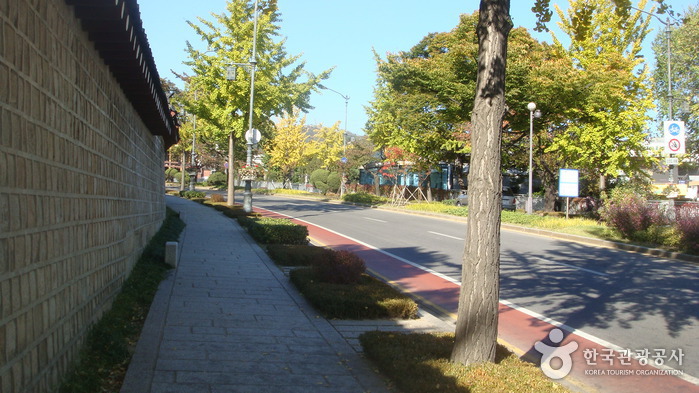
The Street in front of Cheongwadae (The Blue House) (청와대 앞길)
2.6Km 2025-08-20
Gungjeong-dong, Jongno-gu, Seoul
+82-2-120
The street in front of Cheongwadae (the Blue House) is open to the public and includes both Hyoja Samgeori (Hyoja three-way intersection) in Hyoja-dong and Palpan Samgeori (Palpan three-way inetersection) in Palpan-dong. When walking along Hyoja-ro Road from Gyeongbokgung Station, sights include a fountain, Mugunghwa Garden, Yeonmugwan Hall, and Daegogak & Yeongbingwan Hall.
Cheongwadae Sarangchae consists of one basement level and two above-ground levels, including Korean Culture Exhibition Hall, Planned Exhibition Hall, a gift shop, and rest area (Korean Food Promotion Hall, Café) on the first floor and Cheongwadae Hall and Haengboknuri Hall on the second floor. Daegogak Hall houses a book donated to former president, Kim Young-sam for expressing the past spirit of Sinmungo (Petitioner's drum from Korean History). Yeonmugwan Hall is a martial art and fitness center for guards. Mugunghwa Dongsan, formed after the ansa (Safe House) was demolished in 1993, includes a well, mock fortress, and rest area. Located behind Mugunghwa Dongsan is Apostolic Nunciature in Korea and Chilgung (Seven Palaces).
At the beginning of the street in front of Cheongwadae, dense trees and beautiful flower gardens decorating both sides of the road make it a nice place for taking a walk. The area from the north gate of Gyeongbokgung Palace, Chunchumun, to the main gate of Gyeongbokgung Palace, Geonchunmun, is Samcheongdong-gil Road. This road is home to many art galleries, including Kukje Gallery, Growrich Gallery, Gallery Hyundai, and Jin Art gallery, in the area of Hyoja-ro.
![Himart - Cheonggu Branch [Tax Refund Shop] (하이마트 청구점)](http://tong.visitkorea.or.kr/cms/resource/46/2889946_image2_1.jpg)
Himart - Cheonggu Branch [Tax Refund Shop] (하이마트 청구점)
2.6Km 2024-04-18
210, Dasan-ro, Jung-gu, Seoul
-
Sangchonjae House (상촌재)
2.6Km 2025-11-06
12-11 , Jahamun-ro 17-gil, Jongno-gu, Seoul
Sangchonjae House, run by the Jongno Cultural Foundation, is a traditional hanok cultural space located in Sejong Village, Ogin-dong, Jongno-gu, and operates various cultural Korean programs such as exhibitions, educational experiences, and events to fully experience Korea's four seasons. The name Sangchonjae was conceived from the old name of Sejong Village, the western part of Gyeongbokgung Palace and the birthplace of King Sejong. The house reflects the lifestyle of an ordinary peasant during the Joseon dynasty. It consists of three buildings: the main building, the guesthouse known as sarangchae, and the annex. There is an experience center indoors offering tea ceremonies and traditional game experiences.
Olive Young - Daehakro Branch [Tax Refund Shop] (올리브영 대학로점)
2.6Km 2024-06-27
1F~3F, 237, Changgyeonggung-ro, Jongno-gu, Seoul
-
 English
 한국어
한국어 日本語
日本語 中文(简体)
 Deutsch
 Français
 Español
 Русский


