
Optical Manager - Namdaemun Branch [Tax Refund Shop] (안경매니져남대문점)
1.6Km 2024-06-27
1F and 2F, 2-1, Namdaemunsijang 4-gil, Jung-gu, Seoul
-
Olive Young - Daehakro Branch [Tax Refund Shop] (올리브영 대학로점)
1.6Km 2024-06-27
1F~3F, 237, Changgyeonggung-ro, Jongno-gu, Seoul
-
Korea Samgyetang (고려삼계탕)
1.6Km 2024-06-19
1 Seosomun-ro 11-gil, Jung-gu, Seoul
+82-2-752-9376
Located near City Hall Station, Korea Samgyetang specializes in samgyetang. Samgyetang is a traditional healthy dish made by simmering cleaned young chicken in a broth with ginseng, jujube, and glutinous rice. The light and tender texture of the stewed chicken and the ginseng-flavored glutinous rice porridge is excellent. Ogolgye tang (silkie chicken soup) and jeonbok samgye tang (abalone and ginseng chicken soup) are also favorites among patrons. This restaurant was selected for the Michelin Guide Seoul in 2023.
Alpha Stationery - Namdaemun Main Branch [Tax Refund Shop] (알파문구 남대문본점)
1.6Km 2024-04-23
6-2, Namdaemun-ro, Jung-gu, Seoul
-
Gyeonghuigung Palace (경희궁)
1.6Km 2024-07-09
45 Saemunan-ro, Jongno-gu, Seoul
+82-2-724-0274
Gyeonghuigung Palace, a designated Historic Site, was originally called the large palace by Saemun Gate, or the Western Palace, for its location within the city. It was not until the eighth year of Gwanghaegun (1616) that the palace was used as a royal residence for the king, changing the name to Gyeongdeokgung Palace. The name later changed again to the current Gyeonghuigung Palace in 1760. The palace grounds included many halls but they were mostly all burned down in a fire in 1829. After the Japanese occupation began, all remaining buildings on the site were torn down and the palace grounds were turned into Gyeongseong Middle School (now Seoul High School). The school moved to Gangnam area in 1987, afterwhich the previous location was turned into a park. The palace grounds currently hold Seoul Museum of Art and walking paths, as well as a restoration of Heunghwamun Gate, the main gate of the palace, and Sungjeongjeon Hall, the main hall, completed in November 1994.
Kim's Optical [Tax Refund Shop] (김안경)
1.6Km 2024-06-27
1F, D-10, 9, Namdaemunsijang 4-gil, Jung-gu, Seoul
-
India Art [Tax Refund Shop] (인도예술)
1.6Km 2024-06-26
1F, D-61, 9, Namdaemunsijang 4-gil, Jung-gu, Seoul
-
Taesan Total Kitchen [Tax Refund Shop] (태산종합주방)
1.6Km 2024-06-27
3F, D-35, 9, Namdaemunsijang 4-gil, Jung-gu, Seoul
-
![Kim's Optical [Tax Refund Shop] (김안경)](http://tong.visitkorea.or.kr/cms/resource/44/3313944_image2_1.jpg)
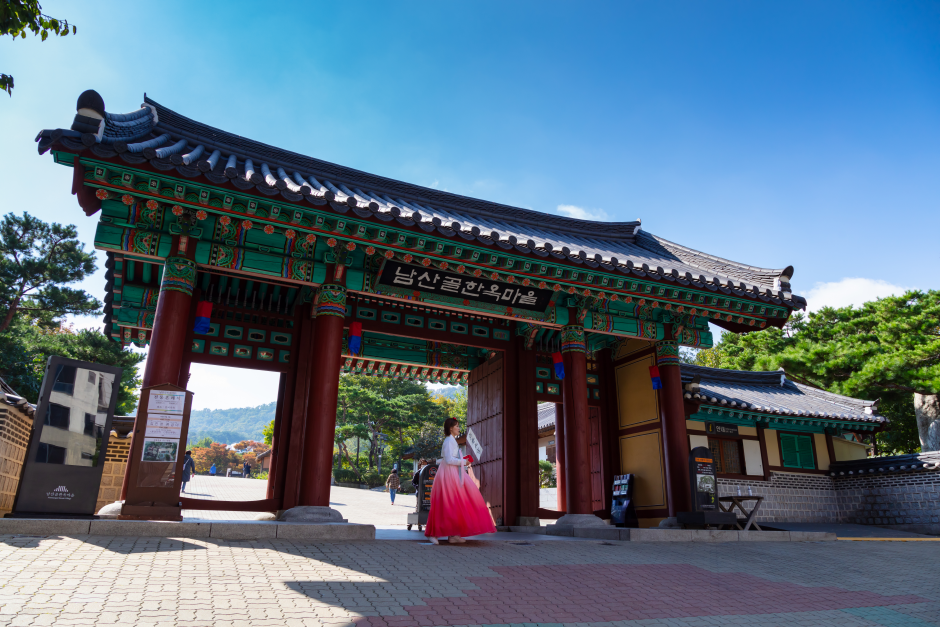
Namsangol Hanok Village (남산골한옥마을)
1.6Km 2025-07-14
28 Toegye-ro 34-gil, Jung-gu, Seoul
Namsangol Hanok Village opened in 1998 on the northern side of Namsan Mountain in the center of the capital. This village has five restored hanok (traditional Korean house) premises, a pavilion, a traditional garden, a performance art stage, and a time capsule plaza, making it a perfect spot for locals and tourists to take a leisure walk. Upon entering from the front gate, visitors will get a taste of Korea's traditional life while escaping from bustling city life. The traditional garden with its pavilion and old houses creates a peaceful ambiance before the forested Namsan Mountain. A time capsule commemorating Seoul’s 600th anniversary was buried in 1994 at the highest point of the village and is scheduled to be reopened 400 years later in 2394.
The five hanok premises at Namsangol Hanok Village once belonged to aristocrats and government officials of the Joseon dynasty. Each house was originally located in a different neighborhood, but they were all moved to this area and restored to their original form. The houses were rebuilt using their original materials, except for one house, where the materials were too old and deteriorated to be reused. The premises were carefully restored and replicated according to their original form to depict the owners’ social class and personality. These buildings are now used as an exhibit to portray the living environment during the Joseon dynasty and as a venue for educational and cultural programs for children and tourists.
Some of the unique programs and activities to participate in include wearing hanbok, folding hanji (traditional Korean paper), writing in Korean, traditional tea ceremony, traditional etiquette school, and herbal medicine experience. There are also taekwondo demonstrations and other various performances held around the village. Visitors can also try traditional games such as yunnori (traditional board game), or understand more about the area through a guided tour.
 English
 한국어
한국어 日本語
日本語 中文(简体)
 Deutsch
 Français
 Español
 Русский


