
Olive Young - Myeongdong Jungang Branch [Tax Refund Shop] (올리브영 명동중앙점)
1.3Km 2024-06-27
1F, 18, Myeongdong 8na-gil, Jung-gu, Seoul
-
![Adidas Original - Myeongdong Branch [Tax Refund Shop] (아디다스오리지널 명동점)](http://tong.visitkorea.or.kr/cms/resource/39/2878639_image2_1.jpg)
Adidas Original - Myeongdong Branch [Tax Refund Shop] (아디다스오리지널 명동점)
1.3Km 2024-04-19
20, Myeongdong 8na-gil, Jung-gu, Seoul
-
![Daiso - Myeong-dong Station Branch [Tax Refund Shop] (다이소 명동역)](http://tong.visitkorea.or.kr/cms/resource/60/2878760_image2_1.jpg)
Daiso - Myeong-dong Station Branch [Tax Refund Shop] (다이소 명동역)
1.3Km 2024-04-22
B2F, 124, Singomae-ro, Giheung-gu, Yongin-si, Gyeonggi-do
-
Healthpedia Co., Ltd. (㈜헬스피디아)
1.3Km 2025-10-23
#1014, 2 Toegye-ro 36-gil, Jung-gu, Seoul
HealthPedia is a medical tourism service that connects foreign patients with specialized clinics in Korea, such as dermatology and plastic surgery. We collaborate with partner hospitals by specialty to assist with appointment booking, interpretation, accommodation guidance, as well as pre- and post-treatment consultations and recovery programs. Multilingual support is available in English, Chinese, Vietnamese, and more for a convenient reservation experience.
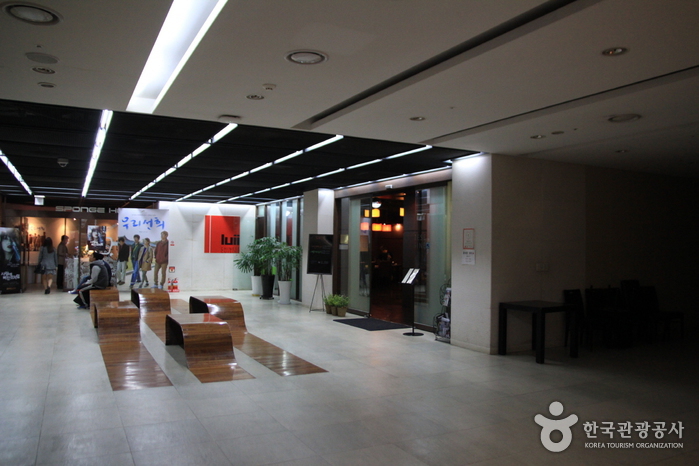
Luii (루이)
1.3Km 2024-07-17
40, Sejong-daero 21-gil, Jung-gu, Seoul
+82-2-736-8889
Luii is a Chinese restaurant operated by a veteran chef with extensive experience in Chinese cuisine. The restaurant has several rooms of different sizes to accommodate various events. It also has a VIP room for more private gatherings.
![Olive Young - Chungmuro Station Branch [Tax Refund Shop] (올리브영 충무로역)](http://tong.visitkorea.or.kr/cms/resource/68/2888868_image2_1.jpg)
Olive Young - Chungmuro Station Branch [Tax Refund Shop] (올리브영 충무로역)
1.3Km 2024-04-18
222, Toegye-ro, Jung-gu, Seoul
-
![EW Spao - Myeong-dong Branch [Tax Refund Shop] (EW 스파오 명동)](http://tong.visitkorea.or.kr/cms/resource/12/2878612_image2_1.jpg)
EW Spao - Myeong-dong Branch [Tax Refund Shop] (EW 스파오 명동)
1.3Km 2024-04-17
15, Myeongdong 8na-gil, Jung-gu, Seoul
-
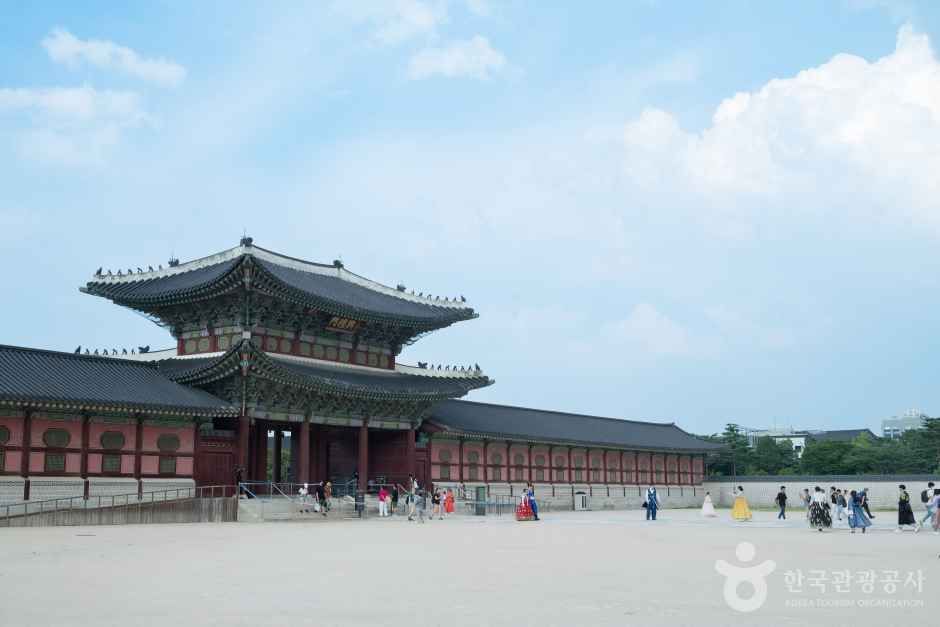
Gyeongbokgung Palace (경복궁)
1.4Km 2025-10-23
161 Sajik-ro, Jongno-gu, Seoul
+82-2-3700-3900
Gyeongbokgung Palace was built in 1395 as the official palace of the Joseon dynasty by Yi Seong-gye, the future King Taejo and founder of the new regime. Gyeongbokgung Palace is commonly referred to as the Northern Palace because of its location to the north, comparied to Changdeokgung Palace in the east and Gyeonghuigung Palace in the west. Gyeongbokgung Palace is arguably the most beautiful and is the largest of all five palaces. Many Joseon kings were crowned here. The premises were once destroyed by fire during the Imjin War (1592-1598). However, all of the palace buildings were later restored under the leadership of Heungseondaewongun during the reign of King Gojong. The assassination of Empress Myeongseong, however, resulted in Gyeongbokgung Palace losing its function as a royal palace, eventually witnessing the downfall of the Joseon dynasty. Gyeongbokgung Palace retains the original Gyeonghoeru Pavilion, a prime example of Joseon architecture, and the Hyangwonjeong Pavilion and pond. The sculptures in the Geunjeongjeon Hall exemplify Joseon-era sculpture techniques. The west side of the area outside Heungnyemun Gate is occupied by the National Palace Museum of Korea, while the eastern side of Hyangwonjeong Pavilion within the Gyeongbokgung Palace is occupied by the National Folk Museum of Korea.
 English
 한국어
한국어 日本語
日本語 中文(简体)
 Deutsch
 Français
 Español
 Русский


