
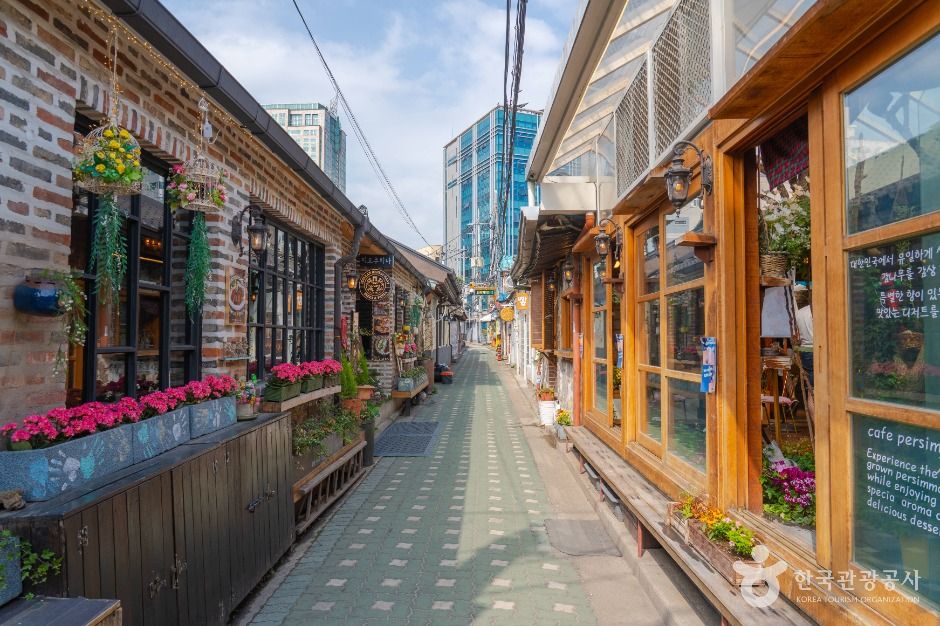
Ikseon-dong Hanok Street (익선동 한옥거리)
896.6M 2025-10-27
Ikseon-dong, Jongno-gu, Seoul
Ikseon-dong is a place where the harmony of alleys and hanok houses exudes beautiful charm and is a must-visit spot for tourists of all ages and genders. It is also an area that connects the younger and older generations.
![Olive Mart [Tax Refund Shop] (올리브마트)](http://tong.visitkorea.or.kr/cms/resource/76/2878676_image2_1.jpg)
![Olive Mart [Tax Refund Shop] (주식회사 올리브마트)](http://tong.visitkorea.or.kr/cms/resource/77/2878677_image2_1.jpg)
Olive Mart [Tax Refund Shop] (주식회사 올리브마트)
901.8M 2024-04-16
1F, 229-3, Jangchungdan-ro, Jung-gu, Seoul
-
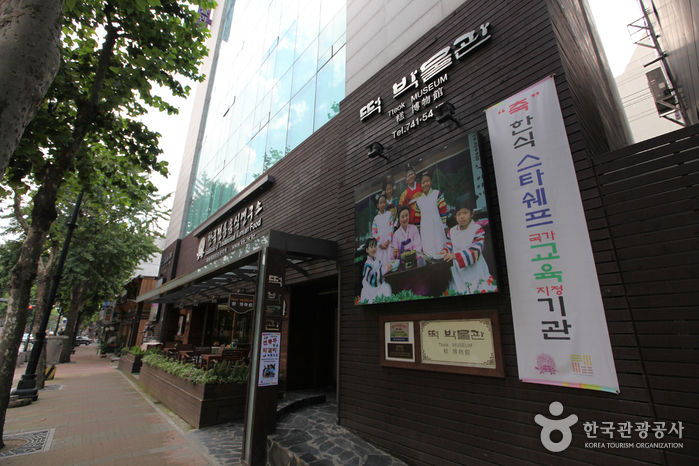
Tteok Museum (떡박물관)
912.4M 2021-09-29
71, Donhwamun-ro, Jongno-gu, Seoul
+82-2-741-5447
The Tteok Museum displays over 2,000 Korean kitchen utensils and tteok (rice cake) related items, arranged by various themes. The displayed utensils are handmade household necessities that are ingenuous, yet reveal the lifestyle of the working class. The elderly may relive fond childhood memories and the younger generation can experience the wisdom of ancestors through the rare kitchen utensils.
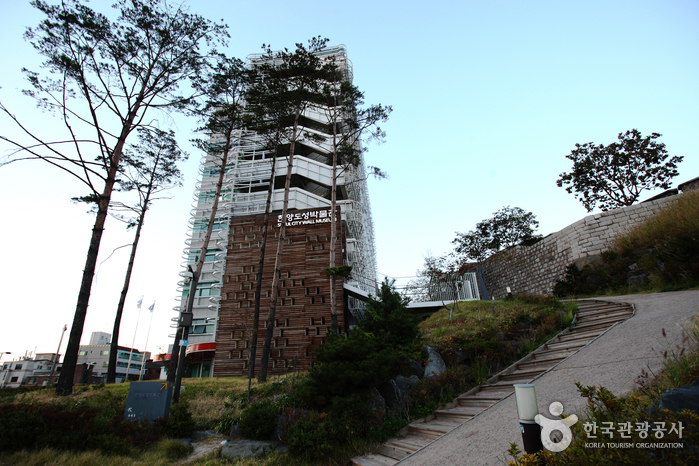
Seoul City Wall Museum (한양도성박물관)
916.8M 2023-12-22
283, Yulgok-ro, Jongno-gu, Seoul
+82-2-724-0243
Hanyangdoseong, the Seoul City Wall, built in 1396, was the city fortress wall that protected the capital city Seoul for over 600 years. The fortress wall was built along the terrains and although it became partially damaged during the modernization process, its original form remains well to this day, making it a cultural heritage that coexists with the modern city. The Seoul City Wall Museum, located in Heungjinjimun Park, is a museum containing the history and culture of city wall from the Joseon dynasty to the present. It is a cultural space with a permanent exhibition hall, special exhibition hall, city wall information center, and study room.
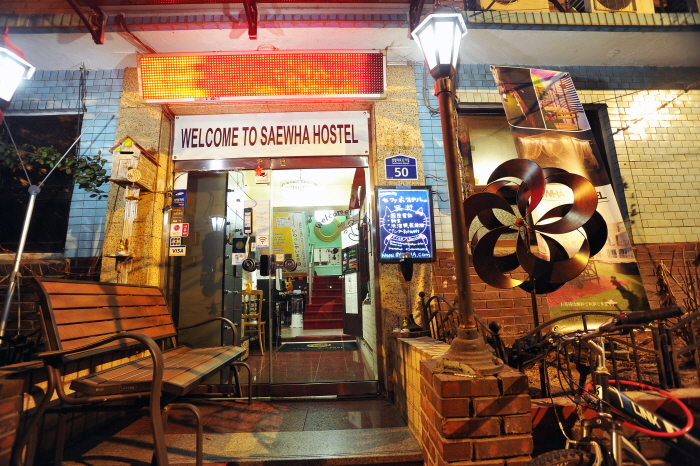
SAEWHA HOSTEL(세화호스텔)
925.2M 2024-06-20
50 , Samil-daero 32ga-gil, Jongno-gu, Seoul
+82-10-3780-5988
Located in Jongno, in the heart of Seoul, Saehwa Hostel offers a variety of guest rooms, including ondol rooms and bedrooms, for up to 3 people. There’s a bathtub in each room. Shared PCs, massage chairs, microwave ovens, washing machines and dryers are all available free of charge. A simple free breakfast is provided, plus a free international phone service and a foreign language guidance service. Seoul Station is 15 minutes away by subway, and the airport limousine bus stops at Jongno 3-ga station. Changdeokgung Palace, Jongmyo Shrine, and downtown shopping streets are all reachable on foot.
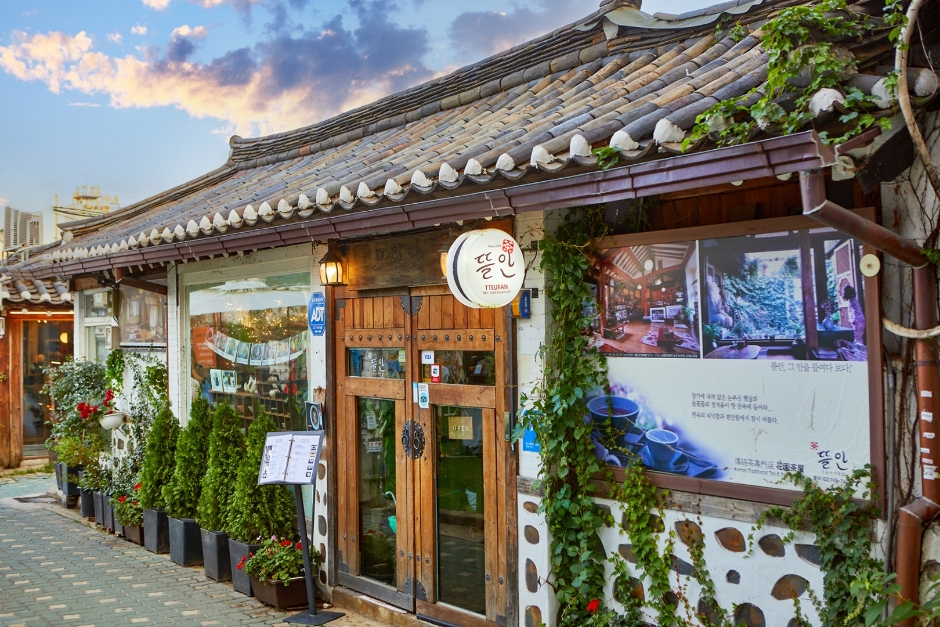
Tteulan Teahouse (뜰안)
935.8M 2024-12-10
Tteulan Teahouse is a cafe that really allows one to feel the tradition and flair of Korea. Tteulan has two entrances: one facing the wide alley and the other facing the smaller one. The smaller entrance is decorated like a garden, so it feels as if one is stepping into a land of fairy-tales. The café has a floor seating tables with traditional items like gadari soban (a table with legs that curve like a dog's legs), and jogakbo (a textile woven from several pieces of scrap cloth), all of which add to the traditional Korean aesthetic. The menu features ssanghwacha (medicinal herb tea known to help the immune system), a favorite among middle-aged and elderly Koreans; omija tea (omija is a tart berry that grows in East Asia known to be good for lung and bronchial health and boosts immunity); citrus tea (usually made with yuzu which is rich in vitamin C and said to help mitigate fatigue); and pour-over coffee. Traditional desserts include mugwort rice cake (rice cake with mugwort added for herbal flavor, best enjoyed with malt syrup), pumpkin rice cake, and roasted grain powder (a nutritious beverage made with a variety of powdered grain). It can be hard to find seating in the afternoon, so visitors are advised to avoid these hours if they seek to enjoy their drink in peace.
![CheongKwanJang - Euljiro Branch [Tax Refund Shop] (정관장 을지로)](http://tong.visitkorea.or.kr/cms/resource/59/2878659_image2_1.jpg)
CheongKwanJang - Euljiro Branch [Tax Refund Shop] (정관장 을지로)
937.4M 2024-04-18
1F, 103, Eulji-ro, Jung-gu, Seoul
-
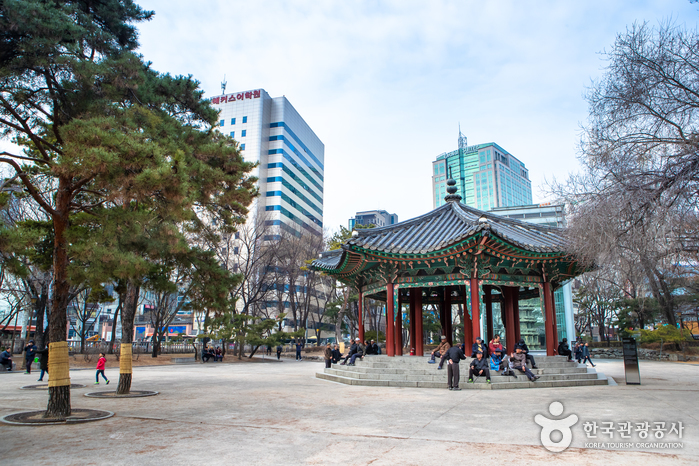
Tapgol Park (탑골공원)
949.4M 2024-03-04
99, Jong-ro, Jongno-gu, Seoul
+82-2-731-0534
Tapgol Park is the first modern park in Seoul. Having been the site of the Buddhist temple of Wongaksa Temple since 1467, the land was turned into a park in 1897. The park has a significant presence in Korean history, being the place where the March 1 Independence Movement began in 1919. One can find historical sites that hearken back to the struggle, such as the Palgakjeong Pavilion, the center of the movement; cultural heritage sites such as the Ten-story Stone Pagoda of Wongaksa Temple Site and the Stele for the Construction of Daewongaksa Temple at Wongaksa Temple Site; and monuments such as the independence movement relief plate, murals, the statue of Son Byeong-hee, and the statue of Han Yong-un.
 English
 한국어
한국어 日本語
日本語 中文(简体)
 Deutsch
 Français
 Español
 Русский


