
Jeong’s Family (정스패밀리)
5.5Km 2025-03-15
16 , Hyochangwon-ro 8-gil, Yongsan-gu, Seoul
+82-10-6332-2043
Jeong's Family is a foreigner-only guesthouse in Hanseong Han River Apartments in Yongsan-gu, Seoul. The apartment building is in a quiet residential area and has a fine view over the Han River and the riverside Hangang Park - which is a great place for walking or cycling. The two rooms are furnished with laptop PCs. Guests will recieve a welcome drink when they check-in, and a simple breakfast and dinner are provided upon prior reservation. The guesthouse is close to the airport bus stop, and convenient for public transport to tourist hotspots such as Gangnam, Hongdae, and Myeong-dong. There’s a key deposit system in operation.
![Olens - Yaksu Branch [Tax Refund Shop] (오렌즈 약수)](http://tong.visitkorea.or.kr/cms/resource/53/2889253_image2_1.jpg)
Olens - Yaksu Branch [Tax Refund Shop] (오렌즈 약수)
5.5Km 2024-04-23
#103, 117, Dasan-ro, Jung-gu, Seoul
-
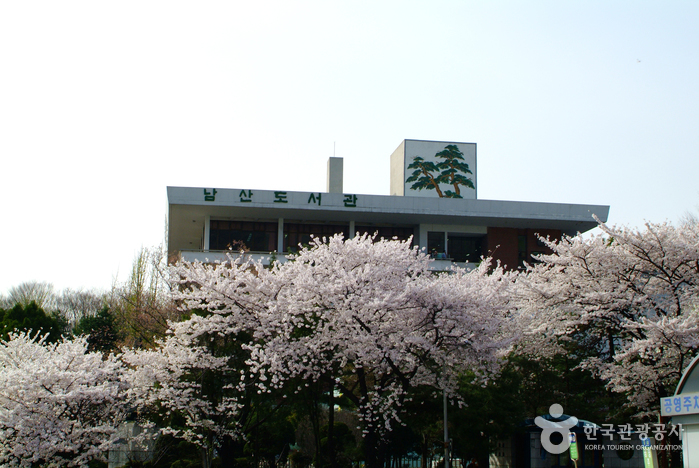
Namsan Library (서울특별시교육청 남산도서관)
5.5Km 2021-07-07
109, Sowol-ro, Yongsan-gu, Seoul
+82-2-754-7338
Namsan Library opened as Kyeongseong Prefectural Library in 1922 as a public library in Myeong-dong, Jung-gu, Seoul. The library was moved to the current site in 1964 with a newly built building and its name changed to Namsan Library in 1965. This concrete building was built in 1964 and was designed by architect Lee Haeseong. It was designated as Seoul Future Heritage in 2013, credited for its preservation value.
It is comprised of 19 rooms and educational areas including the Humanity and Social Science Hall, Nature Science Hall, Language and Literature Hall, Electronic Information Room and more. Since opening, the library has collected nearly 500,000 books, 16,000 non-book materials, 700 continuing resources, and other special materials like old books, oriental books (including Japanese books), and more. Namsan Library also operates a reading treatment program unique to this library that began in 2005. The program includes remodeling of reading consultation room, training for people in charge of reading treatment, workshops, programs for individuals and groups. Also, various exhibitions, lectures, shows, cultural classes and other events are available all year long to enhance lifelong education.
![Olive Young - Yaksu Station Branch [Tax Refund Shop] (올리브영 약수역)](http://tong.visitkorea.or.kr/cms/resource/83/2889583_image2_1.jpg)
Olive Young - Yaksu Station Branch [Tax Refund Shop] (올리브영 약수역)
5.5Km 2024-04-22
189, Dongho-ro, Jung-gu, Seoul
-
Olive Young - Seoul Forest Station Branch [Tax Refund Shop] (올리브영 서울숲역점)
5.5Km 2024-06-26
1F, 50, Wangsimni-ro, Seongdong-gu, Seoul
-
Seoul Hyochang Park (서울 효창공원)
5.6Km 2024-07-09
177-18 Hyochangwon-ro, Yongsan-gu, Seoul
+82-2-2199-7608
Hyochang Park covers 122,245 square meters spanning across Hyochang-dong and Cheongpa 2-dong. It is a historic landmark that once contained several royal tombs, and was known at that time as Hyochangwon. The cemeteries that were originally located in Hyochangwon belonged to Crown Prince Munhyo, King Jeongjo’s first son who died at the age of five; Royal Noble Consort Uibin of the Seong Clan, King Jeongjo’s royal concubine and Crown Prince Munhyo’s mother; Royal Noble Consort Sugui of the Park Clan, King Sunjo’s royal concubine; and her daughter Princess Yeongon. The royal tombs were moved to Seooreung Tombs in the waning months of the Japanese colonial period. The Japanese empire began the development of Hyochangwon into a park in 1924, and the Japanese governor-general officially assigned the site as a park in 1940.
Presently, several of Korea’s greatest leaders are buried in Hyochang Park. The remains mostly belong to independence activists including Yoon Bong-gil, Lee Bong-chang, and Baek Jeong-gi, whose graves are collectively known as Samuisa Tomb. A statue of Lee Bong-chang has been built in the graveyard. Among the other patriotic martyrs who are interred in the park are Kim Gu and some of the key figures of the provisional government such as Lee Dong-nyeong, Cha I-seok, and Cho Seong-hwan. An ancestral shrine named Uiyeolsa has been built along the main gate and holds the portraits of the deceased independence activists.
Superior - Teheran Branch [Tax Refund Shop] (슈페리어테헤란)
5.6Km 2024-04-23
614, Teheran-ro, Gangnam-gu, Seoul
-
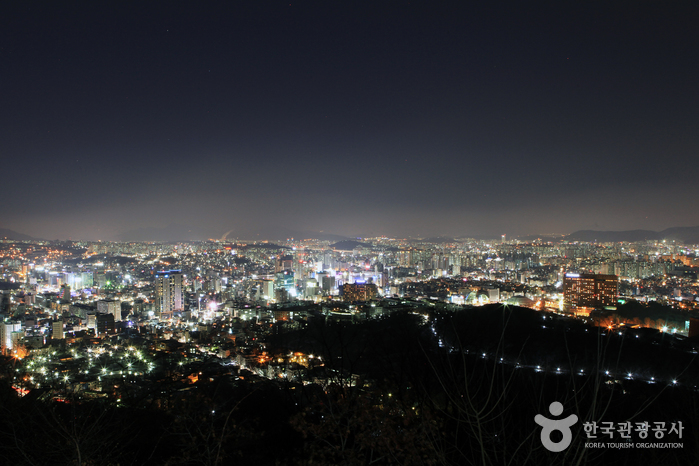
Seoul Namsan Park (남산공원(서울))
5.6Km 2024-03-18
231 Samil-daero, Jung-gu, Seoul
Namsan Mountain rises in the heart of Seoul at an altitude of 265 meters and has been a significant landmark since the Joseon dynasty (1392-1897), leaving behind several ruins. It was heavily damaged in the early 20th century, but was partially restored in 1968 with the creation of the park. Highlights include Namsan Tower and love locks left by numerous couples. Visitors can also easily reach the top by a cable car or bus.
![CheongKwanJang - Cosmo Tower Branch [Tax Refund Shop] (정관장 코스모)](http://tong.visitkorea.or.kr/cms/resource/84/2889484_image2_1.jpg)
CheongKwanJang - Cosmo Tower Branch [Tax Refund Shop] (정관장 코스모)
5.6Km 2024-04-18
B1F, 416, Yeongdong-daero, Gangnam-gu, Seoul
-
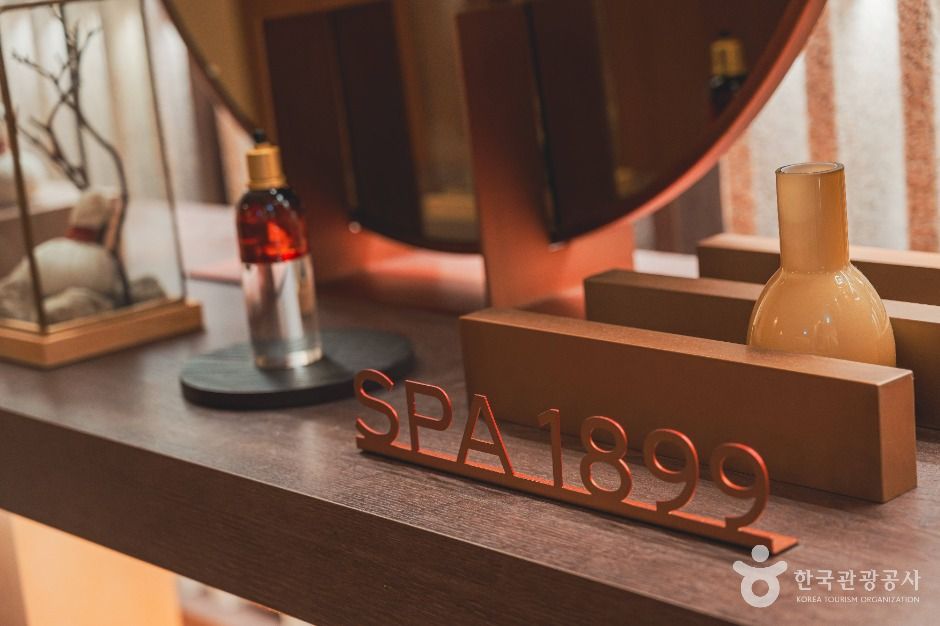
Spa 1978 Donginbi (SPA 1978 동인비)
5.6Km 2025-10-23
416 Yeongdong-daero, Gangnam-gu, Seoul
In traditional Korean medicine, summer is the season when one's energy is severely depleted as people tend to sweat a lot even with little movement. As you are more likely to feel fatigued and lose vitality, replenishing one's energy is crucial. According to Donguibogam, a traditional Korean medical encyclopedia, red ginseng is recommended for vitality. The book says red ginseng slows the aging process and boosts one's energy, helping you live longer. It's effective in restoring vitality and alleviating fatigue. Red ginseng is made by steaming ginseng for approx. 3 hours without peeling it and then letting it dry slowly. This steaming and drying process reduces ginseng's sugar level while creating an active compound, which enhances its efficacy. Saponin, which is abundant in red ginseng, is known for boosting one's immunity and restoring vitality. Notably, ginsenoside helps with digestion, metabolism, and the absorption of nutrients, thereby restoring one's energy. SPA 1978 Donginbi, run by the premium red ginseng brand Jung Kwan Jang, is a specialized spa facility that uses beneficial red ginseng.
 English
 한국어
한국어 日本語
日本語 中文(简体)
 Deutsch
 Français
 Español
 Русский


