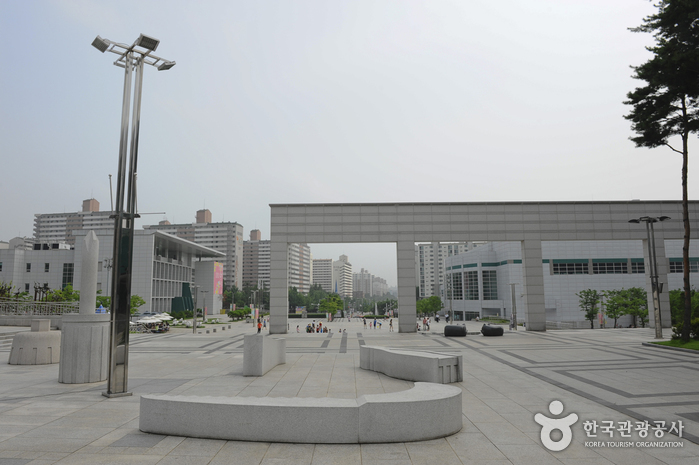
Goyang Oulim Nuri Arts Center (고양 어울림누리)
17.5Km 2021-07-08
33, Eoullim-ro, Deogyang-gu, Goyang-si, Gyeonggi-do
+82-1577-7766
Goyang Oulim Nuri Arts Center is a multi-complex that ties culture and arts facilities with sports facilities. Oulim Theater provides 1,218 seats for various events from classical music to K-pop, plays, musicals and more, while Star and Sand Theater provides 362 seats for more family-oriented shows. The Oulim Art Gallery offers experience programs and exhibitions. The Flower Hill outdoor stage is suitable for plays and concerts.
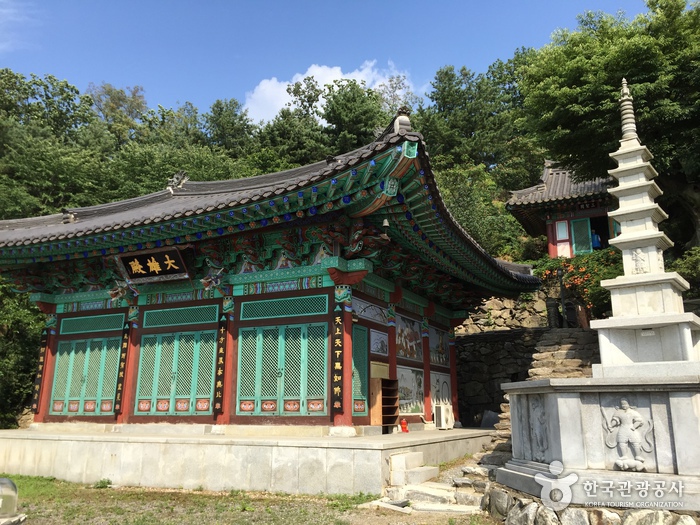
Manggyeongam Hermitage (망경암)
17.5Km 2021-04-24
72, Taepyeong-ro 55beon-gil, Sujeong-gu, Seongnam-si, Gyeonggi-do
+82-31-753-3090
Manggyeongam’s name derives from the hermitage's view of Seoul, and is located in Bokjeong-dong of Seongnam, Gyeonggi-do. Manggyeongam
Hermitage is said to be the place where kings of the late Goryeo and early Joseon periods prayed for peace for their subjects. In addition, Prince Pyeongwon, the 7th son of King Sejong, and Grand Prince Jean built an altar at Mangyeongam Hermitage and Chilseongdae Peak and pledged filial piety.
The hermitage is more widely known for its connection to the Chilseong faith, in which believers worship
Chilseong (the Seven Stars). It is easily recognized by the written records inscribed into the rock wall. Located at the hermitage is the Rock-carved Seated Buddha, an original work of the hermitage that is also designated Gyeonggi-do’s Tangible Cultural Asset No. 102. The Buddha is embossed inside a deep hole in the rock. In the words inscribed near the statue, there is also a legend that says Lee Gu-seung carved Gwaneum Statue near Rock-carved Seated Buddha and built the hermitage in 1897.
Next to the hermitage is a pond called “Bokumul,”
which means “blessed sugared water.” The neighborhood of Bojeong-dong takes its name from this pond. At the hermitage, Daeungjeon Hall (the main hall), Samseonggak Shrine (shrine for three spirits), and Mireukjeon Hall were all established fairly recently. The hermitage site also includes a huge Mireuk Daebul statue (Great State of Maitreya Buddha) and a five-story stone pagoda.
![Olive Young - Hoeryong Station Branch [Tax Refund Shop] (올리브영 회룡역)](http://tong.visitkorea.or.kr/cms/resource/82/2881282_image2_1.jpg)
Olive Young - Hoeryong Station Branch [Tax Refund Shop] (올리브영 회룡역)
17.6Km 2024-04-17
1F, 99, Oemi-ro, Uijeongbu-si, Gyeonggi-do
-
![Lotte Mart - Jangam Branch [Tax Refund Shop] (롯데마트 장암점)](http://tong.visitkorea.or.kr/cms/resource/28/2881328_image2_1.jpg)
Lotte Mart - Jangam Branch [Tax Refund Shop] (롯데마트 장암점)
17.6Km 2024-04-22
224, Janggok-ro, Uijeongbu-si, Gyeonggi-do
-

Pizzeria Hyoinbang (피자성효인방)
17.7Km 2024-03-20
83-5 Gwonyul-ro, Jangheung-myeon, Yangju-si, Gyeonggi-do
Pizzeria Hyoinbang, which opened in the 1980s, is distinctively housed in a refurbished Korean traditional house with a tile roof. Unlike ordinary pizzerias, it offers Korean-style pizzas with unique toppings like bulgogi and crusts made with mugwort and sweet potato. Its savory yet not overly salty pizzas have captivated people's palates, enticing many to return multiple times.
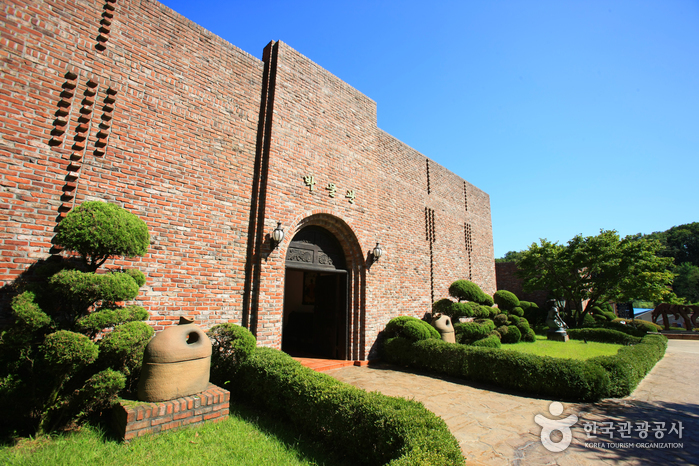
The Latin American Cultural Center Museum (중남미문화원)
17.7Km 2022-12-29
33-15, Daeyang-ro 285beon-gil, Deogyang-gu, Goyang-si, Gyeonggi-do
+82-31-962-7171
The Latin American Cultural Center Museum was established in 1994 to inform visitors about the culture and arts of Latin America. The museum exhibits artifacts from the Maya, Aztec, Inca, and early colony period that represents Latin America, as well as paintings, sculptures, traditional cloth and more from artists that represents the region. The Sculpture Park showcases pieces from 12 contemporary artists throughout the park, walking trail and rest area. In 2011, Religion Exhibition Hall opened which has a large mural and stain glass that is 24 meters in x_width and 5 meters in x_height.
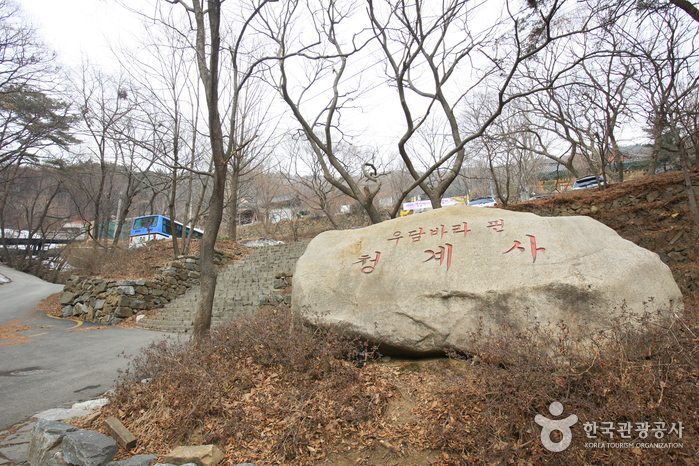
Gyeonggi Cheonggyesa Temple (청계사(경기))
17.7Km 2021-11-23
475, Cheonggye-ro, Uiwang-si, Gyeonggi-do
+82-31-345-2533
Cheonggyesa Temple is a Buddhist temple near Baegunhosu Lake that became well-known as the site of udumbara flower, a rarity that blooms on Buddhist statues. Built during the Silla Kingdom, the temple offers many sights, including the Cheonggyesa Temple Monument, Geungnakjeon Hall, the bell tower, Samseonggak Shrine, Ksitigarbha Hall, and Gamnoji Pond. Among the many things to see, visitors should not miss a glimpse of the Bronze Bell of Cheonggyesa Temple and the Wood Printing Block in Cheonggyesa Temple. Created in the 27th year of the reign of King Sukjong (1701) of the Joseon dynasty, the Bronze Bell has been designated as a national treasure, and is adorned with elaborate patterns.
Olive Young - Goyang Wondang Branch [Tax Refund Shop] (올리브영 고양원당점)
17.8Km 2024-06-27
6, Hoguk-ro 789beon-gil, Deogyang-gu, Goyang-si, Gyeonggi-do
-
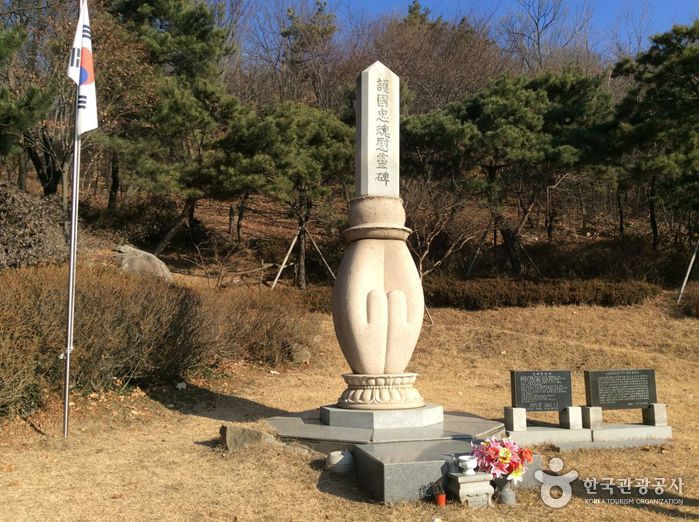
Memorial to the Loyal Dead (호국충혼위령비)
17.8Km 2025-01-13
56-33, Gaehwadong-ro 13-gil, Gangseo-gu, Seoul
+82-2-2125-0848
When the fate of the nation was hanging by a thread as the North Korean Army launched an invasion of the South on June 25, 1950, about 1,100 officers and men from
the South Korean First Division's 11th, 12th, and 15th regiment retreated to Gimpo and built the last line of defense on Gaehwasan Mountain from June 26 to 30 to fight against a large army
of North Korean soldiers disguised as South Korean men.
Unfortunately, their communication with the headquarters was
cut off and their supply of ammunition and food ran out. As a result, the entire South Korean force was killed by the much larger North Korean army
in a valley around Gaehwasan Mountain. In order to commemorate those who died for the country, the government established the
Memorial to the Loyal Dead on Gaehwasan Mountain in 1994. A memorial service is
also held here annualy on June 28th.
x_height: 4.7 meters high
Built by the First Division of the ROK Army, Mitasa Temple
Galaxy - Lotte Gimpo Airport Branch [Tax Refund Shop] (갤럭시 롯데 김포점)
17.9Km 2024-04-23
38, Haneul-gil, Gangseo-gu, Seoul
-
 English
 한국어
한국어 日本語
日本語 中文(简体)
 Deutsch
 Français
 Español
 Русский


