![Enter 6 - Wangsimni Station Branch [Tax Refund Shop] (㈜엔터식스 왕십리역사점)](http://tong.visitkorea.or.kr/cms/resource/91/2890691_image2_1.jpg)
Enter 6 - Wangsimni Station Branch [Tax Refund Shop] (㈜엔터식스 왕십리역사점)
3.1Km 2024-04-16
B1/F1, 17, Wangsimnigwangjang-ro, Seongdong-gu, Seoul
-

Olens - Wangsimni Station Branch [Tax Refund Shop] (오렌즈 왕십리역)
3.1Km 2024-04-22
2F, #2-Ga, 17, Wangsimnigwangjang-ro, Seongdong-gu, Seoul
-
E-Mart - Wangsimni Branch [Tax Refund Shop] (이마트 왕십리)
3.1Km 2024-04-22
17, Wangsimnigwangjang-ro, Seongdong-gu, Seoul
-
Olive Young - ENTER 6 Wangsimni Station Branch [Tax Refund Shop] (올리브영 왕십리엔터식스)
3.1Km 2024-04-22
17, Wangsimnigwangjang-ro, Seongdong-gu, Seoul
-
Olive Young - Wangsimni Station Branch [Tax Refund Shop] (올리브영 왕십리역사점)
3.1Km 2024-06-27
2F, 17, Wangsimnigwangjang-ro, Seongdong-gu, Seoul
-
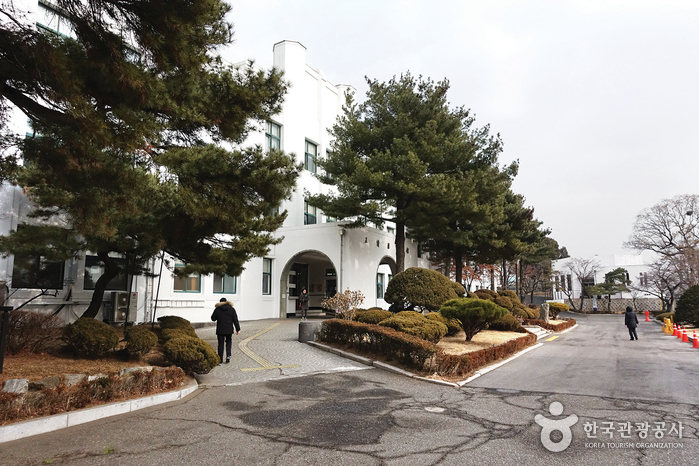
Jeongdok Library (서울특별시교육청 정독도서관)
3.1Km 2021-05-08
48, Bukchon-ro 5-gil, Jongno-gu, Seoul
+82-2-2011-5799
Jeongdok Library opened in January 1977 on the former site of the Gyeonggi High School in Bukchon, Jongno-gu, Seoul. As a public city library, it boasts little under half a million books and 16,300 reference materials. The Seoul Education Museum in the library houses a collection of 12,000 reference materials.
In addition to basic library functions (lending books and offering archives and reading rooms to the public), the library runs various cultural programs such as monthly lectures by invited authors, photo exhibitions, reading seminars, and music/dance performances.
Artee Riders Club (아띠인력거)
3.1Km 2022-09-15
43, Bukchon-ro 5-gil, Jongno-gu, Seoul
+82-1666-1693
Artee Riders Club is the first company that offers rickshaw tours in the nation. Not only do you get to ride on the rickshaw to tour around popular attractions including Bukchon Village, Seochon Village, the rickshaw tour guides you to the smaller alleys as well. Travelers to Bukchon Village may have their belongings or luggage stored at the center, and individual's insurance as well as a complimentary drink are offered.
Lee Ri-Ja Hanbok Museum (이리자 한복전시관)
3.1Km 2022-08-08
20, Samcheong-ro, Jongno-gu, Seoul
+82-2-734-9477
The Lee Ri-Ja Hanbok Museum displays the traditional clothing worn in Korea from birth to death. All hanbok displayed at the museum are created by the hanbok designer Lee Ri-Ja herself, who has over 40 years of experience.
Persian Palace (페르시안궁전)
3.1Km 2024-03-18
9 Sungkyunkwan-ro 6-gil, Jongno-gu, Seoul
+82-2-763-6050
Persian Palace is a restaurant specializing in Indian cuisine and Iranian kebabs, run by an Iranian chef. They offer set menus such as lamb curry, spinach curry, and butter chicken, which can be enjoyed with tandoori nan. The spiciness of the curry can be adjusted, and they also have vegan options available. For dessert, they serve Persian homemade desserts like mast (Persian yogurt) and saffron ice cream. They provide halal food and prayer rooms for Muslims.
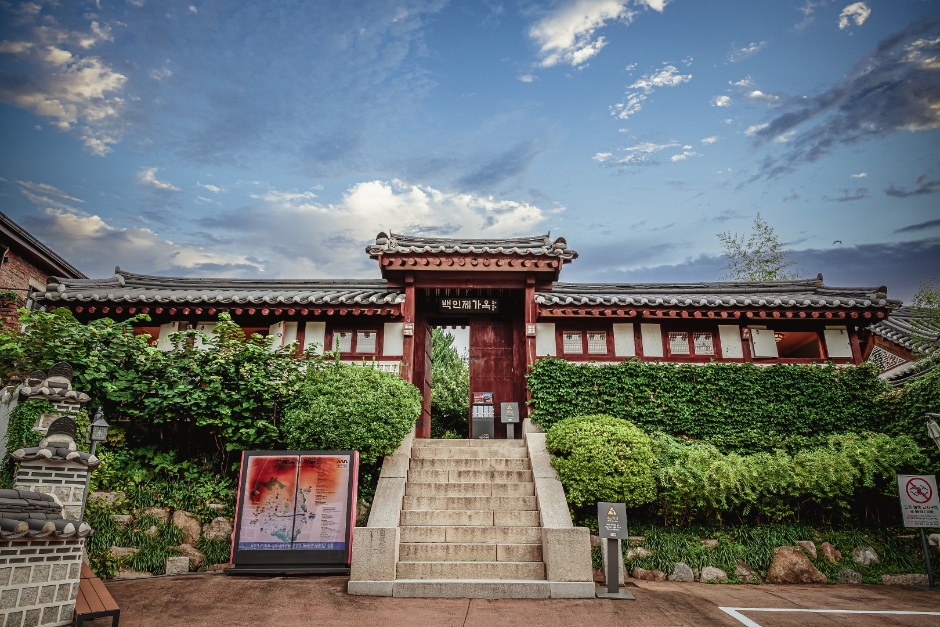
Baek In-je House (백인제가옥)
3.1Km 2025-10-24
16 Bukchon-ro 7-gil, Jongno-gu, Seoul
+82-2-724-0200
Baek In-je House, located in Bukchon Hanok Village, is a hanok built during the Japanese administration period that portrays modern hanok features. The structure consists of a main room offering a good view of the whole village, spacious bedrooms, a large garden, and annex buildings. As it maintains the beauty of a traditional hanok while incorporating the modern trend of its time, Baek In-je House is considered to be highly valuable in means of both architecture and history, representing the Bukchon Hanok Village together with Yun Bo-seon House.
Baek In-je House was built from black pine, which was first introduced in Seoul during the Gyeongseong Expo in 1907, distinguishing itself from other upper-class houses of its time. Unlike other traditional hanok designs that separate the main building from the other rooms, Baek In-je House connects the two with a hallway, allowing convenient access between the two structures. The house also consists of a Japanese-style hallway and floor mat rooms, reflecting the interior trends of that period. Baek In-je House is also unique in that the main room is partially built as a two-story structure, a style that was never seen in any traditional hanok built during the Joseon period.
 English
 한국어
한국어 日本語
日本語 中文(简体)
 Deutsch
 Français
 Español
 Русский


