
![New Kaist Eyewear [Tax Refund Shop] (뉴카이스트안경원)](http://tong.visitkorea.or.kr/cms/resource/81/2878581_image2_1.jpg)
New Kaist Eyewear [Tax Refund Shop] (뉴카이스트안경원)
2.7Km 2024-04-22
12-2, Namdaemunsijang 4-gil, Jung-gu, Seoul
-
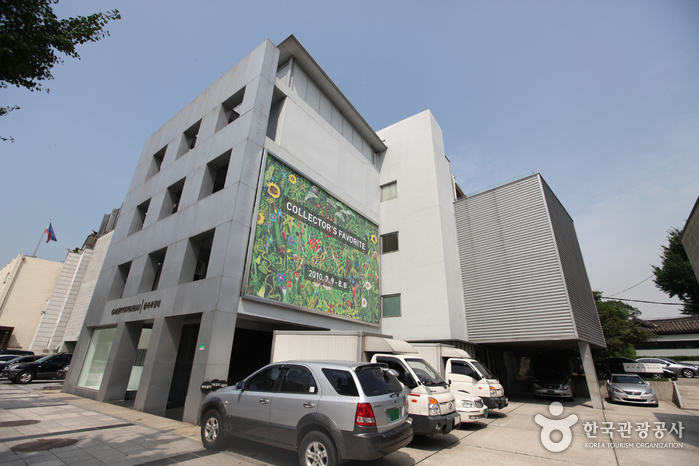
Gallery Hyundai (갤러리 현대)
2.7Km 2021-03-18
14, Samcheong-ro, Jongno-gu, Seoul
+82-2-2287-3500
Gallery Hyundai has been improving daily for over 40 years since April 1970, working closely with various Korean artists in modern art. Gallery Hyundai introduces varied artists including prominent artists, as well as up-and-coming artists, regardless of genre through sophisticated exhibitions, showing domestic and overseas art all in one place.
Dugahun (두가헌)
2.7Km 2024-03-20
23 Yulgok-ro 1-gil, Jongno-gu, Seoul
+82-2-3210-2100
Dugahun is a wine restaurant near Gyeongbokgung Palace, meaning "a very beautiful house." Located in a traditional hanok from the 1910s, it offers a taste of Western culture with wine. Only lunch and dinner courses are available, and customers can select wines from the underground wine cellar or bring their own. Across the street, Gallery Dugahun, housed in a historic Russian-style brick building built in the late period of Joseon, showcases high-quality art pieces.
Lee Ri-Ja Hanbok Museum (이리자 한복전시관)
2.7Km 2022-08-08
20, Samcheong-ro, Jongno-gu, Seoul
+82-2-734-9477
The Lee Ri-Ja Hanbok Museum displays the traditional clothing worn in Korea from birth to death. All hanbok displayed at the museum are created by the hanbok designer Lee Ri-Ja herself, who has over 40 years of experience.
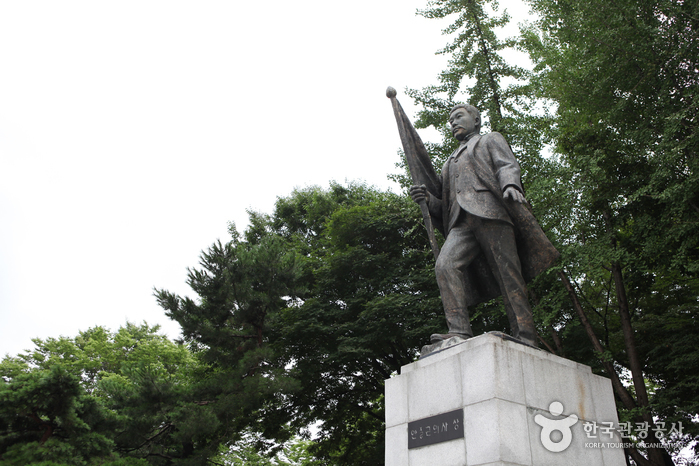
Ahn Junggeun Memorial Museum (안중근의사기념관)
2.7Km 2024-03-06
91, Sowol-ro, Jung-gu, Seoul
82-2-3789-1016
The Ahn Junggeun Memorial Museum honors the memory of Ahn Junggeun (1879-1910), an independence activist and soldier who advocated for Korean independence and peace in Asia. He fought against the Japanese to defend the Korean Empire (1897-1910). He was executed in 1910 for assassinating Hirobumi Ito, the Japanese who led the invasion of Korea in 1909, in Harbin, China.
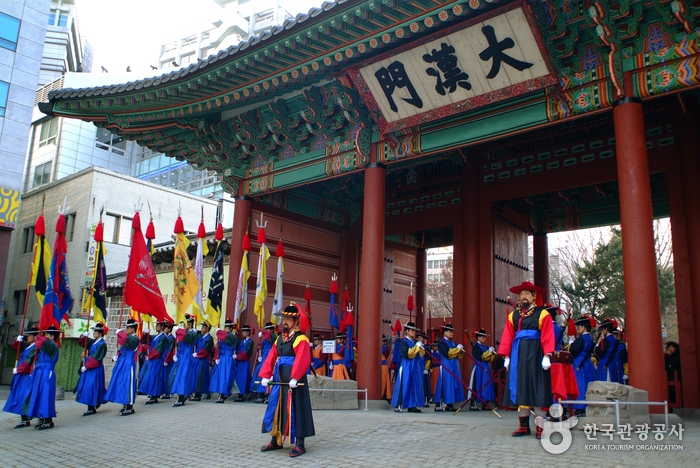
Deoksugung Palace Royal Guard Changing Ceremony (덕수궁 왕궁수문장교대의식)
2.8Km 2025-07-11
99, Sejong-daero, Jung-gu, Seoul
• 1330 Travel Hotline: +82-2-1330 (Korean, English, Japanese, Chinese) • For more info: +82-2-737-6444
Deoksugung Palace has held a guard changing ceremony since 1996 after thorough historical research by leading historians. The ceremony, which is held in front of Daehanmun Gate of Deoksugung Palace, is a tradition similar to the Changing of the Guards at Buckingham Palace and offers a rare opportunity to experience royal culture. The royal gate is opened and closed at pre-determined times, and the gatekeepers in charge of guard duty and patrols hold a shift ceremony three times a day.
The Royal Guard Changing Ceremony is a highly recommended event for tourists. It is held three times a day, with each ceremony following the same procedure and lasts for forty minutes to an hour, and the ceremony is free of charge. There are no ceremonies on Mondays as well as on severely cold or hot days.
As the ceremony begins, the changing of the guards commences replete with traditional musical instruments, and exchanges a password for verification. An eight-minute guard ceremony ensues, followed by a seven-minute change ceremony, and finally a patrol that completes the ceremony. The procedure takes a dramatic turn when 18 guards in six official positions beat a drum and bellow some orders.
The Royal Guard Changing Ceremony is a great opportunity to experience a rare traditional scene. The guards’ splendid costumes, with their brilliant primary colors, are a pleasure to view. Once the ceremony is over, visitors can take pictures with the gatekeepers.
Honam Sikdang (호남식당)
2.8Km 2024-03-15
18-6, Namdaemunsijang-gil, Jung-gu, Seoul
+82-2-775-5033
Honam Sikdang is a specialty restaurant for galchi jorim (braised cutlassfish) located in Namdaemun Market. Its signature dish is the spicy and flavorful galchi jorim, known for its robust broth. Another popular dish is the deeply seasoned godeungeo jorim (braised mackerel), which is boiled until the seasoning is well absorbed. A highlight of dining here is the crispy deep-fried cutlassfish served upon ordering. Its cozy atmosphere attracts many visitors seeking a hearty meal.
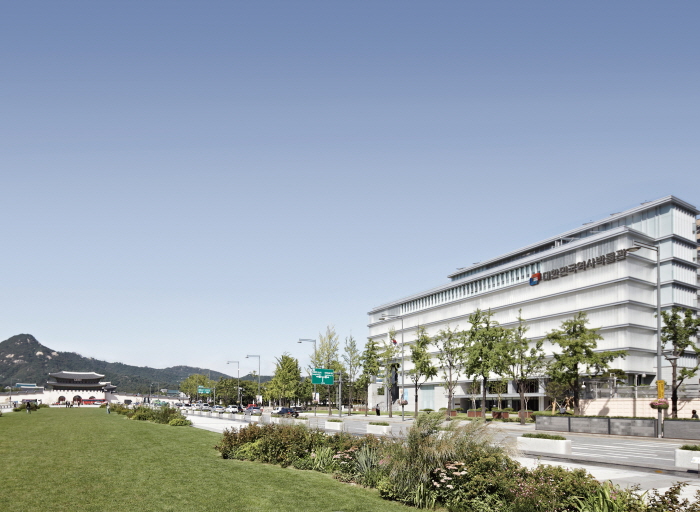
National Museum of Korean Contemporary History (대한민국역사박물관)
2.8Km 2022-12-27
198, Sejong-daero, Jongno-gu, Seoul
+82-2-3703-9200
The National Museum of Korean Contemporary History opened on December 26, 2012, and showcases Korea's modern history, from the opening of Incheon Port to current times. The museum provides an in-depth look at the changes in the nation through exhibitions and educational programs, as well as researching, developing, and collecting materials. The museum is comprised of four exhibition halls; Prelude to the Republic of Korea, Foundation of the Republic of Korea, Development of the Republic of Korea, and Modernization of South Korea, toward the World. In addition, the Korean History Dream Village features a hands-on program hall for children to learn modern and contemporary history. In addition to special exhibitions, the museum also offers educational and cultural programs for children.
![Namsi Glasses [Tax Refund Shop] (남시안경)](http://tong.visitkorea.or.kr/cms/resource/21/3314721_image2_1.jpg)
 English
 한국어
한국어 日本語
日本語 中文(简体)
 Deutsch
 Français
 Español
 Русский


