
Jinju Hoegwan (진주회관)
8.3Km 2024-06-19
26 Sejong-daero 11-gil, Jung-gu, Seoul
+82-2-753-5388
Jinju Hoegwan is a renowned kongguksu (noodles in cold soybean soup) eatery near City Hall Station. Kongguksu is a traditional Korean summer dish made by boiling and grinding soybeans into a creamy broth, served with noodles, offering a refreshing and nutty flavor. Kongguksu is available from March to November. Their staff-recommended menu includes kimchi bokkeumbap (kimchi fried rice), freshly roasted by the staff, along with kimchi jjigae and samgyeopsal (pork belly).
Good Morning Eyewear [Tax Refund Shop] (굿모닝안경)
8.4Km 2024-04-22
61, Namdaemunsijang-gil, Jung-gu, Seoul
-
E-Mart - Wangsimni Branch [Tax Refund Shop] (이마트 왕십리)
8.4Km 2024-04-22
17, Wangsimnigwangjang-ro, Seongdong-gu, Seoul
-
Olive Young - ENTER 6 Wangsimni Station Branch [Tax Refund Shop] (올리브영 왕십리엔터식스)
8.4Km 2024-04-22
17, Wangsimnigwangjang-ro, Seongdong-gu, Seoul
-
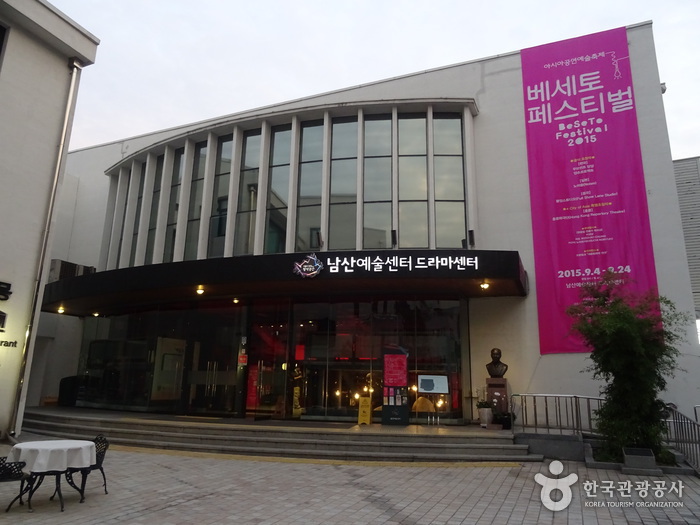
Namsan Arts Center (남산예술센터)
8.4Km 2021-08-26
138, Sopa-ro, Jung-gu, Seoul
+82-2-758-2150
Namsan Arts Center, reopened as a creative space in Seoul in September 2009. It redefined the colors and characteristics of the theater, aiming for a modern theater production center centered on creative premieres, a contemporary performance venue where visitors can feel the pulse of the times, and a theater capable of various experiments.
Namsan Arts Center Drama Center is the first modern folk theater in Korea and the oldest performance hall in which the original architectural form has been preserved. Under the concept of "Contemporary & New Wave," the center continues to produce domestic original plays, and through active exchanges with excellent overseas theaters, build a repertoire of high-quality works that can read domestic and overseas trends, and present contemporary cultural diversity.
Geumdwaeji Sikdang (금돼지식당)
8.4Km 2025-10-28
149 Dasan-ro, Jung-gu, Seoul
Geumdwaeji Sikdang is renowned as one of the top three pork restaurants in Seoul, specializing in pork dishes. Its signature menu item is the nunkkon moksal (grilled pork shoulder), known for its marbled appearance resembling snowflakes. Bonsamgyeop (grilled bone-in pork belly) and deungmoksal (short loin and pork shoulder) are also popular choices. They offer fragrant basil wraps as a side dish, which perfectly complements the slightly grilled basil with the juicy and flavorful meat, creating a harmonious taste sensation that is considered a delicacy at this establishment.
![ABC Mart - Sangbong Branch [Tax Refund Shop] (ABC마트 상봉점)](http://tong.visitkorea.or.kr/cms/resource/40/3314140_image2_1.jpg)
ABC Mart - Sangbong Branch [Tax Refund Shop] (ABC마트 상봉점)
8.4Km 2024-06-27
353, Mangu-ro, Jungnang-gu, Seoul
-
![Golfzon Market - Yaksu Branch [Tax Refund Shop] (골프존마켓 약수)](http://tong.visitkorea.or.kr/cms/resource/43/2878743_image2_1.jpg)
Golfzon Market - Yaksu Branch [Tax Refund Shop] (골프존마켓 약수)
8.4Km 2024-04-19
214, Dongho-ro, Jung-gu, Seoul
-
![Louis Bon - Myeong-dong Branch [Tax Refund Shop] (루이본 명동)](http://tong.visitkorea.or.kr/cms/resource/50/2889050_image2_1.jpg)
Louis Bon - Myeong-dong Branch [Tax Refund Shop] (루이본 명동)
8.4Km 2024-04-22
#101, 37, Toegye-ro 20-gil, Jung-gu, Seoul
-
 English
 한국어
한국어 日本語
日本語 中文(简体)
 Deutsch
 Français
 Español
 Русский


