
Isae - Insa Branch (No. 2) [Tax Refund Shop] (이새 인사2호)
2.8Km 2024-04-18
30-1, Insadong-gil, Jongno-gu, Seoul
-
![Kaist Optical Shop [Tax Refund Shop] (카이스트안경)](http://tong.visitkorea.or.kr/cms/resource/47/2878647_image2_1.jpg)
Kaist Optical Shop [Tax Refund Shop] (카이스트안경)
2.8Km 2024-04-22
49, Myeongdong 2-gil, Jung-gu, Seoul
-
Insa-dong Maneul Bossam (인사동마늘보쌈)
2.8Km 2024-03-18
12-5 Insadong 8-gil, Jongno-gu, Seoul
+82-2-735-7885
Insa-dong Maneul Bossam is a Korean restaurant nestled in the alleys of Insa-dong. Specializing in dishes like maneul bossam (kimchi cabbage wraps with pork and garlic), kimchi jjim (braised kimchi), nakji bokkeum (stir-fried octopus), buchujeon (chive pancake), kimchijeon (kimchi pancake), yeolmu naengmyeon (cold buckwheat noodles with young summer radish kimchi), and bam makgeolli (unrefined chestnut rice wine). Their signature dish, the bossam jeongsik (kimchi cabbage wraps with pork set menu), features pork belly boiled in a secret broth, served with a sweet garlic sauce for dipping, along with seaweed soup, fresh vegetables for wrapping, dried radish salad, and side dishes. They also offer set menus for two people, and neomu hansang set menu.
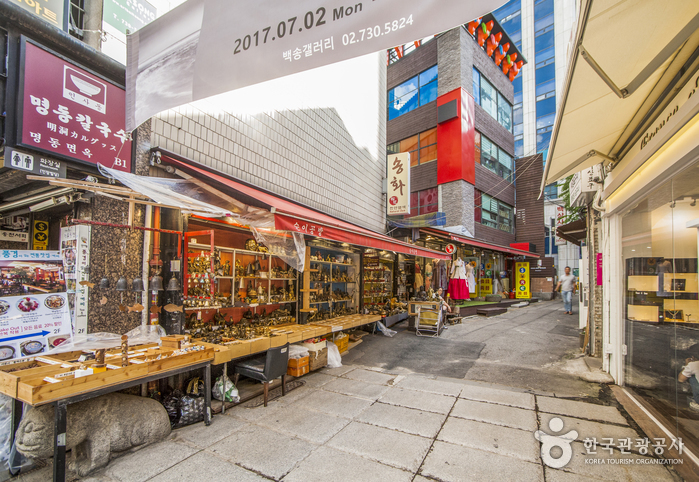
Insa-dong Antique Art Street (인사동 고미술거리)
2.8Km 2025-03-16
29 Insadong-gil, Jongno-gu, Seoul
+82-2-732-2235
As of today, there are approximately 70 shops in the Insa-dong area that sell antique arts. Some of the products they sell include antique artworks, porcelains, woodcrafts, and metalwork. Visitors may even find rare and valuable products such as earthenware from the Silla period or white porcelain used in the Joseon dynasty. Each shop is a specialty store, authorized to sell product types that are of their expertise, ranging from antique furniture and traditional artworks to handcrafted items.
Korea University Anam Hospital (고려대학교 안암병원)
2.8Km 2025-10-23
73 Goryeodae-ro, Seongbuk-gu, Seoul
As a premier medical institution at the forefront of Korea's healthcare system, Korea University Anam Hospital integrates cutting-edge technologies into clinical practice. Our focus on precision medicine drives excellence in cancer and cardiovascular disease treatment, offering safe and accurate medical services through state-of-the-art robotic surgery and multidisciplinary care.
Our commitment to patient-centered care is evident in our ongoing investments to enhance our systems and capabilities. In 2008, we established the International Medical Center to serve our growing number of international patients better.
The International Medical Center offers services in English, Russian, Mongolian, and Arabic, ensuring that language barriers do not impede quality care. Additionally, our nutrition team develops global meal plans tailored to the diverse dietary needs of our international patients. For added convenience, we provide airport pick-up services, making the journey to our hospital as smooth as possible.
Namsan Cable Car (남산 케이블카)
2.8Km 2024-10-25
83 Sopa-ro, Jung-gu, Seoul
+82-2-753-2403
Namsan Cable Car provides a panoramic view of downtown Seoul. The cable car has been in operation for over 40 years, taking tourists and residents alike to Namsan Seoul Tower, one of the most representative tourist attractions in the city.
Choedaegamne (최대감네)
2.8Km 2024-03-18
12-3 Insadong 8-gil, Jongno-gu, Seoul
+82-2-733-9355
Choedaegamne is a traditional Korean restaurant located in a hanok in Insa-dong, with a garden and a pond, and has been in operation for over 100 years. One of their popular dishes is the sangchu shabu jeongsik (shabu with rice in a cabbage set menu), where vegetables and meat are cooked in a broth and then enjoyed with noodles, served with a small rice ball on lettuce. They also offer a so galbijjim jeongsik (steamed beef ribs set menu) and bulgogi jeongsik (bulgogi set menu), served with lotus leaf rice and soybean paste jjigae. After the meal, guests can enjoy tea in the garden.
![Changdeokgung Palace Complex [UNESCO World Heritage Site] (창덕궁과 후원 [유네스코 세계유산])](http://tong.visitkorea.or.kr/cms/resource/03/3092503_image2_1.jpg)
Changdeokgung Palace Complex [UNESCO World Heritage Site] (창덕궁과 후원 [유네스코 세계유산])
2.8Km 2025-07-21
99 Yulgok-ro, Jongno-gu, Seoul
Changdeokgung Palace was the second royal villa built following the construction of Gyeongbokgung Palace in 1405. It was the principal palace for many kings of the Joseon dynasty, and is the most well-preserved of the five remaining royal Joseon palaces. The palace grounds are comprised of a public palace area, a royal family residence building, and the rear garden. Known as a place of rest for the kings, the rear garden boasts a gigantic tree that is over 300 years old, a small pond and a pavilion.
The palace gained importance starting from the time of Seongjong, the 9th king of Joseon, when a number of kings began using it as a place of residence. Unfortunately, the palace was burned down by angry citizens in 1592 when the royal family fled their abode during the Imjin War. Thanks to Gwanghaegun, the palace was restored in 1611. Even today, it houses a number of cultural treasures, such as Injeongjeon Hall, Daejojeon Hall, Seonjeongjeon Hall, and Nakseonjae Hall.
Changdeokgung Palace’s garden behind the inner hall, called the "Secret Garden," was constructed during the reign of King Taejong and served as a rest area for the royal family members. The garden had formerly been called Bugwon and Geumwon, but was renamed Biwon Garden, or Secret Garden, after King Gojong came into power. The garden was kept as natural as possible and was touched by human hands only when absolutely necessary. Buyongjeong Pavilion, Buyongji Pond, Juhamnu Pavilion, Eosumun Gate, Yeonghwadang Hall, Bullomun Gate, Aeryeonjeong Pavilion, and Yeongyeongdang Hall are some of the many attractions that occupy the garden. The most beautiful time to see the garden is during the fall when the autumn foliage is at its peak and the leaves have just started to fall.
Though it has been treasured by Koreans for centuries, Changdeokgung Palace and its complex was recognized as a World Cultural Heritage site by the UNESCO World Cultural Heritage Committee in December of 1997 during the committee meeting in Naples, Italy.
National Souvenirs Center [Tax Refund Shop] (한국관광명품점)
2.9Km 2024-04-23
14, Insadong 5-gil, Jongno-gu, Seoul
-
![Olens - Myeong-dong Embassy Branch [Tax Refund Shop] (오렌즈 명동대사관점)](http://tong.visitkorea.or.kr/cms/resource/05/2878605_image2_1.jpg)
Olens - Myeong-dong Embassy Branch [Tax Refund Shop] (오렌즈 명동대사관점)
2.9Km 2024-04-22
50, Myeongdong 2-gil, Jung-gu, Seoul
-
 English
 한국어
한국어 日本語
日本語 中文(简体)
 Deutsch
 Français
 Español
 Русский


