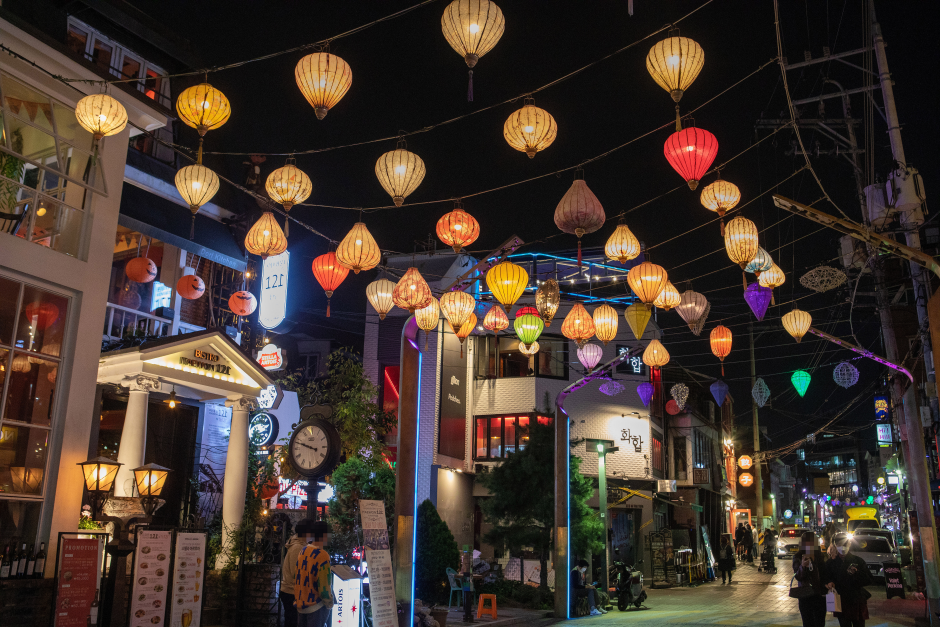
Itaewon Shopping Street (이태원 쇼핑거리)
3.9Km 2025-03-29
Itaewon-dong, Yongsan-gu, Seoul
+82-2-797-7319
Itaewon Shopping Street is a 1.4-kilometer-long road located near Itaewon Station. There is an enormous variety of shops, entertainment venues, and restaurants lined along both sides of the street. As the neighborhood has a reputation as a mini melting pot in Seoul where languages other than Korean are widely spoken, it is one of the most visited places by international visitors. It has become a gateway for many international visitors to receive services and information on basic tourist needs such as accommodations, shopping, tourist attractions, and more.

Bukjeong Village (북정마을)
3.9Km 2024-02-15
132-3 Seongbuk-ro 23-gil, Seongbuk-gu, Seoul
Bukjeong Village, situated along the slopes of Seongbuk-dong, offers a glimpse into Korea's old alleyways. The village expanded as refugees from the Korean War (1950–1953) and people from various regions settled, building houses under the collapsed walls of Hanyang doseong (Seoul City Wall). Presently, the village is home to young artists, and the broad street in front of the village bus stop hosts various community events.
![TUBAn [Tax Refund Shop] (주식회사 투바앤)](http://tong.visitkorea.or.kr/cms/resource/47/2890647_image2_1.jpg)
TUBAn [Tax Refund Shop] (주식회사 투바앤)
3.9Km 2024-04-23
1955, Goyang-daero, Deogyang-gu, Goyang-si, Gyeonggi-do
-
Olive Young - Plus Branch [Tax Refund Shop] (올리브영 플러스점)
3.9Km 2024-06-27
#B114~#B115, 372, Hangang-daero, Yongsan-gu, Seoul
-
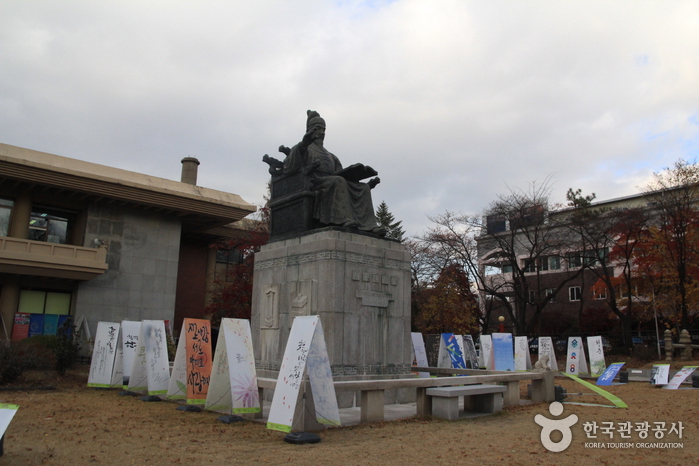
King Sejong The Great Museum (세종대왕박물관)
3.9Km 2024-03-08
56, Hoegi-ro, Dongdaemun-gu, Seoul
+82-2-969-8851
King Sejong The Great Museum is a cultural complex located in the heart of Seoul, near Gwanghwamun Plaza.The Hangeul Room exhibits documents published during the reign of King Sejong, the Science Room displays Cheugugi and celestial planisphere, and the Korean Traditional Music Room showcases various traditional Korean musical instruments. The Biography Room features Portrait of King Sejong and paintings depicting scenes from his life. Outdoors, there are statues of King Sejong, the scahe sundial, the clepsydra, and Cheugugi.
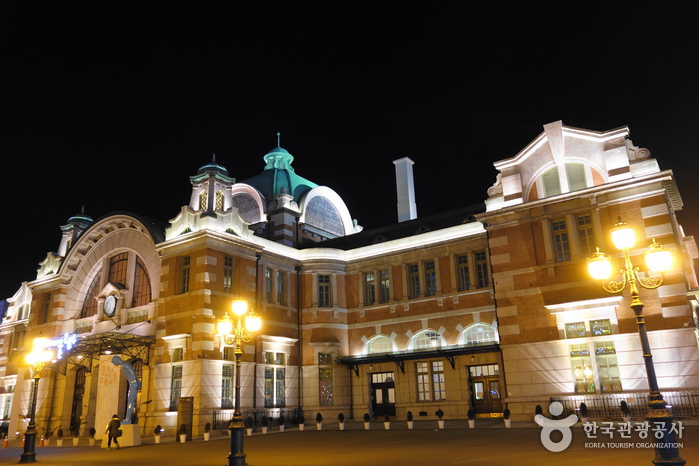
Culture Station Seoul 284 (문화역 서울 284)
4.0Km 2025-10-23
1 Tongil-ro, Jung-gu, Seoul
Culture Station Seoul 284 opened in 2011 by restoring the old Seoul Station. The complex holds various programs including exhibitions, performances, cultural events and workshops. It holds over 100 years of history with Namdaemun Station being the original name of the station in 1900 and changing to Gyeongseong Station, Seoul Station, and now Culture Station Seoul 284. The look of 1925 Gyeongseong Station offers visitors a flashback to the past, providing a fun and special experience.
◎ Travel information to meet Hallyu’s charm
This is where Mok-ha (played by Park Eun-bin) waited for Ki-ho (played by Chae Jong-hyeop) with flowers in the TV series "Castaway Diva." As the restored historic Seoul Station, it also appeared in "Reply 1994" as the location where Samcheonpo (played by Kim Sung Kyun) first arrived in Seoul.
![Converse [Tax Refund Shop] (컨버스)](http://tong.visitkorea.or.kr/cms/resource/76/2891176_image2_1.jpg)
![The Handsome Obzee - Lotte Seoul Station Branch [Tax Refund Shop] (한섬 오브제 롯데서울역)](http://tong.visitkorea.or.kr/cms/resource/19/2878419_image2_1.jpg)
The Handsome Obzee - Lotte Seoul Station Branch [Tax Refund Shop] (한섬 오브제 롯데서울역)
4.0Km 2024-04-23
405, Hangang-daero, Yongsan-gu, Seoul
-
![Lotte Mart - Seoul Station Branch [Tax Refund Shop] (롯데마트 서울역점)](http://tong.visitkorea.or.kr/cms/resource/40/2887940_image2_1.jpg)
Lotte Mart - Seoul Station Branch [Tax Refund Shop] (롯데마트 서울역점)
4.0Km 2024-04-22
426, Cheongpa-ro, Jung-gu, Seoul
-
![Daehyun Dewl - Lotte Seoul Station Branch [Tax Refund Shop] (대현 듀엘 롯데서울역)](http://tong.visitkorea.or.kr/cms/resource/96/2878396_image2_1.jpg)
Daehyun Dewl - Lotte Seoul Station Branch [Tax Refund Shop] (대현 듀엘 롯데서울역)
4.0Km 2024-04-17
405, Hangang-daero, Yongsan-gu, Seoul
-
 English
 한국어
한국어 日本語
日本語 中文(简体)
 Deutsch
 Français
 Español
 Русский


