![Brioni - The Shilla Hotel Branch [Tax Refund Shop] (브리오니 신라호텔)](http://tong.visitkorea.or.kr/cms/resource/89/2888989_image2_1.jpg)
Brioni - The Shilla Hotel Branch [Tax Refund Shop] (브리오니 신라호텔)
4.7Km 2024-04-23
The Shilla Hotel’s shopping arcade, 249, Dongho-ro, Jung-gu, Seoul
-
![Moynat - The Shilla Hotel Branch [Tax Refund Shop] (모이나 신라호텔)](http://tong.visitkorea.or.kr/cms/resource/73/2889673_image2_1.jpg)
Moynat - The Shilla Hotel Branch [Tax Refund Shop] (모이나 신라호텔)
4.7Km 2024-04-18
1F, 249, Dongho-ro, Jung-gu, Seoul
-
![Hermes - The Shilla Hotel Branch [Tax Refund Shop] (에르메스 신라호텔)](http://tong.visitkorea.or.kr/cms/resource/51/2889751_image2_1.jpg)
Hermes - The Shilla Hotel Branch [Tax Refund Shop] (에르메스 신라호텔)
4.7Km 2024-04-23
249, Dongho-ro, Jung-gu, Seoul
-
![Issey Miyake - The Shilla Hotel Branch [Tax Refund Shop] (이세이미야케 신라호텔)](http://tong.visitkorea.or.kr/cms/resource/54/2890154_image2_1.jpg)
Issey Miyake - The Shilla Hotel Branch [Tax Refund Shop] (이세이미야케 신라호텔)
4.7Km 2024-04-18
249, Dongho-ro, Jung-gu, Seoul
-
![Himart - Daechi Branch [Tax Refund Shop] (하이마트 대치점)](http://tong.visitkorea.or.kr/cms/resource/70/2889870_image2_1.jpg)
Himart - Daechi Branch [Tax Refund Shop] (하이마트 대치점)
4.8Km 2024-04-16
156, Samseong-ro, Gangnam-gu, Seoul
-
![Olive Young - Sinyongsan Station Branch [Tax Refund Shop] (올리브영 신용산역)](http://tong.visitkorea.or.kr/cms/resource/95/2888195_image2_1.jpg)
Olive Young - Sinyongsan Station Branch [Tax Refund Shop] (올리브영 신용산역)
4.8Km 2024-04-17
#101, and #102, 95, Hangang-daero, Yongsan-gu, Seoul
-
![Samsung Digital Plaza - Wangsimni Branch [Tax Refund Shop] (삼성 디지털 왕십리점)](http://tong.visitkorea.or.kr/cms/resource/44/2890544_image2_1.jpg)
Samsung Digital Plaza - Wangsimni Branch [Tax Refund Shop] (삼성 디지털 왕십리점)
4.8Km 2024-04-18
217, Gosanja-ro, Seongdong-gu, Seoul
-
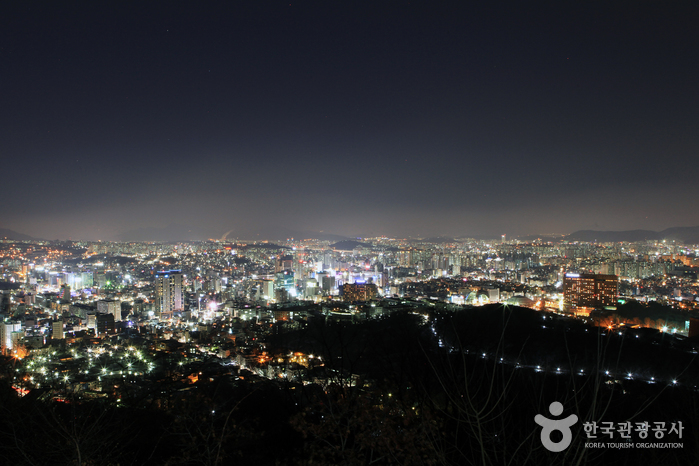
Seoul Namsan Park (남산공원(서울))
4.9Km 2024-03-18
231 Samil-daero, Jung-gu, Seoul
Namsan Mountain rises in the heart of Seoul at an altitude of 265 meters and has been a significant landmark since the Joseon dynasty (1392-1897), leaving behind several ruins. It was heavily damaged in the early 20th century, but was partially restored in 1968 with the creation of the park. Highlights include Namsan Tower and love locks left by numerous couples. Visitors can also easily reach the top by a cable car or bus.
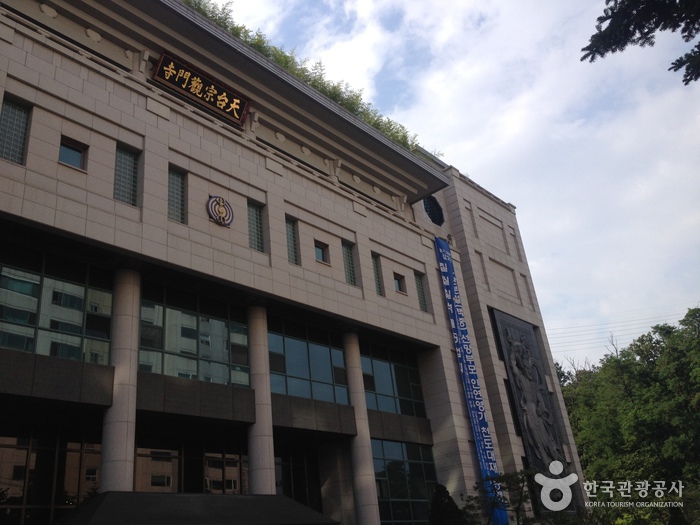
Seoul Gwanmunsa Temple (관문사(서울))
4.9Km 2021-06-01
111, Baumoe-ro 7-gil, Seocho-gu, Seoul
+82-2-3460-5300
Located at the foot of Umyeonsan Mountain in Seocho-gu, Seoul, Gwanmunsa Temple had its ground-breaking ceremony in 1993 and construction was completed in October 1998.
The temple site has a total area of 22,148.76 ㎡ with seven ground levels and four basement levels. The temple was constructed with a mixture of modern and traditional Buddhist architectural designs. Inside the temple, cutting-edge facilities are used for various cultural events, conferences, and sacred ceremonies.
Neighbored by Cheonggyesan Mountain, Umyeonsan Mountain, and Yangjaecheon Stream, the temple is located near many natural spots visitors can enjoy. In particular, Umyeonsan Mountain (alt. 293 m), where Gwanmunsa Temple is located, gets its name for its shape resembling a cow lying down. Designated as a city park and managed by Seoul Metropolitan Government, Umyeonsan Mountain has several valleys with clear spring waters and a dense forest inhabited by diverse animals and plants.
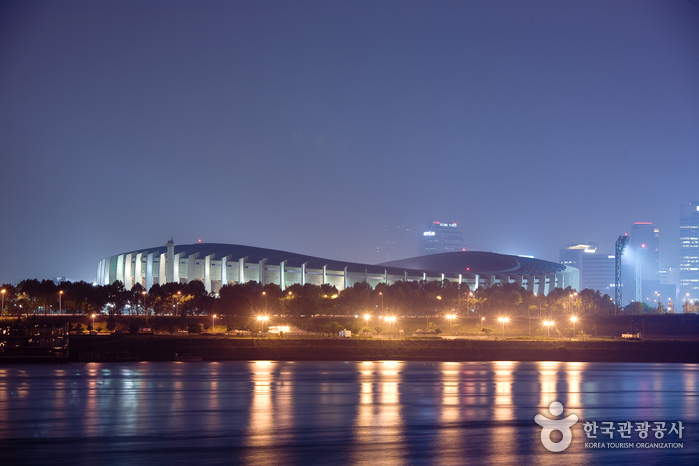
Seoul Sports Complex (Jamsil Sports Complex) (서울종합운동장(잠실종합운동장))
4.9Km 2024-12-02
25 Olympic-ro, Songpa-gu, Seoul
Seoul Sports Complex, located in Songpa, Seoul, hosted the 1986 Asian Games and the 1988 Summer Olympics. It consists of a main stadium, a baseball stadium, an indoor stadium, a students' gymnasium, an indoor swimming pool, and auxiliary stadiums. It serves as the venue for professional baseball and basketball games in Korea, as well as frequent K-pop concerts. Conveniently linked to subway lines 2 and 9, it offers easy access for visitors.
 English
 한국어
한국어 日本語
日本語 中文(简体)
 Deutsch
 Français
 Español
 Русский


