![S Market Kids [Tax Refund Shop] (S마켓키즈)](http://tong.visitkorea.or.kr/cms/resource/97/3314897_image2_1.jpg)
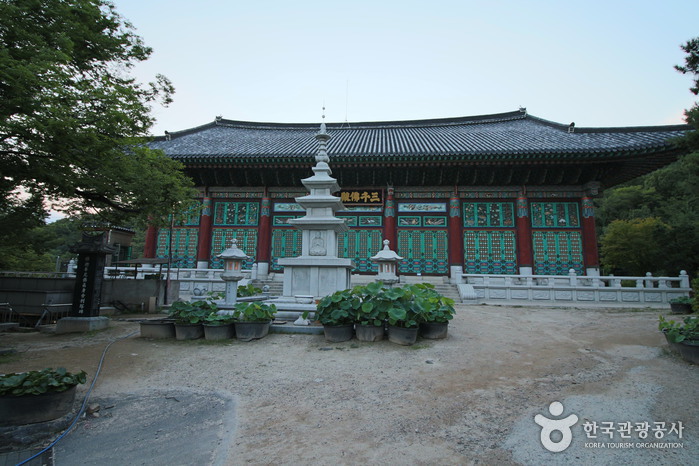
Bongwonsa Temple (봉원사)
8.9Km 2023-03-13
120, Bongwonsa-gil, Seodaemun-gu, Seoul
+82-2-392-3007
Located on the outskirts of Ansan Mountain in Bongwon-dong, Seodaemun-gu, Seoul, Bongwonsa Temple, as the center of Korean Buddhism Taego, is a thousand-year-old temple with a long history and tradition. In 889 (3rd year of Shilla Queen Jinseong’s reign), Monk Doseon founded it at the ground of Yeonhui Palace (now Yonsei Univ.) and named it Banyasa temple. It was destroyed during the Imjin War in 1592, and later in 1748 (the 24th year of Joseon King Yeongjo’s reign), it was rebuilt and renamed “Bongwonsa” by two Buddhist monks, Chanjeup and Jeungam.
“Yeongsanjae,” one of the Buddhist rituals and also a National Intangible Cultural Property, takes place at Bongwonsa on June 6 every year wishing for world peace and the reunification of North and South Korea. It was designated as one of the Intangible Cultural Heritage of Humanity by UNESCO in 2009. During Yeongsanjae, visitors can enjoy the Buddhist arts such as Beompae (Buddhist temple music for rituals) and dancing. Also, during summertime, Seoul Lotus Flower Culture Festival takes place, where visitors can enjoy the beautiful lotus flowers which are a symbol of Buddhism.
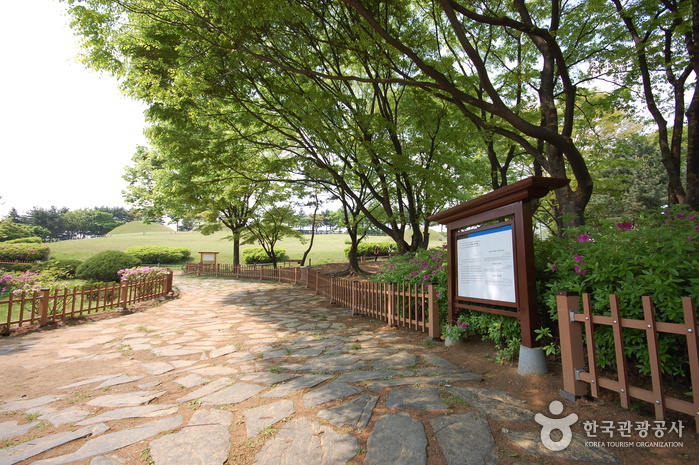
Seoul Bangidong Ancient Tombs (서울 방이동 고분군)
8.9Km 2022-12-29
219, Ogeum-ro, Songpa-gu, Seoul
+82-2-2147-2800
The ancient tombs in Bangi-dong were discovered during the land readjustment project of Jamsil-jigu District in 1975. A total of eight ancient tombs were excavated until 1976, and the site was restored into a park in 1983. The Bangi-dong area was originally a low line of hills with an altitude of 30-50 meters above sea level, but it has been made into flatland for urban development purposes. Tomb numbers 1 to 6 lie on the same hill, while tomb no. 7 and 8 are located on another hill a short distance away.
All eight tombs have circular burial mounds. The insides of the a tomb feature a square or rectangular-shaped burial chamber with earthen ground and stone walls, and a passage leading from the tomb entrance to the chamber. However, details of the burial chambers vary by tomb. Most of the tombs had been robbed before the investigation, but a few relics such as plates and pots have been excavated. At the time of excavation, the relics were presumed to have come from the Baekje dynasty (18 BC-660 AD), but it is now estimated that they date back to the Unified Silla Period (676-935 AD).
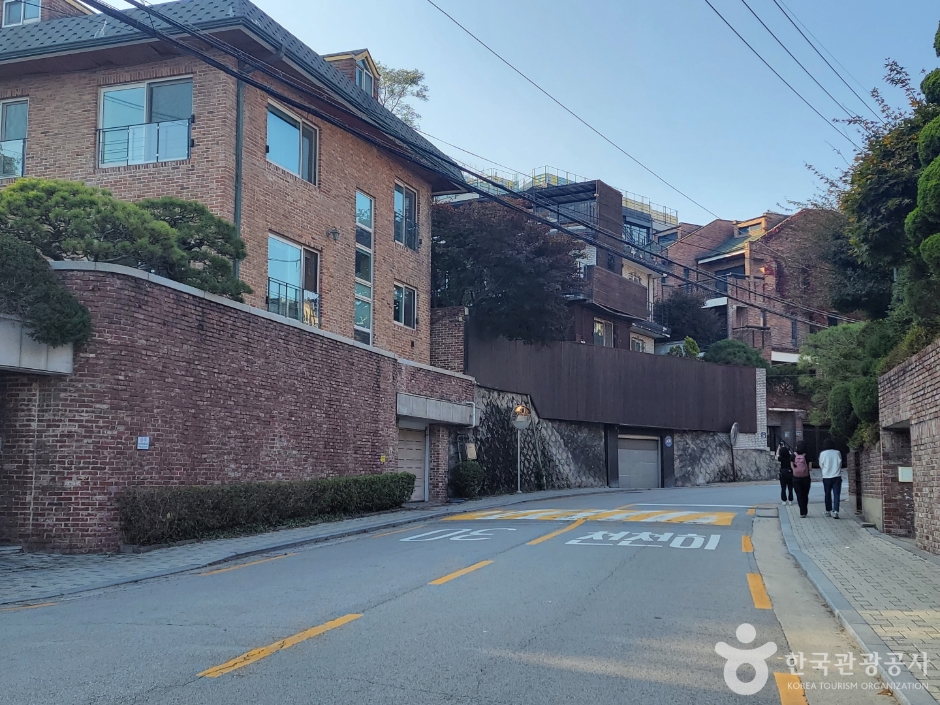
Seongbuk-dong–Bukchon Hanok Village Course (성북동고택북촌산책길)
8.9Km 2025-11-06
68, Seonjam-ro 5-gil, Seongbuk-gu, Seoul
The Seongbuk-dong–Bukchon Hanok Village Course is a nostalgic path connecting famous old houses in Seongbuk-dong and Bukchon Hanok Village, divided by the old city walls. Along the way, you'll find historic sites like Gilsangsa Temple, Jeongbeopsa Temple, Han Yong-un’s Simujang House, and novelist Lee Tae-jun's House. The trail also features charming cultural spots, such as the traditional tea house Sooyeon Sanbang and the Seongbuk Museum of Art.
◎ Travel information to meet Hallyu’s charm - "Parasite"
The scene in the alley where Ki-woo visited Mr. Park's house in a wealthy neighborhood for expensive tutoring was filmed in a residential area in Seongbuk-dong. Seongbuk-dong, an old wealthy village, has luxury mansions lined up in. There are many pretty cafés and galleries here and there, so it's good to take a leisurely look around. Mr. Park's house was a filming set, which was demolished after filming.
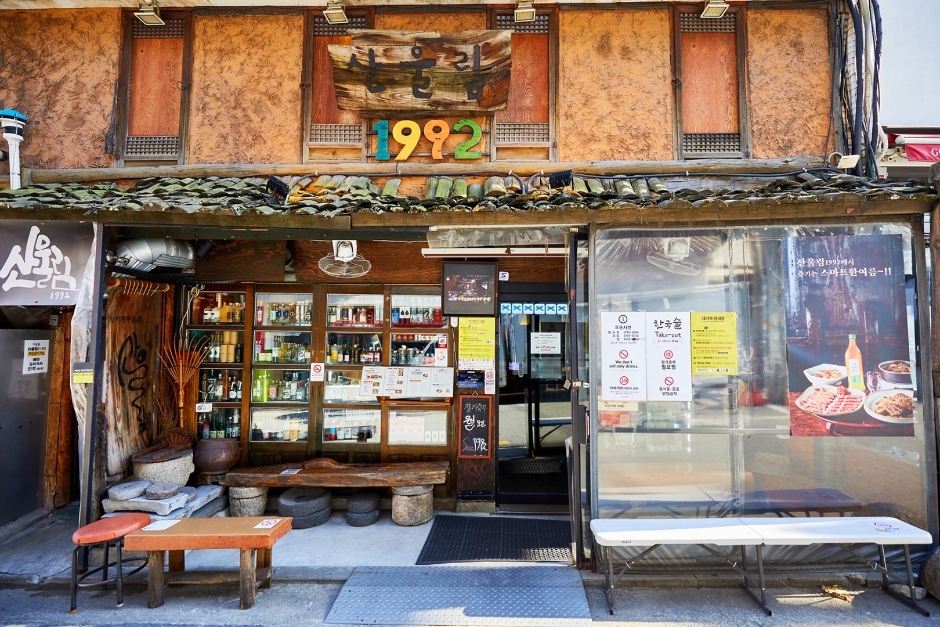
Sanullim 1992 (산울림1992)
8.9Km 2024-03-15
60 Seogang-ro 9-gil, Mapo-gu, Seoul
This Korean bar and restaurant serves Korean dishes with nearly 200 types of traditional Korean liquor on offer, including makgeolli (unrefined rice wine), refined rice wine, and distilled liquor. Its food menu includes bean curd with stir-fried kimchi, ox knee soup (soup made by boiling down calcium-rich ox knee), and cabbage wraps with soy sauce braised pork. The signature menu here, however, is “Bansang,” set menus of the customer's choice ranging from No. 1 to No. 5 served on a round dining table. Each number has a different pricing and composition, but all offer new and unique flavors. The savory and crispy cheese and potato pancake goes perfectly with tangy omija makgeolli.

Olive Young - Boramae Branch [Tax Refund Shop] (올리브영 보라매)
8.9Km 2024-04-18
16, Boramae-ro 5ga-gil, Dongjak-gu, Seoul
-
![LG Best Shop - Gwanak Branch [Tax Refund Shop] (엘지베스트샵 관악점)](http://tong.visitkorea.or.kr/cms/resource/59/2880459_image2_1.jpg)
LG Best Shop - Gwanak Branch [Tax Refund Shop] (엘지베스트샵 관악점)
8.9Km 2024-04-18
210, Bongcheon-ro, Gwanak-gu, Seoul
-
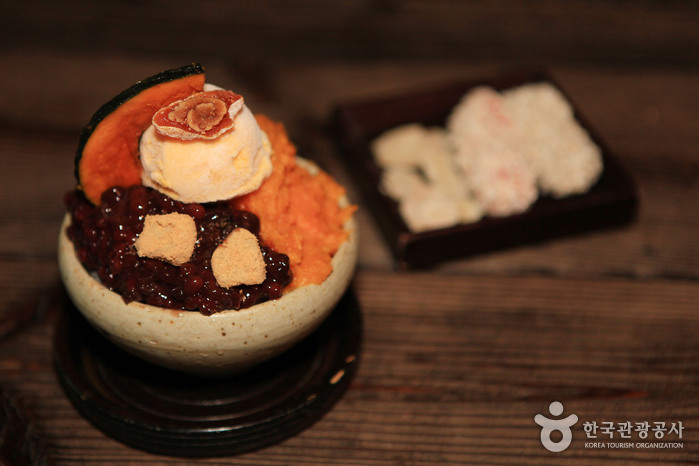
Sooyeon Sanbang (수연산방)
8.9Km 2025-10-23
8 Seongbuk-ro 26-gil, Seongbuk-gu, Seoul
Sooyeon Sanbang is a traditional tea house located in Seongbuk-dong. It was originally built during the Japanese colonial period and was the hanok of the literary figure Lee Taejun. Today, it is operated as a tea house by the writer's granddaughter. The name Sooyeon Sanbang means "a house where literati gather in the mountains." Visitors can enjoy traditional teas such as daechucha (jujube tea) and ssanghwacha (medicinal herb tea), along with snacks like injeolmi (bean-powder-coated rice cake).
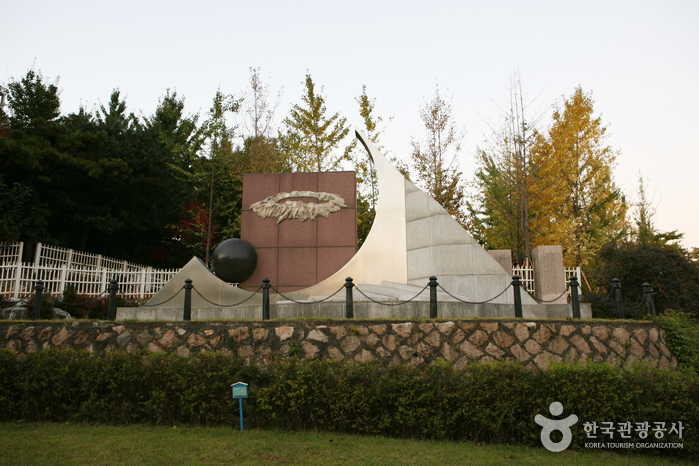
Boramae Park (보라매공원)
8.9Km 2021-03-20
33, Yeouidaebang-ro 20-gil, Dongjak-gu, Seoul
+82-2-120
Boramae Park is a former Air Force Academy site that has been transformed into a recreational park on May 1986. At approximately 397,000 ㎡, the park holds various sports facilities including a tennis court and sports center as well as convenient facilities such as a small zoo, pond, walking trail and more. The 2nd floor of Building 4 has a library that is popular with teenagers as well as Teenager Center where they can enjoy various activities and programs. The symbolic tower of the Air Force Academy still stands as a powerful symbol of loyalty and filial piety.
![Saebom Eyewear - Hongdae Branch [Tax Refund Shop] (새봄안경원 홍대)](http://tong.visitkorea.or.kr/cms/resource/57/2878357_image2_1.jpg)
Saebom Eyewear - Hongdae Branch [Tax Refund Shop] (새봄안경원 홍대)
8.9Km 2024-04-18
1F, 150-1, Wausan-ro, Mapo-gu, Seoul
-
 English
 한국어
한국어 日本語
日本語 中文(简体)
 Deutsch
 Français
 Español
 Русский


