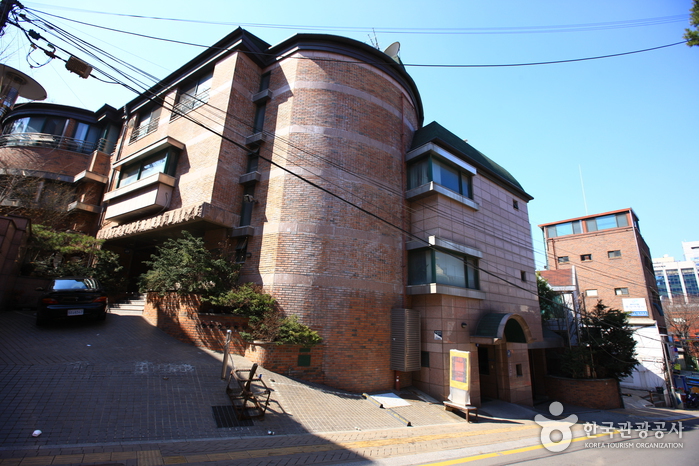
Chojun Textile & Quilt Art Museum (초전섬유ㆍ퀼트박물관)
7.7Km 2024-03-06
29, Toegye-ro 16-gil, Jung-gu, Seoul
+82-2-753-4074~5
Opened in 1998, Chojun Textile & Quilt Art Museum is the only textile art museum in Korea. Visiotrs can learn about the excellence and tradition of Korean textiles by observing a wide range of domestic and international textile artworks. In addition to exhibiting its collection, the museum also holds special exhibitions as well as textile and quilt competitions, giving visitors the opportunity to get up close and personal with textile artworks.

The Bus Stop (더버스스탑)
7.7Km 2024-03-12
26-1, Toegye-ro, 20-gil, Jung-gu, Seoul
+82-10-9083-9616
Located between Myeongdong Street and Namsan Mountain, this café is a perfect place to stop for a drink and dessert while traveling around Seoul, as its name means "bus stop". They serve tasty coffee, ade, bubble tea, and other drinks, as well as a variety of desserts. The neighboring Namsan Pork cutlet Street is worth a visit for meal before visit here.
![Innisfree - Noryangjin Branch [Tax Refund Shop] (이니스프리 노량진)](http://tong.visitkorea.or.kr/cms/resource/20/2880020_image2_1.jpg)
Innisfree - Noryangjin Branch [Tax Refund Shop] (이니스프리 노량진)
7.7Km 2024-04-22
162, Noryangjin-ro, Dongjak-gu, Seoul
-
Chungmuro Jjukkumi Bulgogi (충무로 쭈꾸미 불고기)
7.7Km 2024-03-11
11, Toegye-ro 31-gil, Jung-gu, Seoul
+82-2-2279-0803
Opened in 1976, Chungmuro Jjukkumi Bulgogi is Michelin-starred restaurant. Their signature dish is jjukkumi (webfoot octopus), which is marinated in hot seasoning using traditional know-how. Grilled over charcoal with pen shells, it offers a perfect dish. The spicy and sweet jjukkumi goes well with the bean sprout soup. When you're done eating, fry up some rice and enjoy a delicious meal.
![Olive Young - Janghanpyeong Station Branch [Tax Refund Shop] (올리브영 장한평역)](http://tong.visitkorea.or.kr/cms/resource/62/2888062_image2_1.jpg)
Olive Young - Janghanpyeong Station Branch [Tax Refund Shop] (올리브영 장한평역)
7.7Km 2024-04-17
3, Janghan-ro, Dongdaemun-gu, Seoul
-
GS25 - Dongdaemun Fashion Branch [Tax Refund Shop] (GS25동대문패션점)
7.7Km 2024-06-27
#101, 254, Eulji-ro, Jung-gu, Seoul
-
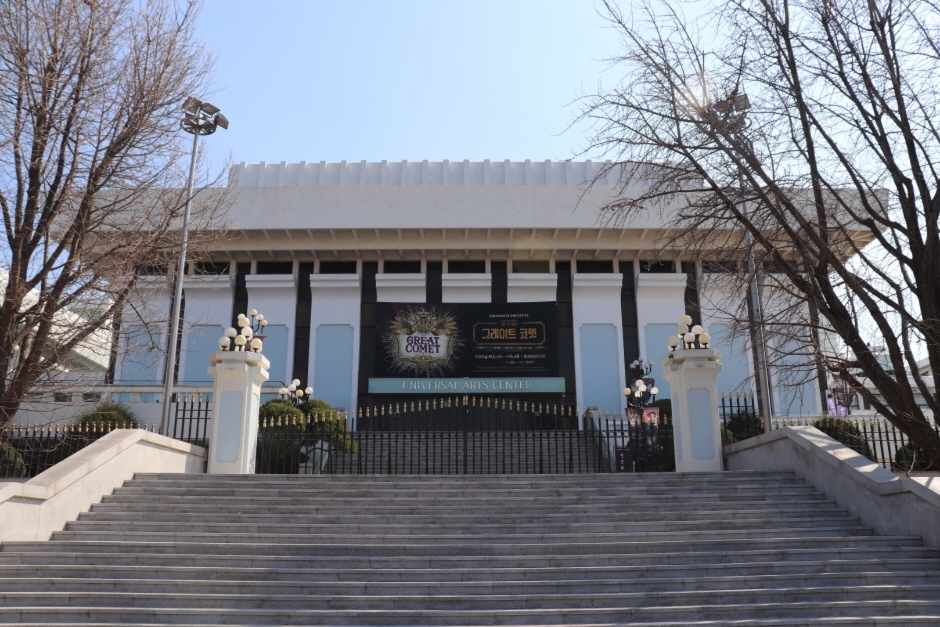
Universal Arts Center (유니버설아트센터)
7.7Km 2024-03-19
664 Cheonho-daero, Gwangjin-gu, Seoul
Universal Arts Center, inaugurated in 1981, stands as a prominent venue for performances. Renowned for its splendid and classic architectural interior, it is celebrated for its distinctiveness. Its main facilities include the Grand Theater, the Luna Hall capable of accommodating up to 300 guests for banquets, and an audience lounge. It serves as a harmonious space where performance venues, artistic community, and art educational institutions converge. Here, visitors can enjoy a diverse array of performances ranging from ballet and musicals to concerts.
Seoul Hyochang Park (서울 효창공원)
7.8Km 2024-07-09
177-18 Hyochangwon-ro, Yongsan-gu, Seoul
+82-2-2199-7608
Hyochang Park covers 122,245 square meters spanning across Hyochang-dong and Cheongpa 2-dong. It is a historic landmark that once contained several royal tombs, and was known at that time as Hyochangwon. The cemeteries that were originally located in Hyochangwon belonged to Crown Prince Munhyo, King Jeongjo’s first son who died at the age of five; Royal Noble Consort Uibin of the Seong Clan, King Jeongjo’s royal concubine and Crown Prince Munhyo’s mother; Royal Noble Consort Sugui of the Park Clan, King Sunjo’s royal concubine; and her daughter Princess Yeongon. The royal tombs were moved to Seooreung Tombs in the waning months of the Japanese colonial period. The Japanese empire began the development of Hyochangwon into a park in 1924, and the Japanese governor-general officially assigned the site as a park in 1940.
Presently, several of Korea’s greatest leaders are buried in Hyochang Park. The remains mostly belong to independence activists including Yoon Bong-gil, Lee Bong-chang, and Baek Jeong-gi, whose graves are collectively known as Samuisa Tomb. A statue of Lee Bong-chang has been built in the graveyard. Among the other patriotic martyrs who are interred in the park are Kim Gu and some of the key figures of the provisional government such as Lee Dong-nyeong, Cha I-seok, and Cho Seong-hwan. An ancestral shrine named Uiyeolsa has been built along the main gate and holds the portraits of the deceased independence activists.
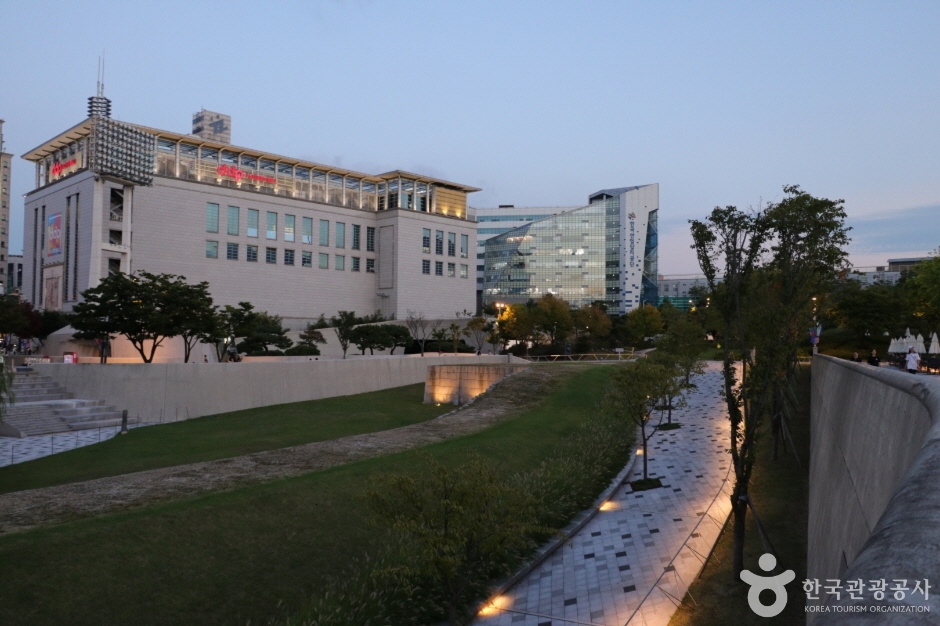
Dongdaemun History & Culture Park (동대문역사문화공원)
7.8Km 2024-11-27
281 Eulji-ro, Jung-gu, Seoul
Dongdaemun History & Culture Park is a park established on the former site of the Dongdaemun Stadium. It serves as a thematic park showcasing the history and culture of Seoul, while also providing a space to experience modern design and culture. During the park's development in 2008, numerous artifacts from the Joseon dynasty, including The Two Floodgates, the Chiseong Castle, Military Training Agency, and over 1,000 relics from the Joseon era, were excavated. Alongside the park, there is the Dongdaemun Design Plaza (DDP) and the Relic area.
Olive Young - CJ THE CENTER Branch [Tax Refund Shop] (올리브영 씨제이남산더센터)
7.8Km 2024-04-18
12, Sowol-ro 2-gil, Jung-gu, Seoul
-
 English
 한국어
한국어 日本語
日本語 中文(简体)
 Deutsch
 Français
 Español
 Русский


