![LG Best Shop [Tax Refund Shop] (LG베스트샵)](http://tong.visitkorea.or.kr/cms/resource/28/2891128_image2_1.jpg)
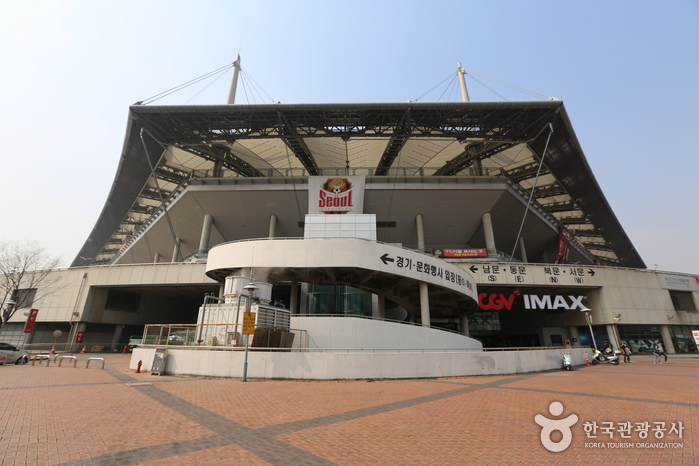
Seoul World Cup Stadium (서울월드컵경기장)
12.7Km 2025-03-15
240 World Cup-ro, Mapo-gu, Seoul
+82-2-2128-2000
Seoul World Cup Stadium, constructed for the 2002 World Cup co-hosted by South Korea and Japan, stands as the largest soccer-specific stadium in Korea. Currently serving as the home ground for FC Seoul's K-League , it also hosts matches for the South Korean national soccer team. The vicinity boasts large-scale supermarkets, cinemas, sports centers, and saunas. Nearby attractions include Haneul Park and Pyeonghwa Park.
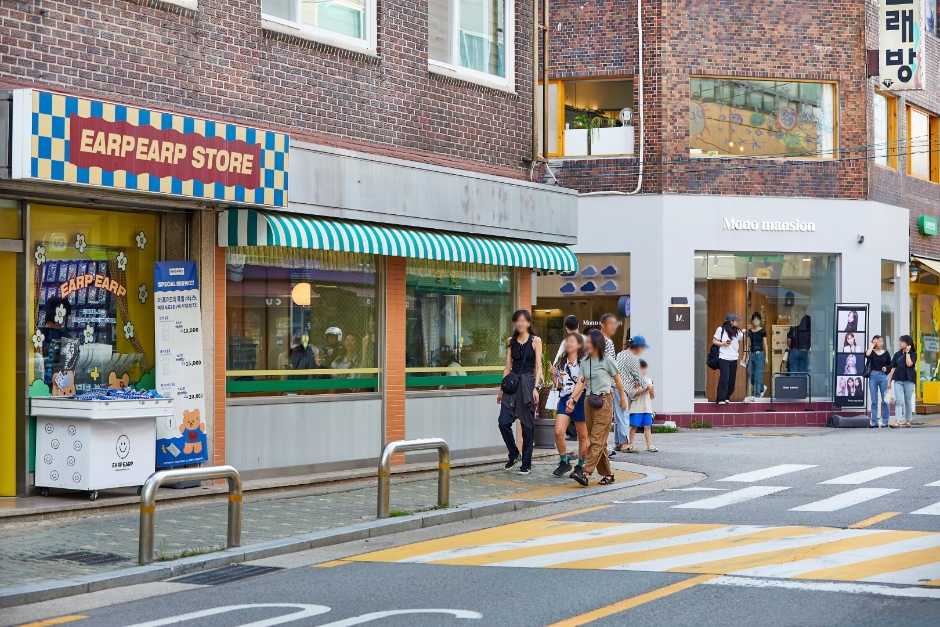
Mangnidan Street (망리단길)
12.7Km 2025-05-20
Poeun-ro, Mapo-gu, Seoul
Mangnidan Street is located near Poeun-ro, which can be reached in about 6 to 8 minutes of leisurely walk toward Mangwon Hangang Park from Exit 2 of Mangwon Station on Subway Line 6. Its name comes from the combination of Mangwon-dong and the Gyeongnidan Street in Itaewon, meaning the “Gyeongnidan Street of Mangwon-dong.” There are a variety of restaurants, cafes, dessert shops, and other small shops, each with their own charm, making it a great place to take the kids shopping or just get some rest. This place is quite close to Mangwon Market, so visitors can stop by the market if time allows. Another way to fit this area into the itinerary is as a pit stop for desserts or some shopping before heading to Mangwon Hangang Park.
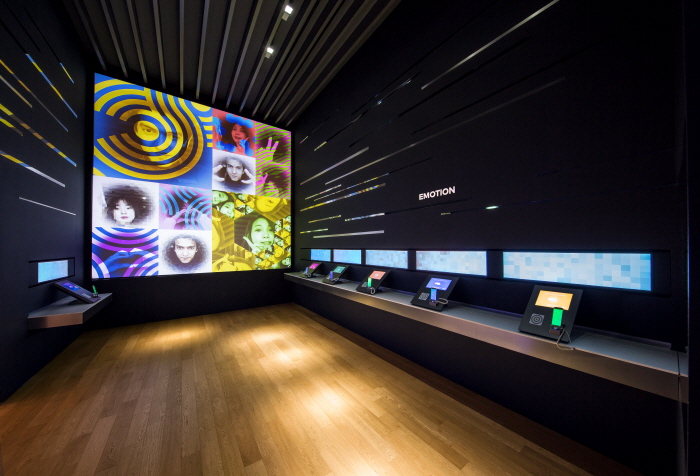
Samsung Gangnam (삼성 강남)
12.7Km 2024-11-26
411 Gangnam-daero, Seocho-gu, Seoul
Samsung Gangnam is a flagship store designed as a playground for Samsung Electronics. Within the building are a photo spot, Galaxy flagship, auditorium, bespoke studio, and coffee shop, attracting numerous visitors. They are invited to appreciate media art through art objects and admire stunning views of skyscrapers on Gangnam-daero via a giant display with pleasure.
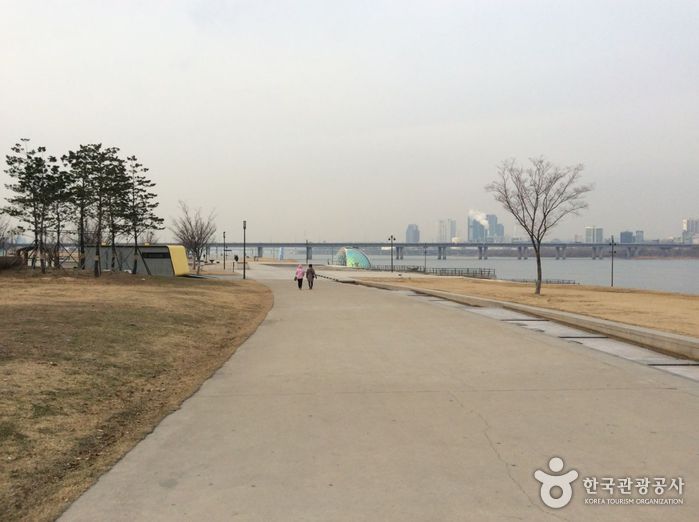
Seoul Color Park (서울색공원)
12.7Km 2021-06-23
330, Yeouidong-ro, Yeongdeungpo-gu, Seoul
+82-2-3780-0561
The Seoul Color Park spans over 9,000 ㎡ of land next to the Hangang River under Mapodaegyo Bridge. It features a large wave-shaped sculpture, as well as bar code graphics and benches painted with 10 different colors that have been designed as the Colors of Seoul. The streetscape is designed with images and Colors of Seoul that includes “Dancheong” red, “Kkotdam” red brown, “Namsan” green and more. Sculptures and art works using the Colors of Seoul can also be seen at Seoul Museum of Art and Seoul History Museum.
![Rodeo Eyewear - Seorae Village Branch [Tax Refund Shop] (로데오안경 서래마을)](http://tong.visitkorea.or.kr/cms/resource/93/2889293_image2_1.jpg)
Rodeo Eyewear - Seorae Village Branch [Tax Refund Shop] (로데오안경 서래마을)
12.7Km 2024-04-18
1F, 44, Seorae-ro, Seocho-gu, Seoul
-

Sangam-dong MBC New Headquarters Media Center (상암동MBC신사옥미디어센터)
12.7Km 2025-11-05
255 Seongam-ro, Mapo-gu, Seoul
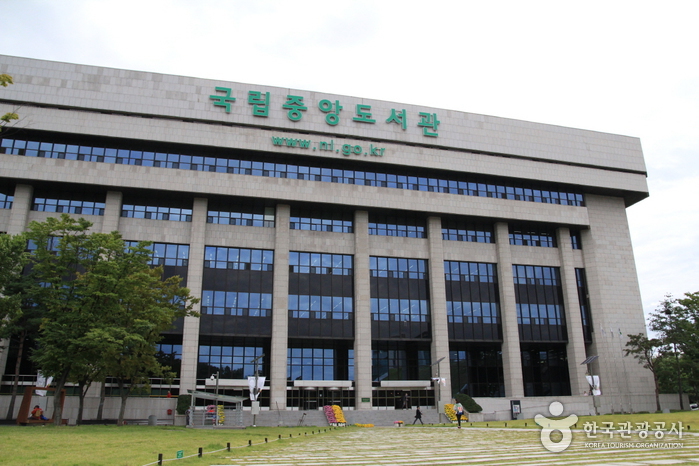
The National Library of Korea (국립중앙도서관)
12.8Km 2021-06-22
201, Banpo-daero, Seocho-gu, Seoul
+82-2-590-0500
The National Library of Korea collects and preserves many important documents and books, promoting a culture of appreciation for these cultural heritages. The library was founded on May 28, 1988 in the area of Seocho Park, later expanding to include an annex. The scenery of the park is beautiful and the atmosphere is very relaxing, perfectly suited to the pursuit of knowledge. For further understanding, the library also offers guided tours for those interested in library science. Many materials have also been scanned and are accessible online through the digital library.
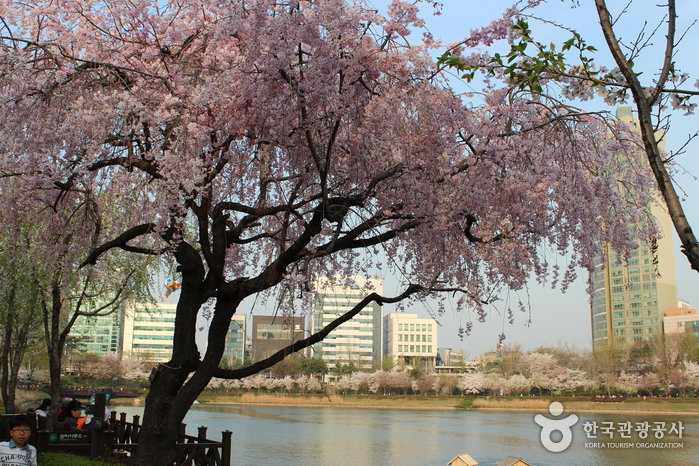
Songpa Naru Park (Seokchonhosu Lake) (송파나루공원 (석촌호수))
12.8Km 2025-10-23
136 Samhaksa-ro, Songpa-gu, Seoul
Songpa Naru Park, also commonly referred to as Seokchonhosu Lake, is a citizen park in Seoul with a jogging course and walking trails. It has two lakes with Songpa-daero Boulevard running in between. Originally, a branch of the Hangang River ran through the site, forming one large lake, but the lake was divided into two with the construction of Songpa-daero Boulevard. The total size of the two lakes is 217,850 ㎡, and they hold about 737 tons of water. The depth of the lakes is 4-5 meters.

First Samsung Eye Center (퍼스트삼성안과의원)
12.8Km 2025-10-23
5F, 22 Seocho-daero 78-gil, Seocho-gu, Seoul
First Samsung Eye Center's medical staff consistently conducts research and academic activities. They publish papers in international academic journals each year, and they are committed to providing quality medical services to customers.
The medical staff members have such outstanding skills that they perform surgeries that other ophthalmology clinics find challenging. With over 100,000 surgical cases for the past 20 years, including cataract surgery, vision correction, and retinal surgery, the medical staff at First Samsung Eye Center provides safe surgeries without side effects and high-quality vision results.
The clinic has the latest equipment that allows examinations and surgeries of all ocular diseases. It accurately diagnoses patients' eye conditions and manages the process from pre-surgery examinations to post-surgery care.
 English
 한국어
한국어 日本語
日本語 中文(简体)
 Deutsch
 Français
 Español
 Русский


