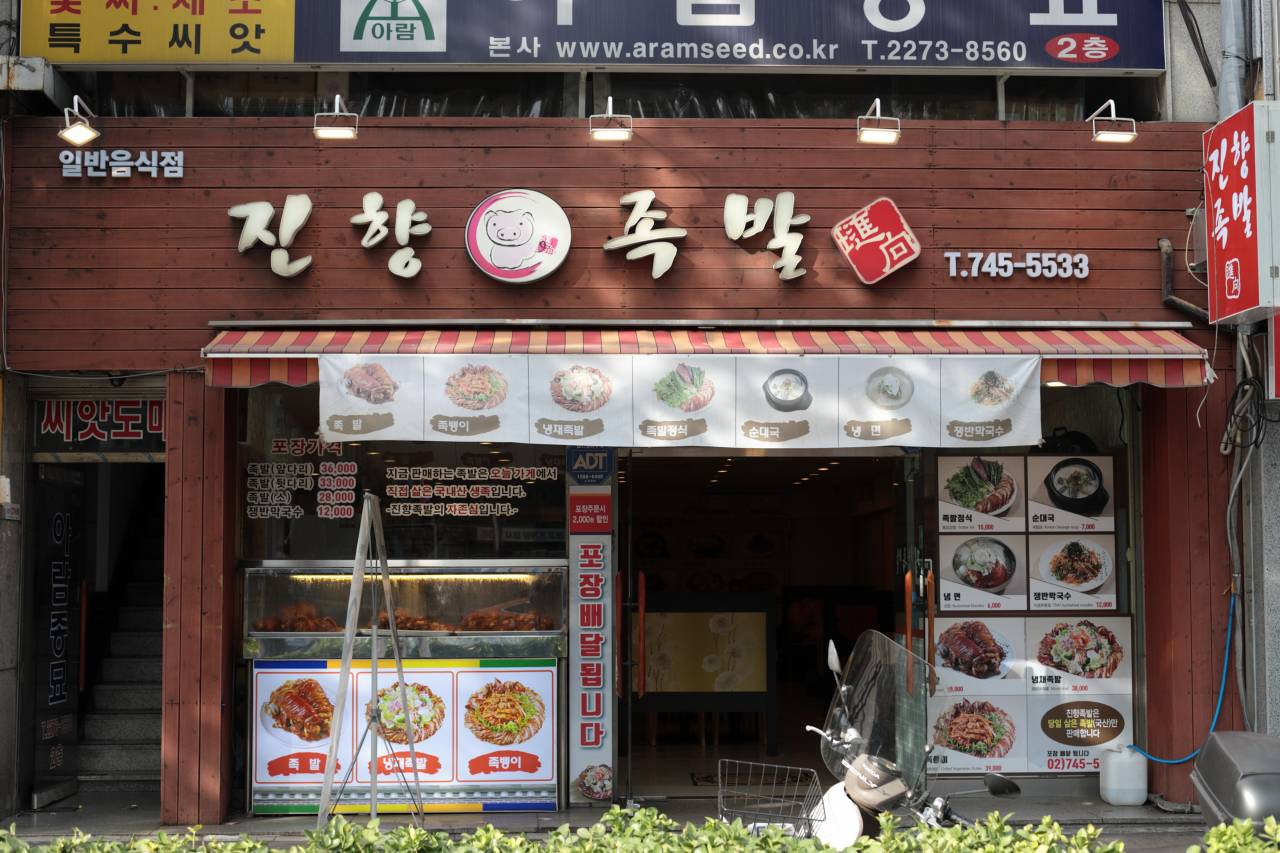
Jinhyang Jokbal (진향족발)
7.6Km 2024-10-15
231-1, Jong-ro, Jongno-gu, Seoul
+82-2-745-5533
A pig's trotter(s) specialty restaurant located near Jongno 5(o)ga Station in Seoul. One of the top 5 jokbal (pig's trotter) restaurants in Seoul. This restaurant's signature menu is braised pigs' feet.
![The Handsome Tommy Hilfiger - Myeong-dong Branch [Tax Refund Shop] (한섬 타미힐피거 명동)](http://tong.visitkorea.or.kr/cms/resource/47/2888847_image2_1.jpg)
The Handsome Tommy Hilfiger - Myeong-dong Branch [Tax Refund Shop] (한섬 타미힐피거 명동)
7.6Km 2024-04-18
11, Myeongdong 6-gil, Jung-gu, Seoul
-

Seoul Hyochang Park (서울 효창공원)
7.6Km 2024-07-09
177-18 Hyochangwon-ro, Yongsan-gu, Seoul
+82-2-2199-7608
Hyochang Park covers 122,245 square meters spanning across Hyochang-dong and Cheongpa 2-dong. It is a historic landmark that once contained several royal tombs, and was known at that time as Hyochangwon. The cemeteries that were originally located in Hyochangwon belonged to Crown Prince Munhyo, King Jeongjo’s first son who died at the age of five; Royal Noble Consort Uibin of the Seong Clan, King Jeongjo’s royal concubine and Crown Prince Munhyo’s mother; Royal Noble Consort Sugui of the Park Clan, King Sunjo’s royal concubine; and her daughter Princess Yeongon. The royal tombs were moved to Seooreung Tombs in the waning months of the Japanese colonial period. The Japanese empire began the development of Hyochangwon into a park in 1924, and the Japanese governor-general officially assigned the site as a park in 1940.
Presently, several of Korea’s greatest leaders are buried in Hyochang Park. The remains mostly belong to independence activists including Yoon Bong-gil, Lee Bong-chang, and Baek Jeong-gi, whose graves are collectively known as Samuisa Tomb. A statue of Lee Bong-chang has been built in the graveyard. Among the other patriotic martyrs who are interred in the park are Kim Gu and some of the key figures of the provisional government such as Lee Dong-nyeong, Cha I-seok, and Cho Seong-hwan. An ancestral shrine named Uiyeolsa has been built along the main gate and holds the portraits of the deceased independence activists.
![Lotte Himart - Songpa Lotte Mart Branch [Tax Refund Shop] (롯데하이마트 송파롯데마트점)](http://tong.visitkorea.or.kr/cms/resource/80/2879480_image2_1.jpg)
Lotte Himart - Songpa Lotte Mart Branch [Tax Refund Shop] (롯데하이마트 송파롯데마트점)
7.6Km 2024-04-18
80, Jungdae-ro, Songpa-gu, Seoul
-
![Lotte Mart - Songpa Branch [Tax Refund Shop] (롯데마트 송파점)](http://tong.visitkorea.or.kr/cms/resource/79/2879479_image2_1.jpg)
Lotte Mart - Songpa Branch [Tax Refund Shop] (롯데마트 송파점)
7.6Km 2024-04-22
80, Jungdae-ro, Songpa-gu, Seoul
-
![Converse - Myeong-dong Branch [Tax Refund Shop] (컨버스 명동점)](http://tong.visitkorea.or.kr/cms/resource/46/2878646_image2_1.jpg)
Converse - Myeong-dong Branch [Tax Refund Shop] (컨버스 명동점)
7.6Km 2024-06-27
16-1, Myeongdong 8-gil, Jung-gu, Seoul
-
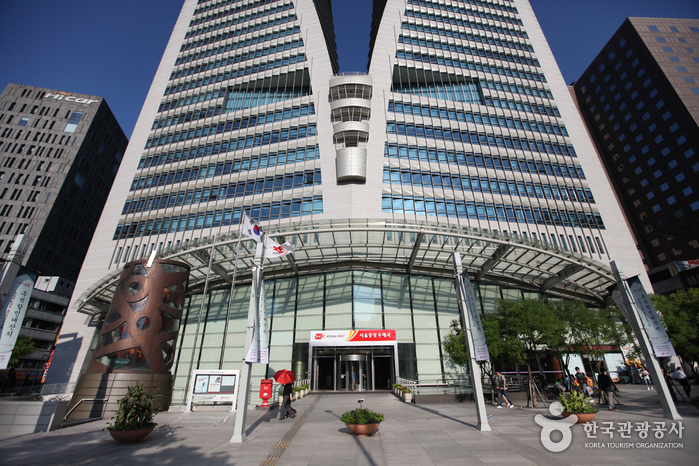
Korea Postage Stamp Museum (우표박물관(구.우표문화누리))
7.6Km 2024-03-06
B2, 70, Sogong-ro, Jung-gu, Seoul
+82-2-6450-5600
The Korea Postage Stamp Museum was established to promote stamp culture. Here, visitors can explore the history of stamps throughout the ages, with a wide variety of subjects and types. Its main facilities include Postal Service History, Hands-on Postage Stamp Experience, Informative Postage Stamps, and Philately Classroom. Reservations are required for weekend tours and can be made on the website.
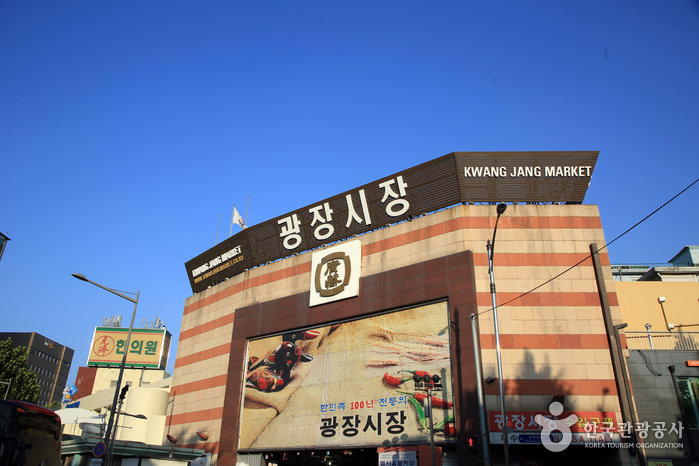
Gwangjang Market (광장시장)
7.6Km 2024-07-08
88, Changgyeonggung-ro, Jongno-gu, Seoul
+82-2-2267-0291
Gwangjang Market was the first permanent market in Korea and continues to thrive as a popular tourist destination today. The name Gwangjang means "to gather from afar and keep altogether." The market began as a small trading center that brought in goods from nearby regions, but has now grown into a large wholesale market selling a variety of goods, including upholstery, imported goods, groceries, dried fish, traditional goods, and more. The most popular section of the market is the food street connected to the East Gate, North Gate 2, and South Gate 1. The food street caters to a wide range of patrons due to the plethora of menus available. It is also one of the most recommended tourist attraction for international travelers.
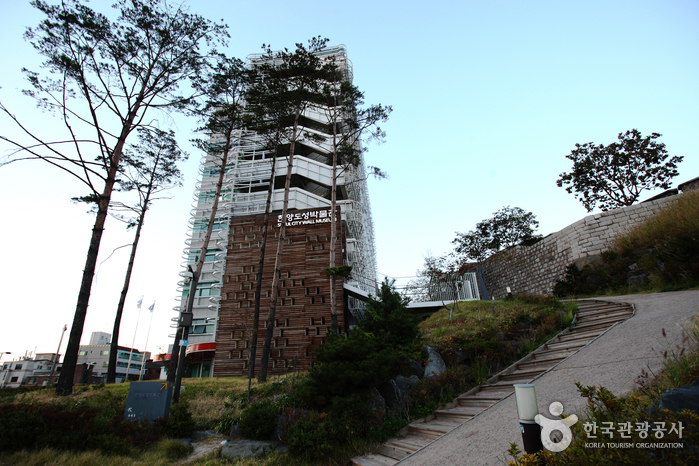
Seoul City Wall Museum (한양도성박물관)
7.6Km 2023-12-22
283, Yulgok-ro, Jongno-gu, Seoul
+82-2-724-0243
Hanyangdoseong, the Seoul City Wall, built in 1396, was the city fortress wall that protected the capital city Seoul for over 600 years. The fortress wall was built along the terrains and although it became partially damaged during the modernization process, its original form remains well to this day, making it a cultural heritage that coexists with the modern city. The Seoul City Wall Museum, located in Heungjinjimun Park, is a museum containing the history and culture of city wall from the Joseon dynasty to the present. It is a cultural space with a permanent exhibition hall, special exhibition hall, city wall information center, and study room.
![Hanaro Optics [Tax Refund Shop] (하나로안경원)](http://tong.visitkorea.or.kr/cms/resource/80/2878580_image2_1.jpg)
Hanaro Optics [Tax Refund Shop] (하나로안경원)
7.6Km 2024-04-19
48, Namdaemunsijang 4-gil, Jung-gu, Seoul
-
 English
 한국어
한국어 日本語
日本語 中文(简体)
 Deutsch
 Français
 Español
 Русский


