
Seodaemun Prison History Museum (서대문형무소역사관)
13.4Km 2024-12-02
251 Tongil-ro, Seodaemun-gu, Seoul
Seodaemun Prison was built under the Japanese administration to imprison independence movement activists. It first opened on October 21, 1908 under the name Gyeongseong Prison. Eventually, so many activists were imprisoned that the building had to be expanded. At that time, the name changed to Seodaemun Prison on September 3, 1912. Eighty years later, the prison was turned into Seodaemun Independence Park on August 15, 1992 to commemorate the Korean patriots who were tortured in prison, giving their lives for freedom. Of the many buildings, only seven were preserved for their historical significance, among which three prison buildings and the execution site were designated as a Historic Site. In 1998, the park underwent another transformation into today's Seodaemun Prison History Hall to educate the public on the importance of Korea's independence and the sacrifices of those who fought to achieve it.
G-line Book Street (경의선책거리)
13.4Km 2024-03-19
35 Wausan-ro 37-gil, Mapo-gu, Seoul
+82-2-3153-8353
G-line Book Street spans approximately 250 meters from Exit 6 of Hongik University Station to Wau Bridge, where the old train tracks remain intact. It serves as a prominent cultural hotspot in Hongik University, housing various bookstores and cultural spaces selling books on diverse topics. Independent bookstores, children's bookstores, specialty bookshops, and art galleries converge in this area, offering a rich tapestry of literary experiences.
SOSO House (소소하우스)
13.4Km 2024-12-13
16-5 , Pirundae-ro 5ga-gil, Jongno-gu, Seoul
+82-10-5286-0704
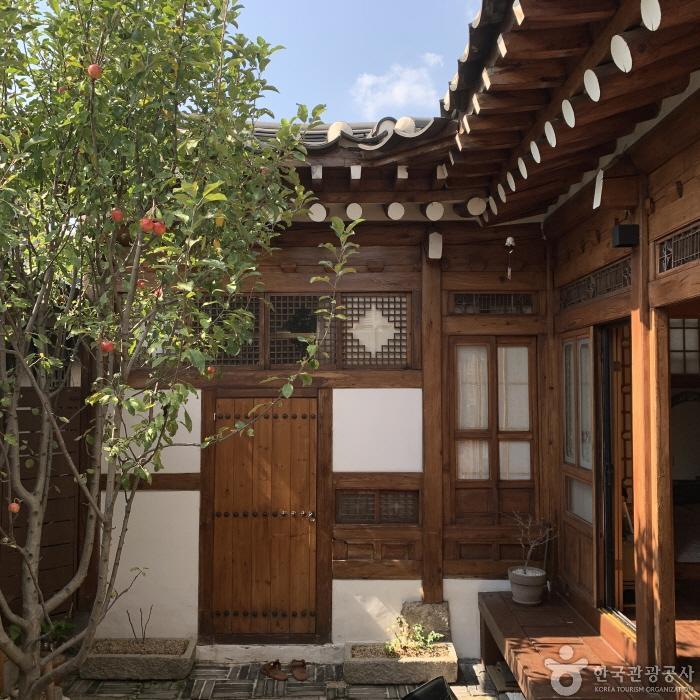
Soso House is a private hanok stay located in Seochon, Jongno-gu, Seoul. Once you enter the gate, you are greeted by a small yard paved with stones and an alpine apple tree. There is a stool on one side of the yard where you can enjoy a cup of tea on a sunny day. In the daecheong maru (wooden-floored hall, there is a master bedroom on one side and a kitchen on the other, and the master bedroom has an attic. Cooking is allowed, and complimentary breakfast includes toast, salad, and coffee, as well as complimentary homemade fruit syrup and tea bags. Gyeongbokgung Palace, Seoul Museum of History, and Park No-Soo Art Museum are all within walking distance.
![Hongdae EyeWorld Eyewear [Tax Refund Shop] (홍대아이월드안경원)](http://tong.visitkorea.or.kr/cms/resource/22/2887922_image2_1.jpg)
Hongdae EyeWorld Eyewear [Tax Refund Shop] (홍대아이월드안경원)
13.4Km 2024-04-16
1F, 93, Wausan-ro, Mapo-gu, Seoul
-
![Mario Outlet [Tax Refund Shop] (마리오아울렛)](http://tong.visitkorea.or.kr/cms/resource/07/2890507_image2_1.jpg)
![Mountia [Tax Refund Shop] (마운티아)](http://tong.visitkorea.or.kr/cms/resource/77/3313577_image2_1.jpg)
![365 Pharmacy - Hongik Univ. Branch [Tax Refund Shop] (365약국 홍대)](http://tong.visitkorea.or.kr/cms/resource/01/2888601_image2_1.jpg)
365 Pharmacy - Hongik Univ. Branch [Tax Refund Shop] (365약국 홍대)
13.4Km 2024-04-16
365 Pharmacy, 43, Wausan-ro 27-gil, Mapo-gu, Seoul
-
NUHADANG(누하당)
13.4Km 2024-06-20
49-7 , Pirundae-ro, Jongno-gu, Seoul
+82-2-3391-0010, +82-10-4347-5768
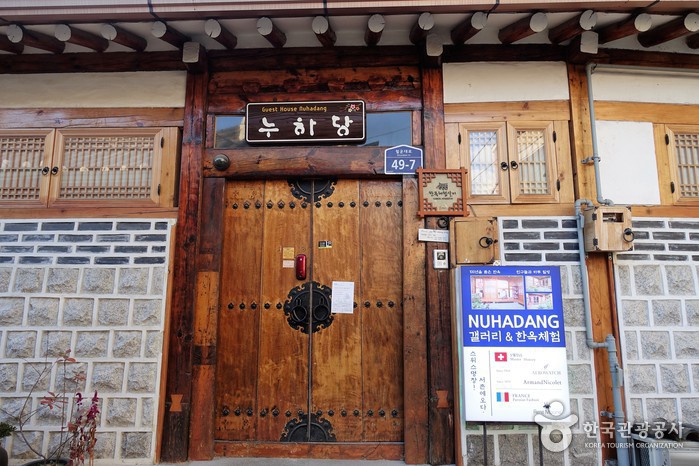
Nuhadang is a traditional hanok with over 100 years of history. It is located in a quiet spot in Seochon, Jongno-gu, Seoul, where many scholars and artists have lived since Joseon times. Rooms are wallpapered with eco-friendly Korean paper, and thick cotton blankets and cypress pillows will sooth travelers' fatigue. In the yard and small garden you can experience traditional Korean culture: janggu drumming, the game of yunnori, and Hanbok clothing. Walking the streets of Seochon - past Yun Dong-ju's hostel, Park No-su's art museum, and Lee Sang's house - you can still feel the atmosphere of old Seoul.
Cosmos House - THE TINTIN SHOP Branch [Tax Refund Shop] (코스모스하우스 틴틴샵)
13.4Km 2024-04-16
80, Wausan-ro 29ga-gil, Mapo-gu, Seoul
-
Dongnimmun Gate (독립문)
13.4Km 2022-12-15
251, Tongil-ro, Seodaemun-gu, Seoul
Dongnimmun stands at the location originally known as Yeongeun, where envoys were once treated. When a Chinese envoy visited, the King would go out through this door to greet. In 1898, to announce the independence from Japan, Dongnimun was constructed with the fund collected by the citizens. The traces of the past still remain on Dongnimmun with two pillars in front of Dongnimmun being the remains of Yeongeunmun.
The Arc de Triomphe in France can be recalled in comparison to Dongnimmun. Dongnimmun was built using granite with a passageway x_height of 14.28 meters. On the top it is written ‘Dongnimmun’ in Korean with the national flag drawn on each side. On the inner-left side there are stone stairs leading to the attic. The national flower Mugunghwa are planted around Dongnimmun. Now it is surrounded by roads and it is eye-catching to view when passing by.
 English
 한국어
한국어 日本語
日本語 中文(简体)
 Deutsch
 Français
 Español
 Русский


