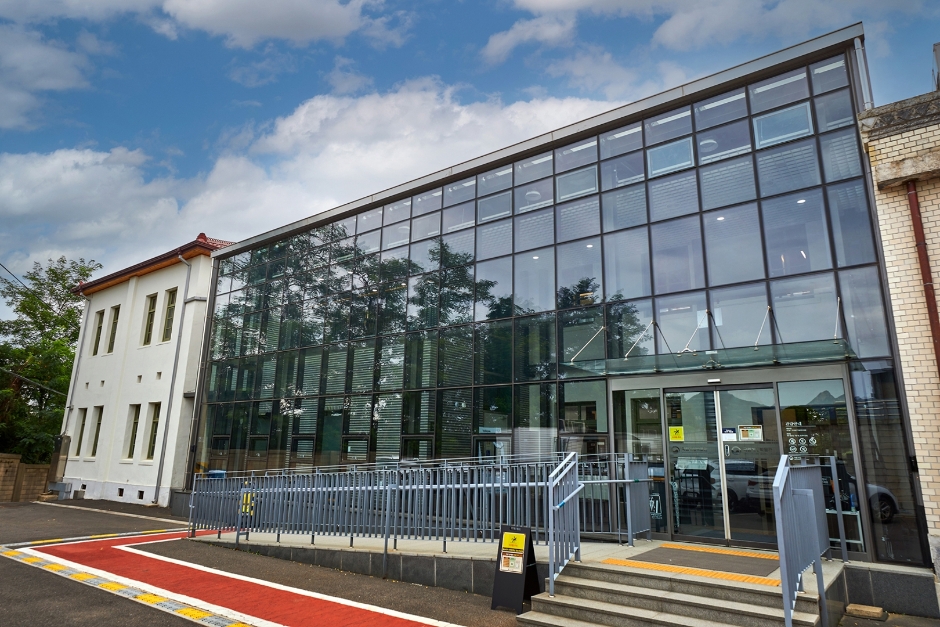
National Meteorological Museum of Korea (국립기상박물관)
8.0Km 2024-03-26
52 Songwol-gil, Jongno-gu, Seoul
A museum where one can look at Korea's meteorological observation history and technological development through exhibitions. The museum has the world's first rain gauge, invented in 1441, in the early Joseon dynasty. The museum operates approximately 350 meteorological observatories across Korea and focuses on promoting the uniqueness and excellence of Korea's meteorological science. There are permanent collections and special exhibitions. The permanent collections focus on the history of meteorological science in Korea. At the same time, the special exhibitions take a closer look at the history and information about meteorological science and natural disasters (e.g., earthquakes) that occurred in various regions of Korea. There are experience programs related to meteorological science, such as making a rain gauge or learning about rain gauges.
![Lotte Himart - Songpa Lotte Mart Branch [Tax Refund Shop] (롯데하이마트 송파롯데마트점)](http://tong.visitkorea.or.kr/cms/resource/80/2879480_image2_1.jpg)
Lotte Himart - Songpa Lotte Mart Branch [Tax Refund Shop] (롯데하이마트 송파롯데마트점)
8.0Km 2024-04-18
80, Jungdae-ro, Songpa-gu, Seoul
-
![Lotte Mart - Songpa Branch [Tax Refund Shop] (롯데마트 송파점)](http://tong.visitkorea.or.kr/cms/resource/79/2879479_image2_1.jpg)
Lotte Mart - Songpa Branch [Tax Refund Shop] (롯데마트 송파점)
8.0Km 2024-04-22
80, Jungdae-ro, Songpa-gu, Seoul
-

Gwacheon Chusa Museum (추사박물관(과천))
8.0Km 2023-07-14
78, Chusa-ro, Gwacheon-si, Gyeonggi-do
+82-2-2150-3650
Gwacheon was where Chusa Gim Jeong-hui immersed himself in studies and arts to ignite his final artistic spirit in the twilight of his life. The city of Gwacheon opened Chusa Museum in order to promulgate the essence of the learning and arts that Chusa flowered. The museum features the life exhibit of Chusa, an art and science exhibit, a planned exhibit hall, an experience room, lounges, a museum shop and an education room for thoroughly researching, exhibiting and experiencing Chusa.
![Olive Young - Cheonho Jungang Branch [Tax Refund Shop] (올리브영 천호중앙)](http://tong.visitkorea.or.kr/cms/resource/76/2878876_image2_1.jpg)
Olive Young - Cheonho Jungang Branch [Tax Refund Shop] (올리브영 천호중앙)
8.1Km 2024-04-18
1027, Cheonho-daero, Gangdong-gu, Seoul
-
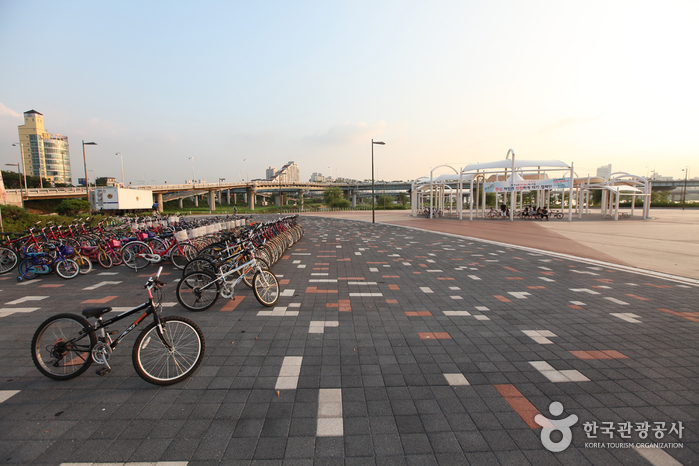
Gwangnaru Hangang Park (광나루한강공원)
8.1Km 2021-12-25
83-66, Seonsa-ro, Gangdong-gu, Seoul
+82-2-3780-0501
Hangang Citizen's Park, composed of 12 areas including Jamsil, Ttukseom and Jamwon, is an eco-friendly park providing areas for sports and leisure. The park is equipped with various cultural and recreational facilities and also has an ecological park. Gwangnaru Hangang Park formed naturally through rich silt that flowed in from the upper Hangang River that was then filled with reeds, creating an ideal habitat for groups of migratory birds.
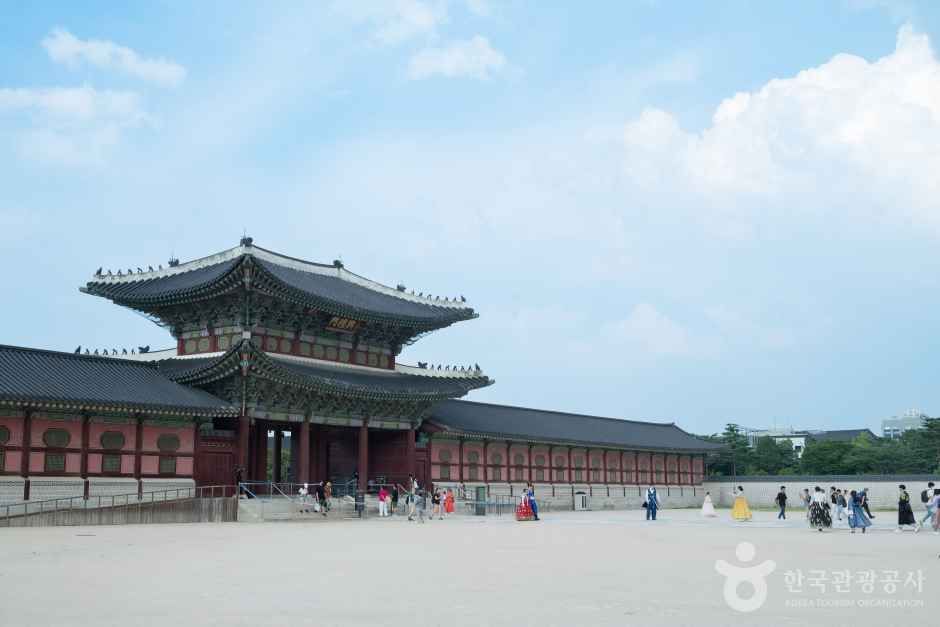
Gyeongbokgung Palace (경복궁)
8.1Km 2025-10-23
161 Sajik-ro, Jongno-gu, Seoul
+82-2-3700-3900
Gyeongbokgung Palace was built in 1395 as the official palace of the Joseon dynasty by Yi Seong-gye, the future King Taejo and founder of the new regime. Gyeongbokgung Palace is commonly referred to as the Northern Palace because of its location to the north, comparied to Changdeokgung Palace in the east and Gyeonghuigung Palace in the west. Gyeongbokgung Palace is arguably the most beautiful and is the largest of all five palaces. Many Joseon kings were crowned here. The premises were once destroyed by fire during the Imjin War (1592-1598). However, all of the palace buildings were later restored under the leadership of Heungseondaewongun during the reign of King Gojong. The assassination of Empress Myeongseong, however, resulted in Gyeongbokgung Palace losing its function as a royal palace, eventually witnessing the downfall of the Joseon dynasty. Gyeongbokgung Palace retains the original Gyeonghoeru Pavilion, a prime example of Joseon architecture, and the Hyangwonjeong Pavilion and pond. The sculptures in the Geunjeongjeon Hall exemplify Joseon-era sculpture techniques. The west side of the area outside Heungnyemun Gate is occupied by the National Palace Museum of Korea, while the eastern side of Hyangwonjeong Pavilion within the Gyeongbokgung Palace is occupied by the National Folk Museum of Korea.
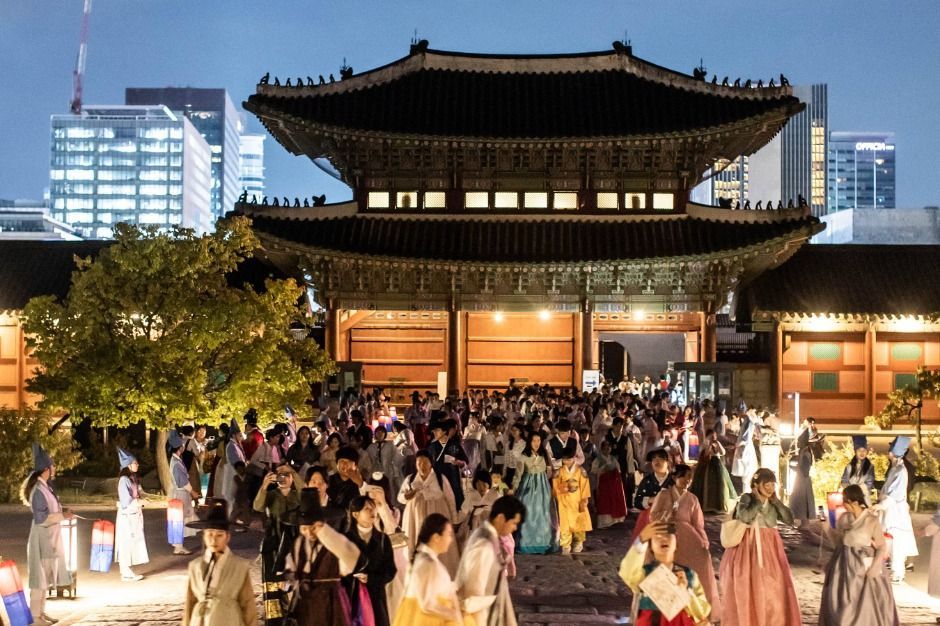
K-Royal Culture Festival (궁중문화축전)
8.1Km 2025-07-29
161 Sajik-ro, Jongno-gu, Seoul
+82-1522-2295
The K-Royal Culture Festival is held at the five Royal Palaces and Jongmyo Shrine. The festival first began in 2014 and provides visitors with first-hand knowledge of these important cultural heritages through unique performances, exhibitions, experiences and programs. The festival expanded in 2021 to be hosted twice a year, in spring and in fall.
![Lunette Eyewear - Mapo Branch [Tax Refund Shop] (루네뜨안경 마포)](http://tong.visitkorea.or.kr/cms/resource/84/2878384_image2_1.jpg)
Lunette Eyewear - Mapo Branch [Tax Refund Shop] (루네뜨안경 마포)
8.1Km 2024-04-17
1F, 24, Dohwa-gil, Mapo-gu, Seoul
-
![Lotte Super - Gongdeok Branch [Tax Refund Shop] (롯데슈퍼 공덕점)](http://tong.visitkorea.or.kr/cms/resource/64/2878364_image2_1.jpg)
Lotte Super - Gongdeok Branch [Tax Refund Shop] (롯데슈퍼 공덕점)
8.1Km 2024-04-23
109, Mapo-daero, Mapo-gu, Seoul
-
 English
 한국어
한국어 日本語
日本語 中文(简体)
 Deutsch
 Français
 Español
 Русский


