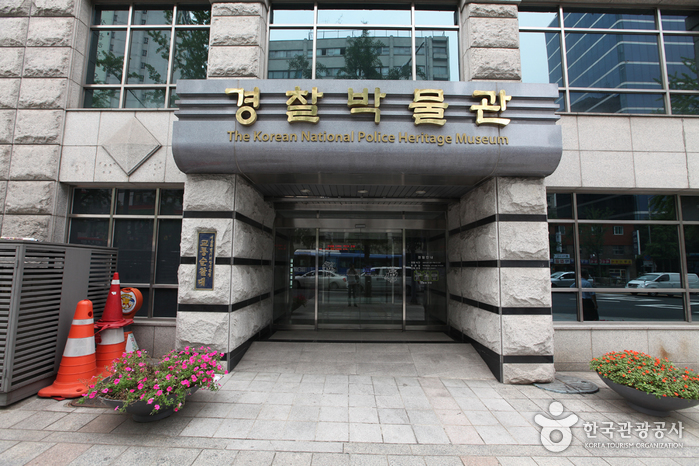
Korean National Police Heritage Museum (경찰박물관)
7.8Km 2021-12-21
41, Saemunan-ro, Jongno-gu, Seoul
+82-2-3150-3681
The police museum opened on October 14, 2005 to give a better understanding of the job of the police and to offer a formal education to children who wish to become police officers in the future. The history hall of the museum is designed for visitors to learn about the history of Korean police at a glance, exhibiting information on the police force from the Joseon dynasty up until current times.
Visitors to the museum can pretend to be police officers by touching actual equipment and learning about an officer's daily tasks. Visitors can also get in patrol cars, wear a police uniform, experience shooting a gun through a simulation, and learn self-defense martial arts and arrest techniques. Visitors can also go to the museum jail.
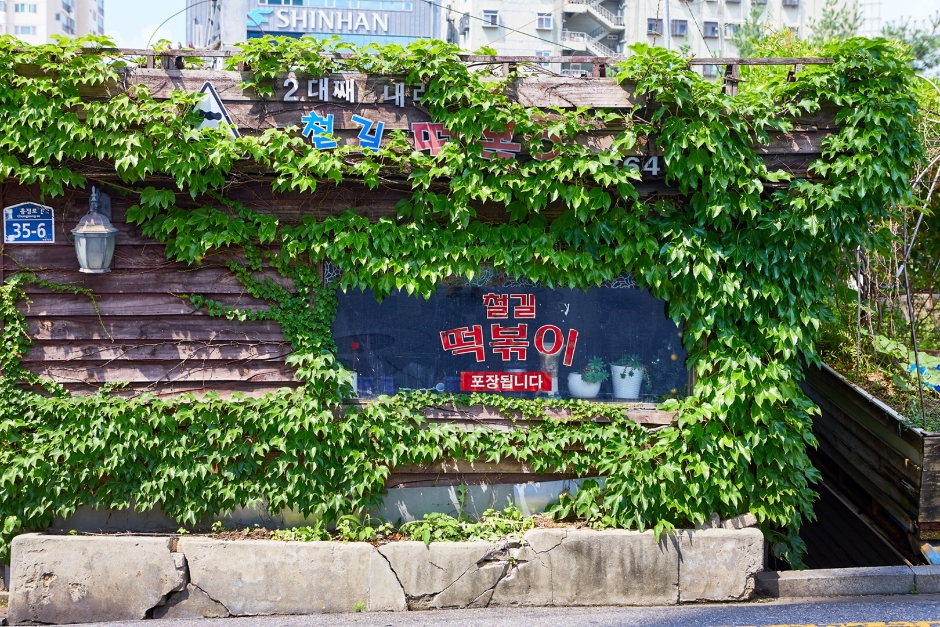
Cheolgil Tteokbokki (철길떡볶이)
7.8Km 2024-03-18
35-6 Chungjeong-ro, Seodaemun-gu, Seoul
Cheolgil Tteokbokki is a famous pilgrimage site for tteokbokki lovers. As the name suggests, it is located next to the railroad (“cheolgil” in Korean) near Chungjeongno Station. There is a wide variety of Korean dishes available, from tteokbokki that will bring back childhood memories to gimbap, deep-fried dishes, and sundae. As the name suggests, it is located next to the railroad near Chungjeongno Station. The restaurant has been in operation for two generations while maintaining its original appearance. The old signboard and exterior have a nostalgic feeling. Unlike tteokbokki in soup, which is currently popular, this tteokbokki with chewy rice cakes is coated well with thick spicy sauce. It's very delicious when mixed with the restaurant’s deep-fried foods. Visitors are recommended to take the seat outdoors to enjoy the view of the railroad tracks while eating.
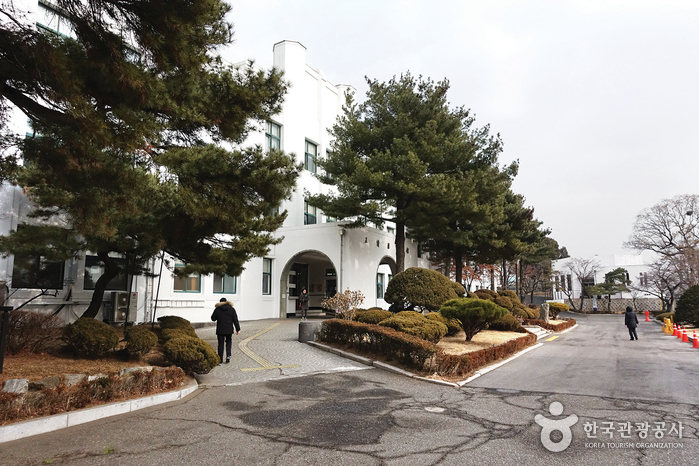
Jeongdok Library (서울특별시교육청 정독도서관)
7.8Km 2021-05-08
48, Bukchon-ro 5-gil, Jongno-gu, Seoul
+82-2-2011-5799
Jeongdok Library opened in January 1977 on the former site of the Gyeonggi High School in Bukchon, Jongno-gu, Seoul. As a public city library, it boasts little under half a million books and 16,300 reference materials. The Seoul Education Museum in the library houses a collection of 12,000 reference materials.
In addition to basic library functions (lending books and offering archives and reading rooms to the public), the library runs various cultural programs such as monthly lectures by invited authors, photo exhibitions, reading seminars, and music/dance performances.

Artee Riders Club (아띠인력거)
7.8Km 2022-09-15
43, Bukchon-ro 5-gil, Jongno-gu, Seoul
+82-1666-1693
Artee Riders Club is the first company that offers rickshaw tours in the nation. Not only do you get to ride on the rickshaw to tour around popular attractions including Bukchon Village, Seochon Village, the rickshaw tour guides you to the smaller alleys as well. Travelers to Bukchon Village may have their belongings or luggage stored at the center, and individual's insurance as well as a complimentary drink are offered.
Lee Ri-Ja Hanbok Museum (이리자 한복전시관)
7.8Km 2022-08-08
20, Samcheong-ro, Jongno-gu, Seoul
+82-2-734-9477
The Lee Ri-Ja Hanbok Museum displays the traditional clothing worn in Korea from birth to death. All hanbok displayed at the museum are created by the hanbok designer Lee Ri-Ja herself, who has over 40 years of experience.
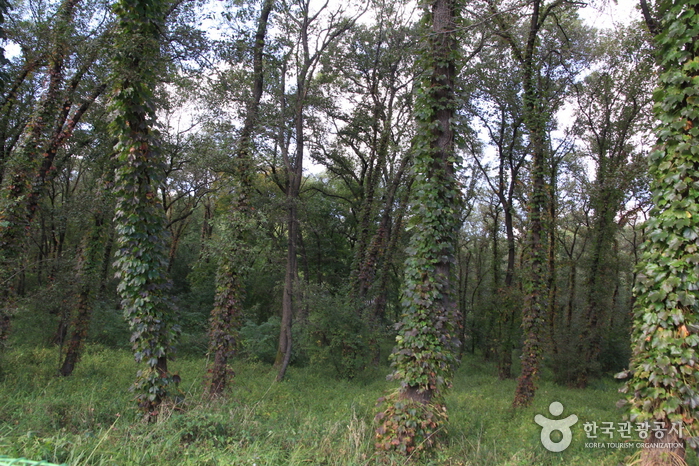
Heoninneung Royal Tombs Ecological Preservation Area (Alder Tree Forests) (헌인릉 생태경관보전지역(오리나무림))
7.8Km 2021-12-11
34, Heonilleung-gil, Seocho-gu, Seoul
+82-2-445-0347
Heonninneung Royal Tombs Ecological Preservation Area is home to alder tree forests. It was officially designated as an ecological preservation area by the Seoul Metropolitan Government in 2005.
Kangbuk Samsung Hospital (강북삼성병원)
7.8Km 2025-10-23
29 Saemunan-ro, Jongno-gu, Seoul
Established in 1968, Kangbuk Samsung Hospital has over 50 years of history and is taking a new leap forward with a vision for its centennial year.
Through partnerships with renowned institutions, such as Johns Hopkins Hospital in the United States and the BBDC in Canada, the hospital delivers advanced medical services while leading the public health arena. It is also committed to systematic research and the development of ICT-integrated digital healthcare, which will be the foundation for future medicine. With an excellent infrastructure that includes clinics and specialized centers (e.g., the Diabetes Center, Breast and Thyroid Cancer Center, Digestive Cancer Center, Musculoskeletal Disease Center, and Prostate Center), Kangbuk Samsung Hospital provides top-quality medical services focused on providing patients with satisfactory treatments.
![Olive Young - Gongdeok Station Branch [Tax Refund Shop] (올리브영 공덕역)](http://tong.visitkorea.or.kr/cms/resource/78/2887978_image2_1.jpg)
Olive Young - Gongdeok Station Branch [Tax Refund Shop] (올리브영 공덕역)
7.8Km 2024-04-16
1F, 199, Baekbeom-ro, Mapo-gu, Seoul
-
Kyung Hee University Medical Center (경희의료원)
7.8Km 2025-10-23
23 Kyungheedae-ro, Dongdaemun-gu, Seoul
KYUNG HEE UNIVERSITY MEDICAL CENTER is the world's only academic medical center where six medical fields including medicine, dentistry, oriental medicine, East-West integrated medicine, pharmacy, and nursing coexist. We have established new treatment systems by complementing the strengths of each field, and have strived to protect humanity from diseases for more than 50 years.
We make all efforts to return the love received from our patients and their guardians. Our innovative medical treatment systems further improve the effectiveness of disease treatment and provide top-class medical services to help all patients recover quickly. We will continue to work hard to fulfill our role as a center for research and academics and make a contribution to the health of the community and the nation.
With the ‘Kyung Hee Family Spirit,’ we promise to become Kyung Hee Medical Center that always thinks and acts on the patient’s side.
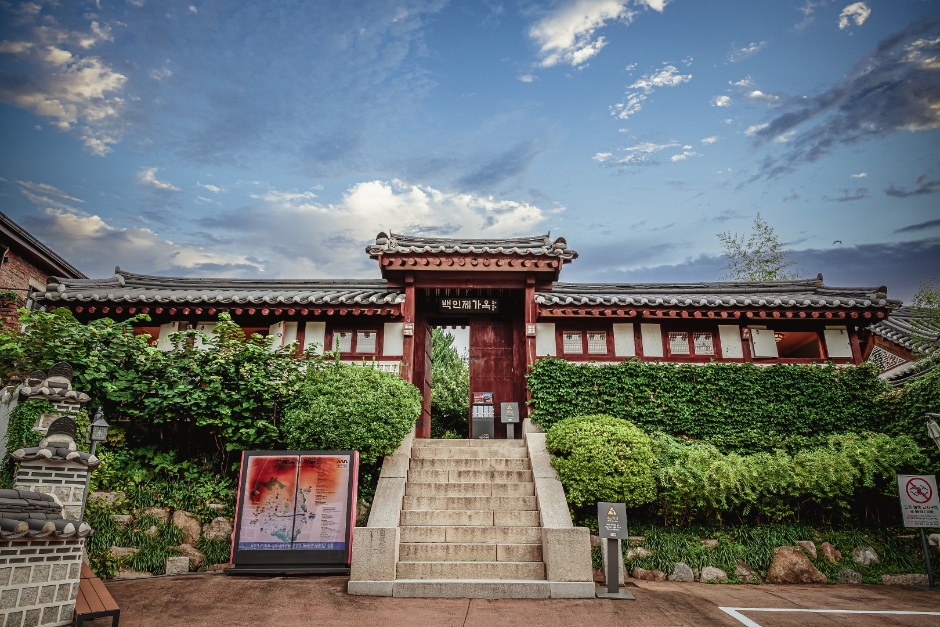
Baek In-je House (백인제가옥)
7.8Km 2025-10-24
16 Bukchon-ro 7-gil, Jongno-gu, Seoul
+82-2-724-0200
Baek In-je House, located in Bukchon Hanok Village, is a hanok built during the Japanese administration period that portrays modern hanok features. The structure consists of a main room offering a good view of the whole village, spacious bedrooms, a large garden, and annex buildings. As it maintains the beauty of a traditional hanok while incorporating the modern trend of its time, Baek In-je House is considered to be highly valuable in means of both architecture and history, representing the Bukchon Hanok Village together with Yun Bo-seon House.
Baek In-je House was built from black pine, which was first introduced in Seoul during the Gyeongseong Expo in 1907, distinguishing itself from other upper-class houses of its time. Unlike other traditional hanok designs that separate the main building from the other rooms, Baek In-je House connects the two with a hallway, allowing convenient access between the two structures. The house also consists of a Japanese-style hallway and floor mat rooms, reflecting the interior trends of that period. Baek In-je House is also unique in that the main room is partially built as a two-story structure, a style that was never seen in any traditional hanok built during the Joseon period.
 English
 한국어
한국어 日本語
日本語 中文(简体)
 Deutsch
 Français
 Español
 Русский


