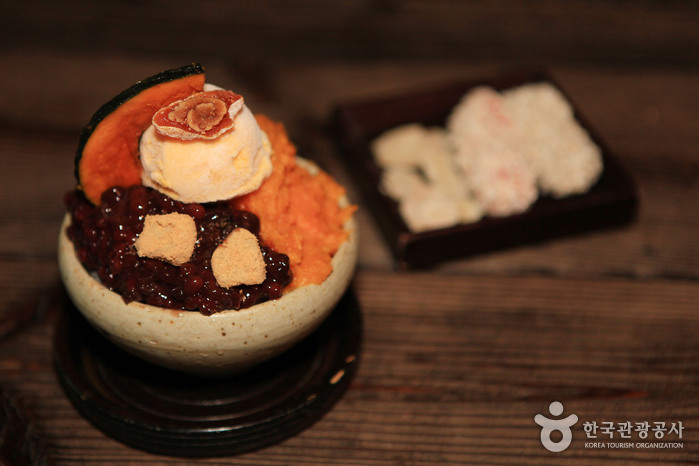
Sooyeon Sanbang (수연산방)
8.8Km 2025-10-23
8 Seongbuk-ro 26-gil, Seongbuk-gu, Seoul
Sooyeon Sanbang is a traditional tea house located in Seongbuk-dong. It was originally built during the Japanese colonial period and was the hanok of the literary figure Lee Taejun. Today, it is operated as a tea house by the writer's granddaughter. The name Sooyeon Sanbang means "a house where literati gather in the mountains." Visitors can enjoy traditional teas such as daechucha (jujube tea) and ssanghwacha (medicinal herb tea), along with snacks like injeolmi (bean-powder-coated rice cake).
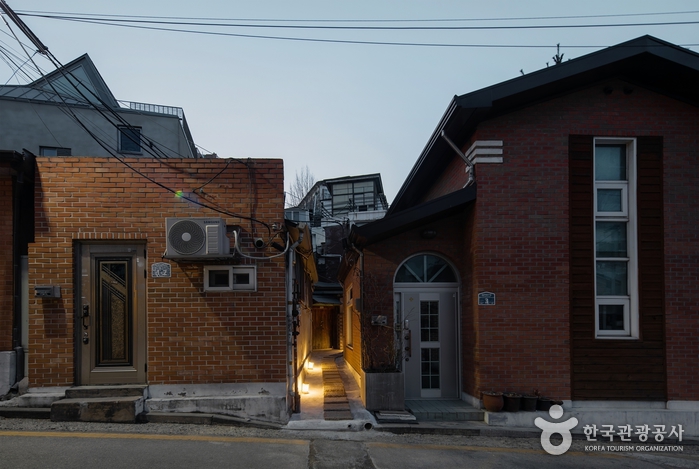
Nuwa (누와)
8.8Km 2024-12-23
3-1 , Pirundae-ro 5na-gil, Jongno-gu, Seoul
+82-504-0904-2313
Nuwa is a small, tastefully-renovated private hanok in the Seochon Village residential area to the west of Gyeongbokgung Palace in Seoul. It gets the light through a window wall in the living room, which contains a walnut table where guests can take tea, and a bathtub: weary travellers will feel better after taking a foot bath or half-body bath. High-quality tea and bath salts are provided. The sleeping space has an unusual round window, like a full moon, facing the bed, through which guests can see the top of Inwangsan Mountain as they fall asleep.
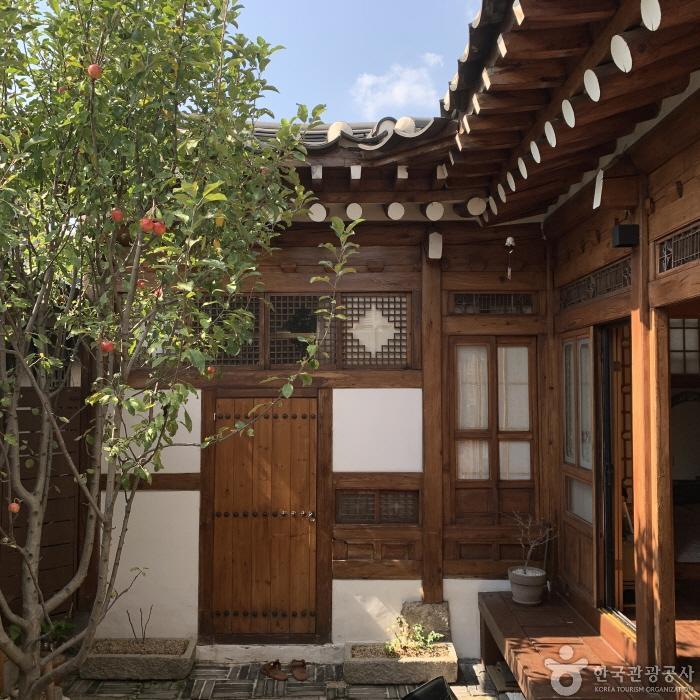
SOSO House (소소하우스)
8.9Km 2024-12-13
16-5 , Pirundae-ro 5ga-gil, Jongno-gu, Seoul
+82-10-5286-0704
Soso House is a private hanok stay located in Seochon, Jongno-gu, Seoul. Once you enter the gate, you are greeted by a small yard paved with stones and an alpine apple tree. There is a stool on one side of the yard where you can enjoy a cup of tea on a sunny day. In the daecheong maru (wooden-floored hall, there is a master bedroom on one side and a kitchen on the other, and the master bedroom has an attic. Cooking is allowed, and complimentary breakfast includes toast, salad, and coffee, as well as complimentary homemade fruit syrup and tea bags. Gyeongbokgung Palace, Seoul Museum of History, and Park No-Soo Art Museum are all within walking distance.
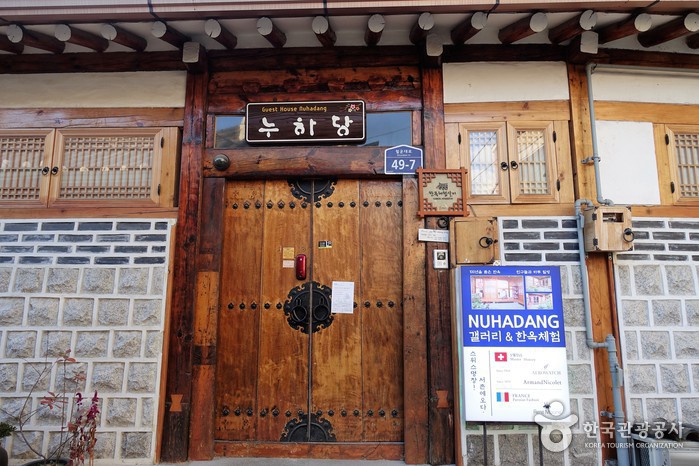
NUHADANG(누하당)
8.9Km 2024-06-20
49-7 , Pirundae-ro, Jongno-gu, Seoul
+82-2-3391-0010, +82-10-4347-5768
Nuhadang is a traditional hanok with over 100 years of history. It is located in a quiet spot in Seochon, Jongno-gu, Seoul, where many scholars and artists have lived since Joseon times. Rooms are wallpapered with eco-friendly Korean paper, and thick cotton blankets and cypress pillows will sooth travelers' fatigue. In the yard and small garden you can experience traditional Korean culture: janggu drumming, the game of yunnori, and Hanbok clothing. Walking the streets of Seochon - past Yun Dong-ju's hostel, Park No-su's art museum, and Lee Sang's house - you can still feel the atmosphere of old Seoul.

Sangchonjae House (상촌재)
8.9Km 2025-11-06
12-11 , Jahamun-ro 17-gil, Jongno-gu, Seoul
Sangchonjae House, run by the Jongno Cultural Foundation, is a traditional hanok cultural space located in Sejong Village, Ogin-dong, Jongno-gu, and operates various cultural Korean programs such as exhibitions, educational experiences, and events to fully experience Korea's four seasons. The name Sangchonjae was conceived from the old name of Sejong Village, the western part of Gyeongbokgung Palace and the birthplace of King Sejong. The house reflects the lifestyle of an ordinary peasant during the Joseon dynasty. It consists of three buildings: the main building, the guesthouse known as sarangchae, and the annex. There is an experience center indoors offering tea ceremonies and traditional game experiences.
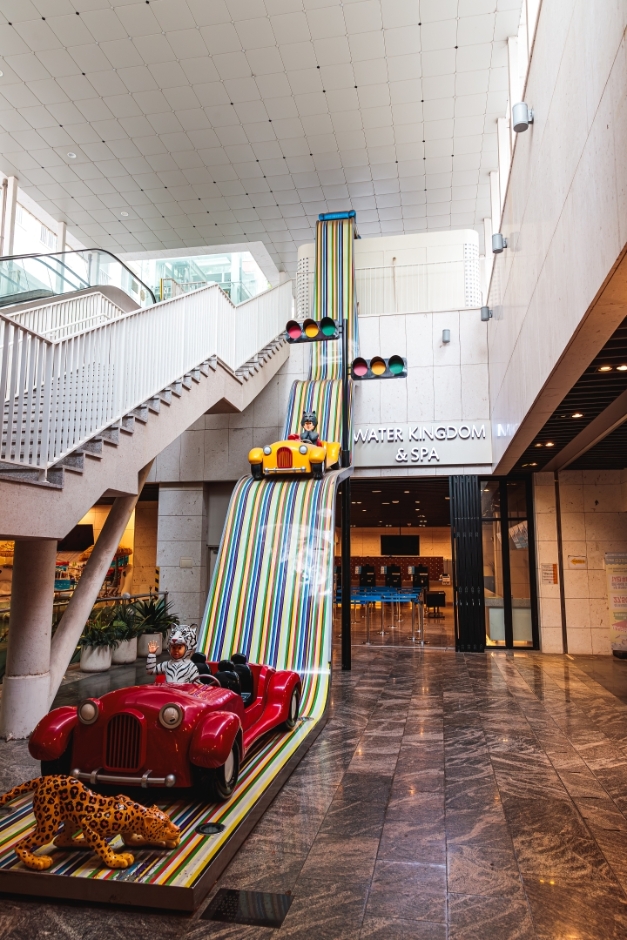
Park Habio Water Kingdom Water Park & Jjimjil Spa (파크하비오 워터킹덤&스파)
8.9Km 2025-10-24
111 Songpa-daero, Songpa-gu, Seoul
In the episode “Proxy Vacation,” where the members of Running Man take a summer vacation on behalf of the viewers, they are seen enjoying swimming and sliding in a cool pool. This refreshing vacation spot is the Water Kingdom & Spa in Songpa Park Habio. This indoor water park, open 365 days a year regardless of the weather, offers a variety of fun activities. If you get tired after playing in the water all day, you can also rest and recharge in the spa.
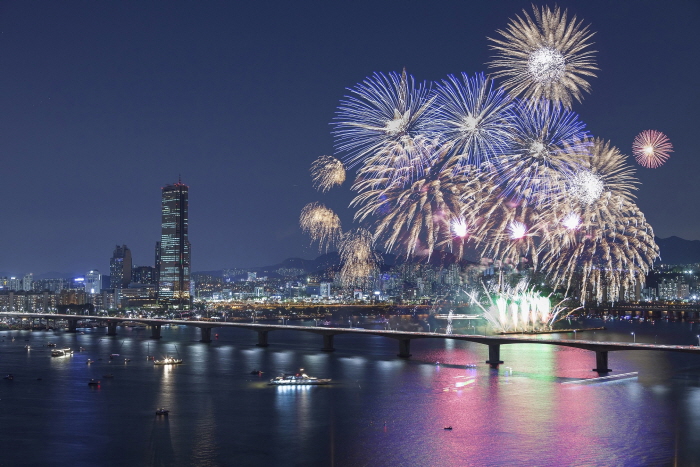
E-Land Cruise (Hangang River Ferry Cruise) (이랜드크루즈 (한강유람선))
8.9Km 2024-10-31
(Nodeulnaru Park), 290, Yeouidong-ro, Yeongdeungpo-gu, Seoul
+82-2-6291-6900
The E-Land Cruise cuts across the Hangang River along the east-west axis. It connects two terminals, one in Yeouido and the other in Jamsil. The company offers a number of different programs, such as the Han River Tour Cruise, a daytime cruise that takes one along the views of Hangang River, and the Moonlight Music Cruise, which offers a beautiful view of Seoul at night with jazz music. One can also enjoy buffet lunch and dinners on the ship.
![Uireung Royal Tomb [UNESCO World Heritage] (서울 의릉(경종, 선의왕후) [유네스코 세계문화유산])](http://tong.visitkorea.or.kr/cms/resource/80/2690680_image2_1.jpg)
Uireung Royal Tomb [UNESCO World Heritage] (서울 의릉(경종, 선의왕후) [유네스코 세계문화유산])
9.0Km 2021-06-03
146-20, Hwarang-ro 32-gil, Seongbuk-gu, Seoul
+82-2-964-0579
Uireung is the royal tomb of King Gyeongjong (reign 1720-1724), the 20th ruler of the Joseon dynasty, and his second wife, Queen Seonui.
King Gyeongjong was the first son of King Sukjong and Janghuibin, who was one of King Sukjong’s concubines. King Gyeongjong, who was born weak and anemic, died four years after becoming the king, without any great political achievements. Uireung tombs differ from the other royal double tombs in that they are not placed side-by-side. Instead, according to geomantic theory, one tomb has been placed directly behind the other one. The arrangement also shows that when making tombs, Korean ancestors did their best to protect the natural environment. Another feature of Uireung Royal Tomb is the stone fence raised using twelve stone posts. Each post has a letter inscribed, representing one of the twelve sibijisin gods.
![Hansarang Pharmacy - Ewha Womans Univ. Branch [Tax Refund Shop] (한사랑약국 이대)](http://tong.visitkorea.or.kr/cms/resource/36/2889036_image2_1.jpg)
Hansarang Pharmacy - Ewha Womans Univ. Branch [Tax Refund Shop] (한사랑약국 이대)
9.0Km 2024-04-23
183, Sinchon-ro, Seodaemun-gu, Seoul
-
![Jaju [Tax Refund Shop] (자주)](http://tong.visitkorea.or.kr/cms/resource/65/2891065_image2_1.jpg)
 English
 한국어
한국어 日本語
日本語 中文(简体)
 Deutsch
 Français
 Español
 Русский


