![Saeki P&C [Tax Refund Shop] (세기피앤씨)](http://tong.visitkorea.or.kr/cms/resource/68/2878668_image2_1.jpg)
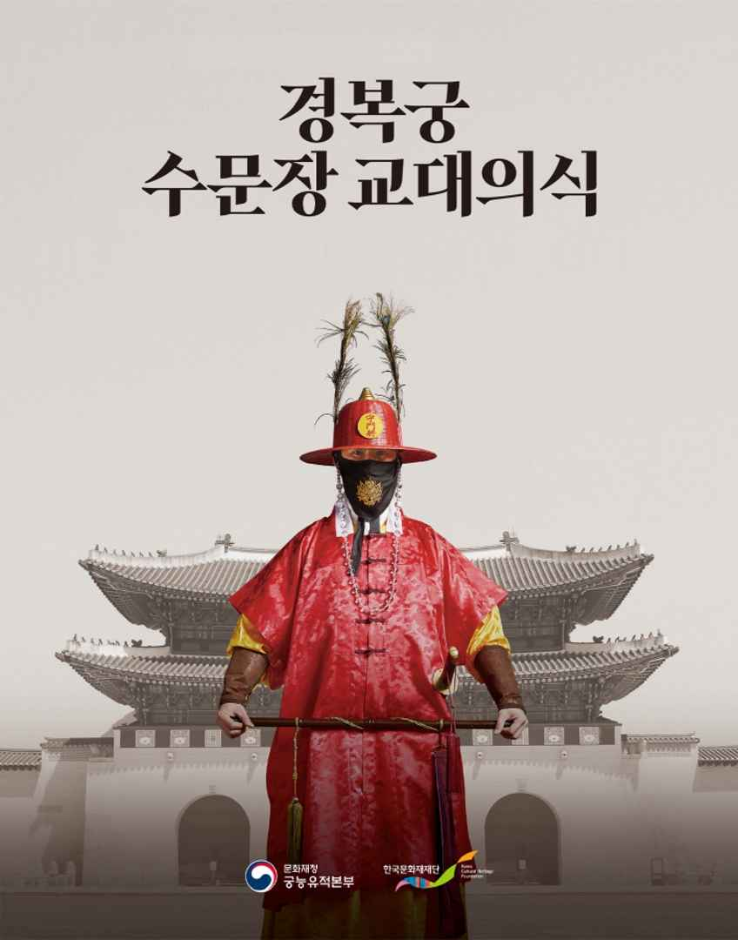
Palace Royal Guard Changing Ceremony (수문장 교대의식)
6.2Km 2025-07-11
161 Sajik-ro, Jongno-gu, Seoul
+82-2-3210-1645
In the Joseon dynasty, the royal guards of the palace were gatekeepers who were responsible for guarding the the main gates of Gyeongbokgung Palace as well as the main gates of the city such as Heunginjimun Gate and Sungnyemun Gate. The royal guards worked in shift duties and were in charge of opening and closing Gwanghwamun Gate. Before the royal guard system was enforced in 1469, the palace gates were protected by soldiers of the central army. The Palace Royal Guard Changing Ceremony held at Gyeongbokgung Palace and the Gwanghwamun area reenacts the guard-changing procedure that took place during the Joseon dynasty, along with the reproduction of costumes and weapons, based on historical records.

Seoul Eungbongsan Mountain (응봉산(서울))
6.2Km 2024-07-05
1540 Geumho-dong 4-ga, Seongdong-gu, Seoul
+82-2-2286-6061
From Eungbongsan Mountain, one can easily see the Hangang River, Seoul Forest, Jamsil Sports Complex and more in the eastern part of Seoul. With such a great view of the Hangang River, the mountain is often packed with visitors including many photographers. The mountain serves as a venue for diverse events, including a sunrise festival on New Year's Day and forsythia festival around April during the flowering season.
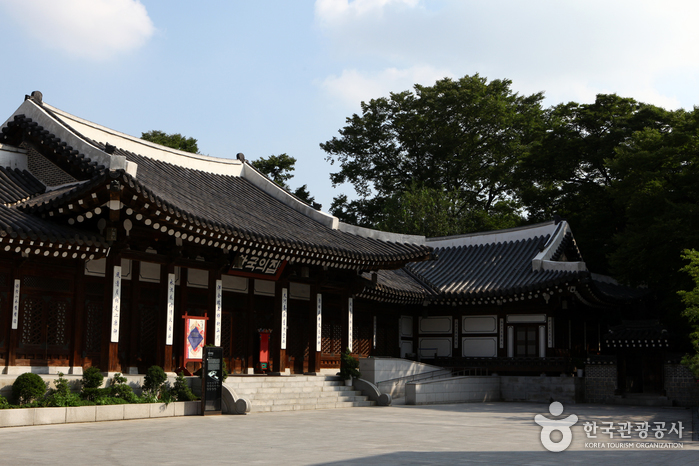
Korea House (한국의집)
6.2Km 2025-10-23
10, Toegye-ro 36-gil, Jung-gu, Seoul
The Korea House was opened in 1981. It is a traditional Korean building that introduces the culture and lifestyle of Koreans, where you can experience traditional architecture and a classical atmosphere. The building was built in the style of the Joseon Dynasty's Jagyeong-jeon building at the Gyeongbok Palace. It is the only building built in the traditional architectural style. You will feel its antiquity as you enter the building.
It is divided into the Haerin-gwan (a space for people to get acquainted with each other), the Traditional Theater, and three annex buildings (Munhyang-ru, Nokeum-jeong and Cheongwu-jeong). At Haerin-gwan, you can enjoy traditional music at Garak-dang and try traditional food at Sohwa-dang. In the square of Garak-dang you can view a traditional wedding (on the weekends) or people playing folk games. Also, at the Traditional Theater, about 156 seats are available, and in the afternoons Human Cultural Assets or members of the National Center for Korean Traditional Performing Arts and the National Corps members present traditional music and dances. Sinayui, Salpuri, Pansori, the Drum Dance and the Bongsan Mask Dance are the most popular programs for foreigners. The programs are all explained in English and Japanese.
In the Cultural Gift Shop you can view various crafts made by traditional craftsmen. It is always open and the crafts are for sale as well. There are pottery, ceramics, golden crafts, knots and embroidery etc; approximately 500 pieces of artwork made by craftsmen from 20 different fields. Next to the House of Korea is the Namsan-gol Hanok Village where visitors can explore traditional houses.
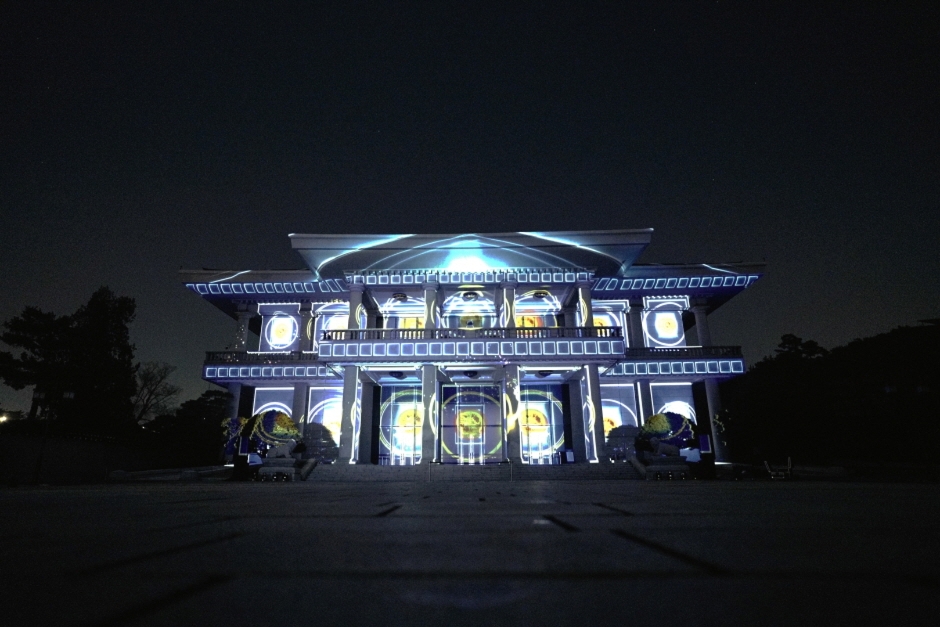
Cheong Wa Dae Media Display (청와대 국민과 함께 영상전시)
6.2Km 2025-08-20
1 Cheongwadae-ro, Jongno-gu, Seoul
박주원 학예연구사 02-3771-8636
Cheong Wa Dae Media Display brightens the night through a media facade display on Yeongbingwan Hall. The display shows the history of Cheong Wa Dae through the theme "Twelve Lights".
![Taereung and Gangneung Royal Tombs [UNESCO World Heritage] (서울 태릉과 강릉 [유네스코 세계문화유산])](http://tong.visitkorea.or.kr/cms/resource/16/2658216_image2_1.jpg)
Taereung and Gangneung Royal Tombs [UNESCO World Heritage] (서울 태릉과 강릉 [유네스코 세계문화유산])
6.2Km 2022-09-19
681, Hwarang-ro, Nowon-gu, Seoul
+82-2-972-0370
Designated as a Historic Site, Taereung & Gangneung Royal Tombs is comprised of two tombs. Taereung Royal Tomb houses the burial mound of Queen Munjeong who was the second queen of King Jungjong, the 11th King of the Joseon dynasty, and Gangneung Royal Tomb houses the burial mounds of King Myeongjong, the 13th King of Joseon dynasty, and Queen Insun. King Myeongjong ascended the throne after his elder brother, King Injong, when he was twelve years old at Geunjeongjeon Hall in Gyeongbokgung Palace in 1545. The king’s mother, Queen Munjeong ruled behind the scenes, acting as guardian for eight years.
![Olens - Gwanghwamun Branch [Tax Refund Shop] (오렌즈 광화문)](http://tong.visitkorea.or.kr/cms/resource/17/2878217_image2_1.jpg)
Olens - Gwanghwamun Branch [Tax Refund Shop] (오렌즈 광화문)
6.2Km 2024-04-18
1F, 82, Sambong-ro, Jongno-gu, Seoul
-
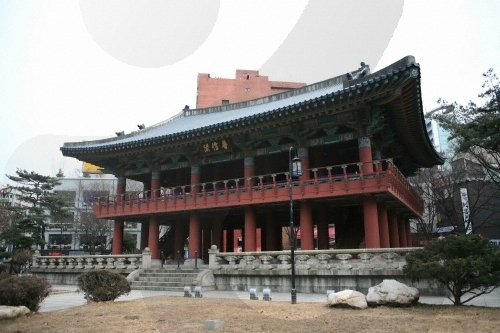
Bosingak Belfry (보신각 터)
6.2Km 2024-03-04
54, Jong-ro, Jongno-gu, Seoul
+82-2-2133-2641
Bosingak Belfry is also known as Jonggak. It was the site in which a large bell, used to keep the time in Seoul, was found during the Joseon period (1392-1897). Bosingak Belfry was burned down during the Korean War (1950-1953) and was reconstructed in 1979. The original bell was moved to the Gyeongbokgung Palace, and a new bell was forged in 1985. At midnight, January 1, the bell at the Bosingak Belfry is rung to welcome the new year. Many people gather around the belfry to make a wish for their new year.
Healthpedia Co., Ltd. (㈜헬스피디아)
6.2Km 2025-10-23
#1014, 2 Toegye-ro 36-gil, Jung-gu, Seoul
HealthPedia is a medical tourism service that connects foreign patients with specialized clinics in Korea, such as dermatology and plastic surgery. We collaborate with partner hospitals by specialty to assist with appointment booking, interpretation, accommodation guidance, as well as pre- and post-treatment consultations and recovery programs. Multilingual support is available in English, Chinese, Vietnamese, and more for a convenient reservation experience.
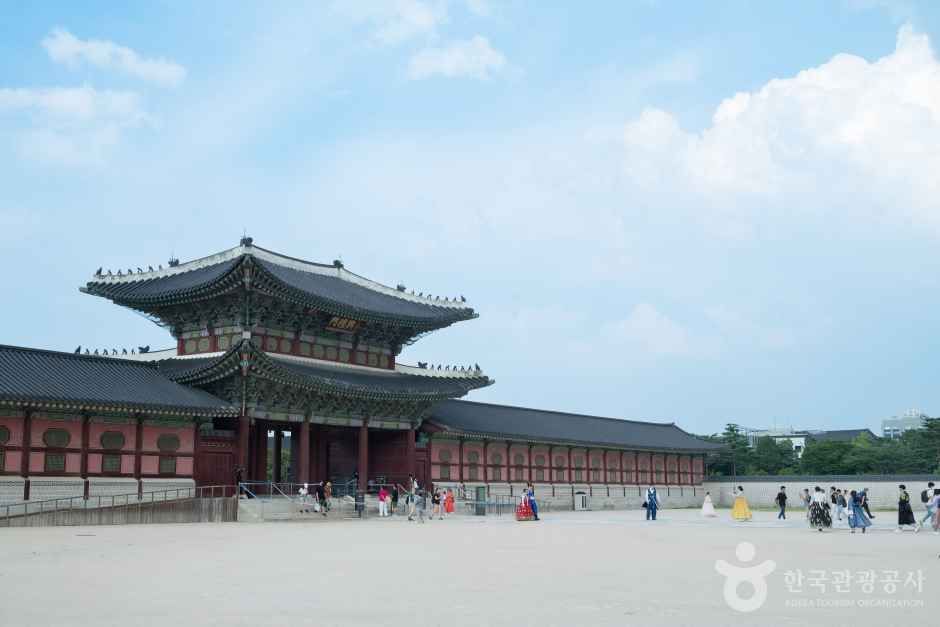
Gyeongbokgung Palace (경복궁)
6.2Km 2025-10-23
161 Sajik-ro, Jongno-gu, Seoul
+82-2-3700-3900
Gyeongbokgung Palace was built in 1395 as the official palace of the Joseon dynasty by Yi Seong-gye, the future King Taejo and founder of the new regime. Gyeongbokgung Palace is commonly referred to as the Northern Palace because of its location to the north, comparied to Changdeokgung Palace in the east and Gyeonghuigung Palace in the west. Gyeongbokgung Palace is arguably the most beautiful and is the largest of all five palaces. Many Joseon kings were crowned here. The premises were once destroyed by fire during the Imjin War (1592-1598). However, all of the palace buildings were later restored under the leadership of Heungseondaewongun during the reign of King Gojong. The assassination of Empress Myeongseong, however, resulted in Gyeongbokgung Palace losing its function as a royal palace, eventually witnessing the downfall of the Joseon dynasty. Gyeongbokgung Palace retains the original Gyeonghoeru Pavilion, a prime example of Joseon architecture, and the Hyangwonjeong Pavilion and pond. The sculptures in the Geunjeongjeon Hall exemplify Joseon-era sculpture techniques. The west side of the area outside Heungnyemun Gate is occupied by the National Palace Museum of Korea, while the eastern side of Hyangwonjeong Pavilion within the Gyeongbokgung Palace is occupied by the National Folk Museum of Korea.
 English
 한국어
한국어 日本語
日本語 中文(简体)
 Deutsch
 Français
 Español
 Русский


