
Korea Furniture Museum (한국가구박물관)
9.7Km 2025-10-24
121 Daesagwan-ro, Seongbuk-gu, Seoul
The Korea Furniture Museum, located on a hill in Seongbuk-dong, Seoul, is a special museum that displays items related to Korea's traditional living culture. The museum exhibits wooden furniture made in the late Joseon dynasty by material (persimmon tree, maple tree, paulownia tree, zelkova tree, pine tree, papers, etc.), by the type of space (men’s quarters, women’s quarters, kitchen, etc.), and by regional characteristics. It also exhibits interior decorations, flower walls, chimneys, and yards, as well as ten traditional Korean houses.
This museum operates through a guided tour (maximum of 20 people per group) only, suitable for showing Korea's housing culture that harmonizes furniture and nature. The old household items, “furniture,” are displayed in rooms outside glass storage boxes, allowing visitors to experience a beautiful traditional culture.
Since it was selected as the official luncheon venue for the spouses of leaders of 20 countries at the 2010 G20 Seoul Summit, there has been a steady stream of state guests and worldwide celebrities, including Chinese President Xi Jinping and his wife, the German President, the Prime Minister of Hungary, the Prime Minister of Singapore, the King and Queen of Belgium, the King of Sweden, the head of the IMF, and movie stars Brad Pitt, and Victoria Beckham.
In addition, it was selected as the "most beautiful museum in Seoul” by CNN in 2011. The museum also served as an interview location for BTS members, who are receiving global attention. As such, it is attracting attention as a representative tourist destination in Seoul and a cultural space preferred by government ministries and companies. Tours require reservations, which can be made through the website.
Suseongdonggyegok Valley (수성동계곡)
9.7Km 2023-08-17
185-3, Ogin-dong, Jongno-gu, Seoul 서울특별시 종로구 옥인동
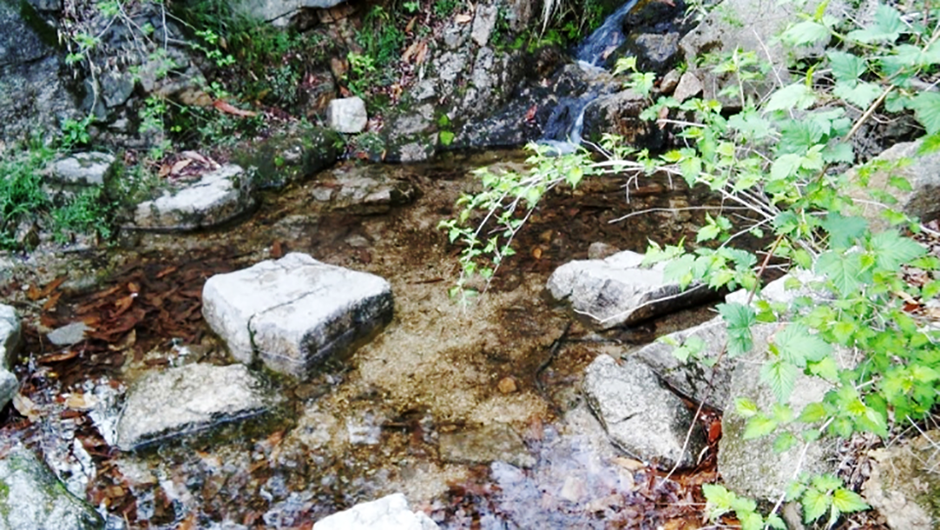
Suseong-dong Valley's stream runs down from Inwangsan Mountain and joins Cheonggyecheon Stream, and it is said that the name of the village was called Suseong-dong during the Joseon dynasty due to the loud and clear sound of the flowing water. It appears in the painting "Jangdong Palgyeongcheop," which is Jangdong Eight Scenic Views, that depicts the eight scenic views of Bugaksan Mountain and Inwangsan Mountain as well as in other historical books of the Joseon dynasty as a place of scenic beauty. The valley was so famous for its beauty, that Prince Anpyeong of the Joseon dynasty built his house "Bihaedang" to fully enjoy the view, and the valley and its stone bridge were designated as a cultural property of Seoul in 2010.
Jihwaja (지화자)
9.7Km 2024-03-18
125 Jahamun-ro, Jongno-gu, Seoul
+82-2-2269-5834
Jihwaja is a traditional Korean restaurant operated by a successor of Joseon dynasty royal dishes. Their manchan course (full course) includes menus served at royal banquets such as gungjung manchan (royal course), Jineo-byul manchan (deluxe royal degustation course), and janggeum manchan (daejanggeum degustation course) courses. The janggeum course reconstructs dishes from the drama "Dae Jang Geum." For the Jeongchan course (Set menu), they offer so galbi sura (grilled beef ribs course), jeonbok cho sura (braised abalones in soy sauce course), so galbi jjim sura (braised beef short ribs course), and haemul sinseollo sura (seafood hot pot course). Additionally, they serve milk porridge, meat and vegetable skewers, mandu, royal hot pot, and grilled marinated beef.
Iljasan Mountain Natural Park (일자산자연공원)
9.8Km 2021-04-23
660, Dongnam-ro, Gangdong-gu, Seoul
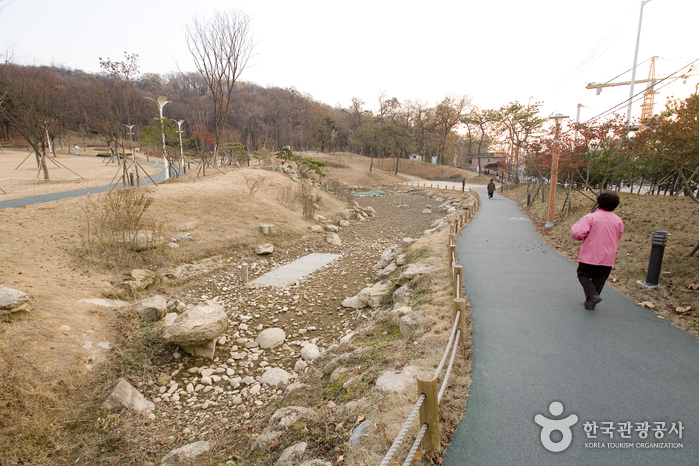
Iljasan Mountain is the tallest peak in Gangdong-gu, Seoul, providing the western boundary between Gangdong-gu and Hanam-si, Gyeonggi-do. Iljasan Mountain is one of the best spots in Seoul to watch the sunrise. Located on the mountain is the house of Master Lee Jip (pen-name Dunchon), providing a good getaway spot for local residents. Lee Jip was a loyal government official during the reign of King Gongmin during the late Goryeo dynasty. He was forced to move to an underground tunnel in the southwest side of Iljasan Mountain to avoid entrapment by Shin Don, a person of influence at the time. While living in hiding, he took the pen-name Dunchon (meaning drawing back to the countryside) to symbolize the hardships he was going through. The nearby area was named after him, being called Dunchon-dong.
Davich Optical - Mia Sageori Branch [Tax Refund Shop] (다비치안경 미아사거리)
9.8Km 2024-04-22
1F, 3, Wolgye-ro, Gangbuk-gu, Seoul
-
Bamseom Island (Ecosystem Conservation Area) (밤섬 생태경관 보전지역)
9.8Km 2025-04-29
Yeouido-dong, Yeongdeungpo-gu, Seoul
+82-2-3780-0793
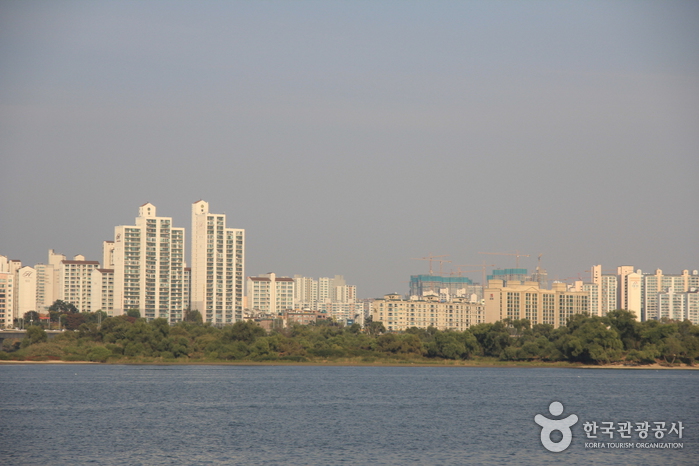
Located at the Hangang River, Bamseom Island derives its name from its chestnut-like shape (bam in Korean). The island was designated as an Ecosystem Conservation Area by the Seoul Metropolitan Government in 1999 and was later recognized as Ramsar Wetland in 2012. Now an uninhabited island, Bamseom Island was once home to around 443 people, who were relocated after the island was exploded as part of the Yeouido Development Project. Today, it is known as a habitat for numerous migratory birds and plant species. People can enjoy views of the Island from Bamseom Park.
Seodaemun Independence Park (서대문독립공원)
9.8Km 2022-12-15
251, Tongil-ro, Seodaemun-gu, Seoul
+82-2-3140-8305
Seodaemun Independence Park was built on the former Seoul Detention Camp. It was used to imprison thousands of Korean independence activists until the liberation from the Japanese occupation on August 15, 1945, as well as the political prisoners during the political turmoil in the 1960s. When the prison was moved to Uiwang-si, Gyeonggi-do in November 1987, the area was restored and turned into a memorial park in August 15, 1992 to honor the sacrifices of the martyrs. The park preserves seven prison buildings, an execution ground, underground women’s prison, and the March 1st Movement Monument that has been moved from Tapgol Park in Jongno.
One of the most significant monuments of the Seodaemun Independence Park is Dongnimmun Gate (Independence Gate), which has been designated a Historic Site. Nearby is Dongnipgwan (Independence Hall), originally called Mohwagwan, which was used to greet Chinese envoys during the Joseon dynasty. Today, the hall enshrines 2,327 tablets inscribed with the names of Koreans who died for the cause of national independence. Standing right next to Dongnimmun Gate are the remnants of Yeongeunmun Gate, another Historic Site. Other sights inside the park include the Patriotic Martyr Monument, Declaration of Independence Monument, and Statue of Dr. Seo Jae-pil, who was an independence activist and publisher of Korea’s first independent newspaper. The main highlight of the park is the Seodaemun Prison History Hall, a former prison building that was renovated into a history museum.
Yongma Land (용마랜드)
9.8Km 2025-10-28
118 Mangu-ro 70-gil, Jungnang-gu, Seoul
Yongma Land, a private amusement park, was opened at the foot of Yongmasan Mountain in 1983, and closed its doors in 2011. Having spent some time as a derelict building, it has now been repurposed as a nostalgia-filled space. It was made famous as the filming location of Crayon Pop’s "Bar Bar Bar" music video. Since then, it has become a renowned destination for photography, thanks to its unique atmosphere created by the combination of lush greenery and derelict amusement rides. Entry may be restricted in the case of filming or space rentals, so make sure to check with the management before you head to the amusement park. Yongma Land is located next to Bonghwa Middle School, at Exit 1 of Mangu Station, Gyeongui–Jungang Line.
![Lotte Himart - Mia Branch [Tax Refund Shop] (롯데하이마트 미아점)](http://tong.visitkorea.or.kr/cms/resource/25/2890125_image2_1.jpg)
Lotte Himart - Mia Branch [Tax Refund Shop] (롯데하이마트 미아점)
9.8Km 2024-04-16
10, Dobong-ro, Gangbuk-gu, Seoul
-
Seoul Mangusan Mountain (망우산(서울))
9.8Km 2021-02-10
San 69-1, Mangu-dong, Jungnang-gu, Seoul
+82-2-2094-2395
Mangusan Mountain at 281.7 meters above sea level spans across Mangu-dong and Myeonmok-dong of Seoul, and Guri-si of Gyeonggi-do. Located on the mountain is Mangu Cemetery, which was designated as a public cemetery in 1933. Since its designation, many popular people have been buried here including children’s literature author Bang Jeong-hwan (penname: Sopa), independence activists Oh Se-chang and Han Yong-un, and Ji Seok-young who pioneered the use of the smallpox vaccination in Korea and was also a Korean linguist. In addition, tombstones bearing chronological listings of seven popular poets and one educator were installed at the park, making the cemetery a venue for historical education. The park also has Sin Gyeong-jin Sindobi, a cultural asset designated as Seoul Tangible Cultural Property No. 95. It is a monument of Sin Gyeong-jin, an official scholar of the Joseon dynasty.
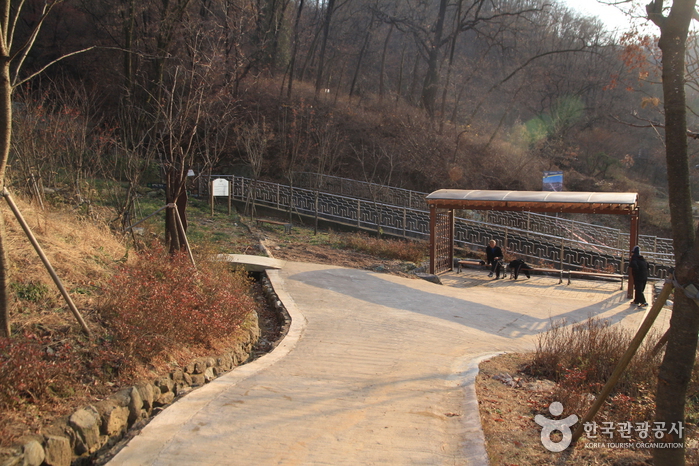
The park also has a 5.2-kilometer-long circular road named “The Thinking Path”. The name was selected through a public competition held in May 1998. Other facilities include the urban environment and nature observation road, a wooden gazebo, and a mineral spring. Thanks to the well managed trees and clean air, the park is visited by many citizens seeking a place to rest.
 English
 한국어
한국어 日本語
日本語 中文(简体)
 Deutsch
 Français
 Español
 Русский


