![Aritaum - Isu Branch [Tax Refund Shop] (아리따움 이수)](http://tong.visitkorea.or.kr/cms/resource/26/2880026_image2_1.jpg)
Aritaum - Isu Branch [Tax Refund Shop] (아리따움 이수)
7.0Km 2024-04-22
1F, 25, Dongjak-daero 29-gil, Dongjak-gu, Seoul
-
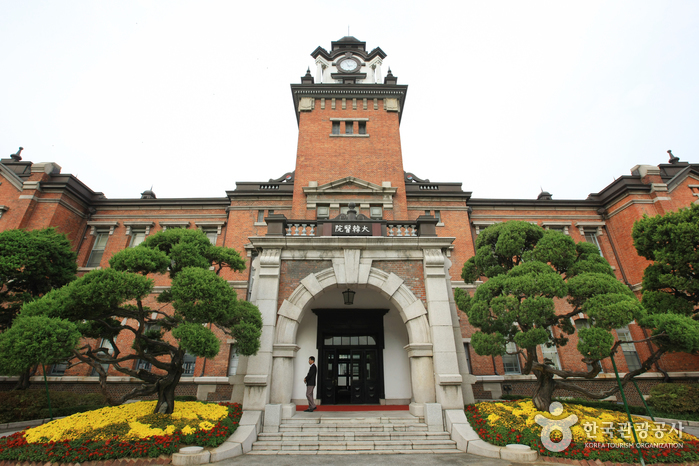
Seoul Daehan Hospital (서울 대한의원)
7.0Km 2021-12-23
101, Daehak-ro, Jongno-gu, Seoul
+82-2-2148-1842
Daehanuiwon (Daehan Medical Center) is an antique two-story brick building within the grounds of Seoul National University Hospital. It was established under the direct administration of the Uijeongbu (State Council), combining the Gwangjewon (under the Home Ministry), Gyeongseong Medical School and the Korean Red Cross Hospital (under the Royal Household).
Built in the Madubong Hill area, this location where Hamchunwon, the outer garden of Changgyeonggung Palace, once stood in 1484 (15th year of King Seongjong), was also once the site of Gyeongmogung Palace, where King Jeongjo enshrined the mortuary tablet of his birth father Crown Prince Sado Seja in 1776 (the year King Jeongjo ascended to the throne).
These places that held importance for the royal family were destroyed as the Japanese built Gyeongseong Empire University in its place. In 1907, with the announcement of the plan to establish Daehan Medical Center, construction began on the main building, seven wards and affiliated buildings. Construction was completed in November 1908.
The Daehan Medical Center opened in Gwangjewon, but upon Japanese colonization in 1910, its name was changed to the Japanese Viceroyalty Hospital. In 1926, it was included as a part of Gyeongseongjeguk University to become a university hospital. Since the liberation of Korea in 1945, it has been a hospital affiliated with Seoul National University.
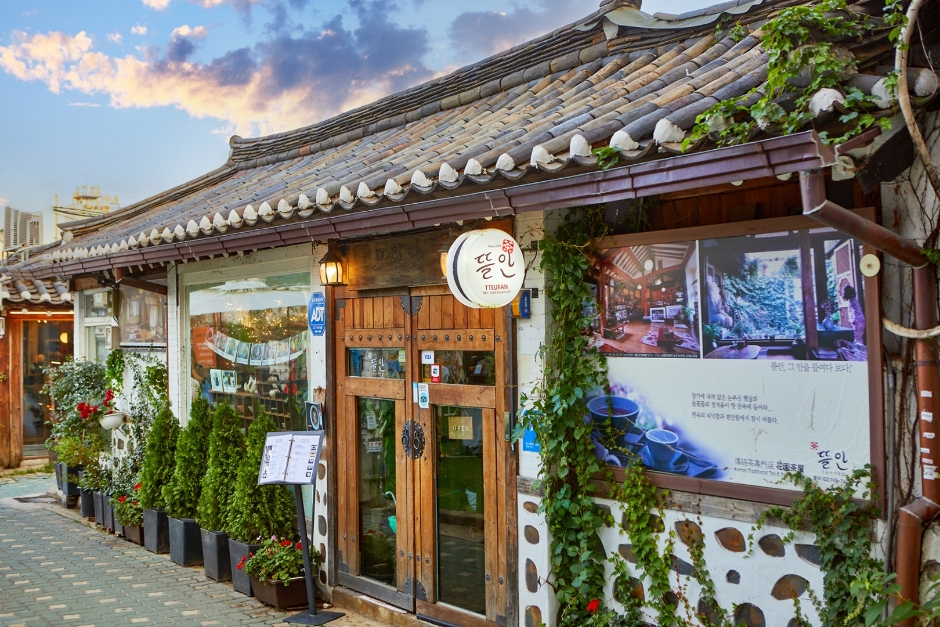
Tteulan Teahouse (뜰안)
7.0Km 2024-12-10
Tteulan Teahouse is a cafe that really allows one to feel the tradition and flair of Korea. Tteulan has two entrances: one facing the wide alley and the other facing the smaller one. The smaller entrance is decorated like a garden, so it feels as if one is stepping into a land of fairy-tales. The café has a floor seating tables with traditional items like gadari soban (a table with legs that curve like a dog's legs), and jogakbo (a textile woven from several pieces of scrap cloth), all of which add to the traditional Korean aesthetic. The menu features ssanghwacha (medicinal herb tea known to help the immune system), a favorite among middle-aged and elderly Koreans; omija tea (omija is a tart berry that grows in East Asia known to be good for lung and bronchial health and boosts immunity); citrus tea (usually made with yuzu which is rich in vitamin C and said to help mitigate fatigue); and pour-over coffee. Traditional desserts include mugwort rice cake (rice cake with mugwort added for herbal flavor, best enjoyed with malt syrup), pumpkin rice cake, and roasted grain powder (a nutritious beverage made with a variety of powdered grain). It can be hard to find seating in the afternoon, so visitors are advised to avoid these hours if they seek to enjoy their drink in peace.
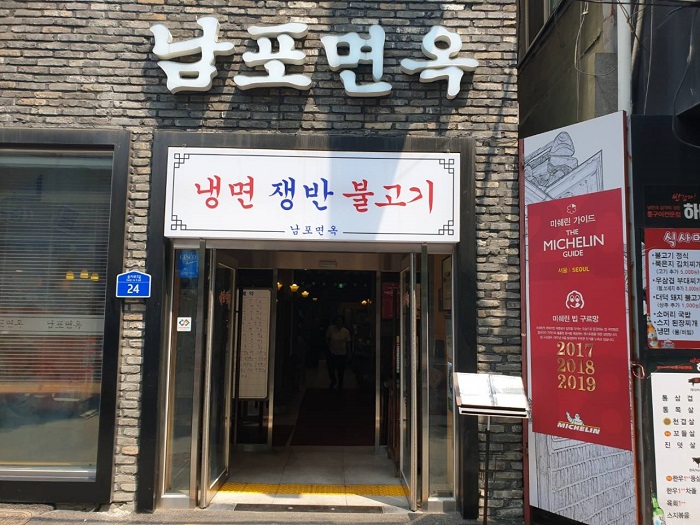
Nampo Myeonok (남포면옥)
7.0Km 2024-03-07
24, Eulji-ro 3-gil, Jung-gu, Seoul
+82-2-777-3131
Located near Seoul City Hall and Cheonggyecheon Stream, Nampo Myeonok is a traditional Korean restaurant. Opened in 1968, it has been recognized by the Michelin Guide several times. Their specialty is pyeongyang naengmyeon (pyeongyang cold buckwheat noodles). The restaurant also serves a variety of other dishes that are the most commonly found in Korea, including galbi tang (galbi soup), bulgogi, mandu soup, and yukgaejang (spicy beef soup).
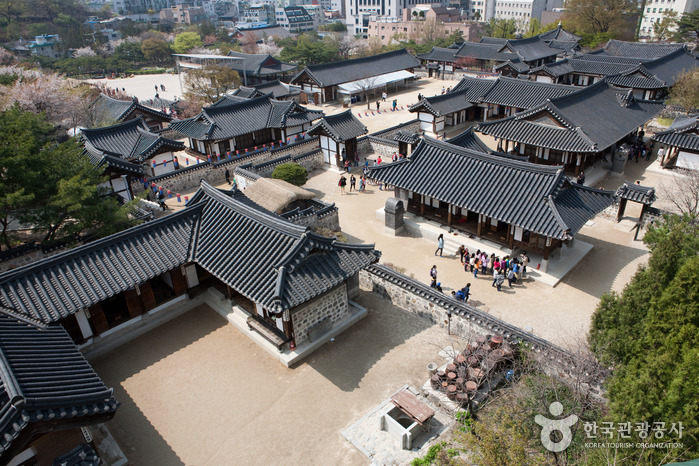
Myeong-dong, Namdaemun, Bukchang-dong, Da-dong and Mugyo-dong Special Tourist Zone (명동 남대문 북창동 다동무교동 관광특구)
7.0Km 2021-12-30
40, Sejong-daero, Jung-gu, Seoul
+82-2-3396-4622
Myeong-dong, Namdaemun, Bukchang-dong and Da-dong are widely known among international visitors as hot spots for shopping and food.
Myeong-dong is a popular destination for shopping, culture, arts and fashion. Major shopping malls such as Lotte Department Store, Shinsegae Department Store, Myeong-dong Migliore and Samik Fashion Town are located here. Shoppers can find a variety of products here from high-end items to relatively inexpensive clothes. There’s also no shortage of street food, traditional restaurants, coffee shops and fancy cafes.
Namdaemun Market is the biggest traditional market in Korea. Visitors can purchase souvenirs and local produce at an affordable price in the shopping complex crowded with stores and street stalls. The market sells a variety of clothes, kitchenware, toys, accessories, food, flowers and imported goods.
Bukchang-dong and Sogong-dong have high-end accommodations including Lotte Hotel Seoul and Westin Chosun Seoul, duty-free shops, and restaurants serving traditional dishes.
[Myeong-dong, Namdaemun Market and Bukchang-dong Special Tourist Zone]
Areas included: Myeong-dong, Bukchang-dong, Mugyo-dong and Da-dong, Seoul
Area size: 872,809 ㎡
Tourist attractions: Myeong-dong, Namdaemun Market and Bukchang-dong, Department Stores (Lotte Department and Shinsegae Department Store, etc.), Traditional Market, Duty-free Shop, Hanok Village, N Seoul Tower, etc.
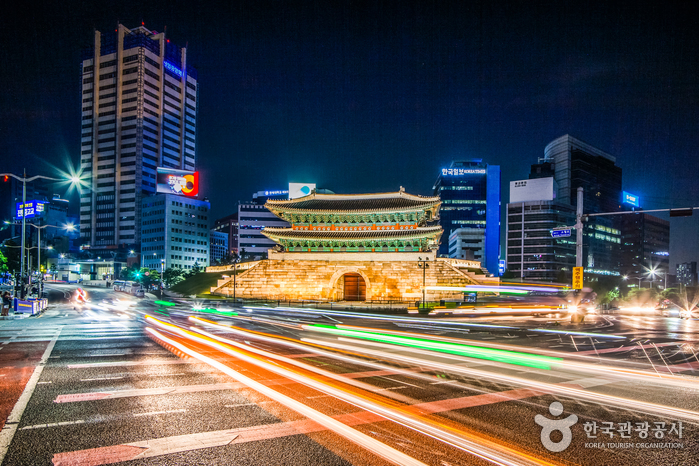
Sungnyemun Gate (숭례문)
7.0Km 2024-11-27
40 Sejong-daero, Jung-gu, Seoul
Sungnyemun Gate is Korea’s National Treasure No. 1, and its unofficial name is Namdaemun Gate. Sungnyemun Gate is the largest castle gate stone structure with an arched entrance in the middle. There’s a column on top of a platform, raising the roof, distinguishing the upper stories and lower stories of the building. Passageways for traffic are located at the east and west ends of the gate. Different from the other gates, Sungnyemun Gate’s tablet has its name written vertically.
On February 10, 2008, Sungnyemun was destroyed by fire. After a 5-year reconstruction work, the gate was re-opened to the public again on May 4, 2013.
![LOTTE OUTLETS SEOUL STATION[Korea Quality]/롯데쇼핑 롯데아울렛 서울역점[한국관광 품질인증]](http://tong.visitkorea.or.kr/cms/resource/32/2652032_image2_1.jpg)
LOTTE OUTLETS SEOUL STATION[Korea Quality]/롯데쇼핑 롯데아울렛 서울역점[한국관광 품질인증]
7.0Km 2024-09-03
405, Hangang-daero, Yongsan-gu, Seoul
+82-2-6965-2500
Lotte Outlet Seoul Station Branch sells famous department store brand products at discounts of 30-70%. Including a North Face Outlet store, there are about 130 brands, Missha, System, and Tendy among them - making this a fashion outlet that stays one step ahead of the trend. Located in Seoul Station, the city’s transport hub, the store has 11,200 sq metres of space over three storeys and provides free storage boxes for shoppers’ convenience.
![The Handsome Obzee - Lotte Seoul Station Branch [Tax Refund Shop] (한섬 오브제 롯데서울역)](http://tong.visitkorea.or.kr/cms/resource/19/2878419_image2_1.jpg)
The Handsome Obzee - Lotte Seoul Station Branch [Tax Refund Shop] (한섬 오브제 롯데서울역)
7.0Km 2024-04-23
405, Hangang-daero, Yongsan-gu, Seoul
-
![Lotte Mart - Seoul Station Branch [Tax Refund Shop] (롯데마트 서울역점)](http://tong.visitkorea.or.kr/cms/resource/40/2887940_image2_1.jpg)
Lotte Mart - Seoul Station Branch [Tax Refund Shop] (롯데마트 서울역점)
7.0Km 2024-04-22
426, Cheongpa-ro, Jung-gu, Seoul
-
![Daehyun Dewl - Lotte Seoul Station Branch [Tax Refund Shop] (대현 듀엘 롯데서울역)](http://tong.visitkorea.or.kr/cms/resource/96/2878396_image2_1.jpg)
Daehyun Dewl - Lotte Seoul Station Branch [Tax Refund Shop] (대현 듀엘 롯데서울역)
7.0Km 2024-04-17
405, Hangang-daero, Yongsan-gu, Seoul
-
 English
 한국어
한국어 日本語
日本語 中文(简体)
 Deutsch
 Français
 Español
 Русский


