
Homeplus - Dongdaemun Branch [Tax Refund Shop] (홈플러스 동대문)
5.3Km 2024-04-23
133, Cheonho-daero, Dongdaemun-gu, Seoul
-
21 Century Hospital (서울21세기병원)
5.3Km 2026-01-02
39 Seochojungang-ro, Seocho-gu, Seoul
Opened in 1999, 21st Century Hospital has a long-standing medical staff, most of whom have worked for the hospital for many years.
This safety has attracted many patients to our hospital.
![CAPO FOOTBALL STORE[Korea Quality]/카포 풋볼 스토어[한국관광 품질인증]](http://tong.visitkorea.or.kr/cms/resource/88/2591988_image2_1.jpg)
CAPO FOOTBALL STORE[Korea Quality]/카포 풋볼 스토어[한국관광 품질인증]
5.3Km 2024-08-20
282 , Eulji-ro, Jung-gu, Seoul
+82-10-8922-7981
Located in Eulji-ro, Jung-gu, Seoul, Capo Football store is the largest football store in Korea. It stocks football boots of various levels, plus fan wear, uniforms, and training wear. On the 5th floor, a customer lounge provides free coffee, a football book cafe, a PlayStation for enjoying FIFA games, table soccer, and an exhibition of capo collections.
![Lotte Mart - Seocho Branch [Tax Refund Shop] (롯데마트 서초점)](http://tong.visitkorea.or.kr/cms/resource/56/2887956_image2_1.jpg)
Lotte Mart - Seocho Branch [Tax Refund Shop] (롯데마트 서초점)
5.3Km 2024-04-22
12, Seocho-daero 38-gil, Seocho-gu, Seoul
-
![Le Mans Eyewear - Cheonggyecheon Branch [Tax Refund Shop] (르망안경콘택트 청계천)](http://tong.visitkorea.or.kr/cms/resource/14/2889514_image2_1.jpg)
Le Mans Eyewear - Cheonggyecheon Branch [Tax Refund Shop] (르망안경콘택트 청계천)
5.4Km 2024-04-18
B2 E-MART, Lotte Castle Venezia, 400, Cheonggyecheon-ro, Jung-gu, Seoul
-
![E-Mart - Cheonggyecheon Branch [Tax Refund Shop] (이마트 청계천)](http://tong.visitkorea.or.kr/cms/resource/80/2888580_image2_1.jpg)
E-Mart - Cheonggyecheon Branch [Tax Refund Shop] (이마트 청계천)
5.4Km 2024-04-18
400, Cheonggyecheon-ro, Jung-gu, Seoul
-
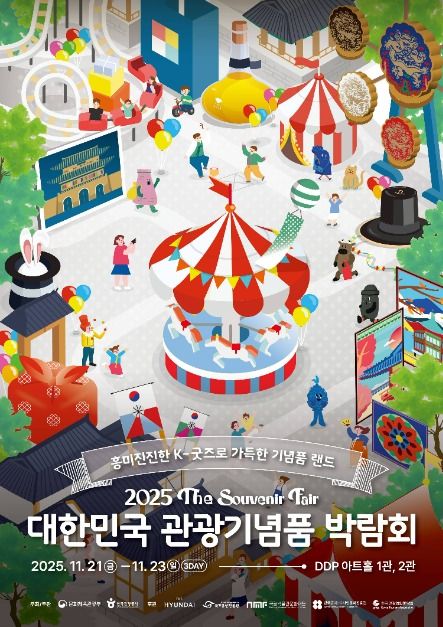
The Souvenir Fair (2025 대한민국 관광기념품 박람회)
5.4Km 2025-10-27
281 Eulji-ro, Jung-gu, Seoul
+82-10-8315-5434
The Souvenir Fair brings together various companies and local governments to showcase a variety of souvenirs, both traditional and trendy. Visitors can freely explore the exhibition space, enjoy souvenir shopping, and take part in various programs. Highlights of the fair include an exhibition of competition-winning works, a zone featuring outstanding local souvenirs, and a special exhibition of overseas souvenirs.
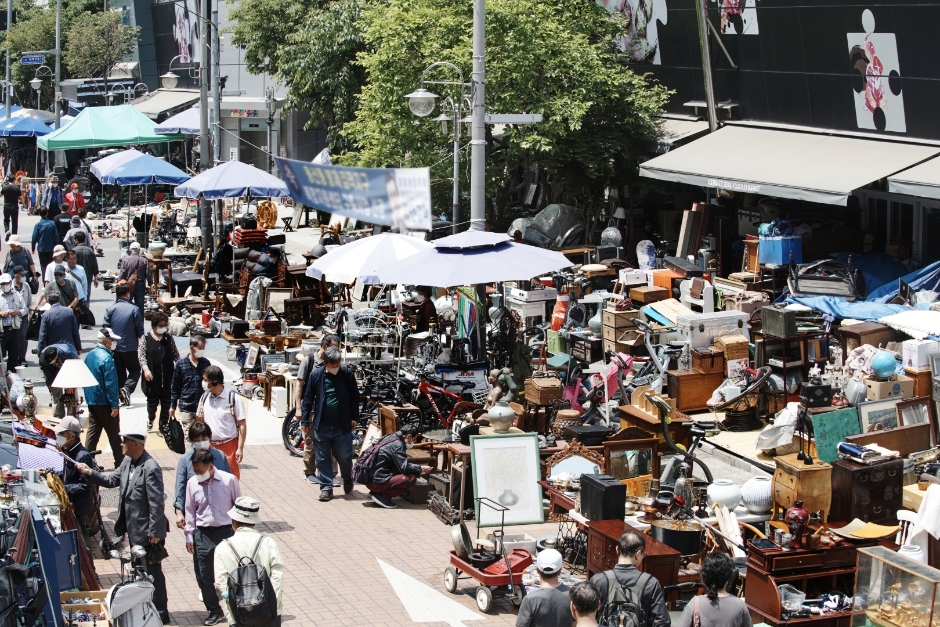
Seoul Folk Flea Market (서울 풍물시장)
5.4Km 2025-04-11
21 Cheonho-daero 4-gil, Dongdaemun-gu, Seoul
+82-2-2232-3367
The Seoul Folk Flea Market is located around Cheonggyecheon Stream's Hwanghakgyo Bridge and Sinseol-dong Station and is on its way to becoming a famous tourist attraction along with the already famous Cheonggyeocheon Stream. The Seoul Folk Flea Market is one of the major folk flea markets preserving the culture of the traditional Korean marketplace and drawing in visitors with a range of folk items that embody the unique charm of Korea. Folk items include everyday items, souvenirs, traditional goods and even traditional foods, allowing visitors to enjoy shopping and eating all under the same roof.
The Seoul Folk Flea Market originated from the flea market in Hwanghak-dong where many street shops and vendors gathered around Cheonggyecheon Stream before it was restored and modernized into its current state. The market was relocated to the Dongdaemun History & Culture Park (Formerly Dongdaemun Stadium) while the Cheonggyecheon Stream was undergoing restorations, and was moved back to Cheonggyecheon Stream sometime later. Seoul City aims to market Seoul Folk Flea Market as a new shopping spot at its current location, the former site of Sungin Girls' Middle School on Cheonggyeo 8-ga Street, near Cheonggyeocheon Stream to develop the Korean representative folk flea market-related tourism industry.
The main items of the Seoul Folk Flea Market include a diverse range of folk items, traditional crafts, local specialties and fashion items. You may also enjoy a range of foods and snacks including traditional Korean food and fusion cuisine from all over the world. What is special about the market is that you can find rare goods and authentic traditional items that cannot be found at other markets. The market atmosphere is a mix of old, revered traditions and modern aspects, providing visitors with a great shopping experience. The Seoul Folk Flea Market is truly a traditional flea market well worth visiting.
![Olive Young - Nambu Bus Terminal Branch [Tax Refund Shop] (올리브영 남부터미널)](http://tong.visitkorea.or.kr/cms/resource/42/2888942_image2_1.jpg)
Olive Young - Nambu Bus Terminal Branch [Tax Refund Shop] (올리브영 남부터미널)
5.4Km 2024-04-18
283, Hyoryeong-ro, Seocho-gu, Seoul
-

Lotte World Tower & Mall (롯데월드타워&롯데월드몰)
5.4Km 2024-11-28
300 Olympic-ro, Songpa-gu, Seoul
+82-2-3213-5000
Lotte World Tower was designed with a conceptual motif inspired by Korean ceramics and writing brushes. With 123 floors total, the tower is the fifth tallest building in the world, standing at 555 meters. The tower contains galleries, cafés, and a luxury hotel, in addition to a skywalk and an observation deck. It is one of the best spots to appreciate the breathtaking view of Seoul's vibrant city lights.
Lotte World Mall, located next to the tower, features Avenuel, a complex of luxury department stores. The multi-leveled mall draws in many visitors as one of the top shopping attractions in Seoul, with a variety of domestic and foreign brands. The mall also offers a wide-range of entertainment facilities, such as a movie theater, aquarium, concert hall, and more.
 English
 한국어
한국어 日本語
日本語 中文(简体)
 Deutsch
 Français
 Español
 Русский


