
BST Plastic Surgery [Tax Refund Shop] (비에스티성형외과 [사후면세점])
640.1M 2024-04-16
6-7F Inam Bldg., 616, Yeongdong-daero, Gangnam-gu, Seoul
-
Superior - Teheran Branch [Tax Refund Shop] (슈페리어테헤란)
655.8M 2024-04-23
614, Teheran-ro, Gangnam-gu, Seoul
-
![Shesmiss - Seolleung Branch [Tax Refund Shop] (쉬즈미스 선릉)](http://tong.visitkorea.or.kr/cms/resource/70/2879870_image2_1.jpg)
Shesmiss - Seolleung Branch [Tax Refund Shop] (쉬즈미스 선릉)
657.5M 2024-04-18
1F, 419, Teheran-ro, Gangnam-gu, Seoul
-
Seoul Bongeunsa Temple (봉은사 (서울))
663.2M 2024-10-24
531 Bongeunsa-ro, Gangnam-gu, Seoul
+82-2-3218-4800
Once known as Gyeonseongsa Temple, Bongeunsa Temple is located north of COEX, and was constructed in the 10th year of Silla King Weongseong’s reign (794). In 1498, Queen Jeonghyeon refurbished Gyeonseongsa Temple and renamed it Bongeunsa Temple.
Originally located near the Royal Tomb of King Seongjong, the temple was transferred to its current location during Joseon King Myeongjong’s reign. The temple is home to 3,479 Buddhist scriptures of 13 types, including the works of Kim Jeong-hee. The Buddhist ceremony called Jeongdaebulsa is held on the ninth day of the eighth month of the lunar calendar, where monks march carrying the scriptures on their heads and recite the Beopseongge (Buddhist rites).
Olive Young - Samseong Jungang Station Branch [Tax Refund Shop] (올리브영 삼성중앙역점)
708.5M 2024-06-27
465, Bongeunsa-ro, Gangnam-gu, Seoul
-
![CheongKwanJang - Cosmo Tower Branch [Tax Refund Shop] (정관장 코스모)](http://tong.visitkorea.or.kr/cms/resource/84/2889484_image2_1.jpg)
CheongKwanJang - Cosmo Tower Branch [Tax Refund Shop] (정관장 코스모)
772.2M 2024-04-18
B1F, 416, Yeongdong-daero, Gangnam-gu, Seoul
-
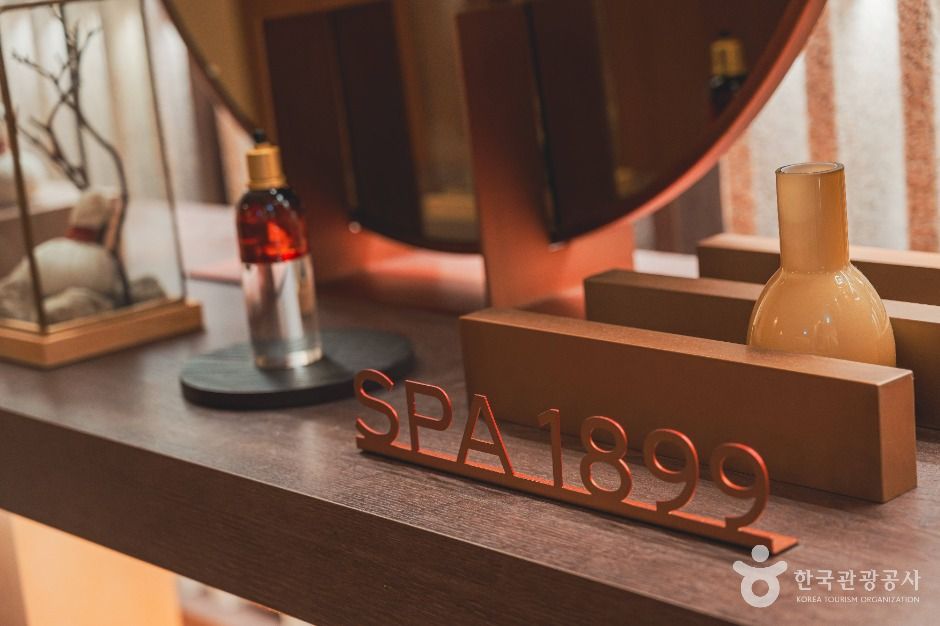
Spa 1978 Donginbi (SPA 1978 동인비)
772.2M 2025-10-23
416 Yeongdong-daero, Gangnam-gu, Seoul
In traditional Korean medicine, summer is the season when one's energy is severely depleted as people tend to sweat a lot even with little movement. As you are more likely to feel fatigued and lose vitality, replenishing one's energy is crucial. According to Donguibogam, a traditional Korean medical encyclopedia, red ginseng is recommended for vitality. The book says red ginseng slows the aging process and boosts one's energy, helping you live longer. It's effective in restoring vitality and alleviating fatigue. Red ginseng is made by steaming ginseng for approx. 3 hours without peeling it and then letting it dry slowly. This steaming and drying process reduces ginseng's sugar level while creating an active compound, which enhances its efficacy. Saponin, which is abundant in red ginseng, is known for boosting one's immunity and restoring vitality. Notably, ginsenoside helps with digestion, metabolism, and the absorption of nutrients, thereby restoring one's energy. SPA 1978 Donginbi, run by the premium red ginseng brand Jung Kwan Jang, is a specialized spa facility that uses beneficial red ginseng.
Olive Young - Seolleung Town Branch [Tax Refund Shop] (올리브영 선릉타운)
773.2M 2024-04-18
1F, 411, Teheran-ro, Gangnam-gu, Seoul
-
Korea Medical Institute Korea Central Clinic ((재)한국의학연구소 한국중부의원)
773.2M 2025-11-06
B1, 3rd, and 4th Floors, Gwanghwamun Building, 149 Sejong-daero, Jongno-gu, Seoul
Korea Medical Institute (KMI), a leader in 'K-health checkups,' operates health checkup centers across eight locations nationwide, from Seoul to Jeju. KMI has been striving to prevent and detect diseases early. It has led the popularization of comprehensive medical examinations in Korea. Based on 39 years of accumulated data and expertise, KMI has enhanced its capabilities in health checkups, services, and brand value.
By utilizing its diagnostic data accumulated over the years, KMI provides accurate test results and follow-up care promptly.
KMI will stay committed to becoming a lifetime health management partner and 'K-health checkup' leader by leveraging its excellence in Korean medicine, beyond health checkups for foreign patients.
Korea Medical Institute Gangnam Clinic ((재)한국의학연구소 강남의원)
773.2M 2025-10-23
5F-8F, 411 Teheran-ro, Gangnam-gu, Seoul
Korea Medical Institute (KMI), a leader in 'K-health checkups,' operates health checkup centers across eight locations nationwide, from Seoul to Jeju. KMI has been striving to prevent and detect diseases early. It has led the popularization of comprehensive medical examinations in Korea. Based on 39 years of accumulated data and expertise, KMI has enhanced its capabilities in health checkups, services, and brand value.
By utilizing its diagnostic data accumulated over the years, KMI provides accurate test results and follow-up care promptly.
KMI will stay committed to becoming a lifetime health management partner and 'K-health checkup' leader by leveraging its excellence in Korean medicine, beyond health checkups for foreign patients.
 English
 한국어
한국어 日本語
日本語 中文(简体)
 Deutsch
 Français
 Español
 Русский


