![KGC - Chungmu-ro Branch [Tax Refund Shop] (KGC 충무로점)](http://tong.visitkorea.or.kr/cms/resource/71/2878671_image2_1.jpg)
KGC - Chungmu-ro Branch [Tax Refund Shop] (KGC 충무로점)
7.8Km 2024-04-16
235, Toegye-ro, Jung-gu, Seoul
-
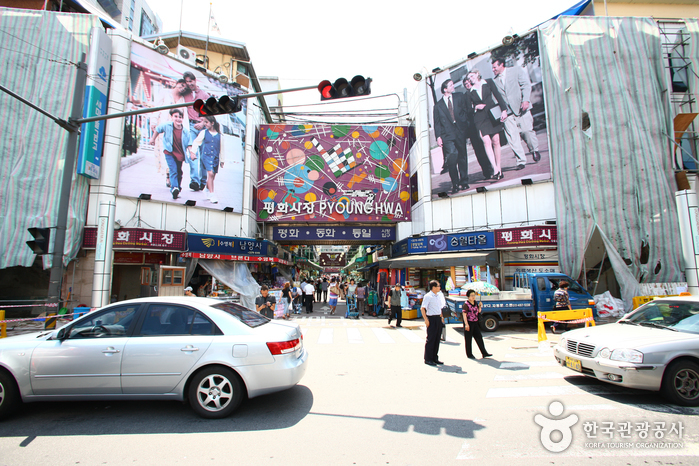
Pyounghwa (Pyeonghwa) Fashion Town (서울 평화시장)
7.9Km 2025-01-06
274, Cheonggyecheon-ro, Jung-gu, Seoul
+82-2-2265-3531~3
The Pyounghwa Fashion Town market in Dongdaemun has been selling fashion clothing and accessories for over 50 years ever since the end of the Korean War. It was here that in 1953 North Korean refugees started selling clothes made from US army uniforms. Their market was then named Pyounghwa, which means peace, in the hope that no other wars would be fought on Korean soil. The Pyounghwa Fashion Town was therefore the beginning of the 30,000 stores that now make up Dongdaemun Fashion Town, which is seen as one of the global centers of the fashion industry.
Spread over a large area, this historical fashion market is divided into several districts, the ‘Gu Pyounghwa Fashion Town’ is the oldest, and there is also the ‘Shin Pyounghwa Fashion Town’, ‘Dong Pyounghwa Fashion Town’, and ‘Cheong Pyounghwa Fashion Town’.
ARTEASPOON (아티스푼)
7.9Km 2025-10-23
7 Sinheung-ro 36-gil, Yongsan-gu, Seoul
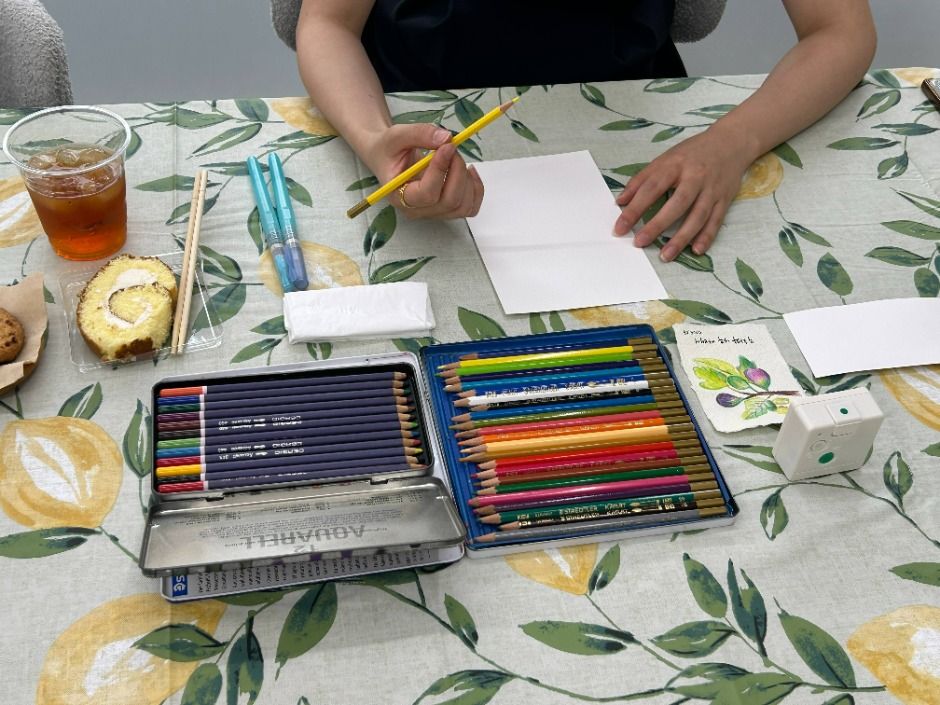
ARTEASPOON operates cultural arts programs centered on paintings, music, and books. It also has a program related to exploring one's feelings and mind, and offers a special program for foreigners for learning Korean culture and art. Located in Huam-dong at the foothills of Namsan Mountain, it's an ideal place to immerse in art and inspirations.
Korea House (한국의집)
7.9Km 2025-10-23
10, Toegye-ro 36-gil, Jung-gu, Seoul
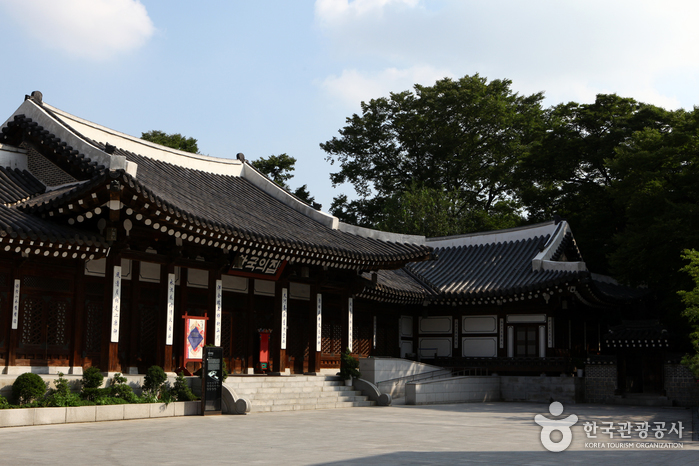
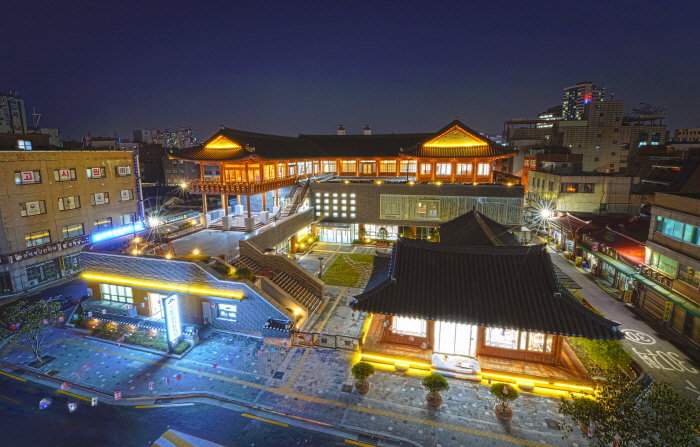
The Korea House was opened in 1981. It is a traditional Korean building that introduces the culture and lifestyle of Koreans, where you can experience traditional architecture and a classical atmosphere. The building was built in the style of the Joseon Dynasty's Jagyeong-jeon building at the Gyeongbok Palace. It is the only building built in the traditional architectural style. You will feel its antiquity as you enter the building.
It is divided into the Haerin-gwan (a space for people to get acquainted with each other), the Traditional Theater, and three annex buildings (Munhyang-ru, Nokeum-jeong and Cheongwu-jeong). At Haerin-gwan, you can enjoy traditional music at Garak-dang and try traditional food at Sohwa-dang. In the square of Garak-dang you can view a traditional wedding (on the weekends) or people playing folk games. Also, at the Traditional Theater, about 156 seats are available, and in the afternoons Human Cultural Assets or members of the National Center for Korean Traditional Performing Arts and the National Corps members present traditional music and dances. Sinayui, Salpuri, Pansori, the Drum Dance and the Bongsan Mask Dance are the most popular programs for foreigners. The programs are all explained in English and Japanese.
In the Cultural Gift Shop you can view various crafts made by traditional craftsmen. It is always open and the crafts are for sale as well. There are pottery, ceramics, golden crafts, knots and embroidery etc; approximately 500 pieces of artwork made by craftsmen from 20 different fields. Next to the House of Korea is the Namsan-gol Hanok Village where visitors can explore traditional houses.
Choi Hyeok Korean Medicine Clinic (최혁한의원)
7.9Km 2025-10-23
(1st Floor), 52 Yangnyeongdong-gil, Dongdaemun-gu, Seoul
Choi Hyeok Korean Medicine Clinic is particularly popular among Japanese visitors. Words about our affordable prices, friendly services, and dedication of the chief and the staff have spread in Japan, which has attracted over 2,000 Japanese visitors to the clinic annually. We offer an extensive array of services, including skin care, wrinkle removal, bloodletting acupuncture, weight-loss herbal medicine (hanyak), lipolysis acupuncture, gongjindan, kyungokgo, and “Magic Powder.” We accept appointments for wrinkle therapy on Sundays. We deliver hanyak to patients’ hotels if they are not too far away. We also ship to patients’ homes in Japan. You are always welcome to contact us on Line or Instagram.
Seoul Yangnyeongsi Herb Medicine Museum (서울약령시 한의약박물관)
7.9Km 2023-04-06
26, Yangnyeongjungang-ro, Dongdaemun-gu, Seoul
+82-2-969-9241
Seoul Yangnyeongsi Herb Medicine Museum opened in September 2006 on the grounds of Bojewon, a medical institution for the poor that was in operation during the Joseon dynasty. The museum was established with the goal of preserving and developing Korea’s herb medicine culture. In October 2017, the museum moved to the second floor of the Seoul K-Medi Center. The center provides both information and hands-on programs.

Seoul K-Medi Center (서울한방진흥센터)
7.9Km 2025-10-23
26 Yangnyeongjungang-ro, Dongdaemun-gu, Seoul
Seoul Yangnyeongsi Market is an herbal medicine specialty market that distributes 70% of the herbal medicines traded in Korea and is a Korean medicine-themed town with over a thousand businesses related to oriental medicine, including oriental medicine clinics and herbal medicine stores. The Seoul K-Medi Center, located in this center of Korean herbal medicine culture, is an oriental medicine complex cultural facility that promotes the excellence and safety of traditional Korean medicine through various exhibitions, education, and experiences. The building is unique in that it harmonizes the simplicity of modern architecture with Korean elegance. Visitors can enjoy various experiences in many different facilities in the center, including the Herb Medicine Museum, where one can expand their understanding of Korean medicine by examining over 300 types of medicinal herbs and their effects; the Herb Medicine Experience Room, where visitors can experience herbal medicine natural face packs and herbal heat packs; and Yakseon Food Experience Center, where visitors can learn about healthy recipes using medicinal herbs and make healthy foods.
Ichon Hangang Park (이촌한강공원)
7.9Km 2025-10-23
62 Ichon-ro 72-gil, Yongsan-gu, Seoul
+82-2-3780-0551
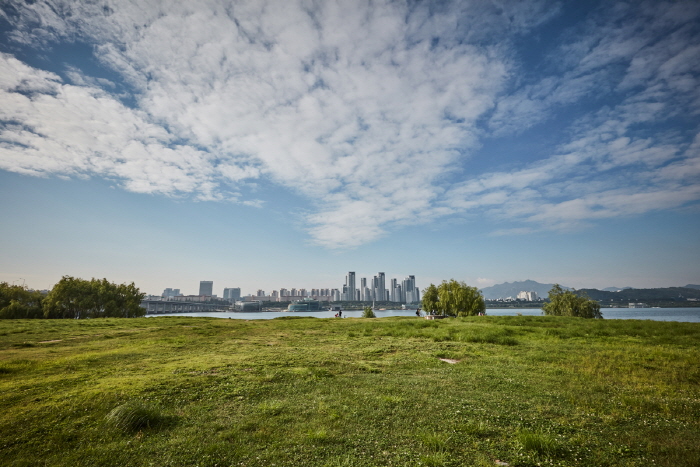
Ichon Hangang Park is built along the Hangang Park in Yongsan. From the park, one can see the Hangang River up close, and one can also find sports facilities like soccer fields, jokgu fields, inline skating rink, water sports facilities, bicycle paths, as well as a nature learning center built around a restored wetland and a lawn. One can follow the Hangangdaegyo Bridge to enter into the Nodeulseom Island, an island in the middle of the river.
◎ Travel information to meet Hallyu’s charm - TV series "Sisyphus: The Myth"
This park was featured in the TV series "Sisyphus: The Myth" as the setting where Seo Hae (played by Park Shin-hye) reflected on bittersweet memories with her father. Its expansive grounds make it an ideal spot for leisure activities such as walking, picnicking, and cultural events.
World Pansori Festival (월드판소리페스티벌)
7.9Km 2025-07-30
28 Toegye-ro 34-gil, Jung-gu, Seoul
+82-2-904-2835
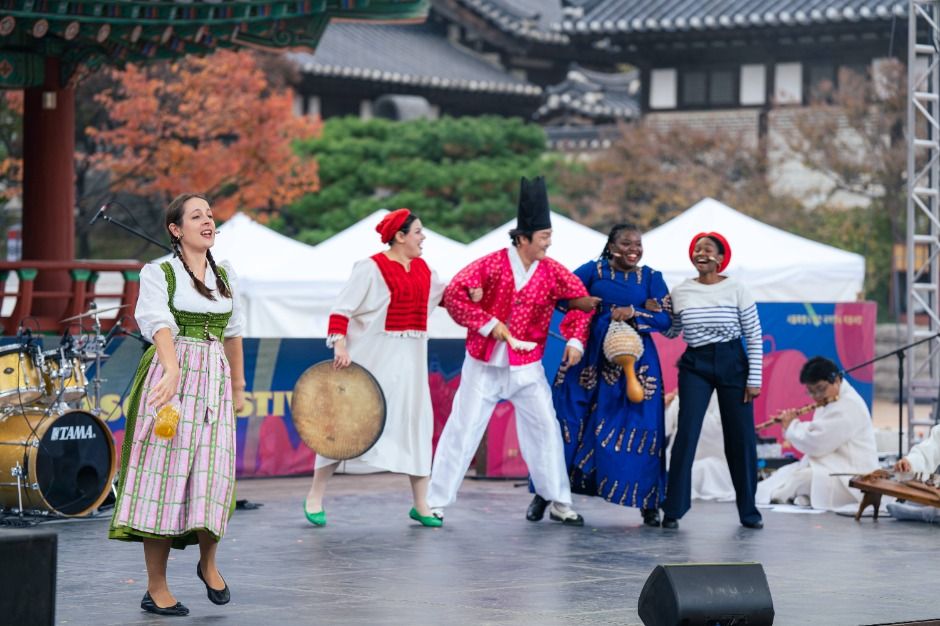
World Pansori Festival is an international music festival that aims to promote pansori, the traditional Korean epic chant, and its values. The festival consists of a variety of performances and concert programs based on its yearly theme. In addition, the festival also has interactive activities for the attendees, such as a free pansori lesson and arts-and-crafts, to make pansori and traditional Korean music more accessible to the public.
Heunginjimun Gate - Dongdaemun Gate (흥인지문)
7.9Km 2025-10-23
288, Jong-ro, Jongno-gu, Seoul
+82-2-2148-1842
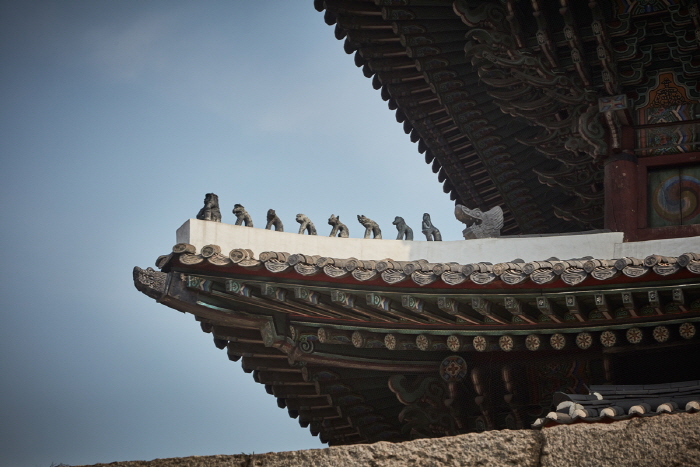
Heunginjimun Gate was built to protect Hanseongbu, which historically housed essential government facilities. Heunginjimun Gate was the gate on the east side of the outer wall of Seoul Fortress among eight gates. It is referred to as Dongdaemun Gate as well. The gate was constructed during King Taejo’s 5th year in 1396, remodeled during the reign of King Danjong in 1453, and was newly built in 1869 during the sixth year of King Gojong’s reign in 1869.
The gate features a hipped roof with five front and two side compartments on a two-storied building. The thin and weak bracket system supports the eaves and is excessively decorated, reflecting the construction features of the late Joseon period. Also, outside of the fortress is the half-circle-shaped Ongseong, a small wall, to protect the gate.
One of the unique factors of Heunginjimun Gate is that it is the only gate among Seoul’s eight to have Ongseong, further exhibiting the style of construction used during the late Joseon period.
 English
 한국어
한국어 日本語
日本語 中文(简体)
 Deutsch
 Français
 Español
 Русский


