![Olive Young - Jongno YBM Branch [Tax Refund Shop] (올리브영 종로YBM)](http://tong.visitkorea.or.kr/cms/resource/27/2878227_image2_1.jpg)
Olive Young - Jongno YBM Branch [Tax Refund Shop] (올리브영 종로YBM)
11.6Km 2024-04-19
104, Jong-ro, Jongno-gu, Seoul
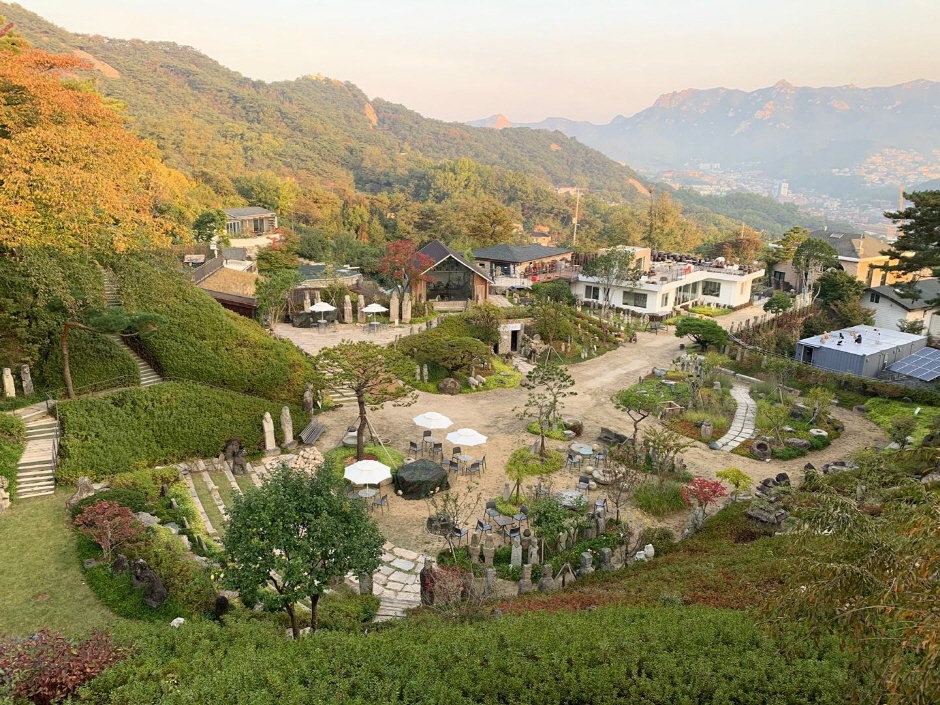
Mok In Museum Mok Seok Won (목인박물관 목석원)
11.6Km 2021-09-01
46-1, Changuimun-ro 5-gil, Jongno-gu, Seoul
+82-2-722-5066
Mok In Museum Mok Seok Won relocated in 2019 from Insa-dong to Buam-dong. Six exhibition halls offer visitors a look at wooden figures from around the world. Mokin refers to traditional wooden sculptures carved in shapes of human figures or various animals. The museum holds around 12,000 wooden folk sculptures including those used to decorate funeral carriages and temples mostly from the Joseon dynasty up to modern times. The museum also has an outdoor exhibition hall that harmonizes the sculptures with nature.
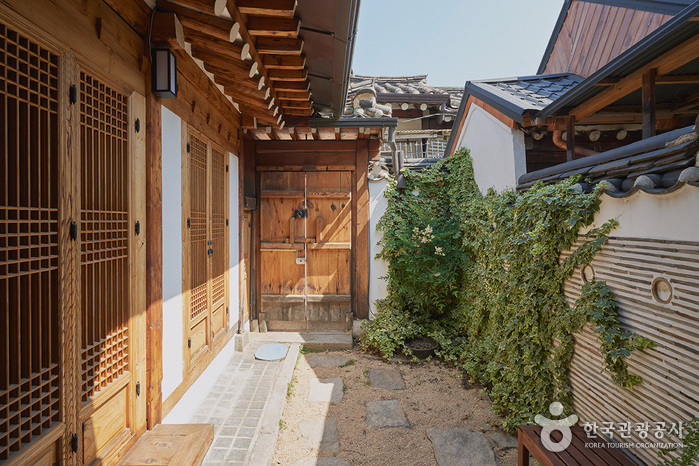
Haeunjae (하은재)
11.6Km 2024-12-23
68-10 , Jahamun-ro, Jongno-gu, Seoul
+82-504-0904-2414
Ha Eunjae is a private hanok stay in Seochon Village, just west of Gyeongbokgung Palace in Seoul. The accommodation comprises a bedroom with queen-size bed, a kitchen, a movie room, and two bathrooms. The movie room is fitted out with a Bose sound system, a beam projector, and a large screen, with a movable footbath as a bonus. The kitchen is equipped for simple cooking. Guests staying 2 nights or more during the week receive a 10% discount, and towel replacement and cleaning services are provided for stays of 3 nights or more. Ha Eunjae is close to major tourist attractions such as Gyeongbokgung Palace and Samcheong-dong.
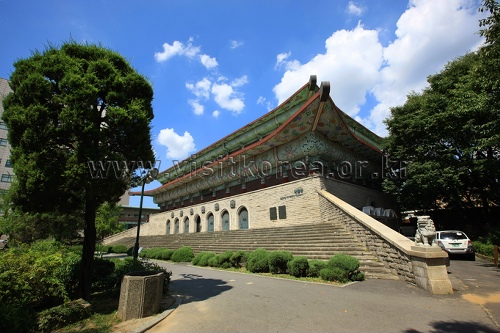
Sejong University Museum (세종대학교 박물관)
11.6Km 2022-09-16
209, Neungdong-ro, Gwangjin-gu, Seoul
+82-2-3408-3876
Sejong University Museum exhibits folk art, wooden crafts, clothing, accessories, pottery, paintings and calligraphy collected for over 40 years by the couple who founded the present day Sejong University, Dr. Ju Young-ha and Dr. Choi Ok-ja. This museum has its origins in the Soodo Gallery, which was built in Chungmuro, the campus’ original location, in 1959. Needing more space to house additional artifacts, the museum moved to its current location, which first opened on May 5, 1973 in a four-story concrete building inspired by traditonal tower design from the Baekje era. This building was later expanded on May 20, 1977.
After the university’s name was changed to Sejong University in 1979, the museum was also renamed the Sejong University Museum. The museum showcases unique artifacts to both scholars and students from home and abroad in contribution to the research of Korea’s culture, arts, and archeology.
![Harmony Mart - Insa Branch [Tax Refund Shop] (하모니마트 인사)](http://tong.visitkorea.or.kr/cms/resource/79/2888079_image2_1.jpg)
Harmony Mart - Insa Branch [Tax Refund Shop] (하모니마트 인사)
11.6Km 2024-04-17
1F (Gwanhun-dong), 38, Insadong 5-gil, Jongno-gu, Seoul
-

Imun Seolnongtang (이문설농탕)
11.6Km 2025-06-18
38-13 Ujeongguk-ro, Jongno-gu, Seoul
+82-2-733-6526
Imun Seolnongtang has been serving its hearty seolleongtang for over a hundred years since it first opened in 1907. Even its name has a long history: the word imun comes from Imun-gol, the now-obsolete name of the restaurant’s location, and seolnongtang, an old variation of the word seolleongtang. During the Japanese colonial rule, the restaurant’s regular customers included Gijeong Son, the marathon gold-medalist at the 1936 Berlin Olympics. The meal served at this restaurante is reputed to stay consistent from the Japanese colonial period.
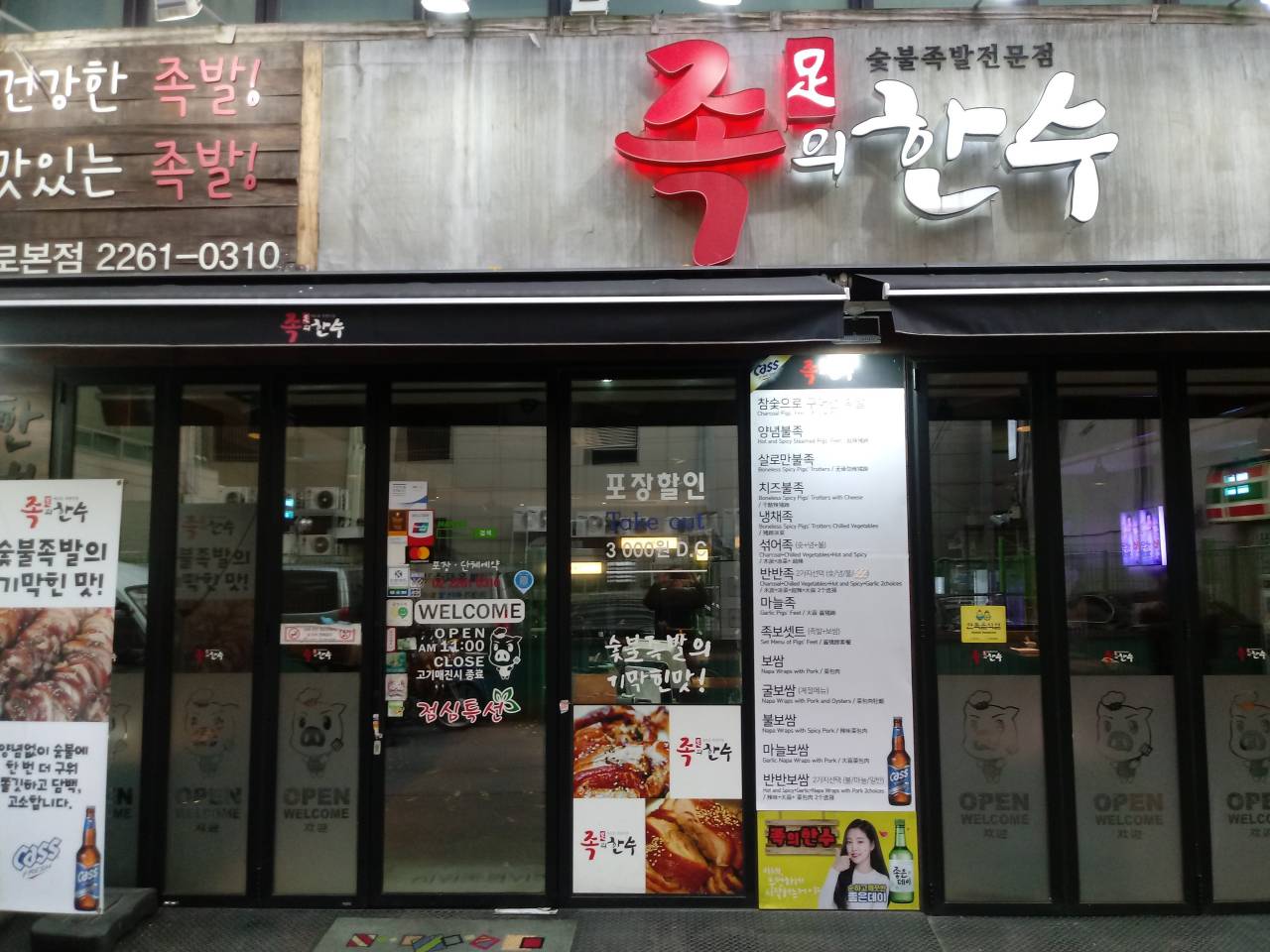
Jogui Hansu (족의한수)
11.6Km 2024-10-15
93-1, Supyo-ro, Jongno-gu, Seoul
+82-2-2261-0310
A pig's trotter(s) specialty restaurant located in Jongno, Seoul. This restaurant's signature menu is braised pigs' feet. A restaurant serving both charcoal-grilled jokbal (pig's trotter) and spicy jokbal.
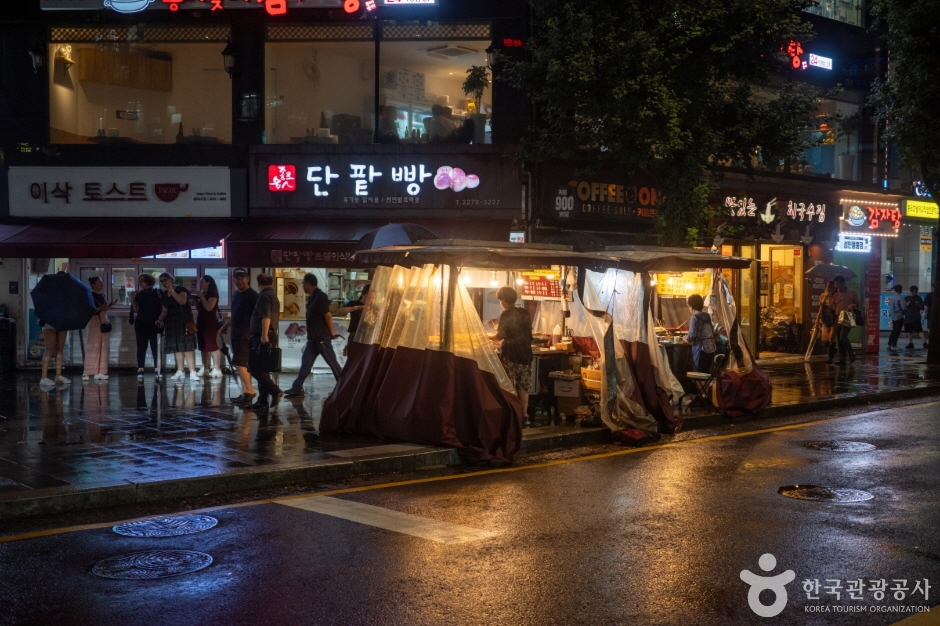
Jongno 3 (sam)-ga Pocha Street (종로3가 포장마차 거리)
11.7Km 2025-11-06
12-1, Gwan-su-dong, Jongno-gu, Seoul
It is one of Seoul's representative Pocha Streets boasting history and tradition. When you come out of Jongno 3-ga Station, exit 6 (toward the Nakwon Music Mall), you will find a lot of food stalls with a crowded atmosphere. There are vinyl covered areas and open areas, so you can choose according to your taste. It is a heaven for snacks such as Chicken feet, Octopus, Udon Kimchi Pancakes, and Rolled Omelet.
Jogyesa Temple (조계사(서울))
11.7Km 2024-10-25
55 Ujeongguk-ro, Jongno-gu, Seoul
As the main temple as well as the district head temple of the Jogye order in Seoul, Jogyesa Temple is the center of Korean Buddhism. The temple was built in the late 14th century during the Goryeo period but was completely destroyed in a fire. It was rebuilt under the name of Gakwangsa Temple in 1910 with the effort of many respectful monks, namely Han Yong-un and Lee Hee-gwang. The temple was given a role as the head temple of Korea’s Buddhism and renamed to Tegosa Temple in 1936. In 1954, a purification drive took place to eliminate Japanese influence and revive traditional Buddhism, which established the present day Jogyesa Temple as a result.
Jogyesa Temple plays an important role in Korean Buddhism as the head temple of the Jogye order. Jogyesa Temple’s Dharma Hall serves as the main venue for several Buddhist events, holding rituals, lectures, ceremonies, and other events all year long. The annual lantern festival in celebration of Buddha's birthday also takes place at this temple.
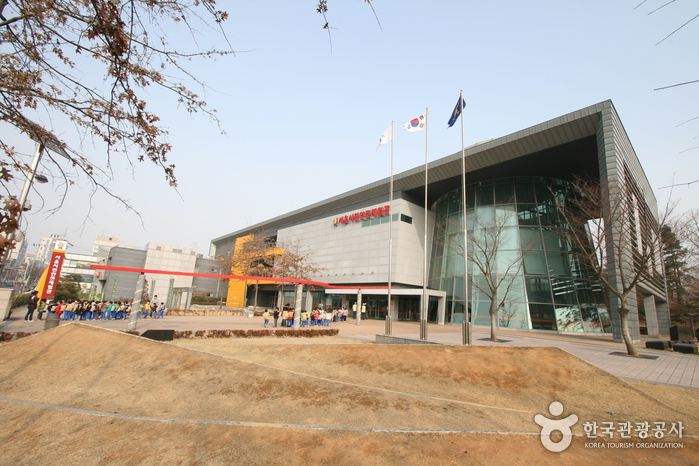
Gwangnaru Safety Experience Center (광나루안전체험관)
11.7Km 2025-03-29
238, Neungdong-ro, Gwangjin-gu, Seoul
+82-2-2049-4061
Gwangnaru Safety Experience Center was founded in 1999 after two fire accidents in which many children lost their lives. These tragedies emphasized the necessity of establishing a disaster training center for common citizens.
Gwangnaru Safety Experience Center is a three-story building with one basement floor, covering an area of more than 5,000 m². The basement floor includes a small theater. The first floor is set up for natural disaster training and consists of an orientation hall, storm simulation training room, earthquake simulation room, computer tests on fire safety knowledge and others. The second floor is a place for artificial catastrophe training. It consists of a smoke escape training room, fire extinguisher training room, first-aid (CPR) training room and practice place for calling 119. The third floor is used for rescue training and consists of a rescue training room, screening room, training for professionals and video examples of the five biggest disasters that have occurred in Seoul. Overall there are about 20 training areas established, so citizens can experience the imitation of a disaster by themselves and learn easily and in an interesting way how to cope with a disaster.
 English
 한국어
한국어 日本語
日本語 中文(简体)
 Deutsch
 Français
 Español
 Русский


