![Olive Young - Uijeongbu Millak Branch [Tax Refund Shop] (올리브영 의정부민락)](http://tong.visitkorea.or.kr/cms/resource/42/2881342_image2_1.jpg)
Olive Young - Uijeongbu Millak Branch [Tax Refund Shop] (올리브영 의정부민락)
10.2Km 2024-04-22
Store #110, #111, Haedong Tower 2, 56, Cheonbo-ro, Uijeongbu-si, Gyeonggi-do
-

![E-Mart - Uijeongbu Branch [Tax Refund Shop] (이마트 의정부)](http://tong.visitkorea.or.kr/cms/resource/48/2881348_image2_1.jpg)
E-Mart - Uijeongbu Branch [Tax Refund Shop] (이마트 의정부)
10.2Km 2024-04-22
210, Millak-ro, Uijeongbu-si, Gyeonggi-do
-
Silbi Sikdang (실비식당)
10.2Km 2025-01-22
12 Hoguk-ro 1123beon-gil, Uijeongbu-si, Gyeonggi-do
Opened in 1965, Silbi Sikdang uses its unique sauce to create special budaejjigae (Sausage Jjigae) and budaebokkeum.
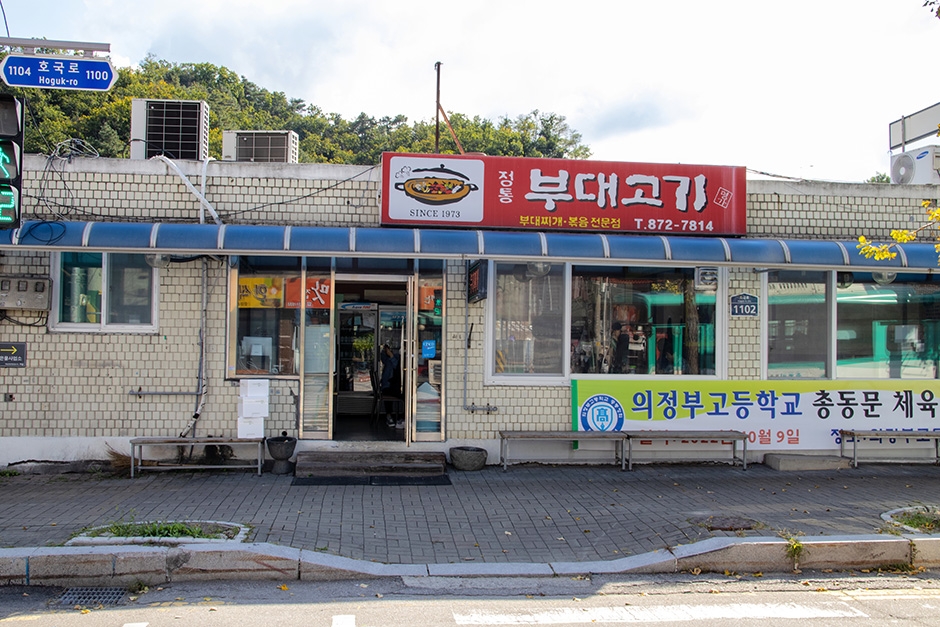
Jeongtong Budaegogi (정통부대고기)
10.2Km 2024-12-23
경기도 의정부시 호국로 1102
Opened in 1973, this budaejjigae (Sausage Jjigae) restaurant is known for its exceptional flavor, achieved through spicy kimchi and a carefully crafted broth. Another popular menu item is budaebokkeum, a stir-fried, soupless version of the classic jjigae.
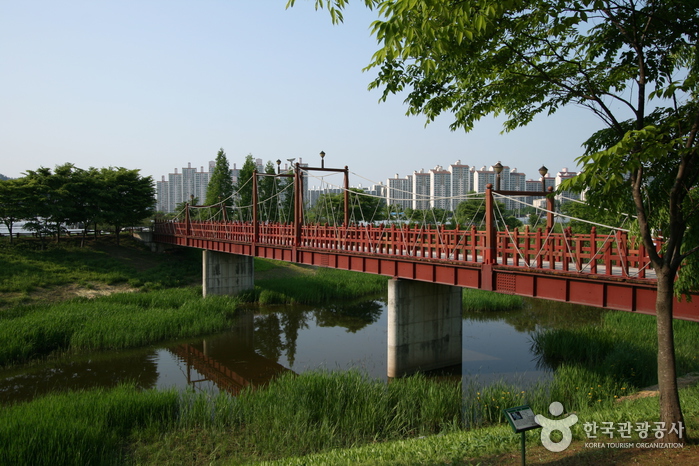
Jangja Lake Park (장자호수공원)
10.3Km 2022-01-01
878, Topyeong-dong, Guri-si, Gyeonggi-do
+82-31-550-2472
Guri City worked to improve the water quality of Jangja Lake in order to form the Jangja Lake Park and in the process an ecological zone was created. A 3.6 km tree-lined walking trail runs through the park and is frequently used by people enjoying an outing or getting some light exercise. Concerts, exhibitions, and other events are held on the outdoor stage on weekends and the park is widely used as a place to relax by local residents.
* Size - Area 107,385 m², average water depth 2.2 m (0.2 m~4.7 m), and walkway 4.6 km
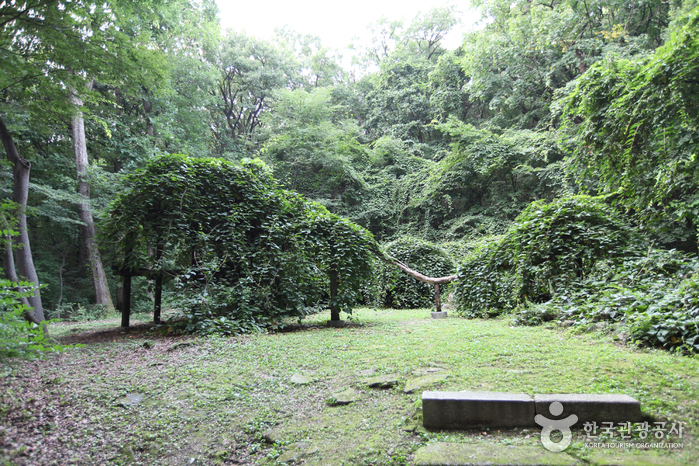
Daraenamu Tree in Changdeokgung Palace (창덕궁 다래나무)
10.3Km 2025-01-13
99, Yulgok-ro, Jongno-gu, Seoul
+82-2-3668-2300
Daraenamu Tree in Changdeokgung Palace is estimated to be 600 years old, meaning it had likely been planted before the palace was built. The tree stands 19m in x_height, and has six separate trunks sprawling in all directions. It is the biggest and the oldest in Korea. It is designated and protected as a National Natural Monument.
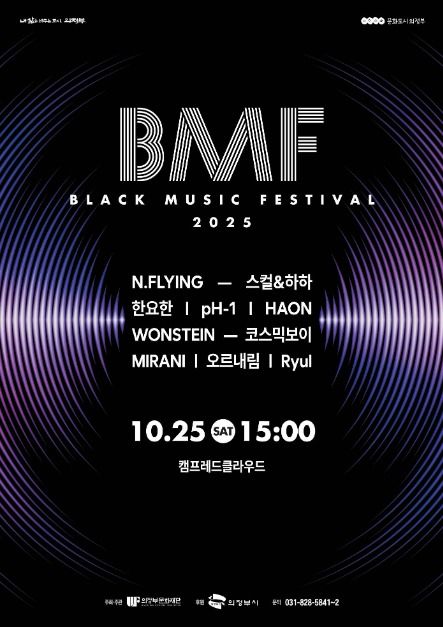
Black Music Festival (BMF) (2025 제7회 BMF(블랙뮤직페스티벌))
10.3Km 2025-10-23
Ganeung-dong, Uijeongbu-si, Gyeonggi-do
+82-31-828-5841
The Black Music Festival feature performances across various genres, including hip hop, R&B, soul form both local artists and international artists. Along with performances, visitors can enjoy various cultural events and hands-on experience programs.
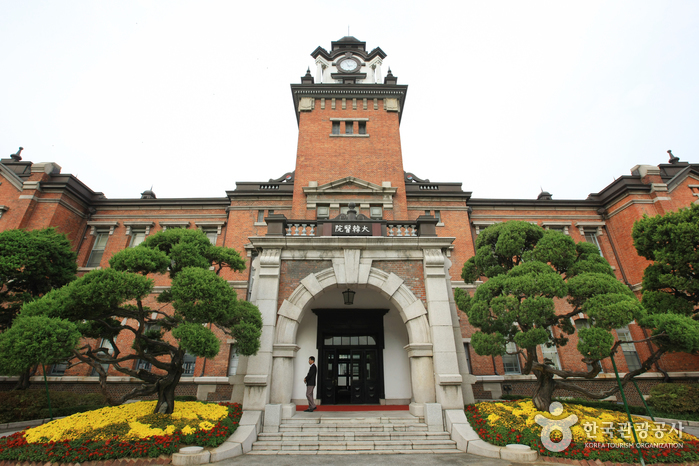
Seoul Daehan Hospital (서울 대한의원)
10.3Km 2021-12-23
101, Daehak-ro, Jongno-gu, Seoul
+82-2-2148-1842
Daehanuiwon (Daehan Medical Center) is an antique two-story brick building within the grounds of Seoul National University Hospital. It was established under the direct administration of the Uijeongbu (State Council), combining the Gwangjewon (under the Home Ministry), Gyeongseong Medical School and the Korean Red Cross Hospital (under the Royal Household).
Built in the Madubong Hill area, this location where Hamchunwon, the outer garden of Changgyeonggung Palace, once stood in 1484 (15th year of King Seongjong), was also once the site of Gyeongmogung Palace, where King Jeongjo enshrined the mortuary tablet of his birth father Crown Prince Sado Seja in 1776 (the year King Jeongjo ascended to the throne).
These places that held importance for the royal family were destroyed as the Japanese built Gyeongseong Empire University in its place. In 1907, with the announcement of the plan to establish Daehan Medical Center, construction began on the main building, seven wards and affiliated buildings. Construction was completed in November 1908.
The Daehan Medical Center opened in Gwangjewon, but upon Japanese colonization in 1910, its name was changed to the Japanese Viceroyalty Hospital. In 1926, it was included as a part of Gyeongseongjeguk University to become a university hospital. Since the liberation of Korea in 1945, it has been a hospital affiliated with Seoul National University.
 English
 한국어
한국어 日本語
日本語 中文(简体)
 Deutsch
 Français
 Español
 Русский


