Heunginjimun Gate - Dongdaemun Gate (흥인지문)
10.7Km 2025-10-23
288, Jong-ro, Jongno-gu, Seoul
+82-2-2148-1842
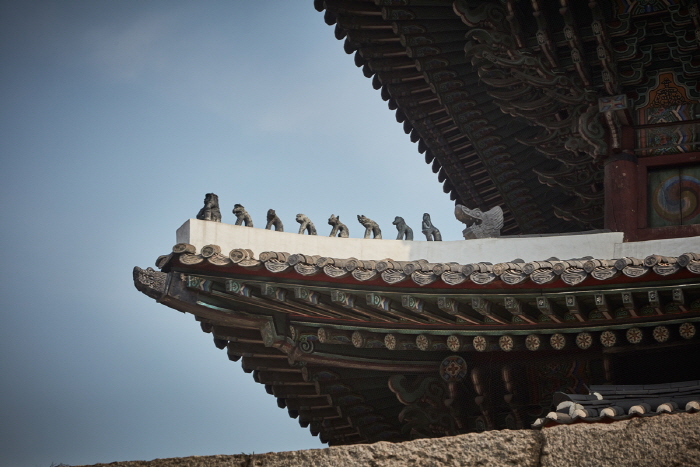
Heunginjimun Gate was built to protect Hanseongbu, which historically housed essential government facilities. Heunginjimun Gate was the gate on the east side of the outer wall of Seoul Fortress among eight gates. It is referred to as Dongdaemun Gate as well. The gate was constructed during King Taejo’s 5th year in 1396, remodeled during the reign of King Danjong in 1453, and was newly built in 1869 during the sixth year of King Gojong’s reign in 1869.
The gate features a hipped roof with five front and two side compartments on a two-storied building. The thin and weak bracket system supports the eaves and is excessively decorated, reflecting the construction features of the late Joseon period. Also, outside of the fortress is the half-circle-shaped Ongseong, a small wall, to protect the gate.
One of the unique factors of Heunginjimun Gate is that it is the only gate among Seoul’s eight to have Ongseong, further exhibiting the style of construction used during the late Joseon period.

Olive Young - Uijeongbu Geumo Branch [Tax Refund Shop] (올리브영 의정부금오점)
10.7Km 2024-06-27
#103~4, #202~3, 41, Cheongsa-ro, Uijeongbu-si, Gyeonggi-do
-
Stay Passport Sindang Ryokan (스테이 패스포트 신당 료칸)
10.7Km 2025-04-24
33 Nangye-ro 11-gil, Jung-gu, Seoul
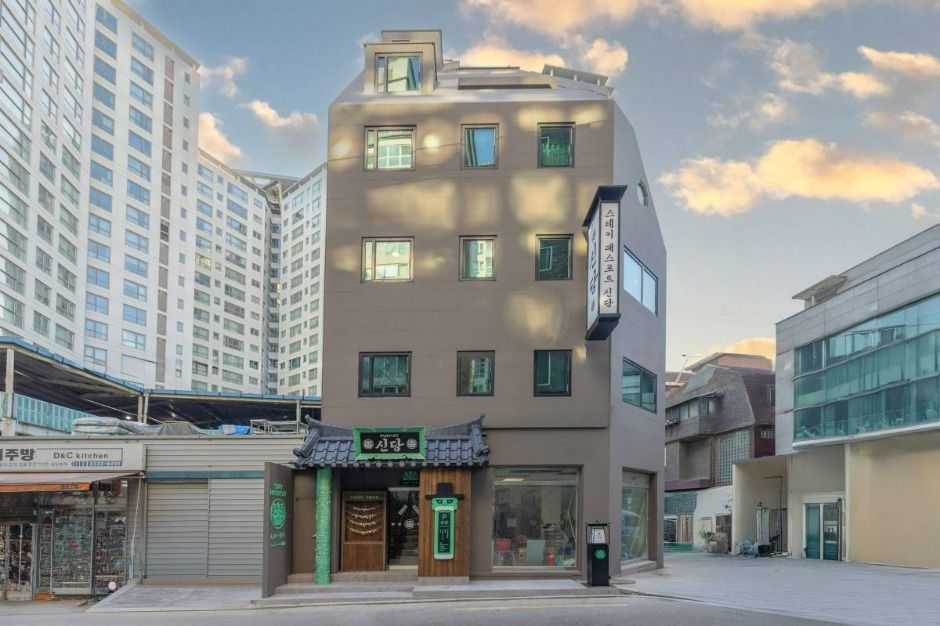
Stay Passport Sindang Ryokan offers a four major room types: "Goyo" and "Sohyang," designed for two who seek privacy and relaxation away from the busy city life; "Pungryu," accommodating up to four people, perfect for family guests or a group of friends; and "Pungyo," designed to offer utmost relaxation.
![Homeplus - Uijeongbu Branch [Tax Refund Shop] (홈플러스 의정부)](http://tong.visitkorea.or.kr/cms/resource/38/2881338_image2_1.jpg)
Homeplus - Uijeongbu Branch [Tax Refund Shop] (홈플러스 의정부)
10.7Km 2024-04-23
38, Cheongsa-ro, Uijeongbu-si, Gyeonggi-do
-
Olive Young - Homeplus Uijeongbu Branch [Tax Refund Shop] (올리브영 홈플러스의정부점)
10.7Km 2024-06-27
1F, 38, Cheongsa-ro, Uijeongbu-si, Gyeonggi-do
-
Seoul Geumseonsa Temple (금선사(서울))
10.7Km 2021-08-17
137, Bibong-gil, Jongno-gu, Seoul
+82-2-395-9911
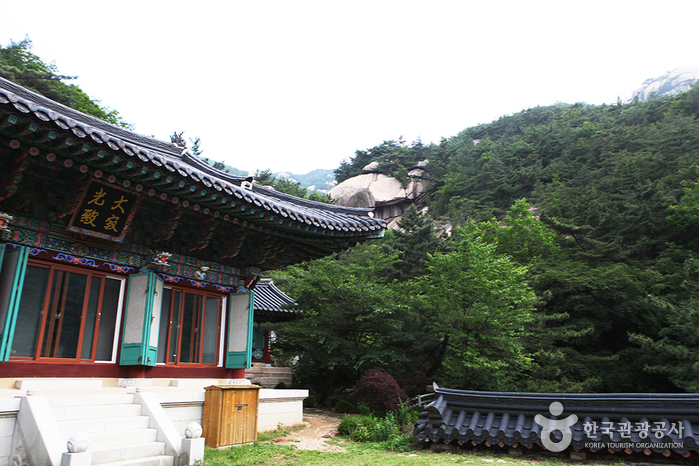
Geumseonsa Temple is located within Bukhansan National Park, just behind Cheong Wa Da (The Blue House) and Gyeongbokgung Palace. The entrance to the temple is just off the hiking path to Bibong Peak.
After passing Banyajeon Hall, where Buddhist services are held, visitors will see a pine tree over 200 years old, and beyond that, a staircase with 108 steps leading up to Daejeokgwangjeon Hall in the temple's main area. To the right is Samseonggak House and Hongyegyo Bridge over the clear waters flowing down from the mountain.
Additional temple buildings include Mitajeon Hall and Yeonhwadang Hall, built in 2004 by Monk Beopan; and Jeokmukdang Hall, built using traditional construction techniques.
Insa Art Space (인사미술공간)
10.7Km 2021-02-26
89, Changdeokgung-gil, Jongno-gu, Seoul
+82-2-760-4722
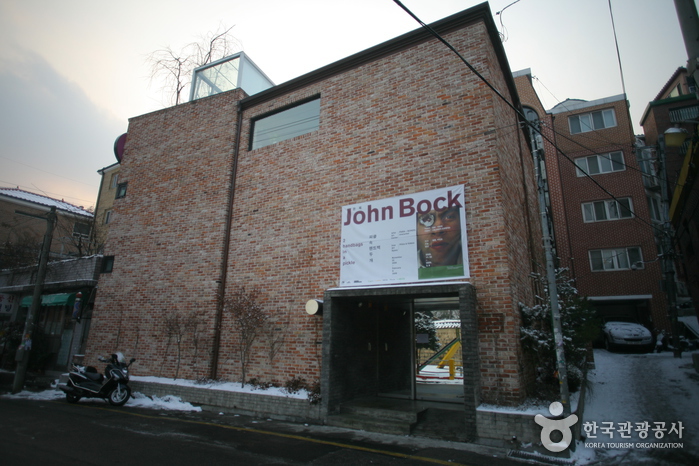
Insa Art Space was established in 2000 to support artists who are experiencing financial difficulties. In 2005, Art Space started to develop artistic projects and in 2006, the gallery began to provide project consultations, and publishing and marketing, to develop into a stronger self-sufficient gallery. Currently, the gallery provides special exhibitions for artists and independent curators.
![Olive Young - Hwanghak Sageori Branch [Tax Refund Shop] (올리브영 황학사거리)](http://tong.visitkorea.or.kr/cms/resource/46/2888246_image2_1.jpg)
Olive Young - Hwanghak Sageori Branch [Tax Refund Shop] (올리브영 황학사거리)
10.7Km 2024-04-17
410, Wangsimni-ro, Seongdong-gu, Seoul
-
![Inwoohouse [Korea Quality] / 인우하우스 [한국관광 품질인증]](http://tong.visitkorea.or.kr/cms/resource/56/3009456_image2_1.jpg)
Inwoohouse [Korea Quality] / 인우하우스 [한국관광 품질인증]
10.7Km 2023-09-12
1-9 , Gyedong 6-gil, Jongno-gu, Seoul
+82-2-742-1115
Inwoo House is a traditional hanok down an alley in Gye-dong, Jongno, Seoul. There is a swallow's nest under the eaves, and the pride of this house is that the swallow family returns every spring. Each room in the house has a private bathroom. Residents can sample Korean culture by taking part in traditional paper crafts, knot bracelet making, and fan decorating. The location is convenient for restaurants, cafes, and convenience stores, and Gyeongbokgung Palace, Changdeokgung Palace, Insadong, and Samcheong-dong are all within walking distance.
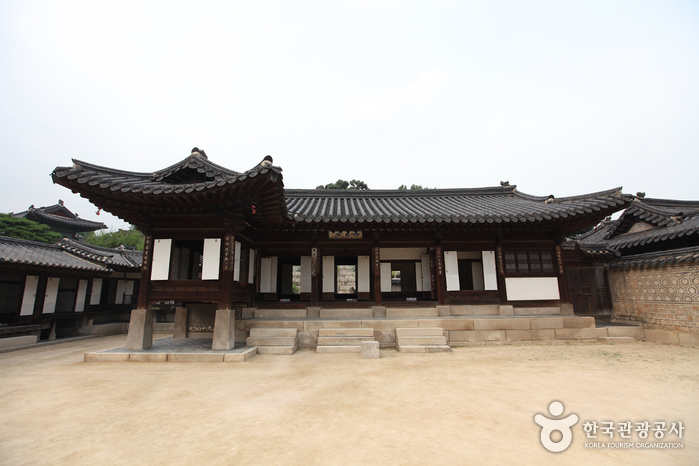
Nakseonjae Hall (낙선재)
10.7Km 2021-09-30
99, Yulgok-ro, Jongno-gu, Seoul
+82-2-2148-1822
Located inside Changdeokgung Palace, Nakseonjae Hall is a one-story structure built in ikgong style (bird wing-shaped eaves placed on top of the pillars) with a hip tiled and gable roof. It has 6 kan in the front and 2 kan (traditional unit of measurement of the space between pillars) to the sides. It originally belonged to the nearby Changgyeonggung Palace, but came to be considered a part of Changdeokgung Palace in more recent years.
The hall was constructed in 1846 (12th year of King Heonjong’s reign) and it is collectively called Nakseonjae together with the adjacent Seokbokheon Hall and Sugangjae Hall.
Behind the building is a flower garden made of stacked large stones. The chimney, the flowers, and the oddly shaped stones harmoniously blend into one another to create an outstanding landscape gardening.
 English
 한국어
한국어 日本語
日本語 中文(简体)
 Deutsch
 Français
 Español
 Русский


