
Herb Island (허브아일랜드)
15.3Km 2024-11-01
35 Cheongsin-ro 947beon-gil, Sinbuk-myeon, Pocheon-si, Gyeonggi-do
+82-31-535-6494
Herb Island is an arboretum themed after the Mediterranean. From the Venice Village, inspired by Venice, to the Herb Plant Museum, one of the largest of its kind in Korea, outdoor garden, Herb Healing Center, and cafés and restaurants, it has a variety of amenities and facilities for visitors. It also hosts diverse events like the Lavender Festival and the Light Festival. Nearby tourist sites include Soyosan Mountain, Dongducheon Recreational Forest, and Pocheon Art Valley.
Gamaksan Suspension Bridge (감악산 출렁다리)
15.5Km 2024-11-26
238 Seolmacheon-ro, Jeokseong-myeon, Paju-si, Gyeonggi-do
Gamaksan is one of five great mountains of the Gyeonggi region, and according to legend, its name means a dark blue-colored rocky mountain whose rocks emanated black and blue lights at the same time. The suspension bridge located at the starting point of the Gamaksan Trail connects Seolmari Valley, which had been severed by a road, to make Gamaksan into a single mountain again. It is 150 meters long, which makes it the nation's longest bridge tower-less suspension bridge, and was constructed to form harmony with nature.
Gamaksan boasts small but beautiful valleys around Seolmacheon Stream as well as Ungyepokpo Falls where the waterfalls are nearly vertical so it is used for ice wall training in the wintertime. Gamaksan Stele sits at the top and, just underneath Janggunbong Peak lies Imkkeokjeonggul Cave where Im kkeokjeong is known to have hidden away from the pursuit of the government army. Gamaksan is close to the ceasefire line so, once you climb up to the peak, you will be able to see the Imjingang River and Songaksan Mountain in Gaesong. Fresh scents of pine trees and soil on the trails and mountain ridges attract countless climbers.
Tomb of General Gwon Yul (권율장군묘)
15.7Km 2024-02-07
223 Gwonyul-ro, Jangheung-myeon, Yangju-si, Gyeonggi-do
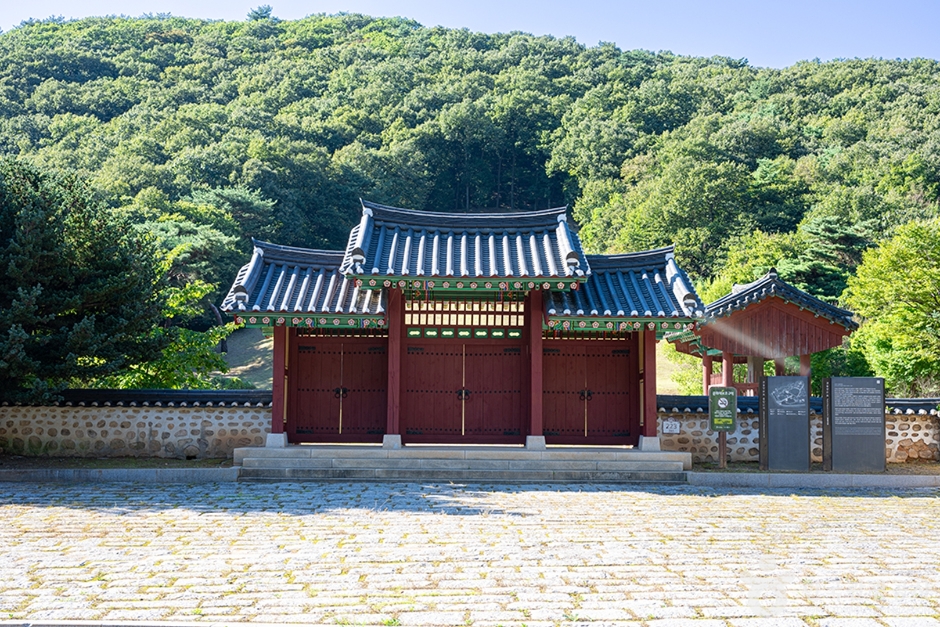
General Gwon Yul (1537-1599) is a historic figure from the Joseon dynasty. He is celebrated for repelling the invading Japanese forces at Haengjusanseong Fortress and other locations near Seoul during the Japanese Invasion of Korea (1592-1598). In front of the tomb stands a tombstone, flanked by pairs of stone statues. These pairs consist of Sangseok, Hyangnoseok, Dongjaseok, Muninseok, and Mangjuseok, with one statue from each pair positioned on the left and the other on the right, respectively. The site also includes the tombs of his father and older brother. His descendants continue to visit and commemorate him to this day.
Paju Bogwangsa Temple (보광사(파주))
16.2Km 2021-09-10
87, Bogwang-ro 474beon-gil, Paju-si, Gyeonggi-do
+82-31-948-7700
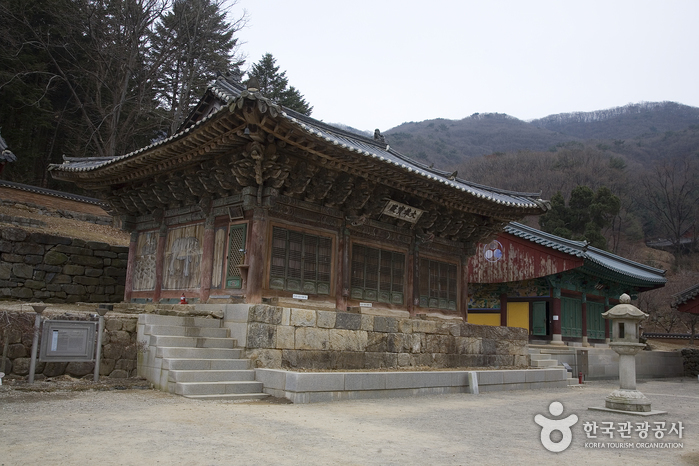
Bogwangsa Temple is a traditional temple located on the foothills of Goryeongsan Mountain in Paju. It was built by Great Monk Doseonguksa during the Silla Kindom period under the order of Queen Jinseong in AD 894. At the time, it was considered a hidden national treasure and one of the six grand temples located on the northern side of the Hangang River. In was once ruined during the Imjin War, and reconstructed in 1622 by Monk Seolmi and Monk Deogin. In 1667, Monk Jigan and Monk Seok Ryeon reconstructed Daeungbojeon Hall and Gwaneumjeon Hall.
Dobongsan Mountain (도봉산)
16.2Km 2021-06-29
Dobong-dong, Dobong-gu, Seoul
+82-2-954-2566
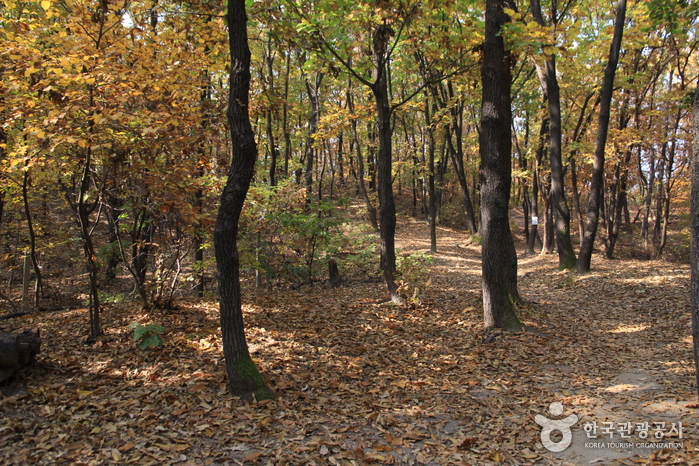
Dobongsan Mountain, located in the northeastern section of Bukhansan National Park, is known for the magnificent rock formations of the main peak, Jaunbong Peak (740.2 m), as well as Manjangbong, Seoninbong, Jubong, Obong Peaks and Uiam Rock. Seoninbong Peak in particular has 37 hiking courses, including the famous Bakjwi (Bat) Course.
The mountain is also home to Cheonchuksa Temple, the oldest temple in the region, and several other temples including Mangwolsa and Hoeryongsa Temples, as well as a number of beautiful valleys such as Dobonggyegok, Songchugyegok, Obonggyegok and Yeongeocheongyegok Valleys. Dobongsan Mountain is easily accessible by public transportation, making it a popular attraction for people living in Seoul.
Gana Art Park (가나아트파크)
16.3Km 2024-02-07
117 Gwonyul-ro, Jangheung-myeon, Yangju-si, Gyeonggi-do
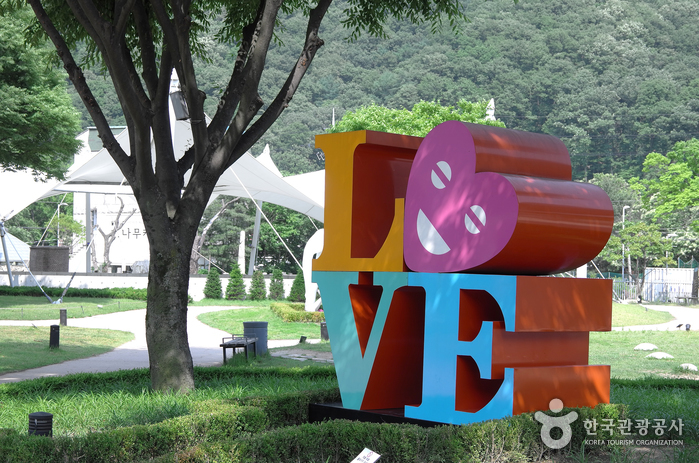
Gana Art Park is a park featuring an art museum, playground, performing stage, art shop, restaurant, and more. The park includes the Gana Children’s Art Museum, showcasing artworks by Korean and international contemporary art masters. There is also the Blue Space, where a work of Picasso is displayed, the Red Space dedicated to artworks of contemporary masters, and the Yellow Space, which is a playground equipped with nets
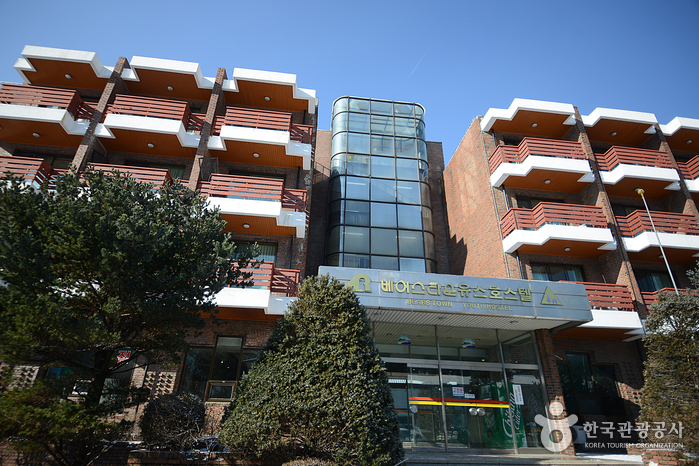
Bears Town Youth Hostel (베어스타운 유스호스텔)
16.6Km 2025-07-09
27, Geumgang-ro 2536beon-gil, Naechon-myeon, Pocheon-si, Gyeonggi-do
+82-31-540-5170, +82-31-540-5151
![[Seoul Trail Course 1] Suraksan · Buramsan Mountain Course ([서울 둘레길 1코스] 수락 · 불암산 코스)](http://tong.visitkorea.or.kr/cms/resource/16/2658216_image2_1.jpg)
[Seoul Trail Course 1] Suraksan · Buramsan Mountain Course ([서울 둘레길 1코스] 수락 · 불암산 코스)
16.6Km 2025-01-06
Junggye-dong, Nowon-gu, Seoul, Republic of Korea
Seoul Trail is a walking trail that encompasses the entire city of Seoul, with a total length of 157km and 8 courses. It weaves together the history, culture, and natural ecology of Seoul through various stories. The 1st course is a gentle path from Suraksan Mountain to Buramsan Mountain, covering 18.6km and taking approximately 8 hours and 10 minutes. This trekking course around Buramsan Mountain passes through Iris Garden, Deongneung-gogae, Information Center, Taereung Royal Tomb, Suamsa Temple, and Hakdoam Temple.
Olive Young - Namyangju Janghyeon Branch [Tax Refund Shop] (올리브영 남양주장현점)
16.7Km 2024-06-26
77, Janghyeon-ro, Jinjeop-eup, Namyangju-si, Gyeonggi-do
-
![Yangju Olleung Royal Tomb [UNESCO World Heritage] (양주 온릉(단경왕후) [유네스코 세계문화유산])](http://tong.visitkorea.or.kr/cms/resource/10/757410_image2_1.jpg)
Yangju Olleung Royal Tomb [UNESCO World Heritage] (양주 온릉(단경왕후) [유네스코 세계문화유산])
16.7Km 2025-01-07
255-41, Hoguk-ro, Yangju-si, Gyeonggi-do
+82-31-855-5228
Olleung Royal Tomb is the royal tomb of Queen Dangyeong (1487-1557), consort of King Jungjong, the 11th ruler of the Joseon dynasty. Queen Dangyeong married King Jungjong when she was 13 years old. In 1506, when King Jungjong ascended to the throne, she became a queen as well, but she was deposed due to her father leading a coup against her husband's acendancy. Therefore, her grave was not regarded as a royal tomb until 1739.
 English
 한국어
한국어 日本語
日本語 中文(简体)
 Deutsch
 Français
 Español
 Русский


