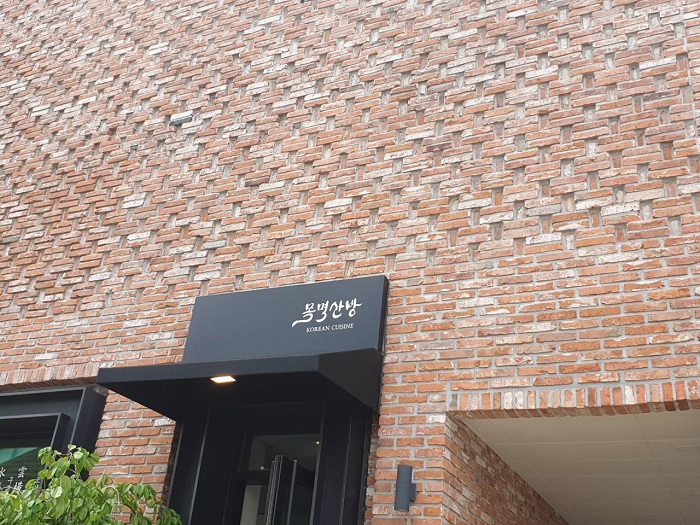
Mongmyeoksanbang (목멱산방)
16.1Km 2024-03-07
71, Toegye-ro, 20-gil, Jung-gu, Seoul
+82-2-318-4790
Situated near Namsan Mountain, Mongmyeoksanbang specializes in bibimbap. Mongmyeok is the ancient name of Namsan Mountain. Bibimbap is a bowl of rice tossed with various vegetables, meat, sesame oil, and red chili paste, making it a nutritionally balanced dish. Their dishes are made with natural seasonings and seasonal herbs gathered from Jirisan Mountain. The soybean pasete and soy sauce are also handmade, and perilla oil and sesame oil are 99.9% natural, without artificial ingredients.
![Iris Eyewear - Konkuk Univ. Branch [Tax Refund Shop] (아이리스안경 건대)](http://tong.visitkorea.or.kr/cms/resource/53/2878853_image2_1.jpg)
Iris Eyewear - Konkuk Univ. Branch [Tax Refund Shop] (아이리스안경 건대)
16.1Km 2024-04-18
Store #105, 220, Achasan-ro, Gwangjin-gu, Seoul
-

Shinsegae Department Store - Main Store (신세계백화점 (본점))
16.1Km 2025-04-07
63 Sogong-ro, Jung-gu, Seoul
+82-1588-1234
Shinsegae Department Store opened its doors as the first modern department store in the country in 1960. It stands where Korea's first department store, the Japanese Misreukkosi Department Store, used to be in the 1930s. After undergoing remodeling in 2007, it reopened as a luxury hall, featuring diverse brands ranging from the top three international luxury brands to new designer brands. In addition, the Trinity Gardens and art halls in the department store serve as a cultural space for a shopping experience that combines art and shopping.
![Columbia - Konkuk Univ. Branch [Tax Refund Shop] (컬럼비아 건대)](http://tong.visitkorea.or.kr/cms/resource/52/2878852_image2_1.jpg)
Columbia - Konkuk Univ. Branch [Tax Refund Shop] (컬럼비아 건대)
16.1Km 2024-04-16
1F, 59, Dongil-ro 20-gil, Gwangjin-gu, Seoul
-
Olens - Konkuk Univ. Branch [Tax Refund Shop] (오렌즈 건대)
16.1Km 2024-04-18
224, Achasan-ro, Gwangjin-gu, Seoul
-
![E-Mart 24 - The Bank Of Korea Branch [Tax Refund Shop] (이마트24 한국은행)](http://tong.visitkorea.or.kr/cms/resource/78/2878578_image2_1.jpg)
E-Mart 24 - The Bank Of Korea Branch [Tax Refund Shop] (이마트24 한국은행)
16.1Km 2024-04-18
9, Namdaemun-ro 5-gil, Jung-gu, Seoul
-
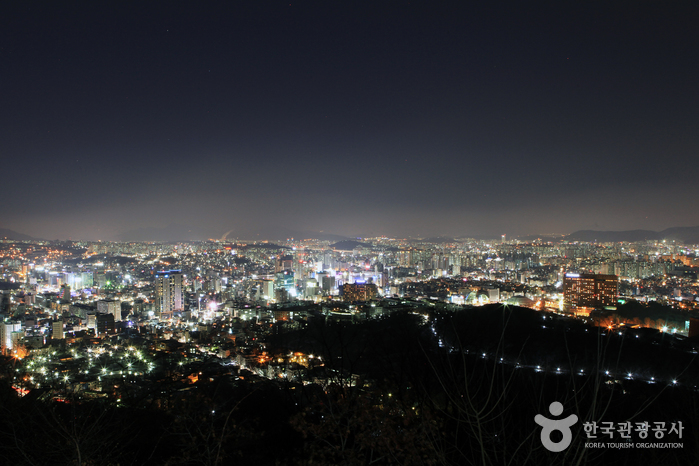
Seoul Namsan Park (남산공원(서울))
16.1Km 2024-03-18
231 Samil-daero, Jung-gu, Seoul
Namsan Mountain rises in the heart of Seoul at an altitude of 265 meters and has been a significant landmark since the Joseon dynasty (1392-1897), leaving behind several ruins. It was heavily damaged in the early 20th century, but was partially restored in 1968 with the creation of the park. Highlights include Namsan Tower and love locks left by numerous couples. Visitors can also easily reach the top by a cable car or bus.
National Memorial of Korean Provisional Government (국립대한민국임시정부기념관)
16.1Km 2023-01-16
279-24, Tongil-ro, Seodaemun-gu, Seoul
The National Memorial of Korean Provisional Government was established to shine a light on the proud history of the Korean Provisional Government's independence and the spirit of a democratic republic and to pass it on to future generations. The four-story memorial building with three underground floors houses three permanent exhibits, one special exhibit, Larchiveum, Symbol Plaza, storage, multi-purpose hall, and rooftop garden over a total area of 3,656 square meters, a total floor area of 9,703 square meters and a total exhibition space of 2,240 square meters. The permanent exhibits consist of a series of historic events from the March 1st Movement, which served as a turning point for the formation of the Provisional Government, to the foundation of the Korean Government that succeeded the mantle of the provisional government, while the special exhibit on the 1st floor currently hosts a special opening exhibition under the title of 『The Return of the Provisional Government of the Republic of Korea』. Moreover, a symbolic wall installation under the theme of "Waves of History" is displayed in the outdoor plaza on the 1st floor of the memorial expressing the Provisional Government’s desire for independence and the dynamics of the past, present, and future of Korea.
Seoul Museum of Art (서울시립미술관(서소문본관))
16.1Km 2024-06-19
61 Deoksugung-gil, Jung-gu, Seoul
+82-2-2124-8800
The Seoul Museum of Art (SeMA) is a space for all to meet and experience the joy of art. Located in the center of Jeong-dong, a district that retains traces of Seoul’s modern and contemporary history, the museum integrates the historical facade of the former Supreme Court with modern architecture. In addition to various programs―encompassing exhibitions, educational outreach initiatives, screenings, workshops, performances, and talks, communal spaces including SeMA Cafe, the artbook store, the open space lobby, and the outdoor sculpture park SeMA WALK provide a rich range of ways for visitors to experience art.
![Wangsol Pharmacy [Tax Refund Shop] (왕솔약국)](http://tong.visitkorea.or.kr/cms/resource/27/2887827_image2_1.jpg)
 English
 한국어
한국어 日本語
日本語 中文(简体)
 Deutsch
 Français
 Español
 Русский


