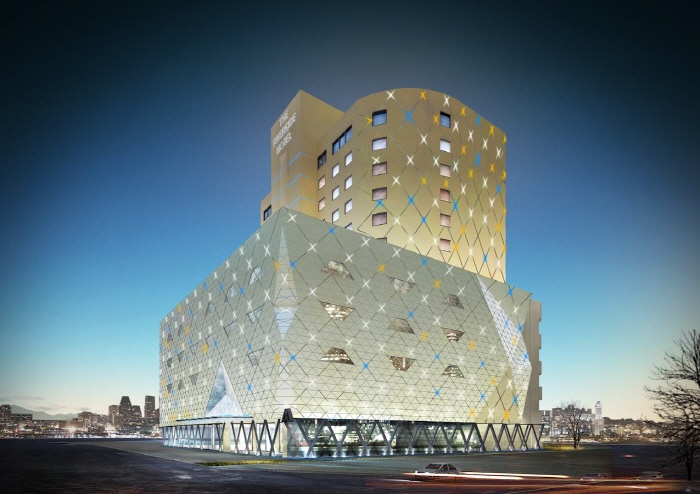
The Riverside Hotel (더 리버사이드 호텔)
19.1Km 2024-05-09
6, Gangnam-daero 107-gil, Seocho-gu, Seoul
+82-2-6710-1105
Located in Jamwon-dong, the transportation hub of Seoul and the center of the Gangnam business area, The Riverside Hotel has outstanding views of the Hangang River and downtown Seoul. The hotel is located a convenient 5-minute walk from Sinsa Station (Subway Line 3). At The Riverside Hotel, guests can enjoy dining, leisure, and culture.
All guestrooms look out on the magnificent nightscape of the Hangang River. Subsidiary facilities include a conference and wedding hall, a top-quality Japanese restaurant, a custom-tailored fitness system, a luxurious spa, an indoor driving range, 24-hour interpretation service, and customer service provided by English and Japanese speaking staff. The beautiful interior decorations and comfort items make a stay in The Riverside Hotel feel like home, perfect for business travelers.

Riz Laser Center (리즈산부인과)
19.2Km 2025-10-23
(3th-4th Floors, Gyeongseo Building), 127 Dosan-daero, Gangnam-gu, Seoul
We are the first hospital to use lasers in female genital plastic surgery, naming it "Laser Vaginoplasty" and introducing it to the Korean obstetrics and gynecology community.
Our practice encompasses a wide range of procedures, including vaginoplasty, labiaplasty, vaginal tightening, hymenorrhaphy, and treatments of gynecologic disorders and sexually transmitted diseases, and cancer.
As a surgery center with equipment tailored to various needs of customers, we pride ourselves on our state-of-the-art surgical system, which cannot be found in other Korean obstetrics and gynecology clinics. In addition, we have an advanced network system to provide expert medical care to patients at all centers in the Riz’ obstetrics and gynecology network through our attending and referred systems for laser female plastic surgery.

Ceramic Cafe JOOL(도자기카페 줄)
19.2Km 2025-11-05
11, Sinchon-ro 4-gil, Mapo-gu, Seoul
'24/365 with BLACKPINK' filming location
This is the studio where JISOO and ROSÉ visited and made pottery in BLACKPINK's exclusive reality content '24/365 with BLACKPINK'. Through the one-day class, you can draw a picture on a mug or make your own pottery by hand. If you follow the teacher's class and pay attention, you will feel great fun even if you are clumsy. Just touching the moist clay dough has the effect of relieving daily stress. Classes require reservations.
![Alley Optician - Nonhyeon Branch [Tax Refund Shop] (골목안경 논현)](http://tong.visitkorea.or.kr/cms/resource/62/2889262_image2_1.jpg)
Alley Optician - Nonhyeon Branch [Tax Refund Shop] (골목안경 논현)
19.2Km 2024-04-18
1F, 15, Hakdong-ro 33-gil, Gangnam-gu, Seoul
-
![National Geographic - Starfield Coex Branch [Tax Refund Shop] (내셔널지오그래픽 스타필드코엑스)](http://tong.visitkorea.or.kr/cms/resource/00/2879900_image2_1.jpg)
National Geographic - Starfield Coex Branch [Tax Refund Shop] (내셔널지오그래픽 스타필드코엑스)
19.2Km 2024-04-22
#C114, 524, Bongeunsa-ro, Gangnam-gu, Seoul
-
Bicena (비채나)
19.2Km 2025-05-20
81F, 300 , Olympic-ro, Songpa-gu, Seoul
+82-2-3213-1261
Bicena provides tasty Korean cuisine available only in Korea in a refined interior.
![Lotte World Aquarium [Tax Refund Shop] (롯데월드 아쿠아리움)](http://tong.visitkorea.or.kr/cms/resource/23/2878923_image2_1.jpg)
Lotte World Aquarium [Tax Refund Shop] (롯데월드 아쿠아리움)
19.2Km 2024-04-22
B1, 300, Olympic-ro, Songpa-gu, Seoul
-
Diptyque - World Tower Branch [Tax Refund Shop] (딥디크 월드타워점)
19.2Km 2024-04-19
B1, 300, Olympic-ro, Songpa-gu, Seoul
-
![Estée Lauder - World Tower Branch [Tax Refund Shop] (에스티로더 월드타워점)](http://tong.visitkorea.or.kr/cms/resource/56/2879156_image2_1.jpg)
Estée Lauder - World Tower Branch [Tax Refund Shop] (에스티로더 월드타워점)
19.2Km 2024-04-19
B1, 300, Olympic-ro, Songpa-gu, Seoul
-
Creed - World Tower Branch [Tax Refund Shop] (크리드 월드타워점)
19.2Km 2024-04-23
574, Cheonan-daero, Dongnam-gu, Cheonan-si, Chungcheongnam-do
-
 English
 한국어
한국어 日本語
日本語 中文(简体)
 Deutsch
 Français
 Español
 Русский


