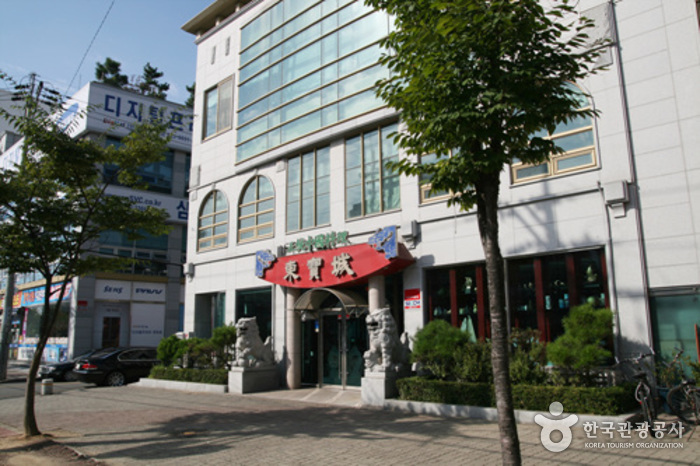
Dongboseong (동보성)
17.0Km 2024-04-07
437, Hana-ro, Iksan-si, Jeonbuk-do
Dongboseong is an authentic Chinese restaurant serving dishes prepared by a number of chefs from China. It has separate rooms and large banquet rooms for group dining.
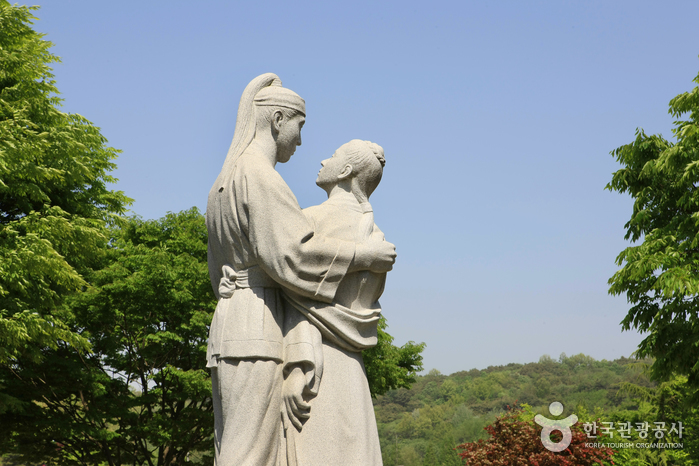
Seodong Park (서동공원)
17.3Km 2024-04-07
41-14, Godo 9-gil, Geumma-myeon, Iksan-si, Jeonbuk-do
+82-63-859-3818
Built alongside the Geumma Reservoir, Seodong Park traces its origins to ancient records from the 600 AD with historical figures (Princess Seonhwa and Seodong, King Mu). More than 100 works of art can be found in the park, including twelve Chinese zodiac animal statues and sculptures of Princess Seonhwa and Seodong. The central plaza features a statue of King Mu, and various amenities such as the Mahan Museum, a children's forest playground, a picnic area, a fountain, and a riverside plaza enrich the experience for visitors.
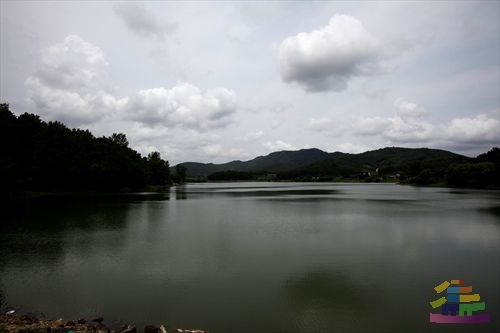
Geumma Reservoir (금마저수지)
17.4Km 2024-04-07
Donggodo-ri, Geumma-myeon, Iksan-si, Jeonbuk-do
+82-63-859-3818
Looking towards the south from the top of Mireuksan Mountain, one can see Geumma Reservoir. The reservoir is shaped like the Korean peninsula. Hence it is also referred to as Jido Yeonmot, or Map Pond. The terrain is especially beautiful when viewing it through the fog in the early mornings.
The water comes from Mireuksan Mountain, ensuring a steady supply of water throughout the year. There are no factories or other contaminants nearby so the water quality is of the highest grade. Near the reservoir, one can find Seodong Park and Mahan Hall. Seodong Park is a sculpture park displaying various sculptures such as a bronze statue of Baekje’s King Muwang of Baekje and a statue of Seodong’s Princess Seonhwa. Mahan Hall showcases the lifestyle and culture of Mahan, a tribal confederation during the Samhan period. The park also features various facilities such as an observatory, fishing spot and a promenade.

Andeok Health and Healing Village (안덕 건강 힐링 체험마을)
17.6Km 2025-10-23
72 Jangpa-gil, Gui-myeon, Wanju-gun, Jeonbuk-do
Andeok Health and Healing Village is nestled near a valley at the foot of Moaksan Mountain in Wanju. As Korea's first health and healing experience village, it offers experience programs and health and wellness classes. Health experience programs and health and wellness classes are professionally designed in collaboration with a traditional Korean medicinal clinic in Andeok Village. Therefore, it offers visitors opportunities to learn quality information and experience specialized programs.
Andeok Health and Healing Village consists of a healing experience center, Yochodang House, a food experience center, a traditional sauna, a well-being restaurant, and a convention hall. For accommodations, seven Hwangtobangs (red-clay cottages) are available as well as studio-type rooms at Soo Pension. These accommodation facilities are open to visitors regardless of whether they participate in programs run by the village or not.
The village's signature experience programs include the red-clay sauna where the floor is heated in the traditional manner. The walls are made of red clay mixed with traditional herbal medicinal water. When heated, the sauna effectively removes waste from the body. Other signature programs include making injeolmi (bean-powder-coated rice cakes) by cooking rice and pounding the rice dough using a mallet; and harvesting seasonal crops (e.g., potatoes, sweet potatoes, and corn)
Gimje Munsusa Temple (문수사(김제))
18.5Km 2024-04-07
158, Hwangsan 5-gil, Gimje-si, Jeonbuk-do
+82-63-547-0972
Munsusa Temple, located in Hwangsan-dong, Gimje, is a branch temple of Geumsansa Temple. The temple is located in the heart of nature atop Bonghwangsan Mountain (alt. 100 meters), which is surrounded by the seemingly endless Mangyeong Plains. The temple was built by the great monk Hyedeok Seonsa in the 25th year of King Mu of Baekje after he was visited in his dreams by Munsu Bosal (a Buddhist Saint). The temple was named ‘Munsu’ after ‘Munsugol,’ the original name of the neighborhood in which the temple is located.
In front of the temple stands an ancient zelkova tree whose giant girth measures well over 5 meters. The tree, which is called gwimok (meaning holy, miraculous tree), was recently designated a specially protected tree and is now the focus of preservation efforts. Every January 14th (according to the lunar calendar), local lovernment of Gimje holds a sacred ritual for the tree while the temple holds a ritual to honor the mountain spirit.
Wonkwang University Hospital (원광대학교병원)
18.9Km 2025-10-23
895 Muwang-ro, Iksan-si, Jeonbuk-do (54538)
WONKWNAG UNIVERSITY HOSPTIAL leads the advancement of medical care in Jeollabuk-do by centering on excellent medical personnel and introducing the latest medical equipment.
We are the first in the Jeonbuk State to receive the KAHF (Korean Accreditation Program for Hospitals serving Foreign Patients). Our hospital is a tertiary hospital equipped with a Jeonbuk Regional Cardiocerebrovascular Disease Center, Trauma Center, Regional Emergency Medical Center, and a multi-person hyperbaric oxygen therapy chamber.
As a renowned cancer specialist, we have consistently attained the highest level, Grade 1, in all four major cancer care assessments (colon cancer and stomach cancer for 7 consecutive years, and breast cancer and lung cancer for 6 consecutive years) conducted by the Health Insurance Review and Assessment Service (HIRA). With a team of specialists dedicated to developing cancer treatments, it provides specialized cancer management service. In particular, we have established a collaborative treatment system essential for patients with severe cancer through multidisciplinary integrated treatment by internal medicine, surgery, rehabilitation medicine, and oriental medicine hospitals together, and performed cancer surgeries with a high degree of difficulty on a large number of patients every year.
![Mireuksa Temple Site [UNESCO World Heritage] (익산 미륵사지 [유네스코 세계문화유산])](http://tong.visitkorea.or.kr/cms/resource/91/2514991_image2_1.jpg)
Mireuksa Temple Site [UNESCO World Heritage] (익산 미륵사지 [유네스코 세계문화유산])
19.3Km 2024-04-07
362, Mireuksaji-ro, Iksan-si, Jeonbuk-do
+82-63-859-3873
Mireuksa was the largest Buddhist temple of the ancient Baekje Kingdom (18 BC-AD 660). According to Samgukyusa (historical records published in 1281), King Mu (30th king of Baekje, in power AD 600-641) and his wife Queen Seonhwa were said to have seen a vision of Mireuksamjon (the three Sanskrit) emerging from a large pond. At the time of their revelation, the king and queen were on their way to visit a Buddhist monk in Sajasa Temple on Yonghwasan Mountain (now known as Mireuksan Mountain). In response to their vision, the king drained the nearby pond and established Mireuksa Temple. The temple is believed to have shown the most advanced architectural and cultural skills of Baekje, Silla, and Goguryeo (the three main kingdoms at that time). Records indicate that King Jinpyeong of Silla even sent his craftsmen over to assist with the temple construction.
The two main features of the Mireuksa Temple Site are the stone pagoda (Mireuksaji Seoktap) and the flagpole supports (Mireuksaji Dangganjiju). The 14.24-meter-high west stone pagoda (National Treasure No. 11) is the oldest and largest Korean stone pagoda in existence. The west pagoda currently has only six tiers, but is estimated to originally have had nine. The nine-story east stone pagoda (27.67 meters in x_height) was restored to its original stature in 1993 based on historical records. Other surviving landmarks include the flagpole supports (Treasure No. 236) to the south of the stone pagodas. The 395 centimeter-tall poles are estimated to have been created during the Unified Silla period (AD 676-935) and are set 90 meters apart from east to west.
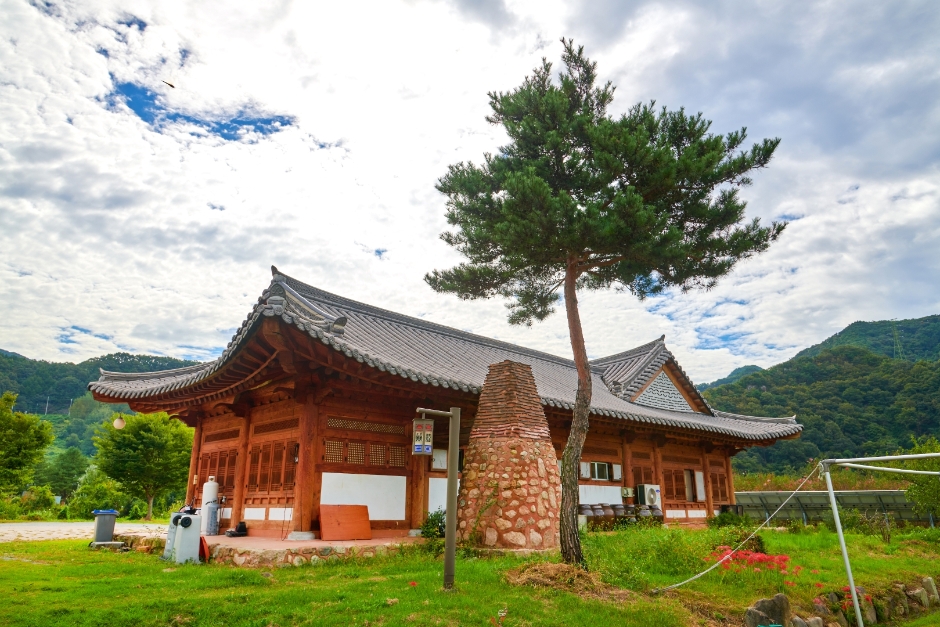
Gosan Changpo Village (창포마을)
19.4Km 2025-10-23
385 Daeajeosu-ro Gosan-myeon, Wanju-gun, Jeollabuk-do
Since there is a colony of irises (Changpo), it is a quiet rural village that produces traditional handmade products using irises. Various experiences such as making natural shampoo and soap are available. It is essential to take a picture in a pose like a pictorial at the rustic concrete bridge where the BTS members sat, and the old shop Yongam Sanghoe where you can feel the years.
 English
 한국어
한국어 日本語
日本語 中文(简体)
 Deutsch
 Français
 Español
 Русский


