
Haengnidan Street (행리단길)
15.0Km 2025-06-18
43 Hwaseomun-ro, Paldal-gu, Suwon-si, Gyeonggi-do
Haengnidan Street is a stretch of approximately 612 meters from Hwahongmun Gate of Hwaseong Fortress to Hwaseo Park. The name Haengnidan Street originates from Haenggung-dong (Haenggung referring to the king's temporary palace) and Gyeongnidan Street, a popular area in Itaewon, Seoul. This vibrant district seamlessly blends tradition and modernity, featuring a variety of unique restaurants, stylish cafés, concept stores, and exhibition spaces. It has become one of Suwon's most iconic attractions.
![Himart - Suji Branch [Tax Refund Shop] (하이마트 수지점)](http://tong.visitkorea.or.kr/cms/resource/97/2889997_image2_1.jpg)
Himart - Suji Branch [Tax Refund Shop] (하이마트 수지점)
15.1Km 2024-04-19
317, Poeun-daero, Suji-gu, Yongin-si, Gyeonggi-do
-
Olive Young - Hwaseong Branch [Tax Refund Shop] (올리브영 화성봉담점)
15.1Km 2024-06-27
89, Donghwa-gil, Bongdam-eup, Hwaseong-si, Gyeonggi-do
-
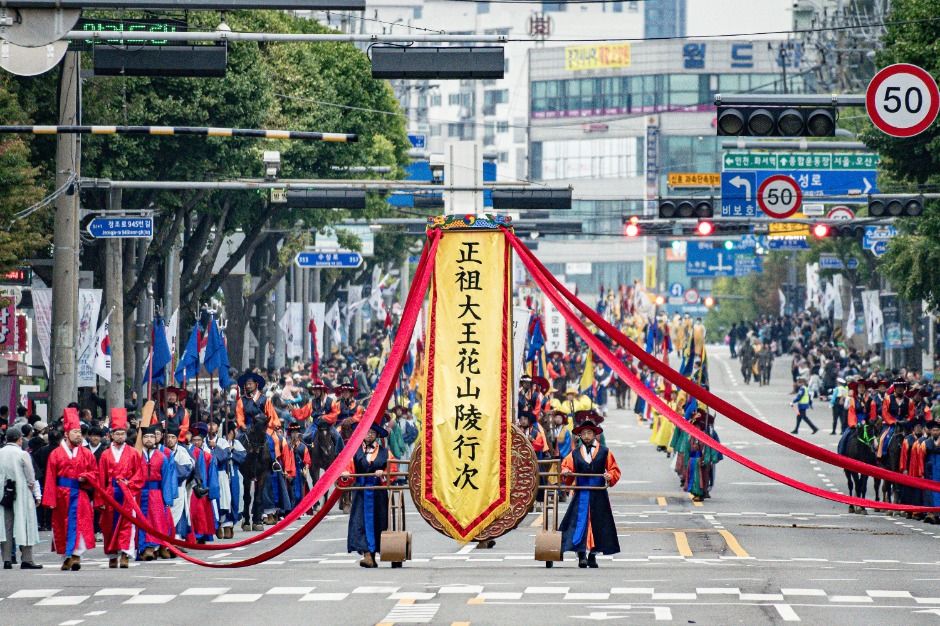
Suwon Hwaseong Cultural Festival (수원화성문화제)
15.2Km 2025-07-09
825 Jeongjo-ro, Paldal-gu, Suwon-si, Gyeonggi-do
+82-31-228-3920
Hwaseong Fortress, a UNESCO World Heritage Site, hosts the Suwon Hwaseong Cultural Festival every autumn. The festival’s main event is the “King Jeongjo’s Royal Parade,” a reenactment of King Jeongjo’s procession to pay respects to his father Crown Prince Sado’s tomb. This spectacular event features over 4,000 participants in traditional Joseon-era costumes marching along a 59km route. The “King Jeongjo’s Dasobangwa” program, offering a taste of royal court cuisine served for the Banquet of Lady Hyegyeong-Gung Hong, is especially popular among international tourists. Additionally, the festival includes fortress-building experiences, night tours, and various reenactment events and performances, all linked to Hwaseong Fortress, Suwon.
◎Hwaseong Fortress, Suwon
This planned city was built by King Jeongjo during the Joseon Dynasty. It is considered a pinnacle of Korean fortress culture, incorporating the advanced technologies of its time.
![Suwon Hwaseong Fortress [UNESCO World Heritage] (수원 화성 [유네스코 세계유산])](http://tong.visitkorea.or.kr/cms/resource/36/2613036_image2_1.jpg)
Suwon Hwaseong Fortress [UNESCO World Heritage] (수원 화성 [유네스코 세계유산])
15.2Km 2025-08-06
Yeonghwa-dong, Jangan-gu, Suwon-si, Gyeonggi-do
+82-31-290-3600
Suwon was one of four main regional government centers during the Joseon dynasty. Hwaseong Fortress, built to protect the city, was designated as a UNESCO World Cultural Heritage Site on December 12, 1997 for its historical value. The fortress offers various performances daily as well as the Suwon Hwaseong Cultural Festival every fall. The walls stretch for 5,700 kilometers, with Paldalsan Mountain at the center. The fortress, constructed from 1794 to 1796, was built as a display of King Jeongjo’s filial piety towards his father and to build a new pioneer city with its own economic power.
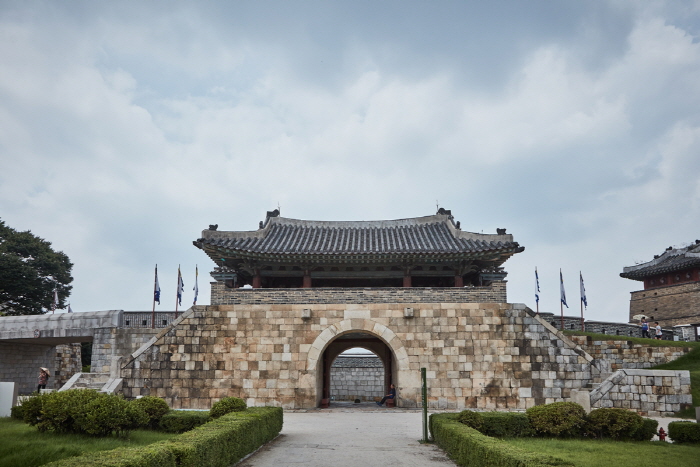
Hwaseomun Gate (화서문)
15.2Km 2022-12-29
334, Jangan-dong, Paldal-gu, Suwon-si, Gyeonggi-do
+82-31-290-3600
Hwaseomun Gate is the western gate of Hwaseong Fortress, a Treasure. Over the stone mujigae (rainbow) door is a single-story tower gate. Hwaseomun Gate's ongseong (defensive gate) forms a crecent shape, with one side of the ongseong remaining open.
Olive Young - Pyeongtaek Seojeong Branch [Tax Refund Shop] (올리브영 평택서정점)
15.3Km 2024-06-27
1F, 2, Jeongam-ro, Pyeongtaek-si, Gyeonggi-do
-
Olive Young - Pyeongtaek Godeok Rodeo Branch [Tax Refund Shop] (올리브영 평택고덕로데오점)
15.5Km 2024-06-27
29, Godeokgalpyeong 6-gil, Pyeongtaek-si, Gyeonggi-do
-
![E-Mart - Suji Branch [Tax Refund Shop] (이마트 수지)](http://tong.visitkorea.or.kr/cms/resource/68/2888668_image2_1.jpg)
E-Mart - Suji Branch [Tax Refund Shop] (이마트 수지)
15.6Km 2024-04-22
203, Suji-ro, Suji-gu, Yongin-si, Gyeonggi-do
-
Yongin Beomnyunsa Temple (법륜사(용인 문수산))
15.7Km 2021-11-05
126, Nongchonpark-ro, Cheoin-gu, Yongin-si, Gyeonggi-do
+82-31-332-5703
Beomnyunsa Temple, located at the foot of Munsusan Mountain in Yongin, Gyeonggi-do, consists of Geungnakbojeon Hall, Gwaneumjeon Hall, Samseonggak Hall, Beomjonggak Hall, and other buildings.
The sizable 430-square-meter Daeungjeon Hall was built in an open form of the Chinese character "亞" ("ah") in a Southern Buddhist style. The hall, made of indigenous red pine tree from Baekdusan Mountain, contains a 53-ton stone Buddha Statue (three times bigger in size than the statue in Seokguram Grotto) and a 33-ton stone Munsu Bohyeon Buddhist Saint Statue. On the left wall are 104 Sinjungnim (guardians of Buddhist law) as well as a Dongjin Boan Buddhist Saint Statue. There are also 1,250 Buddhist saint statues, symbolizing the devotion of Buddhist followers.
 English
 한국어
한국어 日本語
日本語 中文(简体)
 Deutsch
 Français
 Español
 Русский


