![Nike - Olympic Branch [Tax Refund Shop] (나이키 올림픽)](http://tong.visitkorea.or.kr/cms/resource/96/2878896_image2_1.jpg)
Nike - Olympic Branch [Tax Refund Shop] (나이키 올림픽)
1.0Km 2024-04-18
1F, 1329, Yangjae-daero, Gangdong-gu, Seoul
-
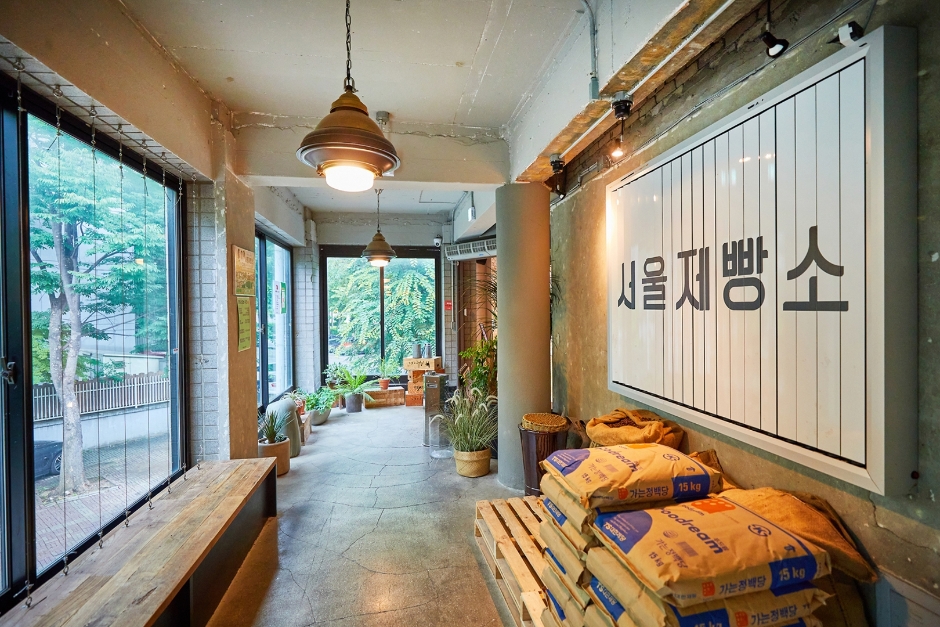
Seoul Bakery (서울제빵소 올림픽본점)
1.1Km 2024-03-20
1178 Yangjae-daero, Songpa-gu, Seoul
This bakery cafe is located on the second floor of a commercial wing attached to the Olympic Village Apartments, located across from Olympic Park’s Rose Plaza. The spacious cafe features naturally fermented bread made with organic flour and seats looking out the window. The interior is modern and open, with plenty of seats for long stays. Naturally fermented bread here includes Hongguk rice bread, salt bread, and cream cheese and fig bread. Bread is baked from 08:00 to midday. Visitors can find a timetable for the different kinds of bread served in this cafe in order to make plans in advance to get freshly-baked bread.
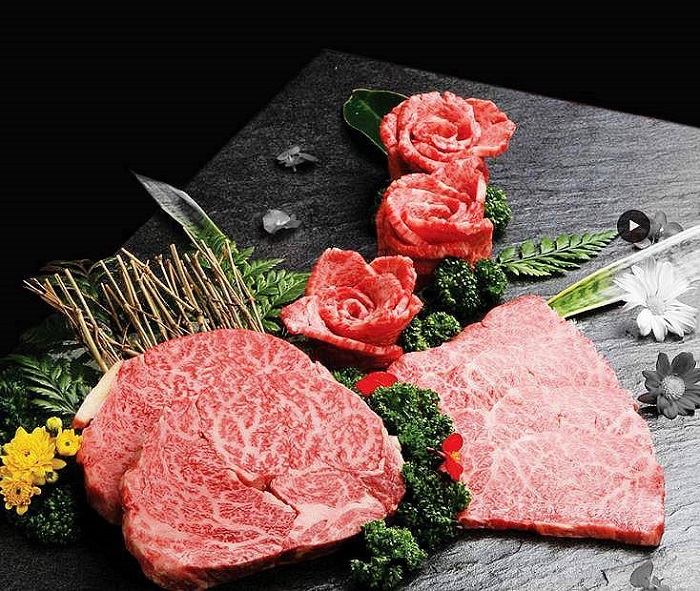
Byeokje Galbi Bangi(벽제갈비(방이본점))
1.3Km 2024-03-13
1-4, Yangjae-daero 71-gil, Songpa-gu, Seoul
+82-2-415-5522
Byeokje Galbi is a restaurant serving top-quality hanu (Korean beef). One can enjoy a variety of cuts sourced from the finest hanu (Korean beef), such as deungsim (sirloin), galbi, and sagol (beef bone). The signature menus of Byeokje Galbi are Seol-hwa Saeng Galbi (Diamond cut Hanwoo rib) and Seol-hwa Kkot Deungsim (Hanwoo rib eye). The menu also includes naengmyeon (cold buckwheat noodles) dishes, seolleongtang (ox bone soup), and Hanwoo Kkoritang (Artisanal Hanwoo tail soup). The restaurant was notably included in the MICHELIN Guide Seoul 2023.

Bongpiyang (Bangi Branch) (봉피양 방이점)
1.3Km 2024-03-13
5, Yangjae-daero 71-gil, Songpa-gu, Seoul
Bongpiyang is an upscale restaurant serving dwaeji galbi gui (grilled pork galbi) near the Olympic Park. Its signature menus include the Pyeongyang naengmyeon (Pyeongyang cold buckwheat noodles), dwaeji galbi (grilled pork galbi), and hanu tteokgalbi (grilled Korean beef galbi patties). Bongpiyang’s dwaeji galbi (grilled pork galbi) uses medicinal herbs, licorice, and thin yeot (malt candy) for sweetness. The broth for Pyeongyang naengmyeon (Pyeongyang cold buckwheat noodles) is made every early morning using hanu (Korean beef) and other ingredients, and the restaurant also prepares its buckwheat noodles in-house as well.
Asan Medical Center (서울아산병원)
1.5Km 2025-10-23
(Pungnap-dong), 88 Olympic-ro 43-gil, Songpa-gu, Seoul
Opened in June 1989, Asan Medical Center is the largest tertiary hospital in Korea with 2,764 beds. In 2023, we treated an average of 13,260 outpatients and 2,539 inpatients per day, and performed 70,892 surgeries throughout the year.
With three specialty hospitals–Cancer Institute, Heart Institute, and Children's Hospital–and more than 50 specialized centers, we lead the world in cancer, organ transplantation, and cardiac care. In recognition of our efforts, we have topped the list of Korea's Most Admired Hospitals for 18 consecutive years and ranked NO. 1 in Korea for six consecutive years in U.S. Newsweek's World's Best Hospitals.
As a "quarternary hospital" serving critically ill patients from Korea and abroad who come to us as their last hope, Asan Medical Center treats more than 20,000 international patients from around 100 countries, including the United States, United Arab Emirates, and Mongolia. Medical professionals from developed countries visit us to learn our advanced medicine. Over the past decade, more than 3,700 professionals from nearly 90 countries have visited us to learn the latest medical techniques.
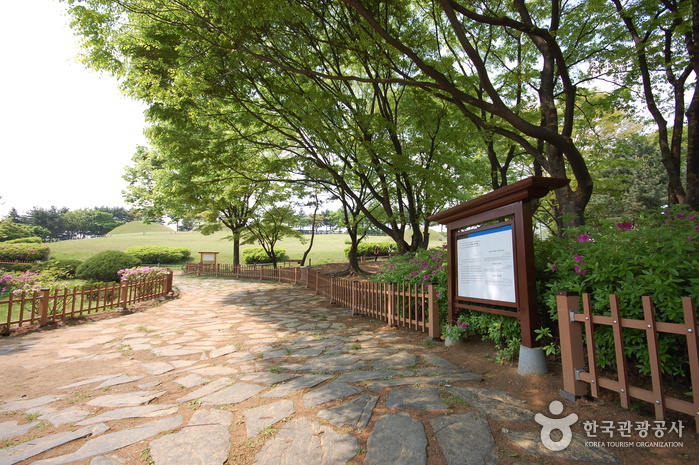
Seoul Bangidong Ancient Tombs (서울 방이동 고분군)
1.6Km 2022-12-29
219, Ogeum-ro, Songpa-gu, Seoul
+82-2-2147-2800
The ancient tombs in Bangi-dong were discovered during the land readjustment project of Jamsil-jigu District in 1975. A total of eight ancient tombs were excavated until 1976, and the site was restored into a park in 1983. The Bangi-dong area was originally a low line of hills with an altitude of 30-50 meters above sea level, but it has been made into flatland for urban development purposes. Tomb numbers 1 to 6 lie on the same hill, while tomb no. 7 and 8 are located on another hill a short distance away.
All eight tombs have circular burial mounds. The insides of the a tomb feature a square or rectangular-shaped burial chamber with earthen ground and stone walls, and a passage leading from the tomb entrance to the chamber. However, details of the burial chambers vary by tomb. Most of the tombs had been robbed before the investigation, but a few relics such as plates and pots have been excavated. At the time of excavation, the relics were presumed to have come from the Baekje dynasty (18 BC-660 AD), but it is now estimated that they date back to the Unified Silla Period (676-935 AD).
![JDX - Gangdong Station Branch [Tax Refund Shop] (강동역점JDX)](http://tong.visitkorea.or.kr/cms/resource/91/2878891_image2_1.jpg)
JDX - Gangdong Station Branch [Tax Refund Shop] (강동역점JDX)
1.7Km 2024-04-22
1084, Cheonho-daero, Gangdong-gu, Seoul
-
![Lordsystem [Tax Refund Shop] (주식회사 로드시스템)](http://tong.visitkorea.or.kr/cms/resource/15/2878915_image2_1.jpg)
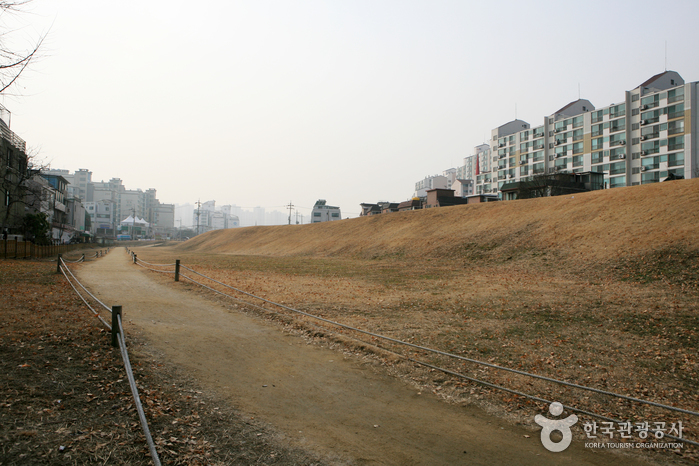
Pungnap-dong Toseong Fortress (서울 풍납동 토성)
1.8Km 2025-01-10
Pungnap-dong, Songpa-gu, Seoul
+82-2-2147-2800
Onjo, the progenitor of Kingdom Baekje, first settled in Wiryeseong Hanam. But exact location is still unknown. One thing for sure, however, is that Pungnaptoseong Fortress, Mongchontoseong Fortress, Bangidong Ancient Tombs of Baekje, Seokchondong Stone Mound Tomb of Early Baekje are the remains of Baekje. Pungnaptoseong Fortress faces Hangang River to its west and connects to Mongchontoseong Fortress to the south. To the northwest faces Achasanseong Fortress over Hangang River and far to the southeast is Namhansanseong Fortress.
Pungnaptoseong Fortress, located at the south end of Cheonhodaegyo Bridge over Hangang River, is one of the remains of Early Baekje. Originally, the fortress was 4km in circumference, but due to massive overflowing of Hangang River during flood season in 1925, most of the fortress was lost and only 2.7km of it remains. To the east of the fortress are 4 vestiges of the fortress gates. The remains from the prehistoric era through the Samguk (Three States) era have been unearthed, indicating that this place was a residential area well before the Baekje Era. Through vigorous excavation, some people suggest that there used to be a palace located here during the Baekje Era.
![Olive Young - Cheonho Jungang Branch [Tax Refund Shop] (올리브영 천호중앙)](http://tong.visitkorea.or.kr/cms/resource/76/2878876_image2_1.jpg)
Olive Young - Cheonho Jungang Branch [Tax Refund Shop] (올리브영 천호중앙)
1.8Km 2024-04-18
1027, Cheonho-daero, Gangdong-gu, Seoul
-
 English
 한국어
한국어 日本語
日本語 中文(简体)
 Deutsch
 Français
 Español
 Русский


