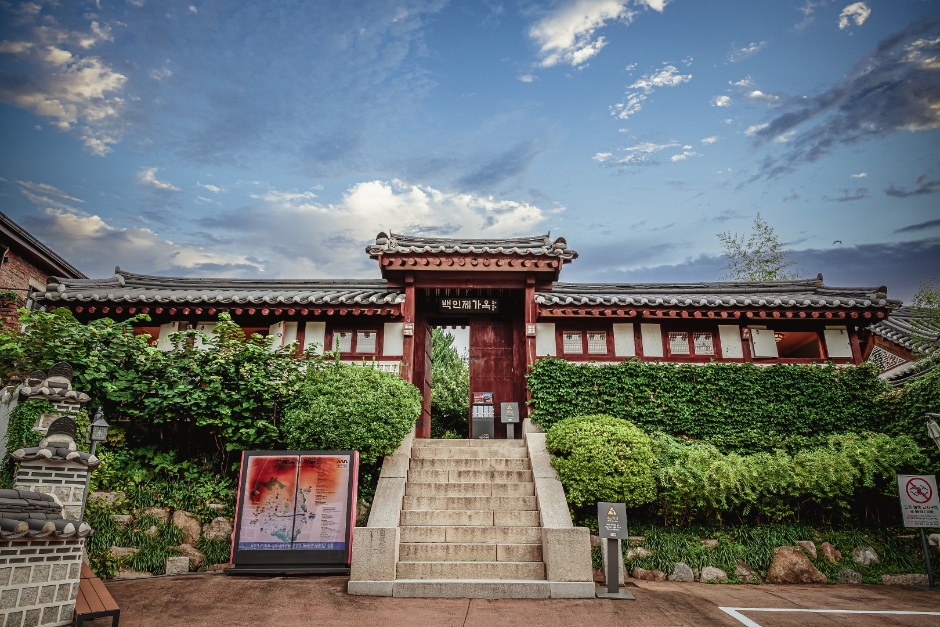
Baek In-je House (백인제가옥)
14.1Km 2025-10-24
16 Bukchon-ro 7-gil, Jongno-gu, Seoul
+82-2-724-0200
Baek In-je House, located in Bukchon Hanok Village, is a hanok built during the Japanese administration period that portrays modern hanok features. The structure consists of a main room offering a good view of the whole village, spacious bedrooms, a large garden, and annex buildings. As it maintains the beauty of a traditional hanok while incorporating the modern trend of its time, Baek In-je House is considered to be highly valuable in means of both architecture and history, representing the Bukchon Hanok Village together with Yun Bo-seon House.
Baek In-je House was built from black pine, which was first introduced in Seoul during the Gyeongseong Expo in 1907, distinguishing itself from other upper-class houses of its time. Unlike other traditional hanok designs that separate the main building from the other rooms, Baek In-je House connects the two with a hallway, allowing convenient access between the two structures. The house also consists of a Japanese-style hallway and floor mat rooms, reflecting the interior trends of that period. Baek In-je House is also unique in that the main room is partially built as a two-story structure, a style that was never seen in any traditional hanok built during the Joseon period.

Bukchon Hanok Village Gamgodang Street (북촌한옥마을 감고당길)
14.1Km 2025-10-30
Anguk-dong, Jongno-gu, Seoul
An alley with cute cafes and galleries
This is the road that appeared in the last episode and the flashback scene where Choi Ung (played by Choi Woosik) and Kuk Yeonsoo (played by Kim Dami) got drunk. Behind the Seoul Craft Museum in Bukchon Hanok Village, it extends for about 440m from Poongmoon Girls' High School to Jeongdok Library. There are many pretty cafes and galleries on the cozy road, and there are also craft markets open, so there is plenty to look around. The alley where Kuk Yeonsoo walked with the drunken Choi Ung on her back is Yunboseon Street in the middle of Gamgodang Street. It stretches along the hill between narrow tiled walls and stone walls, giving off a unique atmosphere.

Olive Young - Pangyo Kakao Branch [Tax Refund Shop] (올리브영 판교카카오점)
14.1Km 2024-06-26
166, Pangyoyeok-ro, Bundang-gu, Seongnam-si, Gyeonggi-do
-
![Olive Young - Yongsan Richensia Branch [Tax Refund Shop] (올리브영 용산리첸시아)](http://tong.visitkorea.or.kr/cms/resource/84/2889184_image2_1.jpg)
Olive Young - Yongsan Richensia Branch [Tax Refund Shop] (올리브영 용산리첸시아)
14.1Km 2024-04-22
Store #103, #104, #105, #112, 341, Baekbeom-ro, Yongsan-gu, Seoul
-
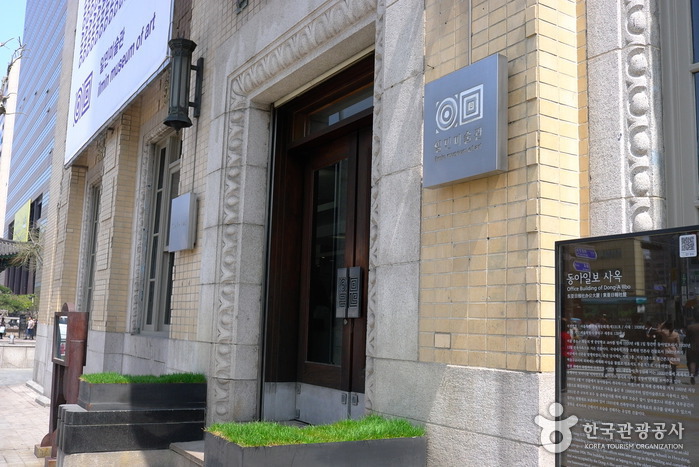
Ilmin Art Museum (일민미술관)
14.1Km 2022-09-27
152, Sejong-daero, Jongno-gu, Seoul
The Ilmin Art Museum located in former Dong-A Newspaper Building, was formed in honor of their honorable and late CEO Kim Sang-man. The museum was established in December of 1996, and with a full renovation in 2001, large exhibition hall and Ilmin collection was placed in. Through the renovation, the combination of glass and steel made Artrium aimed to become one of the best comtemporary museum, connecting the museum to the streets of Gwanghwamun.
This museum boasts a large Ilmin collection. There are 430 pieces of Ilmin collection from Goryeo dynasty (918-1392) to present, 1,200 pieces in the Donga Newspaper's collection of art, and 100 pieces of art owned by Hyundai Corporation. The Ilmin Collection mostly consists of pieces that Kim Sang-man collected from ceramics to aesthetic paintings. The Dongah Newspaper's collection has time-relevant pieces that are important in history.
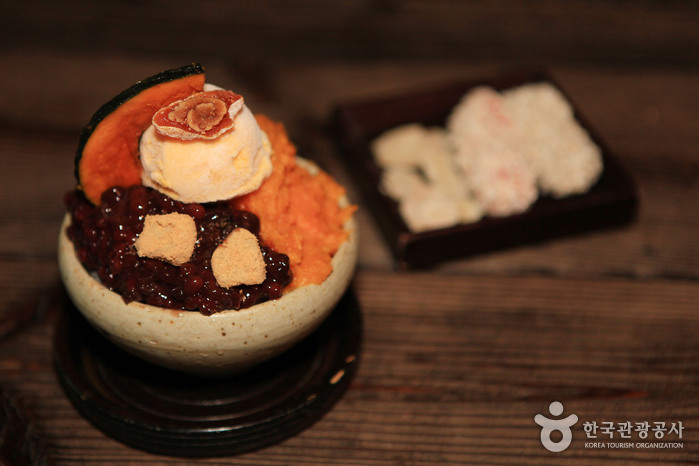
Sooyeon Sanbang (수연산방)
14.1Km 2025-10-23
8 Seongbuk-ro 26-gil, Seongbuk-gu, Seoul
Sooyeon Sanbang is a traditional tea house located in Seongbuk-dong. It was originally built during the Japanese colonial period and was the hanok of the literary figure Lee Taejun. Today, it is operated as a tea house by the writer's granddaughter. The name Sooyeon Sanbang means "a house where literati gather in the mountains." Visitors can enjoy traditional teas such as daechucha (jujube tea) and ssanghwacha (medicinal herb tea), along with snacks like injeolmi (bean-powder-coated rice cake).
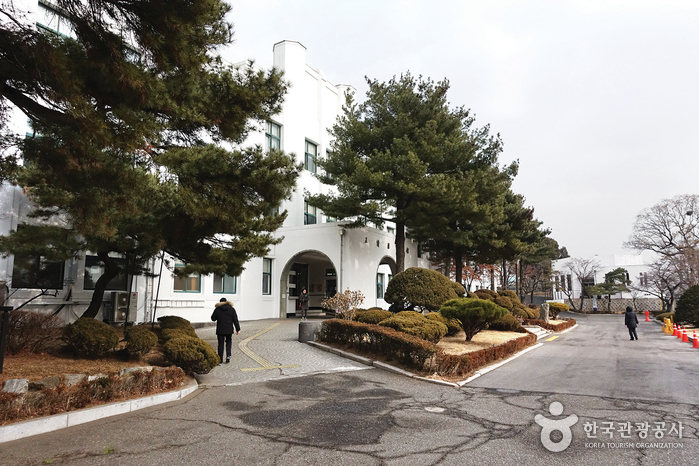
Jeongdok Library (서울특별시교육청 정독도서관)
14.1Km 2021-05-08
48, Bukchon-ro 5-gil, Jongno-gu, Seoul
+82-2-2011-5799
Jeongdok Library opened in January 1977 on the former site of the Gyeonggi High School in Bukchon, Jongno-gu, Seoul. As a public city library, it boasts little under half a million books and 16,300 reference materials. The Seoul Education Museum in the library houses a collection of 12,000 reference materials.
In addition to basic library functions (lending books and offering archives and reading rooms to the public), the library runs various cultural programs such as monthly lectures by invited authors, photo exhibitions, reading seminars, and music/dance performances.
![DAHMSOJUNG[Korea Quality] / 담소정[한국관광 품질인증/Korea Quality]](http://tong.visitkorea.or.kr/cms/resource/92/2477092_image2_1.png)
DAHMSOJUNG[Korea Quality] / 담소정[한국관광 품질인증/Korea Quality]
14.1Km 2025-01-06
16-2, Bukchon-ro 9-gil, Jongno-gu, Seoul
010-3749-9550
Dahmsojung, meaning ‘a house full of laughs’, is a hanok guesthouse that provides sincere services and comfortable relaxation. Located in the middle of Seoul’s city center, this hanok hotel-class guesthouse was built using traditional hanok construction materials including the 200-years-old Korean land pine from Gyeongju, and clay for rooms. The owner originally bought the land to build the residential area for the family, but wishing to promote the charms of the hanok building to foreigners, it was opened as a guesthouse in October 2012. This hanok guesthouse with modern elements is decorated with refined interior items. It provides a special breakfast that consists of steamed rice wrapped in a lotus leaf and tasty side dishes without any artificial seasonings. All the vegetables used for the meals are organic and cultivated by the owner. It also uses refined objects including high quality tableware, bedding (cotton bedclothes with colored stripes), authentic ceramics, lacquered painting by an artisan, and artistic living items. It carries out a cleaning and disinfection process every day as well. In particular, Hinoki cypress with a subtle scent was used for the bathroom. The home bar was installed especially for foreign guests who find it difficult to sit on the floor in the kitchen. These detailed consideration and decorations have attracted many guests including foreign diplomats, VIPs, and so on.
It also operates a hands-on programs including ‘calligraphy’ and ‘making a fan’ that are held on the main floored room and are popular among foreign guests. Dahmsojung offers guests sophisticated services and comfortable facilities with a clean and traditional atmosphere that attracts many domestic and foreign guests.
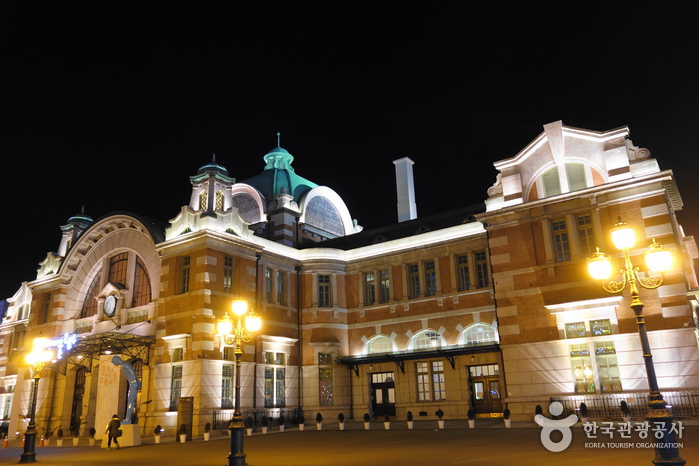
Culture Station Seoul 284 (문화역 서울 284)
14.1Km 2025-10-23
1 Tongil-ro, Jung-gu, Seoul
Culture Station Seoul 284 opened in 2011 by restoring the old Seoul Station. The complex holds various programs including exhibitions, performances, cultural events and workshops. It holds over 100 years of history with Namdaemun Station being the original name of the station in 1900 and changing to Gyeongseong Station, Seoul Station, and now Culture Station Seoul 284. The look of 1925 Gyeongseong Station offers visitors a flashback to the past, providing a fun and special experience.
◎ Travel information to meet Hallyu’s charm
This is where Mok-ha (played by Park Eun-bin) waited for Ki-ho (played by Chae Jong-hyeop) with flowers in the TV series "Castaway Diva." As the restored historic Seoul Station, it also appeared in "Reply 1994" as the location where Samcheonpo (played by Kim Sung Kyun) first arrived in Seoul.
CU - Koreana Hotel Branch [Tax Refund Shop] (cu코리아나호텔점)
14.1Km 2024-06-26
135, Sejong-daero, Jung-gu, Seoul
-
 English
 한국어
한국어 日本語
日本語 中文(简体)
 Deutsch
 Français
 Español
 Русский


