![Ave Sports - Dapsimni Branch [Tax Refund Shop] (아베스포츠 답십리)](http://tong.visitkorea.or.kr/cms/resource/11/2889011_image2_1.jpg)
Ave Sports - Dapsimni Branch [Tax Refund Shop] (아베스포츠 답십리)
7.0Km 2024-04-23
209, Dapsimni-ro, Dongdaemun-gu, Seoul
-

CU - Hankuk University of Foreign Studies Branch [Tax Refund Shop] (cu한국외국어대학교점)
7.0Km 2024-06-27
107, Imun-ro, Dongdaemun-gu, Seoul
-
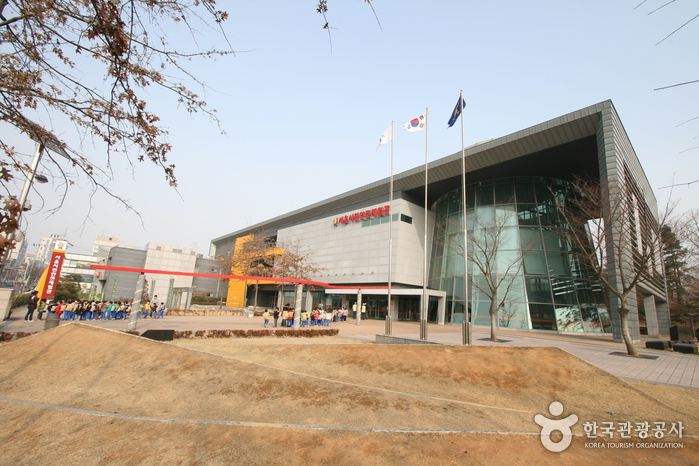
Gwangnaru Safety Experience Center (광나루안전체험관)
7.1Km 2025-03-29
238, Neungdong-ro, Gwangjin-gu, Seoul
+82-2-2049-4061
Gwangnaru Safety Experience Center was founded in 1999 after two fire accidents in which many children lost their lives. These tragedies emphasized the necessity of establishing a disaster training center for common citizens.
Gwangnaru Safety Experience Center is a three-story building with one basement floor, covering an area of more than 5,000 m². The basement floor includes a small theater. The first floor is set up for natural disaster training and consists of an orientation hall, storm simulation training room, earthquake simulation room, computer tests on fire safety knowledge and others. The second floor is a place for artificial catastrophe training. It consists of a smoke escape training room, fire extinguisher training room, first-aid (CPR) training room and practice place for calling 119. The third floor is used for rescue training and consists of a rescue training room, screening room, training for professionals and video examples of the five biggest disasters that have occurred in Seoul. Overall there are about 20 training areas established, so citizens can experience the imitation of a disaster by themselves and learn easily and in an interesting way how to cope with a disaster.
![Olive Young - Seokgye Station Branch [Tax Refund Shop] (올리브영 석계역)](http://tong.visitkorea.or.kr/cms/resource/30/2888130_image2_1.jpg)
Olive Young - Seokgye Station Branch [Tax Refund Shop] (올리브영 석계역)
7.2Km 2024-04-17
14, Seokgye-ro 1-gil, Nowon-gu, Seoul
-
![LG Best Shop - Byeollae Branch [Tax Refund Shop] (엘지베스트샵 별내점)](http://tong.visitkorea.or.kr/cms/resource/88/2890288_image2_1.jpg)
LG Best Shop - Byeollae Branch [Tax Refund Shop] (엘지베스트샵 별내점)
7.3Km 2024-04-18
337, Sunhwagung-ro, Namyangju-si, Gyeonggi-do
-
![Uireung Royal Tomb [UNESCO World Heritage] (서울 의릉(경종, 선의왕후) [유네스코 세계문화유산])](http://tong.visitkorea.or.kr/cms/resource/80/2690680_image2_1.jpg)
Uireung Royal Tomb [UNESCO World Heritage] (서울 의릉(경종, 선의왕후) [유네스코 세계문화유산])
7.3Km 2021-06-03
146-20, Hwarang-ro 32-gil, Seongbuk-gu, Seoul
+82-2-964-0579
Uireung is the royal tomb of King Gyeongjong (reign 1720-1724), the 20th ruler of the Joseon dynasty, and his second wife, Queen Seonui.
King Gyeongjong was the first son of King Sukjong and Janghuibin, who was one of King Sukjong’s concubines. King Gyeongjong, who was born weak and anemic, died four years after becoming the king, without any great political achievements. Uireung tombs differ from the other royal double tombs in that they are not placed side-by-side. Instead, according to geomantic theory, one tomb has been placed directly behind the other one. The arrangement also shows that when making tombs, Korean ancestors did their best to protect the natural environment. Another feature of Uireung Royal Tomb is the stone fence raised using twelve stone posts. Each post has a letter inscribed, representing one of the twelve sibijisin gods.
![E-Mart - Hanam Branch [Tax Refund Shop] (이마트 하남)](http://tong.visitkorea.or.kr/cms/resource/00/2888500_image2_1.jpg)
E-Mart - Hanam Branch [Tax Refund Shop] (이마트 하남)
7.3Km 2024-04-22
70, Deokpungseo-ro, Hanam-si, Gyeonggi-do
-
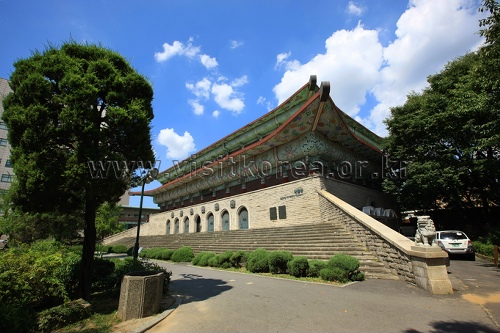
Sejong University Museum (세종대학교 박물관)
7.3Km 2022-09-16
209, Neungdong-ro, Gwangjin-gu, Seoul
+82-2-3408-3876
Sejong University Museum exhibits folk art, wooden crafts, clothing, accessories, pottery, paintings and calligraphy collected for over 40 years by the couple who founded the present day Sejong University, Dr. Ju Young-ha and Dr. Choi Ok-ja. This museum has its origins in the Soodo Gallery, which was built in Chungmuro, the campus’ original location, in 1959. Needing more space to house additional artifacts, the museum moved to its current location, which first opened on May 5, 1973 in a four-story concrete building inspired by traditonal tower design from the Baekje era. This building was later expanded on May 20, 1977.
After the university’s name was changed to Sejong University in 1979, the museum was also renamed the Sejong University Museum. The museum showcases unique artifacts to both scholars and students from home and abroad in contribution to the research of Korea’s culture, arts, and archeology.
The Saem - ENTER 6 Gangbyeon Branch [Tax Refund Shop] (더샘엔터식스점)
7.4Km 2024-04-22
85, Gwangnaru-ro 56-gil, Gwangjin-gu, Seoul
-
ABC-Mart - Techno Mart Gangbyeon Branch [Tax Refund Shop] (ABC마트 테크노마트 강변점)
7.4Km 2024-04-18
85, Gwangnaru-ro 56-gil, Gwangjin-gu, Seoul
-
 English
 한국어
한국어 日本語
日本語 中文(简体)
 Deutsch
 Français
 Español
 Русский


