Sangso-dong Forest Park (상소동 산림욕장)
18.1Km 2022-12-26
San 1-1, Sangso-dong, Dong-gu, Daejeon
+82-42-251-4771
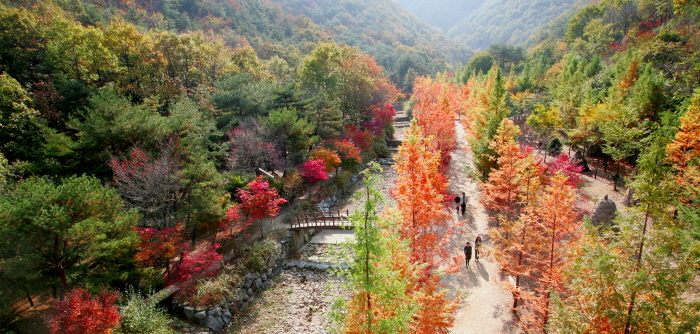
Sangso-dong Forest Park is located at the point where the foothills of Maninsan Mountain and Sikjangsan Mountain meet. The road to the park is beautifully lined with sycamore trees. The park offers various facilities for enjoying nature and in particular, the stone pagodas placed throughout the park are a must-see. Visitors can stack their own rocks and make wishes relating to family, health, relationships, and more. The park is great for walks, hikes, or even just to relax as wild flowers bloom all throughout spring to fall.

Yetteo Folk Museum (옛터민속박물관)
18.2Km 2025-02-04
321-35 Sannae-ro, Dong-gu, Daejeon
The Yetteo Folk Museum showcases traditional folk artifacts that reflect the daily life of the Daejeon region. Inside the exhibition hall, visitors can view items such as knives, tray tables, water droppers, cups, and oil lamps. The outdoor exhibition area features stone mortars, troughs, and grinding stones. The museum also includes a traditional jar exhibition hall, a Korean restaurant, and a traditional teahouse. Visitors can engage in hands-on experiences like natural dyeing, hanji paper crafts, and knot-making, or relax and enjoy a campfire.

Aquatic Botanical Garden (수생식물학습원)
18.3Km 2025-10-27
255 Bangoasil-gil, Gunbuk-myeon, Okcheon-gun, Chungcheongbuk-do
Aquatic Botanical Garden in the beautiful Daecheong Lake Garden is a place where you can see various aquatic plants native to Korea, as well as those from tropical regions. It is often referred to as the most beautiful lakeside garden in Korea. Prior reservations are required for entry, so make sure to book them through the website.
Mok hyang jae / 목향재
18.3Km 2025-05-20
33 , Mannam-ro 6-gil, , Sejong-si
+82-10-8666-1217
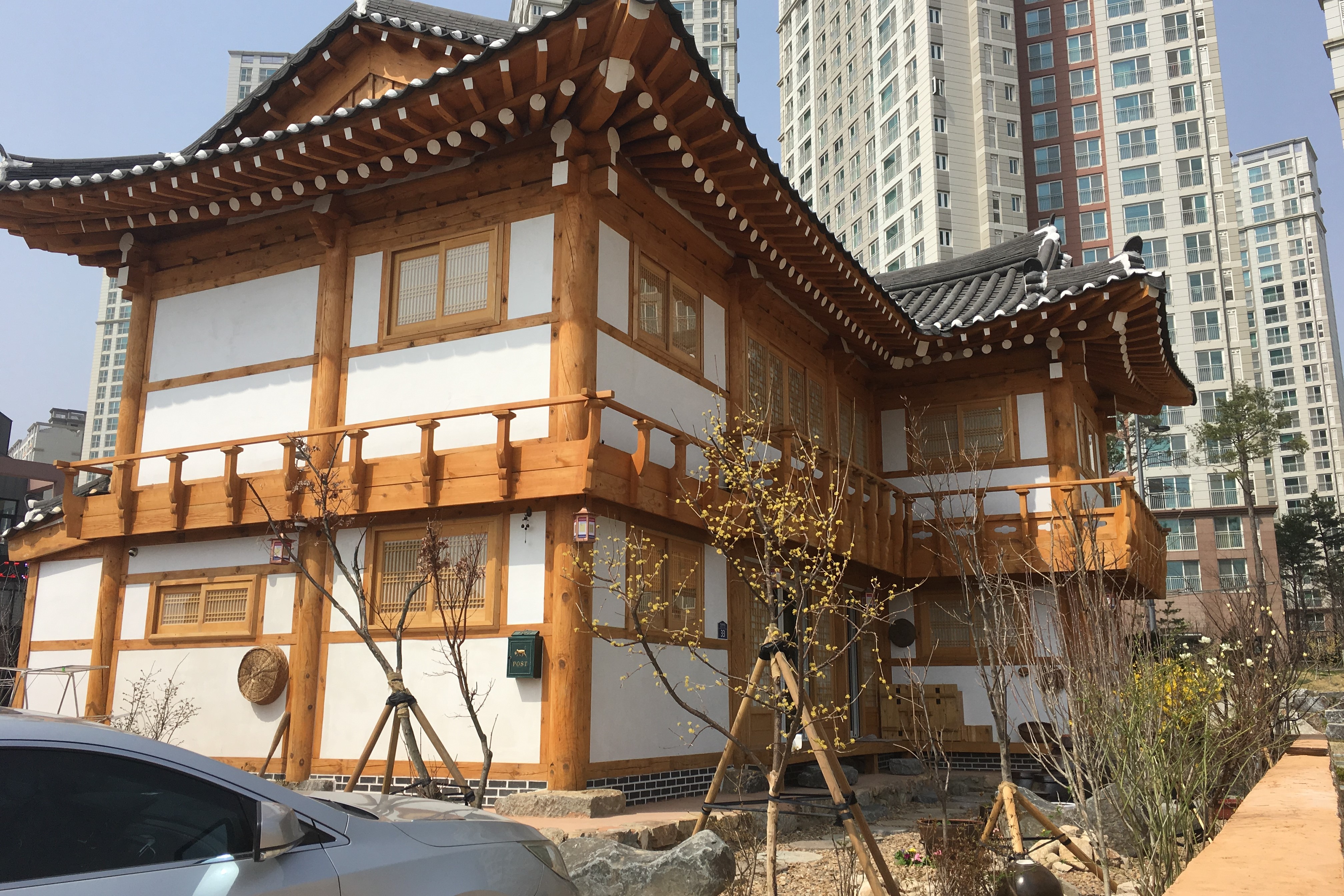
Mokhyangjae in Sejong City, Chungcheongnam-do, is a hanok pension built in the style of a palace with beams and pillars of thick red pine. The exposed beam ceilings and hanji-covered sliding doors add to the feel of a grand old house. There’s a choice of rooms: Korean style ondol room (either 1-2 person or family-sized); a standard room with a bed and an attic; or deluxe room with a living room and an attic. The attic, equipped with comics and picture books, is a favorite space for children. There’s also a traditional tea house.
Bugangok (부강옥)
18.5Km 2025-05-20
103, Bugangoecheon-ro, Sejong-si
+82-10-9577-8953
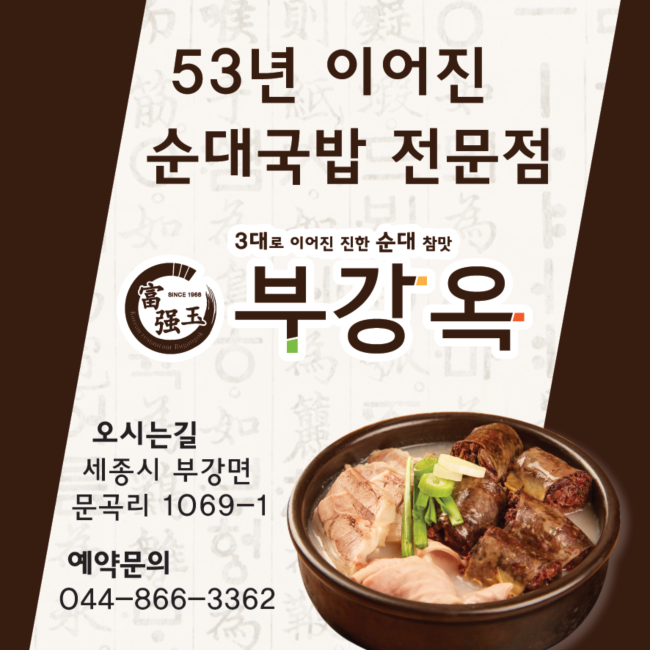
It is a restaurant that’s featured a lot in various media. This Korean restaurant is located in Sejong-si. The representative menu is blood sausage and rice soup.
Garden of Sky (하늘물빛정원)
19.5Km 2024-06-03
156 Geomhan 1-gil, Chubu-myeon, Geumsan-gun, Chungcheongnam-do
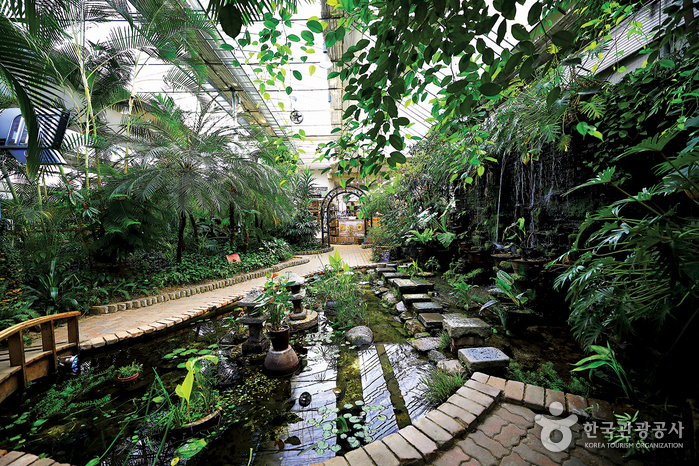
A garden filled with wild flowers, exotic plants, and rare trees, Garden of Sky is nestled by Jangsanhosu Pond located at the foothills of Meodeullyeong Pass. The garden also has a wide variety of facilities that cater to visitors' convenience and needs such as a jjimjilbang (Korean sauna), seminar rooms, restaurants, herbal souvenir shop, cafes local food stores, forests, and photo zones.
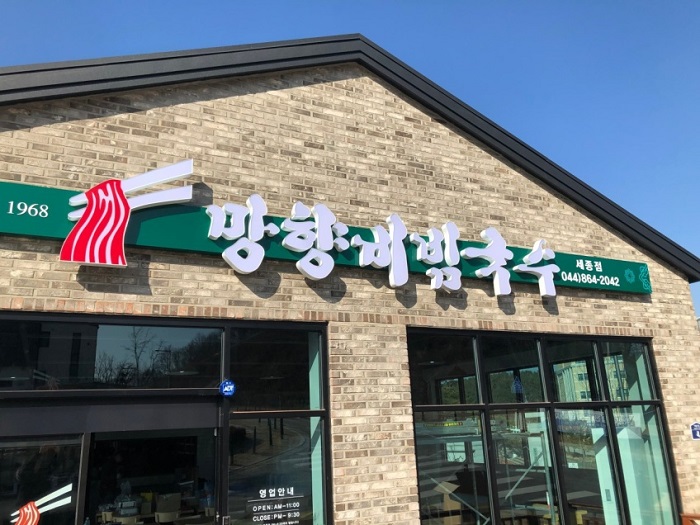
Manghyang Bibimguksu Sejong Branch (망향비빔국수 세종)
19.9Km 2025-05-20
4 Bareun 7-gil, Sejong-si
+82-44-864-2042
Manghyang Bibimguksu is a Korean noodle specialty restaurant located in Sejong Administrative City. Its signature dish is bibim guksu (spicy noodles), which is spicy noodles mixed with a special sauce. Additionally, they offer other dishes such as janchi guksu (banquet noodles), mandu, kimchi mandutguk (kimchi mandu soup), and dongaseu (pork cutlet). Nearby, there's the Ogarnangtteul Neighborhood Park, providing a pleasant setting for a meal and a stroll.
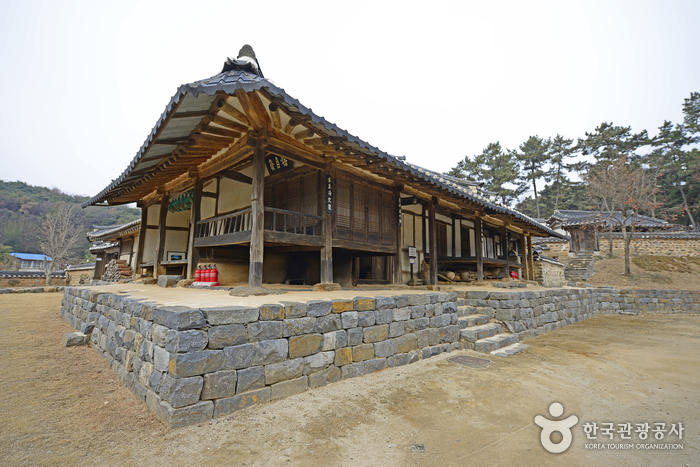
Baek il heon Head House (논산 백일헌 종택)
19.9Km 2024-08-05
45, Jugok-gil, Sangwol-myeon, Nonsan-si, Chungcheongnam-do
+82-41-736-4166 / +82-10-2911-4166
The Baegilheon Head House (National Folklore Cultural Heritage No. 273) is the house that was bestowed upon General Yi Sam by King Yeongjo in recognition of his achievement in suppressing the Yi In-jwa Rebellion in 1728. King Yeongjo also granted Yi Sam the posthumous name ‘Baegilheon’. The house is composed of the munganchae (gate quarters) situated next to a tall gate, the ‘ㄷ’-shaped anchae (women’s quarters), and the ‘ㄱ’-shaped sarangchae (men’s quarters), which are configured in an overall square layout. The accommodation includes the munganchae, the araet sarang with a numaru (upper floor), and the wit sarang and the geonneotbang, each of which has a large toenmaru (a narrow wooden porch running along the outside of the building). Notably, the geonneotbang, which is connected with the daecheong (wooden floor) and has a cozy courtyard surrounded by a mud wall, was the living space for the eldest son of the family and his wife for many generations. As the house has been designated as a National Folklore Cultural Heritage, cooking in the guestrooms is strictly prohibited. However, the house provides breakfast prepared by the daughter-in-law of the head house free of charge. The toilets and shower room are situated in the back yard.
 English
 한국어
한국어 日本語
日本語 中文(简体)
 Deutsch
 Français
 Español
 Русский


