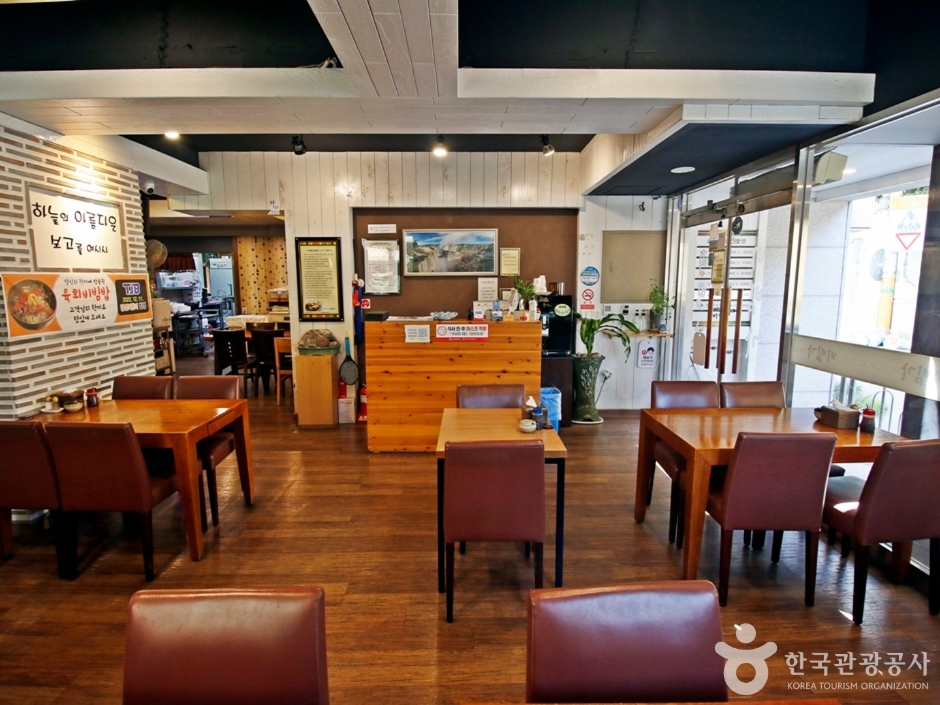
Bibimga (비빔가)
9.6Km 2024-03-20
41 Sinseong-ro 84beon-gil, Yuseong-gu, Daejeon
Bibimga is a Korean restaurant specializing in various bibimbap dishes. Alongside the classic Jeonju bibimbap, they offer creative variations with ingredients like yukhoe (beef tartare), ginseng, and octopus. Each bibimbap is crafted with an array of fresh vegetables, mixed with red chili paste, and finished with a drizzle of freshly squeezed sesame oil, resulting in a delightful flavor. The menu also features yukhoe and sogalbi jjim (braised galbi).
![Lotte Himart - Seodaejeon Branch [Tax Refund Shop] (롯데하이마트 서대전점)](http://tong.visitkorea.or.kr/cms/resource/63/2883563_image2_1.jpg)
Lotte Himart - Seodaejeon Branch [Tax Refund Shop] (롯데하이마트 서대전점)
9.7Km 2024-04-18
26-37, Yuseong-daero, Yuseong-gu, Daejeon
-
![Lotte Mart - Seodaejeon Branch [Tax Refund Shop] (롯데마트 서대전점)](http://tong.visitkorea.or.kr/cms/resource/60/2883560_image2_1.jpg)
Lotte Mart - Seodaejeon Branch [Tax Refund Shop] (롯데마트 서대전점)
9.7Km 2024-04-16
26-37, Yuseong-daero, Yuseong-gu, Daejeon
-
![Moda Outlet - Daejeon Branch [Tax Refund Shop] (모다아울렛 대전점)](http://tong.visitkorea.or.kr/cms/resource/56/2883556_image2_1.jpg)
Moda Outlet - Daejeon Branch [Tax Refund Shop] (모다아울렛 대전점)
9.8Km 2024-04-18
5, Daejeong-ro, Yuseong-gu, Daejeon
-

Mobap (모밥)
9.8Km 2024-03-20
20 Sinseong-ro 61beon an-gil, Yuseong-gu, Daejeon
Mobap is a Korean table d'hote restaurant that serves a hearty traditional set meal. The signature dish is the mobap jeongsik (cast-iron pot set menu), which includes sticky and sweet rice cooked in an cast-iron pot, accompanied by over 10 kinds of side dishes, suyuk (boiled pork slices), fish, and doenjang jjigae (soybean paste jjigae). Set in a remodeled hanok, this restaurant is popular for offering a satisfying and hearty experience of Korean home-cooked meals.
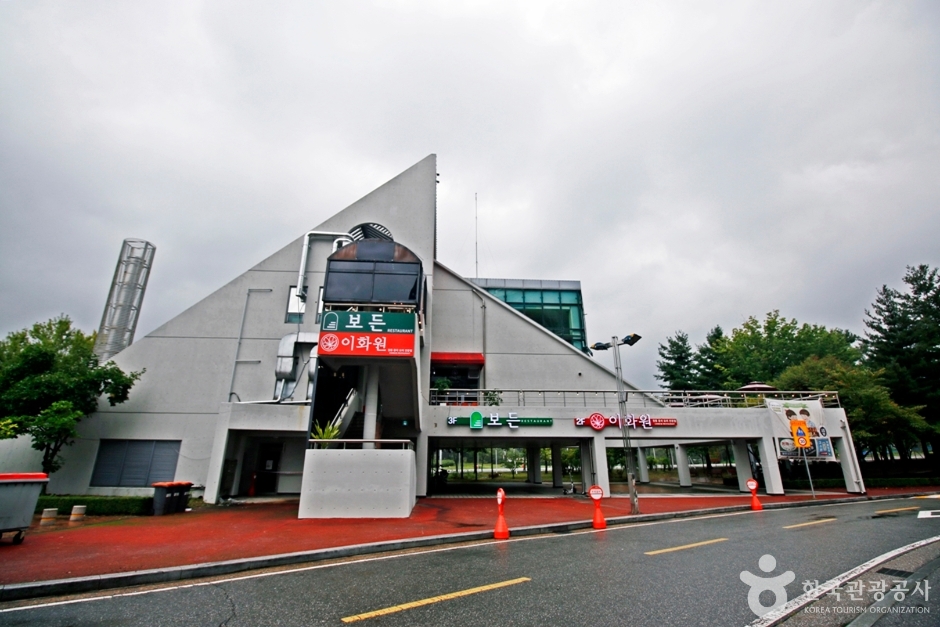
Lee Hwa Won Chinese Restaurant (이화원)
10.0Km 2024-03-04
32 World cup-daero, Yuseong-gu, Daejeon
+82-42-823-0022
Lee Hwa Won is a Chinese cuisine restaurant established in 1998, located near the Daejeon World Cup Stadium. With a head chef who has experience working in hotels in China, diners can experience the authentic taste of Chinese cuisine. The signature dish is jjajangmyeon (black bean saouce noodles). In addition to that, various set menus and course meals are available.
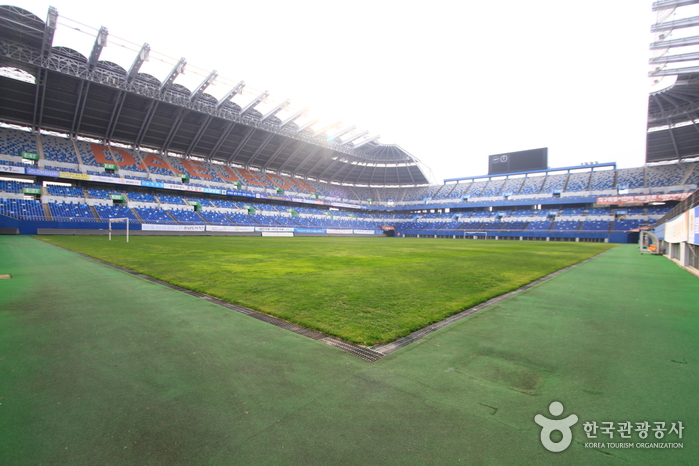
Daejeon World Cup Stadium (대전월드컵경기장)
10.0Km 2021-06-11
32, World Cup-daero, Yuseong-gu, Daejeon
+82-42-610-2900
Daejeon World Cup Stadium is one of the stadiums where games were held during the 2002 World Cup Korea/Japan. The stadium can accommodate up to 42,000 fans and is the first retractable roof stadium in Korea.
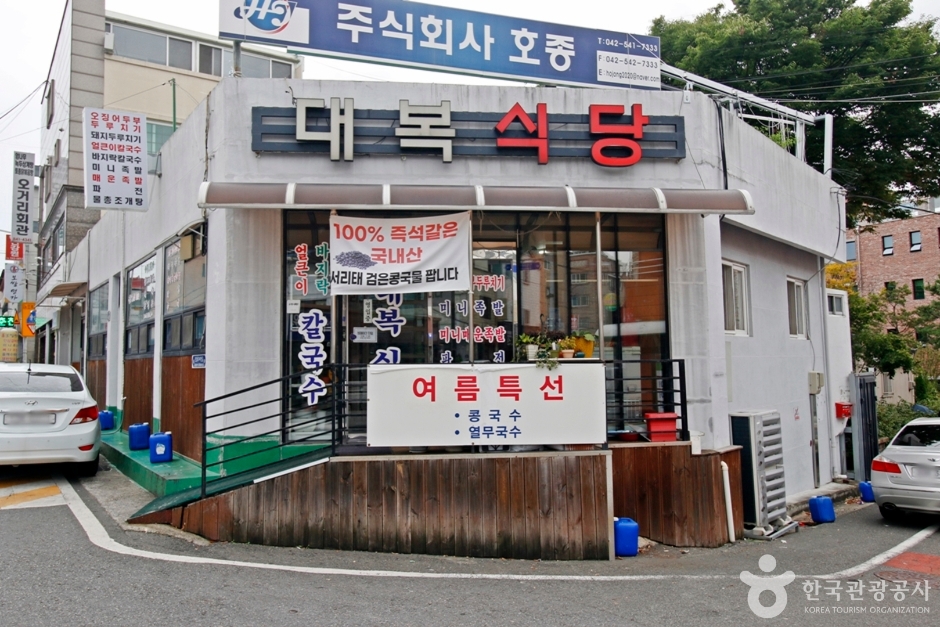
Daebok Sikdang (대복식당)
10.3Km 2024-03-04
67 Jinjam-ro 140beon-gil, Yuseong-gu, Daejeon
042-542-8959
Daebok Sikdang is a renowned restaurant in Daejeon specializing in kalguksu (noodle soup). It offers various dishes incorporating kalguksu noodles. The signature menu items include ojingeo dubu duruchigi (stir-fried kimchi, squid and bean curd) and additional servings of kalguksu noodles. Rather than the typical clear broth, their specialty lies in mixing stir-fried pork ingredients with boiled noodles for a spicy and flavorful experience.
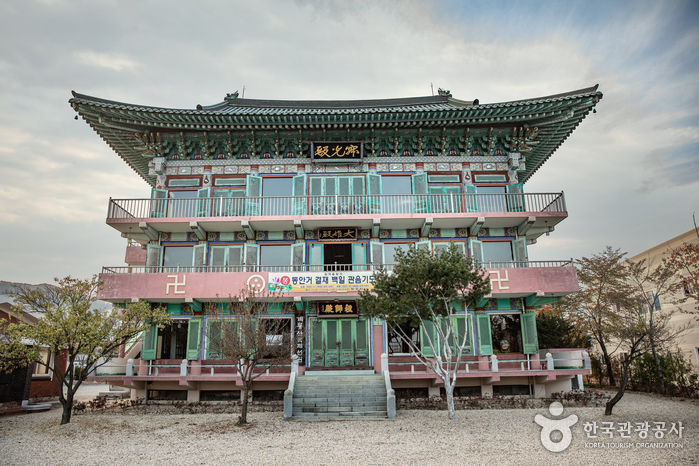
Daejeon Jagwangsa Temple (자광사(대전))
10.4Km 2021-09-07
50-8, Hakhadong-ro 63beon-gil, Yuseong-gu, Daejeon
+82-42-822-9220
Legend has it that the region of Hakha-dong was where the gods lived when they periodically came down from the heavens. When Jagwangsa Temple was built in the district, Song Siyeol saw it as a sign and created a village school near the temple to train his pupils. It was his hope that the sacred land would aide in the raising of gifted students who would grow to serve their community and country. When building the school, Song Siyeol also planted a juniper tree that, 300 years later, still proudly stands by Jagwangsa Temple.
Upon entering the temple area, visitors will find to their left the Seongjeonnyeongdangji Memorial Stone, which serves to commemorate Song Siyeol and his school. Next to the memorial stone is a pond in which carp swim lazily around lotus flowers. From the white wooden chair in front of the pond, there is a large bell to the left and main Dharma Hall to the right.
Jinjamhyanggyo Confucian School (진잠향교)
10.4Km 2022-12-26
67, Gyochon-ro, Yuseong-gu, Daejeon
+82-42-543-1811
Jinjamhyanggyo Confucian School was established to enshrine and orient the ancestral tablet of excellent classical scholars in 1405 (the 5th year of King Taejong's reign) and to educate people. More detailed information is not available in the record. The remaining building is called Daeseongjeon, and the ancestral tablets are 5 Seong, Songju 6 hyeon, and Korean 18 hyeon. One instructor, who received a plot of land and slaves from the nation, taught 30 students during the Joseon period, but after the Gapo Reform, the educational function disappeared and Seokjeon, a religious ceremony, was served in summer and fall with offerings of incense on the first day of each month and at the half-moon instead. Daeseongjeon (Cheongju Daeseong High School (Former Main Building of Cheongju Commercial High School) is designated as a Registered Cultural Heritage.
 English
 한국어
한국어 日本語
日本語 中文(简体)
 Deutsch
 Français
 Español
 Русский


