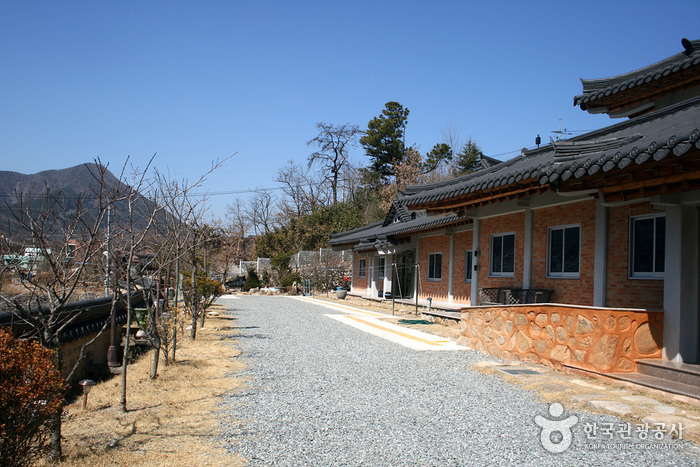
Museum of Natural Dye Arts (자연염색박물관)
13.3Km 2021-03-19
17, Pagye-ro 112-gil, Dong-gu, Daegu
+82-53-981-4330
The Museum of Natural Dye Arts was formed to collect and preserve the traditional way of dyeing, as well as inform the high quality of Korean natural dye to the world. The museum has various art products from around the world. Divided into two floors, Ahwon Gallery on the first floor showcases replicas of ancient dyeing tools and provides information on the natural dyeing process. The Relic Hall on the second floor displays pieces of ancient artwork including fabric, clothes, pillows, blankets and accessories, all made using different methods such as dyeing, embroidery, quilting, knotting and sewing.

Olive Young - Homeplus Gyeongsan Branch [Tax Refund Shop] (올리브영 홈플러스 경산점)
13.9Km 2025-10-28
288, Gyeongan-ro, Gyeongsan-si, Gyeongsangbuk-do
Davich Optical - Branch [Tax Refund Shop] (다비치안경 경산점)
14.0Km 2025-10-28
43-1, Jungang-ro, Gyeongsan-si, Gyeongsangbuk-do
Yongyeonsa Temple (Daegu) (용연사(대구))
14.3Km 2024-02-15
260 Yongyeonsa-gil, Okpo-eup, Dalseong-gun, Daegu
The name Yongyeonsa has its roots in a legend: a dragon is said to have ascended from the pond at the temple's entrance, leading to the name Yongyeon ("yong" means "dragon" and "yeon" means "pond" in Korean). This temple is renowned as one of the sites that enshrine the Buddha's sarira (relics). Inside Yongyeonsa, the ordination platform holds special significance as the resting place of the Buddha's sarira, where rituals are conducted. This symbolizes the enduring presence of the Buddha. The approach to Yongyeonsa Temple is through a forest-rich path, offering an experience akin to a forest bathing. This path also doubles as a hiking trail leading up to Biseulsan Mountain.
Olive Young - Yeungnam Univ. Branch [Tax Refund Shop] (올리브영 영남대점)
15.3Km 2025-10-28
285, Daehak-ro, Gyeongsan-si, Gyeongsangbuk-do
St. Mary's Pine Forest Village (성모솔숲마을)
15.5Km 2024-02-08
166 Songnae-gil, Gakbuk-myeon, Cheongdo-gun, Gyeongsangbuk-do
St. Mary's Pine Forest Village, a serene retreat house under the Catholic Archdiocese of Daegu, was initially established as a haven for the sick and those seeking spiritual retreats. However, it is now open to all, regardless of their reason for visiting. A mass is celebrated at eleven every morning in the church, welcoming both Catholics and non-Catholics alike. Visitors who are not of the Catholic faith are also encouraged to explore the church, or enjoy a peaceful stroll through the surrounding pine forest. The village comprises several facilities, including the Pine Forest Church, the Way of the Cross, a restaurant, a café, and the Yedam Gallery, which is located within the café.
Olive Young - Gyeongsan Choyeong Branch [Tax Refund Shop] (올리브영 경산조영점)
15.5Km 2025-10-28
321 Daehak-ro, Gyeongsan-si, Gyeongsangbuk-do
Yuksinsa Shrine (육신사)
15.8Km 2024-02-15
64 Yuksinsa-gil, Habin-myeon, Dalseong-gun, Daegu
Yuksinsa Shrine is a revered site dedicated to honoring the Sayuksin. Established during the Joseon dynasty, it stands well-preserved to this day. "Sayuksin" translates to "six dead ministers," referencing the six loyal subjects who, in 1453, attempted to restore King Danjong of the Joseon dynasty but were ultimately captured and executed. The shrine's entrance, marked by the Chungjeolmun Gate, is flanked by long rows of crape myrtle trees. These trees create a stunning visual spectacle when their red flowers are in bloom.
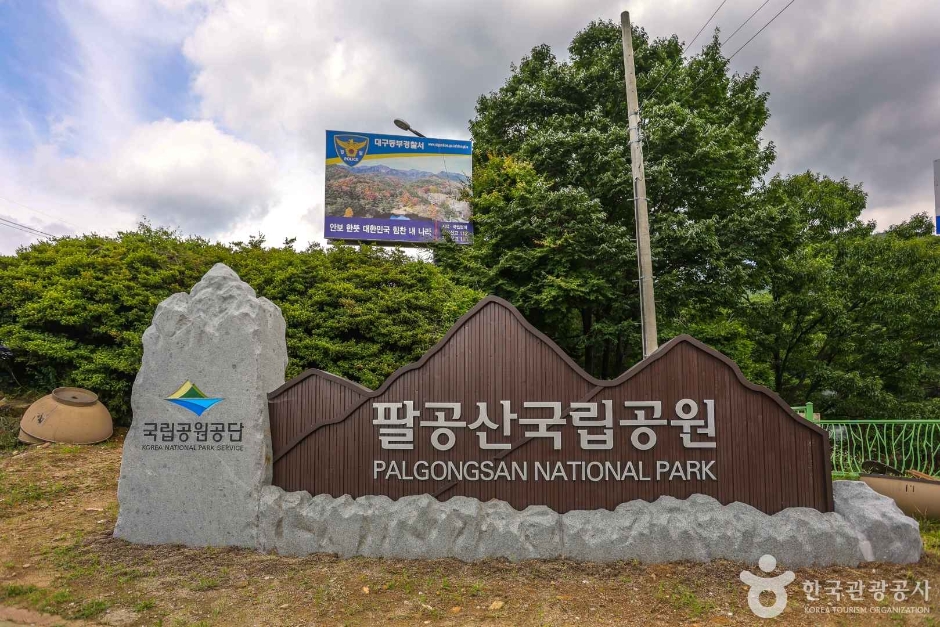
Palgongsan National Park (Pagyesa Temple District) (팔공산국립공원(파계사지구))
16.2Km 2025-04-08
741 Pagye-ro, Dong-gu, Daegu
+82-53-939-0080
Palgongsan National Park is located close to Palgongsan Mountain, one of the larger mountains in the Taebaek Mountain Range. Palgongsan Mountain is located 20 kilometers northeast from downtown Daegu, where Nakdonggang River and Geumhogang River meet. The mountain has three peaks in a row: Birobong Peak in the center and Dongbong Peak (aka Mitabong, 1,155 m) and Seobong Peak (aka Samseongbong, 1,150 m) on each side.
The park is within the administrative district of Dong-gu, Daegu and has four towns along its border including Yeongcheon-si, Gyeongsan-si, and Chilgok-gun. A number of Buddhist temples including Donghwasa Temple, the headquarters of the 9th Buddhist Parish, are located in the area.
The park has numerous rocks and valleys and is carpeted with azaleas in the spring. In autumn, many visitors flock to the park to admire the fall foliage on the trees lining the 16.3 kilometer-long roadway that runs through the park. With vibrant green leaves in spring and a delicate snowscape in the winter, Palgongsan Mountain is an attractive destination for visitors throughout the year.
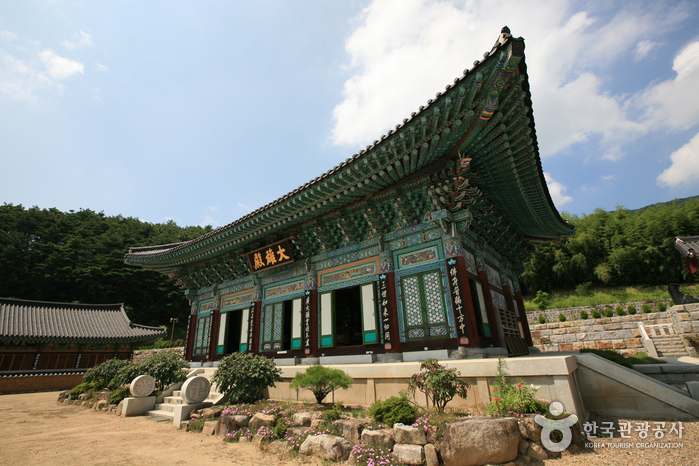
Buinsa Temple (Daegu) (부인사(대구))
16.3Km 2024-02-23
967-28 Palgongsan-ro, Dong-gu, Daegu
Buinsa Temple is a temple nestled on the southern slopes of Palgongsan Mountain, with a deep historical connection to Queen Seondeok of Silla (580–647). The temple is renowned for preserving the woodblocks of the First Tripitaka Koreana, a collection of Buddhist scriptures carved in the 11th century. The current Buinsa Temple encompasses significant structures, including Daeungjeon Hall, Queen Seondeok's Memorial Hall, and Samseonggak Shrine. Visitors have the opportunity to appreciate the scenic beauty of nature while exploring the cultural and architectural heritage from the Silla and Goryeo periods.
 English
 한국어
한국어 日本語
日本語 中文(简体)
 Deutsch
 Français
 Español
 Русский


