
Daegu Korean Chinese Association (대구화교협회)
249.5M 2023-02-03
34, Jong-ro, Jung-gu, Daegu
+82-53-661-2624
Daegu Korean Chinese Association building is a red brick two-story Western-style house built in 1929. Seo Byeong-guk, a rich man in Daegu, entrusted the design and construction to Mo Mungeum, a Chinese architect. It is a flat rectangular structure, and the protruding granite porch balances left and right symmetry. There is a theory that the bricks were brought from Pyeongyang and the woods from Geumgangsan Mountain. It was also used as an HID (Headquarters of Intelligence Detachment) building. There is one building, a playground, a statue of Chiang Kai-shek, and a mural of a Chinese figure painted at the entrance. It is a representative modern building in the Daegu area that boasts a beautiful appearance and is currently used as the office of the Daegu Korean Chinese Association. It was designated as a National Registered Cultural Heritage on June 19, 2006, as it shows the style of modern architecture in the 1930s, not many examples of which are left. This is the last stop of Daegu Modern Alley Tour Course 2.
![8 Seconds - Dongseong-ro 2(i)-ga Branch [Tax Refund Shop] (에잇세컨즈 동성로2가점)](http://tong.visitkorea.or.kr/cms/resource/43/2884043_image2_1.jpg)
8 Seconds - Dongseong-ro 2(i)-ga Branch [Tax Refund Shop] (에잇세컨즈 동성로2가점)
269.9M 2024-04-23
34, Dongseong-ro, Jung-gu, Daegu
-
![ER Donga Shopping [Tax Refund Shop] (ER 동아 쇼핑)](http://tong.visitkorea.or.kr/cms/resource/73/2888073_image2_1.jpg)
ER Donga Shopping [Tax Refund Shop] (ER 동아 쇼핑)
269.8M 2024-04-23
2085, Dalgubeol-daero, Jung-gu, Daegu
-
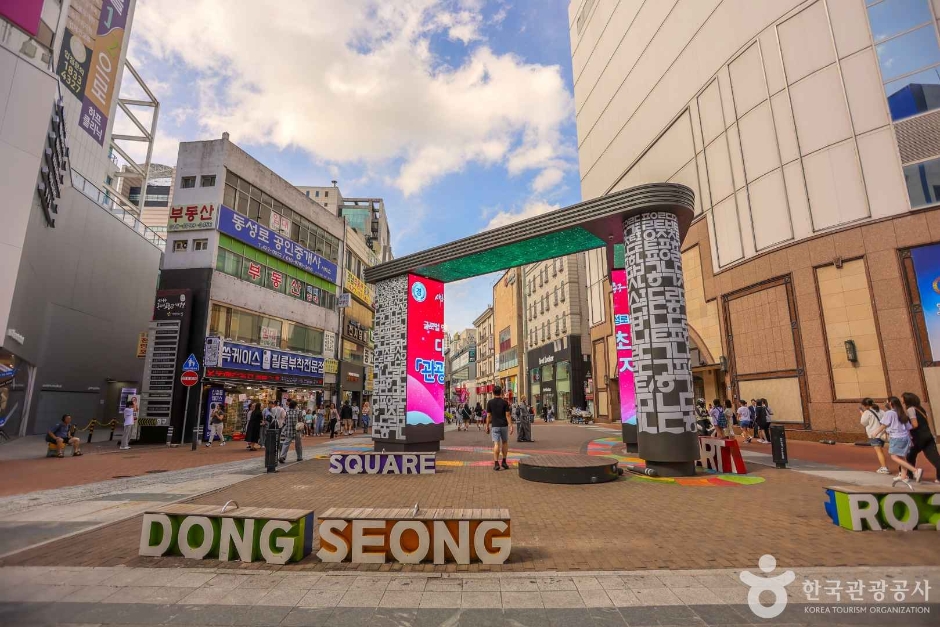
Daegu Dongseong-ro Street (대구 동성로거리)
272.0M 2025-08-11
27 Dongseong-ro 2-gil, Jung-gu, Daegu
+82-53-252-2696
Dongseong-ro Street, named for its location in relation to the old Daegueupseong Walled Town's wall, is the epicenter of youth culture in Daegu. It is the central business district, stretching 900 meters from Daegu Station Intersection to Art Square. In addition to the many name brand shops located here, the street includes performance stages and event squares, creating a lively environment. The street is divided into various sections, making it easy for first-time visitors to find their way around.
![Nageunol Street - Daegu Dongseong-ro Branch [Tax Refund Shop] (나그놀스트릿 대구동성로)](http://tong.visitkorea.or.kr/cms/resource/90/2884090_image2_1.jpg)
Nageunol Street - Daegu Dongseong-ro Branch [Tax Refund Shop] (나그놀스트릿 대구동성로)
273.7M 2024-04-16
50-14, Dongseong-ro 2-gil, Jung-gu, Daegu
-
![Tonymoly - Dongseong-ro Branch [Tax Refund Shop] (토니모리 동성로)](http://tong.visitkorea.or.kr/cms/resource/30/2884030_image2_1.jpg)
Tonymoly - Dongseong-ro Branch [Tax Refund Shop] (토니모리 동성로)
284.4M 2024-04-23
124, Singomae-ro, Giheung-gu, Yongin-si, Gyeonggi-do
-
![Aimerfeel - Daegu Branch (No. 1) [Tax Refund Shop] (에메필 대구1호)](http://tong.visitkorea.or.kr/cms/resource/66/2888566_image2_1.jpg)
Aimerfeel - Daegu Branch (No. 1) [Tax Refund Shop] (에메필 대구1호)
284.7M 2024-04-18
1F, 53, Dongseong-ro 5-gil, Jung-gu, Daegu
-
Tonymoly - Dongseong-ro Branch [Tax Refund Shop] (토니모리 동성로)
284.4M 2024-04-23
93, Bugyuseong-daero, Yuseong-gu, Daejeon
-
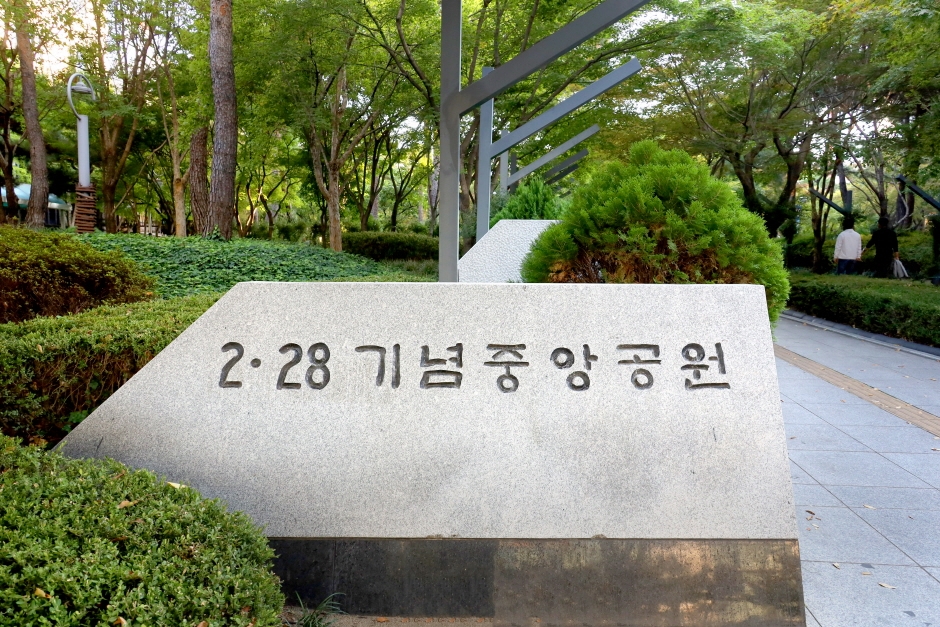
February 28th Jungang Memorial Park (2.28기념중앙공원)
298.4M 2023-04-03
80, Dongseong-ro 2-gil, Jung-gu, Daegu
+82-53-254-9405
This park was created in 2003 to commemorate the February 28 Student Democratic Uprising in 1960 on the site of Jungang Elementary School. It is a place that contains the pain of Daegu's history from the February 28 Uprising to the March 15 Uprising and the April 19 Revolution, but now it has become a peaceful and pleasant resting place in the city center. Thanks to the cool fountain and the shade created by the beautiful trees, it is established as a park that anyone can visit comfortably, regardless of age or gender. Furthermore, there are various amenities such as a walking trail, stream, and central fountain plaza, as well as many famous restaurants nearby, serving as a convenient public area to the citizens of Daegu throughout the year.
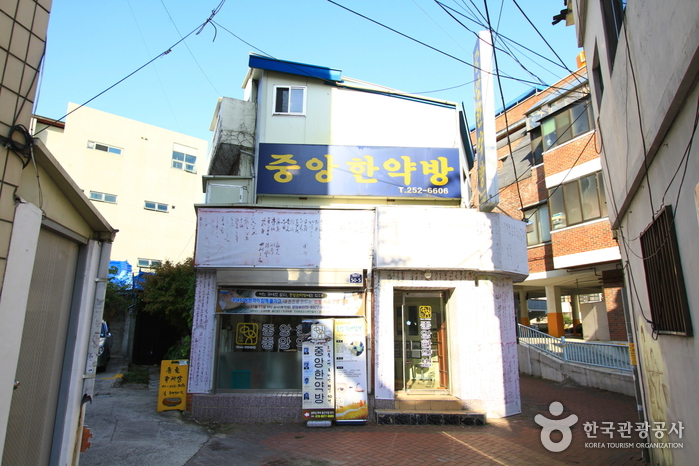
Petite Joongang Family Museum (작은 중앙가족박물관(한방개인박물관))
319.6M 2021-12-20
50-5, Jungang-daero 77-gil, Jung-gu, Daegu
+82-53-252-6606
Petite Joongang Family Museum is a family-owned museum that showcases the antiquities of Oriental medicine, as practiced by a local family for three generations over 90 years in the city of Daegu, a city known for its 350-year-old medicinal herb market. The tools used by the family including scales, medicine bowls, prescriptions and manuscripts of traditional medicine tell the history of Oriental medicine in Korea as well as the family's dedication to treatment using the traditional herbal medicine practice. The museum serves its visitors with healthy Oriental medicine tea, while the living family members offer free medical consultation.
 English
 한국어
한국어 日本語
日本語 中文(简体)
 Deutsch
 Français
 Español
 Русский


