
Hwawon Park (화원동산)
15.0Km 2024-04-08
40-14 , Samunjin-ro 1-gil, Dalseong-gun, Daegu
+82-53-659-4465
Hwawon Park, a vast park beside the Nakdonggang River, is steeped in history. The river, once bustling with Samunjin Quay, where ships laden with goods frequented, now features Samunjin Ferries. Visitors can access Dalseong Marsh Ecological Park via a floating walkway across the river. In the vicinity, the Samunjin Jumakchon Village offers traditional beverages and delicacies, including makgeolli (unrefined rice wine) and pajeon (green onion pancake). With well-maintained walking trails, cafés, and picnic spots, the park serves as an ideal destination for family outings.
Samunjin Jumakchon Village (사문진 주막촌)
15.4Km 2023-11-09
40-12 Samunjin-ro 1-gil, Hwawon-eup, Dalseong-gun, Daegu
Samunjin was the location of a ferry dock on the Nakdonggang River in the past. During the Japanese occupation, the area was turned into a recreation ground, which saw many people coming to enjoy leisure strolls. In November 2013, three hanok jumak (traditional dining establishment) were built at the site of the old dock and the current Samunjin Jumakchon Village was opened. The jumak serve a range of foods that were enjoyed in the past, such as makgeolli, gukbap, and buchujeon (chives pancake). The village is well-known as a place to enjoy the sunset.
Olive Young - Gyeongsan Sadong Branch [Tax Refund Shop] (올리브영 경산사동점)
15.7Km 2025-10-28
72 Baekja-ro, Gyeongsan-si, Gyeongsangbuk-do
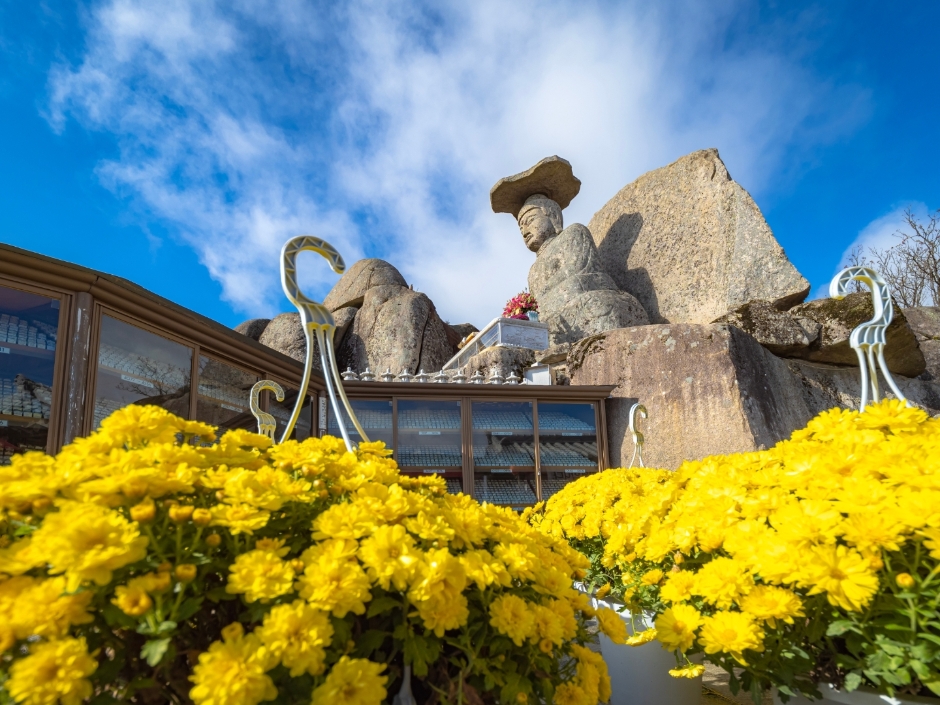
Palgongsan National Park (Gatbawi Section) (팔공산국립공원(갓바위지구))
15.7Km 2025-04-08
716-64 Gatbawi-ro 81-gil, Wachon-myeon, Gyeongsan-si, Gyeongsangbuk-do
Located east of Daegu downtown, Palgongsan Mountain (altitude 1,192.3 meters) was called both Jungaksan and Buaksan Mountain during the Silla period. The mountain has many ancient temples and historical sites such as the Gatbawi Stone Buddha, Wonhyosa Temple, Cheonseongsa Temple and Bulgulsa Temple.
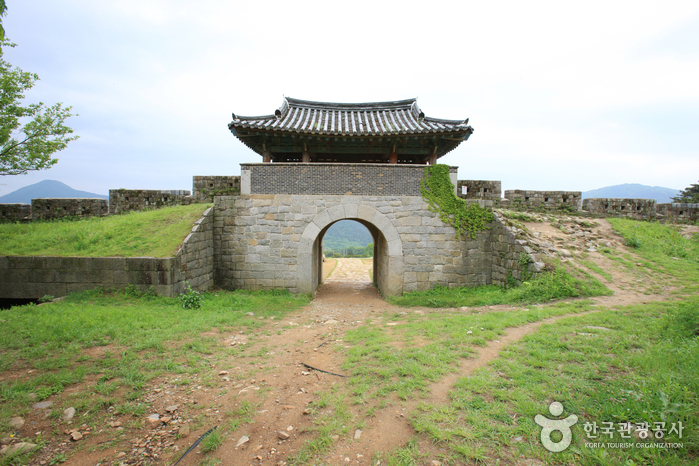
Chilgok Gasansanseong Fortress and Gasanbawi Rock (칠곡 가산산성 및 가산바위)
16.0Km 2025-01-08
Gasan-ri, Chilgok-gun, Gyeongsangbuk-do
+82-54-979-6452
Gasansanseong Fortress in Chilgok-gun, Gyeongsangbuk-do is located in the middle of Chilgok-gun, between Daegu Metropolitan City and Gumi. Gasansan Mountain (901m in elevation) is 10 kilometers west of Palgongsan Mountain. Because it boasts seven peaks, the mountain was called Chilbongsan Mountain. After enduring foreign invasions, including the Imjin War (1592-1598) and the Qing invasion of Joseon (1636), the Joseon rulers built a fortress over the course of 100 years to aid in Korea’s defense. It is Korea’s only three-layered fortress, consisting of inner, outer and central walls. The flat Gasanbawi Rock at the mountain’s peak, which is large enough to accommodate 100 people at a time, offers a great view of Daegu Metropolitan City.
Gunwi Buddha Triad Grotto (2nd Seokguram) (군위 아미타여래삼존 석굴)
16.9Km 2021-11-12
24, Namsan 4-gil, Gunwi-gun, Gyeongsangbuk-do
+82-54-383-8032
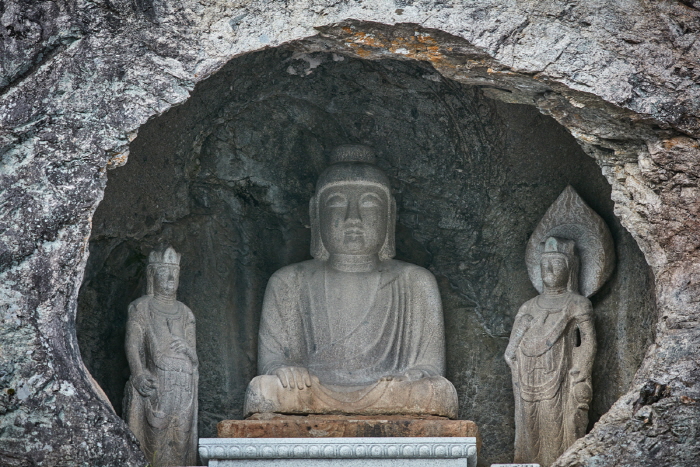
At the Hantijae Peak of Palgongsan Mountain in Daegu, is the Gunwi Buddha Triad Grotto, referred to as "the 2nd Seokguram Grotto". This grotto, designated as a National Treasure, is a natural cave on a sheer cliff. There is the beautiful Amitabul Buddha, the Bodhisattva of Power and the Bodhisattva of Compassion. The cave is 4.25 meters wide and 4.3 meters long, and is located 20 meters above the ground. This grotto is the progenitor of the Gyeongju Seokgulam Grotto, preceding the construction of Seokguram grotto by 100 years. It has been designated as a world cultural heritage.
The square-shaped ceiling is highest in the middle of the chamber. The Amitabul Buddha sits in the center with the Bodhisattva of Power and the Bodhisattva of Compassion flanking its left and right sides. The main Buddha is very refined and graceful with short hair and a divine smile on its face, sitting with crossed legs in a full-lotus posture.
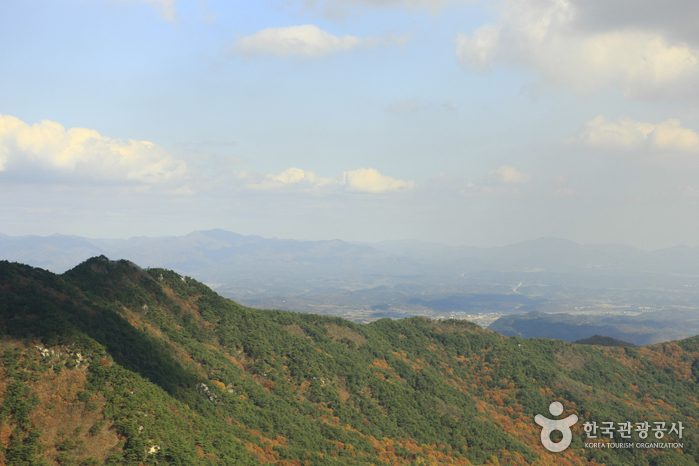
Gunwi-gun Palgongsan National Park (팔공산국립공원(군위군))
17.1Km 2025-04-08
Namsan-ri, Gunwi-gun, Gyeongsangbuk-do
+82-54-880-8300
Palgongsan Mountain is located south of the Taebaek Mountain Range where the Nakdonggang and Geumhogang Rivers meet. The mountain stands high and stretches out like a folding screen. Near the top of the mountain, the granite protrudes in an odd shape creating a tall, grand geographical feature of the mountain. Furthermore, every valley is decorated with an exquisite rock face and lush forest adding to the mountain's reputation. Palgongsan Mountain was designated as a National Park in December 2023. The mountain has many ancient temples and historical sites such as the Gatbawi Stone Buddha, Wonhyosa Temple, Cheonseongsa Temple and Bulgulsa Temple.
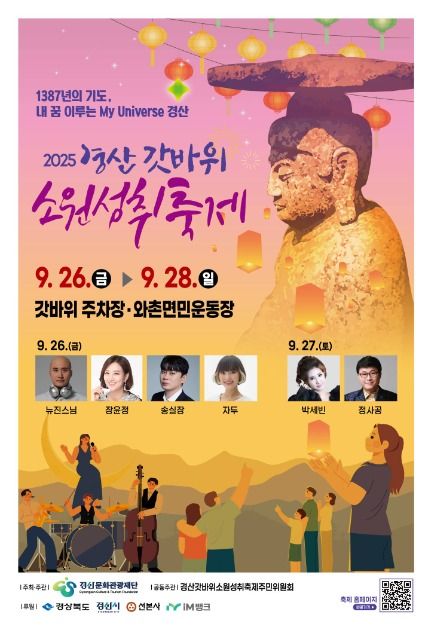
Gyeongsan Gatbawi Wish Fulfillment Festival (경산 갓바위소원성취축제)
17.2Km 2025-10-23
Wachon-myeon, Gyeongsan-si, Gyeongsangbuk-do
+82-53-819-0332
Gyeongsan Gatbawi Wish Fulfillment Festival is a healing and participatory festival that blends traditional culture with modern performances. Various events and hands-on activities are offered during the festival, including tea ceremony programs, temple stay, wish pagoda stacking, meditation, and yoga. Visitors can also explore various regional products such as fresh Wachon plums and enjoy opening performances.
Yuksinsa Shrine (육신사)
17.7Km 2024-02-15
64 Yuksinsa-gil, Habin-myeon, Dalseong-gun, Daegu
Yuksinsa Shrine is a revered site dedicated to honoring the Sayuksin. Established during the Joseon dynasty, it stands well-preserved to this day. "Sayuksin" translates to "six dead ministers," referencing the six loyal subjects who, in 1453, attempted to restore King Danjong of the Joseon dynasty but were ultimately captured and executed. The shrine's entrance, marked by the Chungjeolmun Gate, is flanked by long rows of crape myrtle trees. These trees create a stunning visual spectacle when their red flowers are in bloom.
Palgongsan National Park (Eunhaesa Temple Section) (팔공산국립공원 - 은해사지구)
17.8Km 2025-04-08
Geojo-gil, Yeongcheon-si, Gyeongsangbuk-do
+82-54-852-8031
Located east of Daegu downtown, Palgongsan Mountain (1,192.3m) was called both Jungaksan and Buaksan Mountain during the Silla period. The mountain has many ancient temples and historical sites such as the Gatbawi Stone Buddha, Wonhyosa Temple, Cheonseongsa Temple and Bulgulsa Temple.
 English
 한국어
한국어 日本語
日本語 中文(简体)
 Deutsch
 Français
 Español
 Русский


