
Olive Young - Gyeongsan Hayang-ro Branch [Tax Refund Shop] (올리브영 경산하양점)
16.6Km 2025-10-28
82, Hayang-ro, Hayang-eup, Gyeongsan-si, Gyeongsangbuk-do
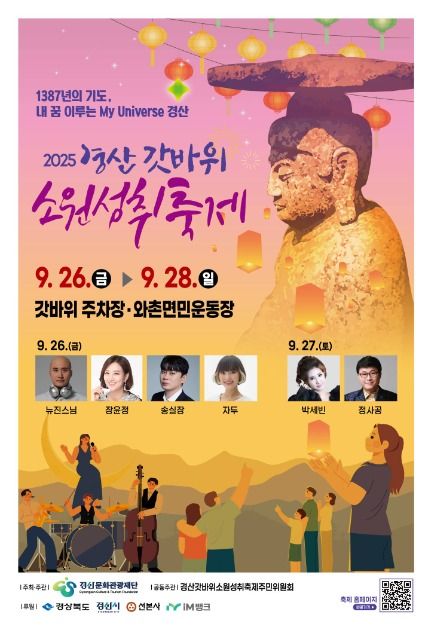
Gyeongsan Gatbawi Wish Fulfillment Festival (경산 갓바위소원성취축제)
17.0Km 2025-10-23
Wachon-myeon, Gyeongsan-si, Gyeongsangbuk-do
+82-53-819-0332
Gyeongsan Gatbawi Wish Fulfillment Festival is a healing and participatory festival that blends traditional culture with modern performances. Various events and hands-on activities are offered during the festival, including tea ceremony programs, temple stay, wish pagoda stacking, meditation, and yoga. Visitors can also explore various regional products such as fresh Wachon plums and enjoy opening performances.
St. Mary's Pine Forest Village (성모솔숲마을)
17.1Km 2024-02-08
166 Songnae-gil, Gakbuk-myeon, Cheongdo-gun, Gyeongsangbuk-do
St. Mary's Pine Forest Village, a serene retreat house under the Catholic Archdiocese of Daegu, was initially established as a haven for the sick and those seeking spiritual retreats. However, it is now open to all, regardless of their reason for visiting. A mass is celebrated at eleven every morning in the church, welcoming both Catholics and non-Catholics alike. Visitors who are not of the Catholic faith are also encouraged to explore the church, or enjoy a peaceful stroll through the surrounding pine forest. The village comprises several facilities, including the Pine Forest Church, the Way of the Cross, a restaurant, a café, and the Yedam Gallery, which is located within the café.
Yongyeonsa Temple (Daegu) (용연사(대구))
17.1Km 2024-02-15
260 Yongyeonsa-gil, Okpo-eup, Dalseong-gun, Daegu
The name Yongyeonsa has its roots in a legend: a dragon is said to have ascended from the pond at the temple's entrance, leading to the name Yongyeon ("yong" means "dragon" and "yeon" means "pond" in Korean). This temple is renowned as one of the sites that enshrine the Buddha's sarira (relics). Inside Yongyeonsa, the ordination platform holds special significance as the resting place of the Buddha's sarira, where rituals are conducted. This symbolizes the enduring presence of the Buddha. The approach to Yongyeonsa Temple is through a forest-rich path, offering an experience akin to a forest bathing. This path also doubles as a hiking trail leading up to Biseulsan Mountain.
Hayang Life Sports Park (하양생활체육공원)
17.8Km 2024-02-23
33 Yongcheonjebang-gil, Hayang-eup, Gyeongsan-si, Gyeongsangbuk-do
Hayang Life Sports Park was constructed to enhance physical education amenities and offer a relaxation space for residents. It features a football field, futsal court, foot volleyball court, gateball court, and a lawn for relaxation. Additionally, it boasts a floor fountain, a pavilion, a walking trail, and various photo zones. During the summer, a water playground is available. Nearby attractions include Palgongsan Mountain and Daegu Stadium.
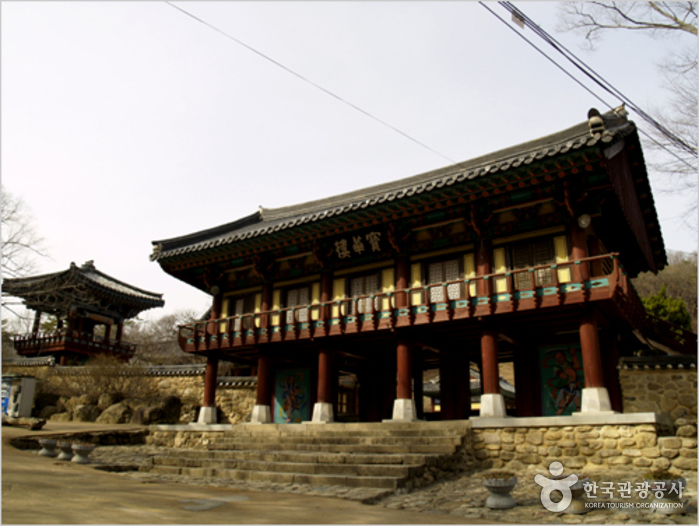
Yeongcheon Eunhaesa Temple (은해사 (영천))
19.1Km 2021-12-21
951, Cheongtong-ro, Yeongcheon-si, Gyeongsangbuk-do
+82-54-335-3318
Eunhaesa Temple, located on Palgongsan Mountain in Yeongcheon city, Gyeongsangbuk-do, is one of two major temples on the mountain along with Donghwasa Temple.
The temple was founded by Monk Hyecheol and was given the name Haeansa Temple in the first year of King Heondeok’s reign during the Silla Kingdom (AD 809), but was moved to the current site in the Joseon dynasty in 1546 (the first year of King Myeongjong). Upon its relocation, King Injong of Joseon dynasty was commemorated with a new lecture hall along with a memorial stone plaque where the king's umbilical cord was buried and sealed. It was then when the temple was also given its current name, Eunhaesa Temple.
The temple houses the main shrine, Bohwaru pavilion, Seolseondan Hall, Shimgeondang Hall, eight small hermitages, as well as Baegeungam Temple, Jungangam Temple, and a professional Buddhist education institution, the Eunhaesa Buddhist University. Eunhaesa Temple is home to a National Treasure, Geojoamyongsanjeon Hall, and Treasure, Baekheungamgeukrakjeon Hall. It also contains Treasure, the Sunidan Buddha Platform; Treasure, the Wunbuamcheongdongbosal Seated Buddha Statue; and Treasure, the Eunhaesa Temple Gwaebultaeng hanging Buddha picture. The area is also close to the Seongbu Museum, which exhibits cultural assets from Eunhaesa Temple and the neighboring areas, as well as popular tourist attractions such as Geukrakgul grotto of Jungangam temple (Hwaeomgul Grotto), Geondeul Rock, Manyeonsong Pine Tree, Ganggunsu Waters, and Anheungpokpo Falls of Gigiam Temple.
Palgongsan National Park (Eunhaesa Temple Section) (팔공산국립공원 - 은해사지구)
19.1Km 2025-04-08
Geojo-gil, Yeongcheon-si, Gyeongsangbuk-do
+82-54-852-8031
Located east of Daegu downtown, Palgongsan Mountain (1,192.3m) was called both Jungaksan and Buaksan Mountain during the Silla period. The mountain has many ancient temples and historical sites such as the Gatbawi Stone Buddha, Wonhyosa Temple, Cheonseongsa Temple and Bulgulsa Temple.
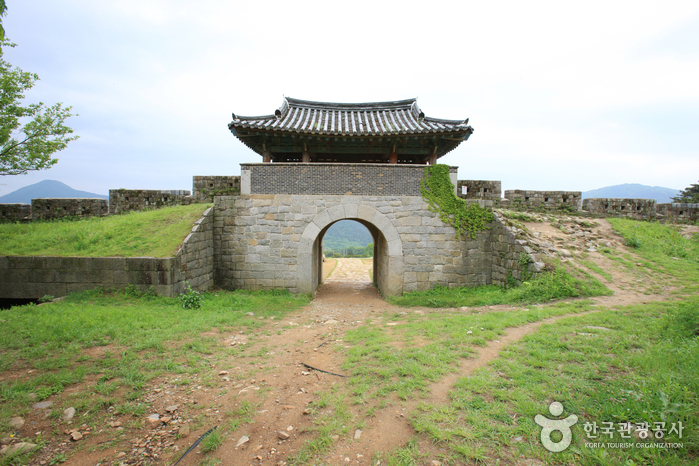
Chilgok Gasansanseong Fortress and Gasanbawi Rock (칠곡 가산산성 및 가산바위)
19.2Km 2025-01-08
Gasan-ri, Chilgok-gun, Gyeongsangbuk-do
+82-54-979-6452
Gasansanseong Fortress in Chilgok-gun, Gyeongsangbuk-do is located in the middle of Chilgok-gun, between Daegu Metropolitan City and Gumi. Gasansan Mountain (901m in elevation) is 10 kilometers west of Palgongsan Mountain. Because it boasts seven peaks, the mountain was called Chilbongsan Mountain. After enduring foreign invasions, including the Imjin War (1592-1598) and the Qing invasion of Joseon (1636), the Joseon rulers built a fortress over the course of 100 years to aid in Korea’s defense. It is Korea’s only three-layered fortress, consisting of inner, outer and central walls. The flat Gasanbawi Rock at the mountain’s peak, which is large enough to accommodate 100 people at a time, offers a great view of Daegu Metropolitan City.
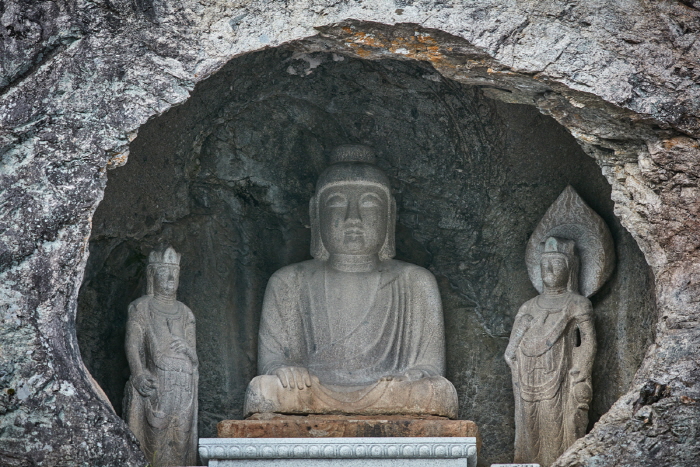
Gunwi Buddha Triad Grotto (2nd Seokguram) (군위 아미타여래삼존 석굴)
19.6Km 2021-11-12
24, Namsan 4-gil, Gunwi-gun, Gyeongsangbuk-do
+82-54-383-8032
At the Hantijae Peak of Palgongsan Mountain in Daegu, is the Gunwi Buddha Triad Grotto, referred to as "the 2nd Seokguram Grotto". This grotto, designated as a National Treasure, is a natural cave on a sheer cliff. There is the beautiful Amitabul Buddha, the Bodhisattva of Power and the Bodhisattva of Compassion. The cave is 4.25 meters wide and 4.3 meters long, and is located 20 meters above the ground. This grotto is the progenitor of the Gyeongju Seokgulam Grotto, preceding the construction of Seokguram grotto by 100 years. It has been designated as a world cultural heritage.
The square-shaped ceiling is highest in the middle of the chamber. The Amitabul Buddha sits in the center with the Bodhisattva of Power and the Bodhisattva of Compassion flanking its left and right sides. The main Buddha is very refined and graceful with short hair and a divine smile on its face, sitting with crossed legs in a full-lotus posture.
Gunwi-gun Palgongsan National Park (팔공산국립공원(군위군))
19.8Km 2025-04-08
Namsan-ri, Gunwi-gun, Gyeongsangbuk-do
+82-54-880-8300
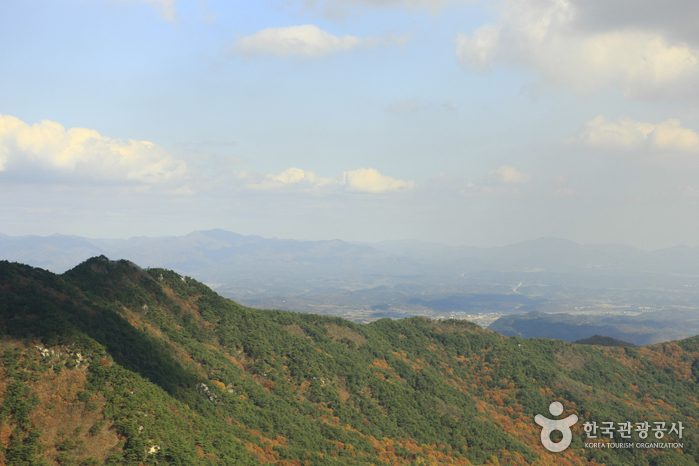
Palgongsan Mountain is located south of the Taebaek Mountain Range where the Nakdonggang and Geumhogang Rivers meet. The mountain stands high and stretches out like a folding screen. Near the top of the mountain, the granite protrudes in an odd shape creating a tall, grand geographical feature of the mountain. Furthermore, every valley is decorated with an exquisite rock face and lush forest adding to the mountain's reputation. Palgongsan Mountain was designated as a National Park in December 2023. The mountain has many ancient temples and historical sites such as the Gatbawi Stone Buddha, Wonhyosa Temple, Cheonseongsa Temple and Bulgulsa Temple.
 English
 한국어
한국어 日本語
日本語 中文(简体)
 Deutsch
 Français
 Español
 Русский


