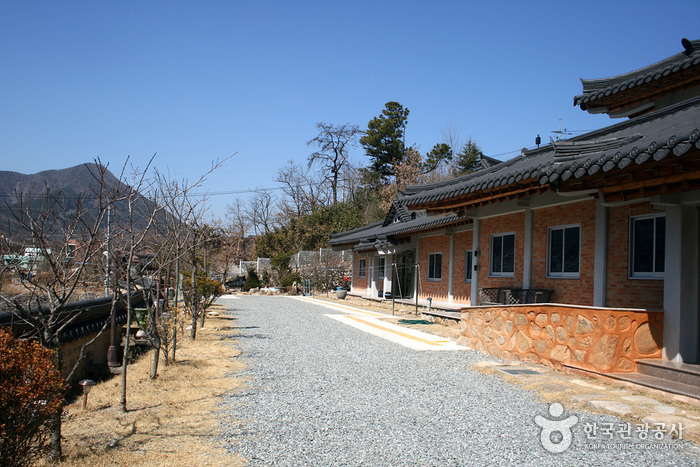
Museum of Natural Dye Arts (자연염색박물관)
5.4Km 2021-03-19
17, Pagye-ro 112-gil, Dong-gu, Daegu
+82-53-981-4330
The Museum of Natural Dye Arts was formed to collect and preserve the traditional way of dyeing, as well as inform the high quality of Korean natural dye to the world. The museum has various art products from around the world. Divided into two floors, Ahwon Gallery on the first floor showcases replicas of ancient dyeing tools and provides information on the natural dyeing process. The Relic Hall on the second floor displays pieces of ancient artwork including fabric, clothes, pillows, blankets and accessories, all made using different methods such as dyeing, embroidery, quilting, knotting and sewing.
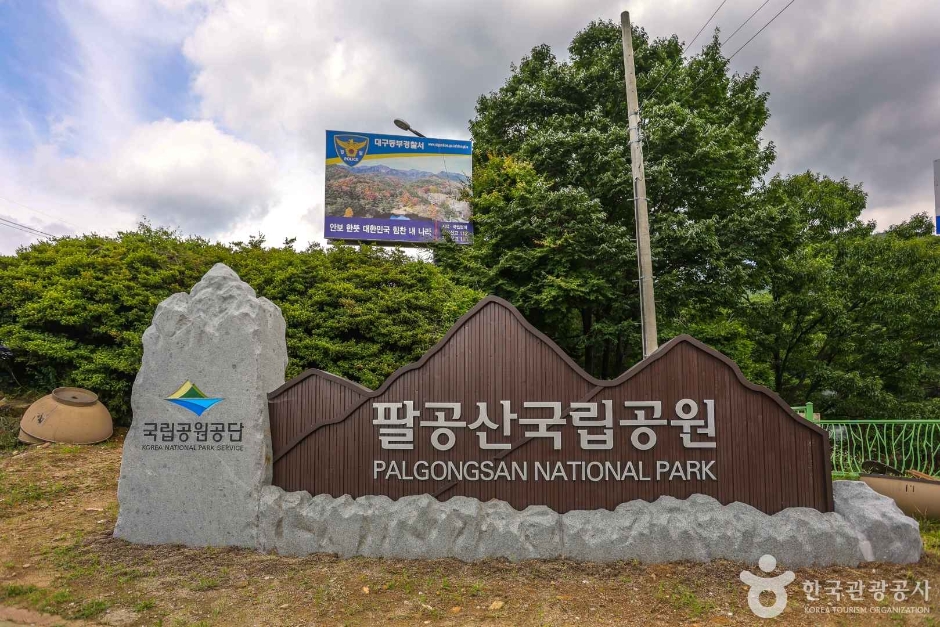
Palgongsan National Park (Pagyesa Temple District) (팔공산국립공원(파계사지구))
5.6Km 2025-04-08
741 Pagye-ro, Dong-gu, Daegu
+82-53-939-0080
Palgongsan National Park is located close to Palgongsan Mountain, one of the larger mountains in the Taebaek Mountain Range. Palgongsan Mountain is located 20 kilometers northeast from downtown Daegu, where Nakdonggang River and Geumhogang River meet. The mountain has three peaks in a row: Birobong Peak in the center and Dongbong Peak (aka Mitabong, 1,155 m) and Seobong Peak (aka Samseongbong, 1,150 m) on each side.
The park is within the administrative district of Dong-gu, Daegu and has four towns along its border including Yeongcheon-si, Gyeongsan-si, and Chilgok-gun. A number of Buddhist temples including Donghwasa Temple, the headquarters of the 9th Buddhist Parish, are located in the area.
The park has numerous rocks and valleys and is carpeted with azaleas in the spring. In autumn, many visitors flock to the park to admire the fall foliage on the trees lining the 16.3 kilometer-long roadway that runs through the park. With vibrant green leaves in spring and a delicate snowscape in the winter, Palgongsan Mountain is an attractive destination for visitors throughout the year.
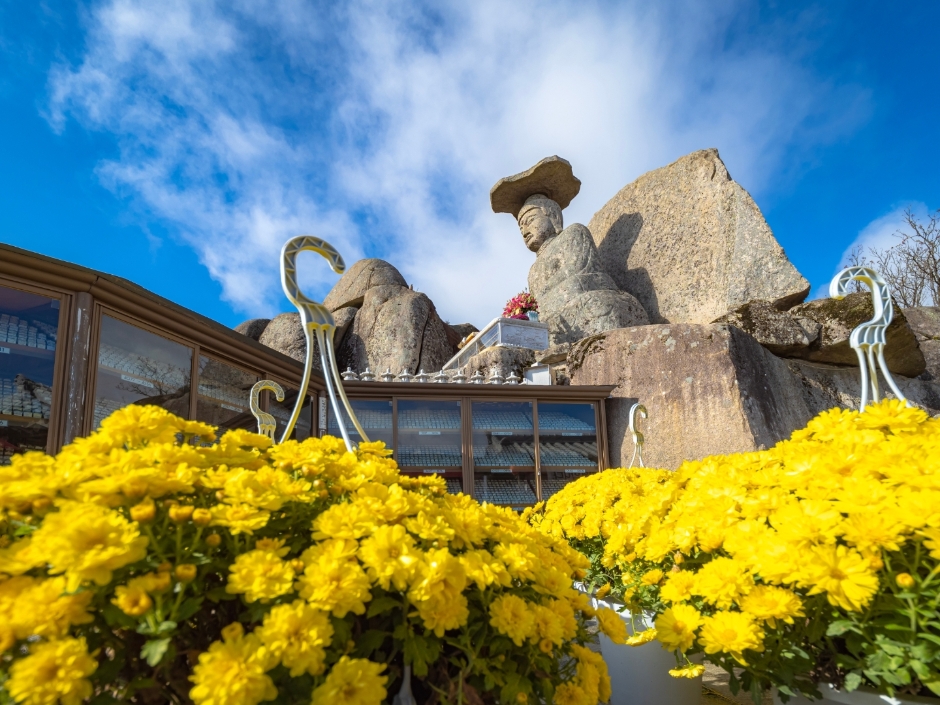
Palgongsan National Park (Gatbawi Section) (팔공산국립공원(갓바위지구))
6.0Km 2025-04-08
716-64 Gatbawi-ro 81-gil, Wachon-myeon, Gyeongsan-si, Gyeongsangbuk-do
Located east of Daegu downtown, Palgongsan Mountain (altitude 1,192.3 meters) was called both Jungaksan and Buaksan Mountain during the Silla period. The mountain has many ancient temples and historical sites such as the Gatbawi Stone Buddha, Wonhyosa Temple, Cheonseongsa Temple and Bulgulsa Temple.
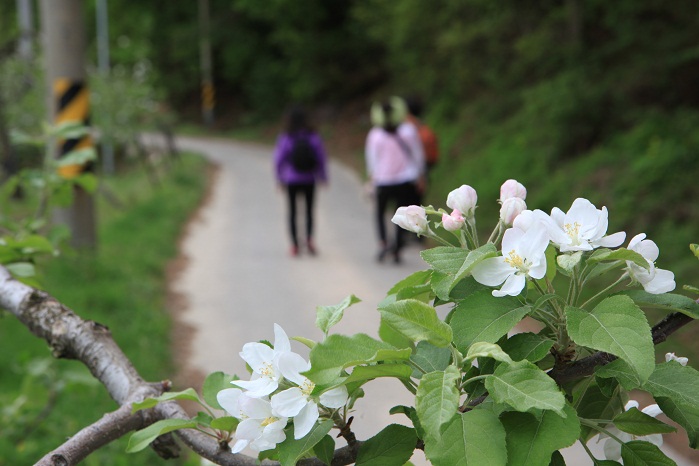
Pyeonggwang-dong Apple Village (평광동 사과마을)
6.4Km 2023-11-09
37 Dopyeong-ro 116-gil, Dong-gu, Daegu
Pyeonggwang-dong Apple Village is home to some 140 apple orchards. The village is located at the foot of Palgongsan Mountain, and has been growing apples for over 100 years, even creating a new apple, the Pyeonggwang honey apple. The village features many impressive trees, including the nation's oldest Hongok apple tree, a pine tree planted in honor of Korean Independence, and a large willow tree referred to as Filial Soon Gang Sunhang Tree. Many families visit in fall the enjoy apple picking.

PyoChungJae Experience Center (표충재 전통체험관)
7.3Km 2024-08-01
17 , Sinsunggyeom-gil, Dong-gu, Daegu
+82-53-428-9980
Pyochungjae Hanok stands within the General Shin Sung-gyeom Historic Site in Dong-gu, Gyeongsangbuk-do, and is a quiet spot surrounded by beautiful scenery. Rooms incorporate a toilet and modern bathroom, with a shared kitchen and additional toilet outside. Traditional pastimes such as archery, Yutnori and Neolttwigi can be enjoyed in the hanok yard. Pyochungjae is just 10 minutes from Daegu International Airport and 30 minutes from the center of Daegu. Donghwasa Temple is 15 minutes and Palgongsan and Gatbawi Rock 20 minutes away. The hanok is not always open during winter, so prior booking is required.

Bumbine (붐비네)
7.4Km 2025-10-30
54 Pagye-ro 6-gil, Dong-gu, Daegu
Holy place for SHINee fans
It is a small Tteokbokki restaurant in front of an elementary school without a prominent sign, but it is a must-visit place for SHINee fans. It was because Key stopped by every day when he was in elementary school. It is fun to see the store filled with SHINee's albums and photos. Sweet Tteokbokki with a lot of cabbage is not irritating, so you can eat it without burden. If you mix this with Daegu's specialty Flat Mandu, it's the best combination. Listening to the pleasant story of the owner of this restaurant creates new memories.
Gunwi Buddha Triad Grotto (2nd Seokguram) (군위 아미타여래삼존 석굴)
8.1Km 2021-11-12
24, Namsan 4-gil, Gunwi-gun, Gyeongsangbuk-do
+82-54-383-8032
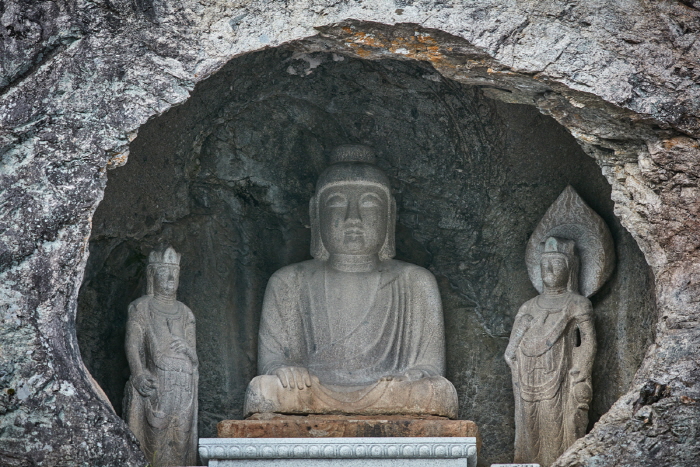
At the Hantijae Peak of Palgongsan Mountain in Daegu, is the Gunwi Buddha Triad Grotto, referred to as "the 2nd Seokguram Grotto". This grotto, designated as a National Treasure, is a natural cave on a sheer cliff. There is the beautiful Amitabul Buddha, the Bodhisattva of Power and the Bodhisattva of Compassion. The cave is 4.25 meters wide and 4.3 meters long, and is located 20 meters above the ground. This grotto is the progenitor of the Gyeongju Seokgulam Grotto, preceding the construction of Seokguram grotto by 100 years. It has been designated as a world cultural heritage.
The square-shaped ceiling is highest in the middle of the chamber. The Amitabul Buddha sits in the center with the Bodhisattva of Power and the Bodhisattva of Compassion flanking its left and right sides. The main Buddha is very refined and graceful with short hair and a divine smile on its face, sitting with crossed legs in a full-lotus posture.
Gunwi-gun Palgongsan National Park (팔공산국립공원(군위군))
8.2Km 2025-04-08
Namsan-ri, Gunwi-gun, Gyeongsangbuk-do
+82-54-880-8300
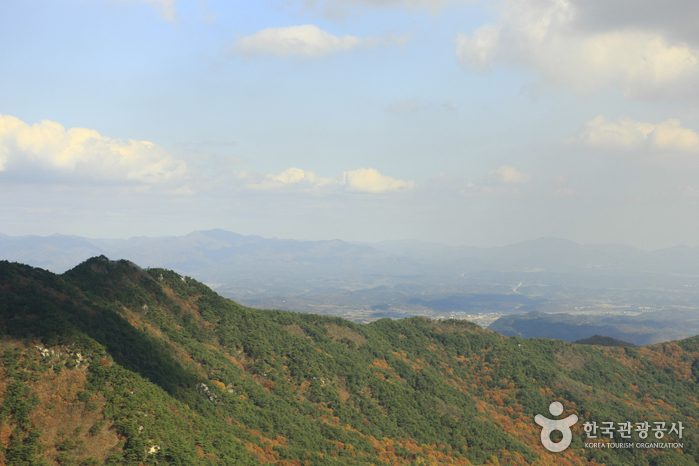
Palgongsan Mountain is located south of the Taebaek Mountain Range where the Nakdonggang and Geumhogang Rivers meet. The mountain stands high and stretches out like a folding screen. Near the top of the mountain, the granite protrudes in an odd shape creating a tall, grand geographical feature of the mountain. Furthermore, every valley is decorated with an exquisite rock face and lush forest adding to the mountain's reputation. Palgongsan Mountain was designated as a National Park in December 2023. The mountain has many ancient temples and historical sites such as the Gatbawi Stone Buddha, Wonhyosa Temple, Cheonseongsa Temple and Bulgulsa Temple.
Yeongcheon Eunhaesa Temple (은해사 (영천))
8.3Km 2021-12-21
951, Cheongtong-ro, Yeongcheon-si, Gyeongsangbuk-do
+82-54-335-3318
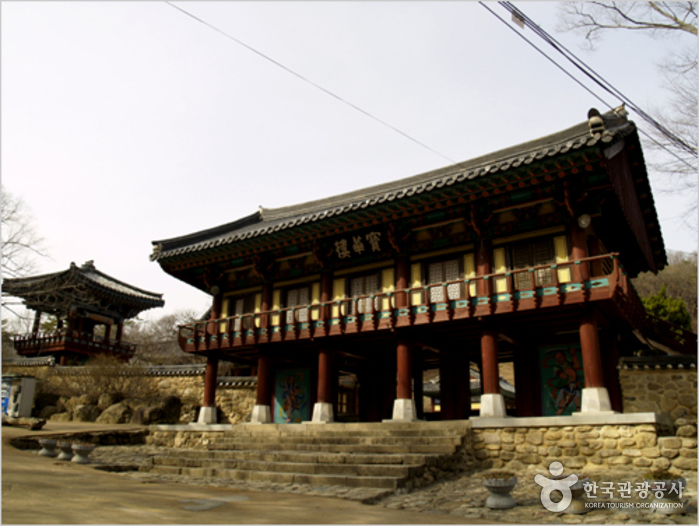
Eunhaesa Temple, located on Palgongsan Mountain in Yeongcheon city, Gyeongsangbuk-do, is one of two major temples on the mountain along with Donghwasa Temple.
The temple was founded by Monk Hyecheol and was given the name Haeansa Temple in the first year of King Heondeok’s reign during the Silla Kingdom (AD 809), but was moved to the current site in the Joseon dynasty in 1546 (the first year of King Myeongjong). Upon its relocation, King Injong of Joseon dynasty was commemorated with a new lecture hall along with a memorial stone plaque where the king's umbilical cord was buried and sealed. It was then when the temple was also given its current name, Eunhaesa Temple.
The temple houses the main shrine, Bohwaru pavilion, Seolseondan Hall, Shimgeondang Hall, eight small hermitages, as well as Baegeungam Temple, Jungangam Temple, and a professional Buddhist education institution, the Eunhaesa Buddhist University. Eunhaesa Temple is home to a National Treasure, Geojoamyongsanjeon Hall, and Treasure, Baekheungamgeukrakjeon Hall. It also contains Treasure, the Sunidan Buddha Platform; Treasure, the Wunbuamcheongdongbosal Seated Buddha Statue; and Treasure, the Eunhaesa Temple Gwaebultaeng hanging Buddha picture. The area is also close to the Seongbu Museum, which exhibits cultural assets from Eunhaesa Temple and the neighboring areas, as well as popular tourist attractions such as Geukrakgul grotto of Jungangam temple (Hwaeomgul Grotto), Geondeul Rock, Manyeonsong Pine Tree, Ganggunsu Waters, and Anheungpokpo Falls of Gigiam Temple.
Hanbam Village (한밤마을)
8.5Km 2025-10-23
2137-3 Hanti-ro, Bugye-myeon, Gunwi-gun, Daegu
◎ Travel information to meet Hallyu’s charm - TV series"The Good Bad Mother"
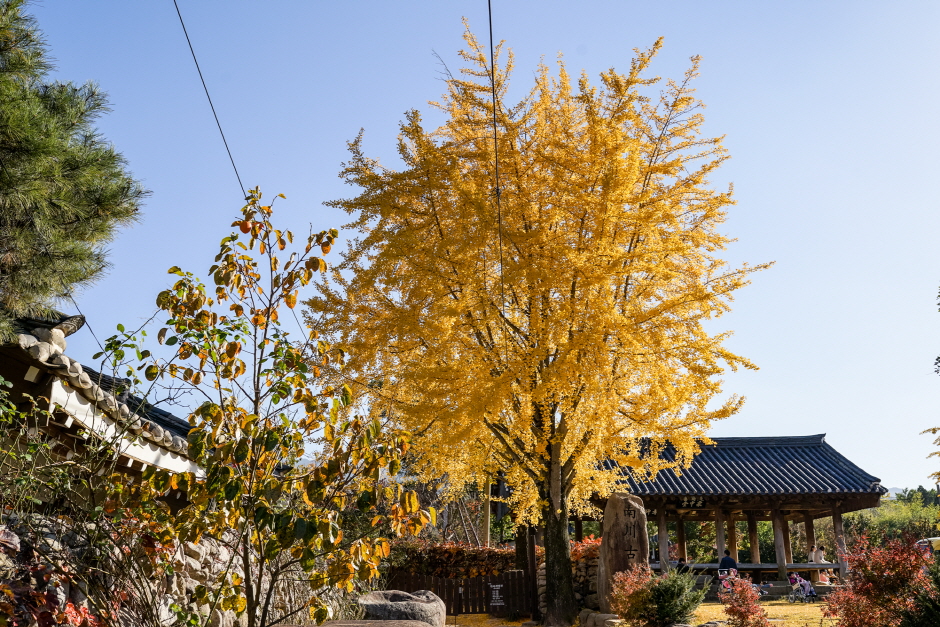
Serving as the inspiration for Jowoori Village in the show “The Good Bad Mother,” this charming village under the Palgongsan Mountain retains the picturesque stone walls and sceneries of rural Korean villages. If you were a fan of the show, head to Hanbam Village and walk along the stone walls to re-live your favorite scenes.
 English
 한국어
한국어 日本語
日本語 中文(简体)
 Deutsch
 Français
 Español
 Русский


