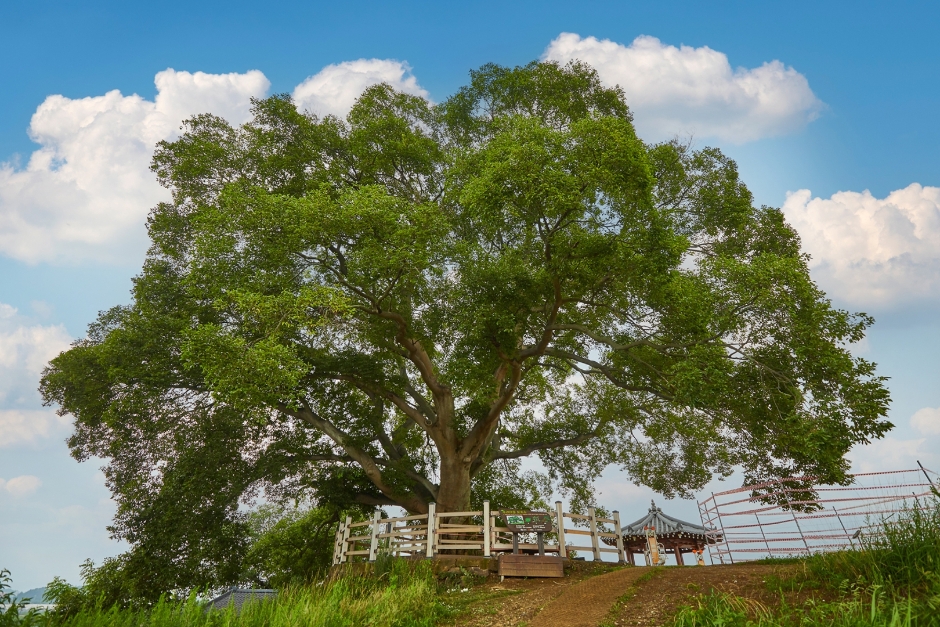
Hackberry Tree in Bukbu-ri (창원북부리팽나무)
16.1Km 2024-02-15
102-1 Bukbu-ri, Uichang-gu, Changwon-si, Gyeongsangnam-do
Hackberry Tree in Bukbu-ri is the most famous “celebrity tree” in Changwon. It became famous after appearing in episodes 7 and 8 of the popular drama “Extraordinary Attorney Woo (2022).” The tree sits on a hilltop, allowing visitors to enjoy the cool breeze and the panoramic view of Changwon's old neighborhood. Bukbu-ri village entrance has signposts leading to the hackberry here and there with drawings of dolphins symbolizing the drama (the drama protagonist’s favorite animal), making it convenient for tourists to reach the tree. The hackberry tree is estimated to be over 500 years old, and its size and scale cannot be captured with a camera in one frame. It is a protected tree designated by the state, visitors are advised to refrain from touching or getting close to the tree.
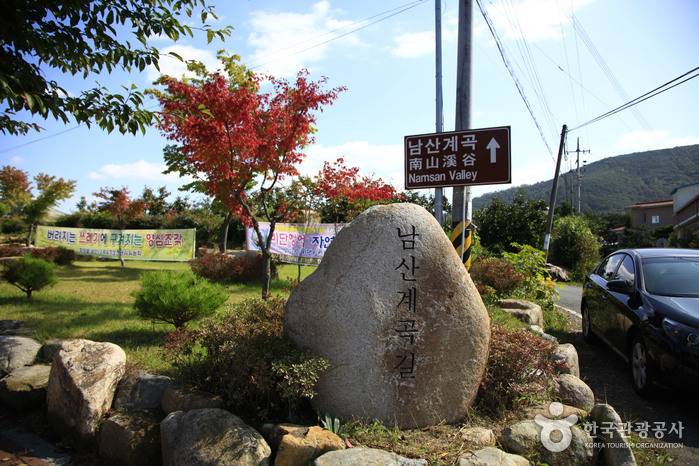
Cheongdo Namsan Valley (청도 남산계곡)
16.5Km 2024-02-08
68-32 Dongcheon-ri, Hwayang-eup, Cheongdo-gun, Gyeongsangbuk-do
Namsan Valley finds its source in a modest stream located on the northern slopes of Namsan Mountain in Cheongdo. This charming valley, adorned with rocky cliffs and crystal-clear waters, provides a refreshing respite from the sweltering summer heat. At the entrance to the valley, you'll encounter the Cheongdo Stone Ice Storage, a historical gem and the oldest stone ice storage facility in Korea. Strolling further along the valley, you'll find lines of intriguing rocks, carved with poems, including Chwiam and Ungeumcheon. These natural landmarks served as gathering spots for Seonbi, scholars from the Goryeo and Joseon periods, who came here to revel in the beauty of nature and craft spontaneous poems, fostering a deep appreciation for the arts.
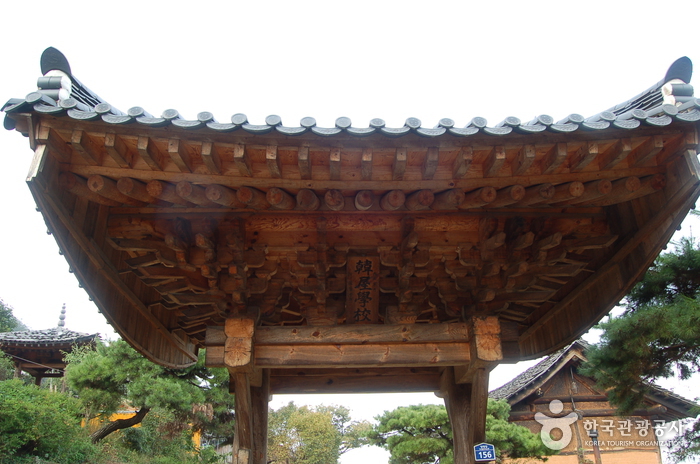
Cheongdo Hanok School (청도한옥학교)
16.6Km 2021-08-13
156, Yangjeong-gil, Cheongdo-gun, Gyeongsangbuk-do
+82-54-373-8555
Located on the slopes of Namsan Mountain, the Cheongdo Hanok School is an educational center for carpenters who specialize in hanok (traditional Korean architecture).
Hanok buildings hold cultural and historical values and the school has been gaining in popularity not only among carpenters, but also those who are interested in enjoying and upholding Korea's proud architectural history. The entrance of the school is marked with a large traditional "Neowa" (a house roofed with thick, unfinished shingles of pine) that immediately catches the eye.
The school provides three types of courses. There is a basic carpentry course to teach people how to make wooden objects and structures, a course to nurture professional carpenters, and a course to teach carpenters how to build Hanok. The school’s hands-on programs offer visitors a chance to make a traditional Korean window and to saw and plane wood. There are cultural programs for children as well. Children, along with their parents, can make rice cake by pounding rice with a large hammer, bake sweet potatoes, or join a seminar on traditional Korean houses. The cultural programs change with each season.
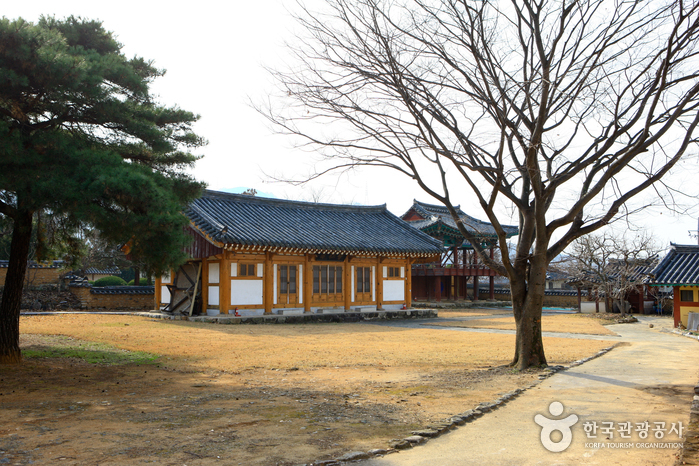
Cheongdohyanggyo Local Confucian School (청도향교)
17.7Km 2024-03-25
36 Donggyo-gil, Hwayang-eup, Cheongdo-gun, Gyeongsangbuk-do
Hyanggyo Local Confucian Schools were government-run provincial schools established separately during Korea's Goryeo and Joseon periods. It was a place for achieving success in government or for holding ancestral rites. Cheongdohyanggyo Local Confucian School was first built in 1568 in the middle of the Joseon dynasty and has been relocated twice. This location is known as the burial place for Toegye Yi Hwang, the face of Korea's 1,000 won note and a historical figure who established Confucianism in Korea. One can see the shape of a tile-roofed hanok, and flowers and trees surround it, making it a nice place to stroll.
Cheongdo Stone Ice Storage (청도 석빙고)
18.0Km 2024-04-22
119-3 Dongsang-ri, Hwayang-eup, Cheongdo-gun, Gyeongsangbuk-do
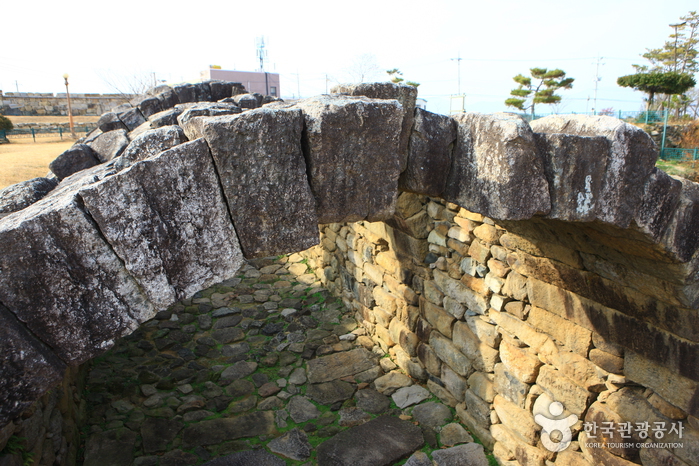
Stone ice storage was a type of building used to store ice in the past. Some of them are preserved today in Korea, including Gyeongju, Andong, and Cheongdo in the Gyeongsang-do area. The Cheongdo Stone Ice Storage was constructed during the Joseon dynasty, and now just part of the ceiling remains, allowing visitors to see inside.
As a building used to store ice, it was built in the form of a warehouse dug into the ground. While looking around and observing the interior is possible, visitors may not enter the icehouse for safety reasons. At night, there are lights on around the ice storage, which makes viewing possible at anytime. It is located across from Cheongdoeupseong Walled Town, making it a good stop when visiting.
Sicily (시실리)
18.1Km 2024-03-26
188 Dojugwan-ro, Hwayang-eup, Cheongdo-gun, Gyeongsangbuk-do
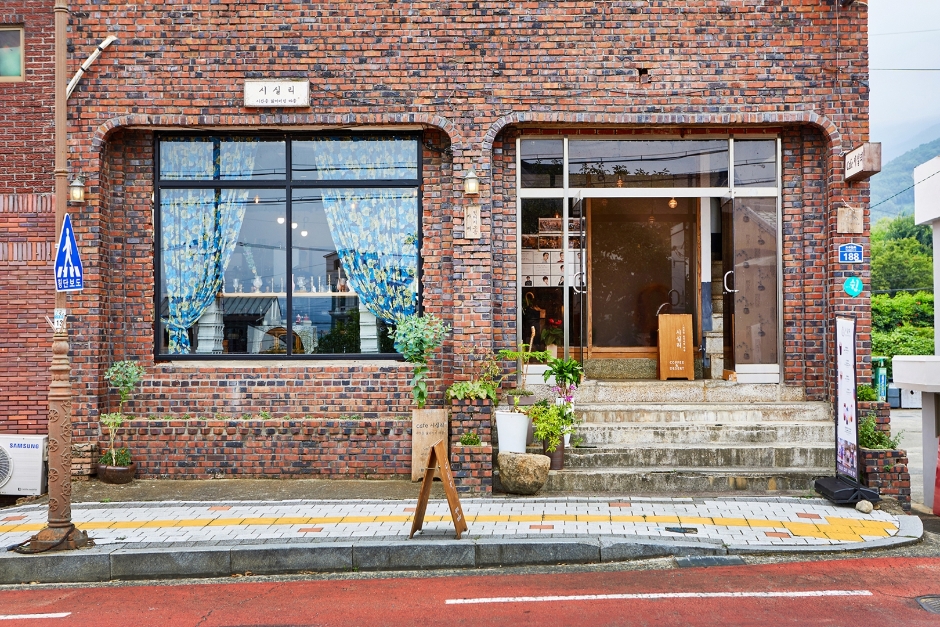
It's a cafe built on the first floor of an old house that gives the sense of being transported back to the 1970s and 1980s when one steps inside. The tables and chairs are made from wood that appears to have aged well, and in a corner, a display of retro-concept tea sets, glasses, and candle holders catches the eye.
The signature drinks are Esuppänner and La La Land. Esupänner is a coffee drink with espresso, roasted grain powder (glutinous rice, barley rice, etc.), and topped with cream. La La Land is a lemon and grapefruit tea inspired by the movie "La La Land (2016)," boasting mysterious colors of purple and yellow. Tea, juice, and smoothies are also available, as well as brownies and scones for dessert. It is located near Cheongdoeupseong Walled Town, so it is an excellent place to stop by on the way.

Cheongdoeupseong Walled Town (청도읍성)
18.1Km 2024-03-25
48-1 Dongsang-ri, Hwayang-eup, Cheongdo-gun, Gyeongsangbuk-do
The walled town was built during the Goryeo dynasty and has endured through the Joseon dynasty and to the present. The walled town was destroyed during a war in the mid-Joseon dynasty and demolished under Japanese colonial rule, but it was restored and reconstructed to what visitors see now. Its long walls on flat land are beautiful, and it is a popular walking trail for locals and travelers in the late spring and late summer. Regardless of gender or age, anyone can walk comfortably and easily on the smooth trail while enjoying the beauty of each season. In addition, visitors can have a cup of coffee at many unique cafes around the walled town while admiring the view of the walls.
Hyangudang (향우당)
18.3Km 2024-12-19
7-8 , Sannaeyachon 1-gil, Miryang-si, Gyeongsangnam-do
+82-10-4902-7216, +82-10-6400-6124
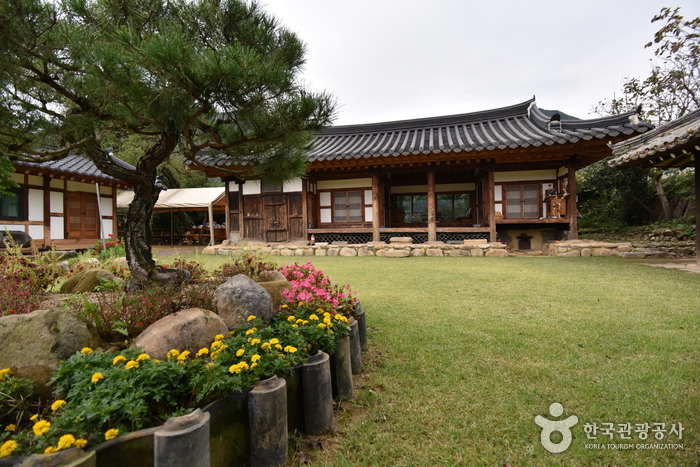
Hyangudang is a 120-year old hanok in Eoreumgol, Miryang-si, Gyeongsangnam-do. Both the anchae and the sarangchae have one large guestroom and two smaller ones; all have underfloor heating, bathroom and kitchen, and guests in the larger rooms have access to a living room. The hanok has a meeting room equipped with a beam projector and sound equipment, a barbecue area, and a parking lot. The owner runs several local farms, and offers experience programs in cheonyeon sea-salt making, magnolia flower tea preparation, and apple picking: guests can buy apples at a discount!
Jaeyaksan Mountain (재약산)
18.6Km 2021-05-25
Gucheon-ri, Miryang-si, Gyeongsangnam-do
+82-55-352-1150
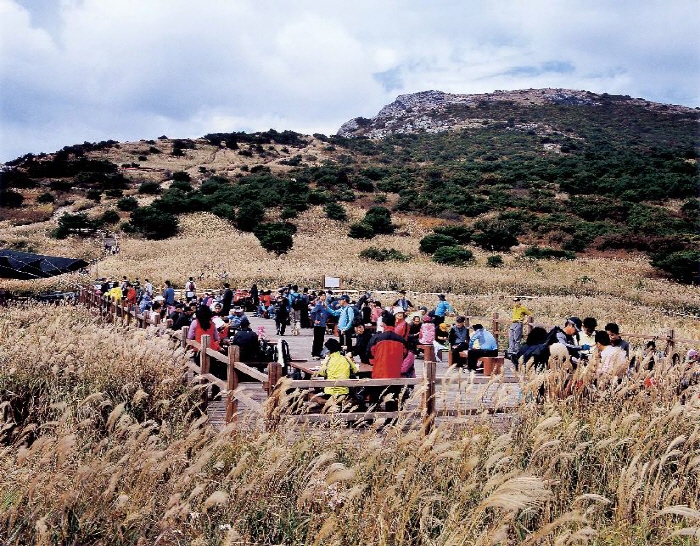
Situated between Miryang and Ulju, Jaeyaksan Mountain (1,119.1 meters) boasts gorgeous landscapes with giant rock formations near its peak. One of the most popular attractions of the mountain is Sajapyeong Plain and its vast field of silvergrass. The hiking course is relatively easy, adding to its charm. Nearby attractions include Eoreumgol Valley, Hobakso Pool, Pyochungsa Temple, Cheungcheungpokpo Falls, and Geumgangpokpo Falls.
Miryang Pyochungsa Temple (표충사 (밀양))
18.8Km 2022-09-16
1338, Pyochung-ro, Miryang-si, Gyeongsangnam-do
+82-55-352-1150
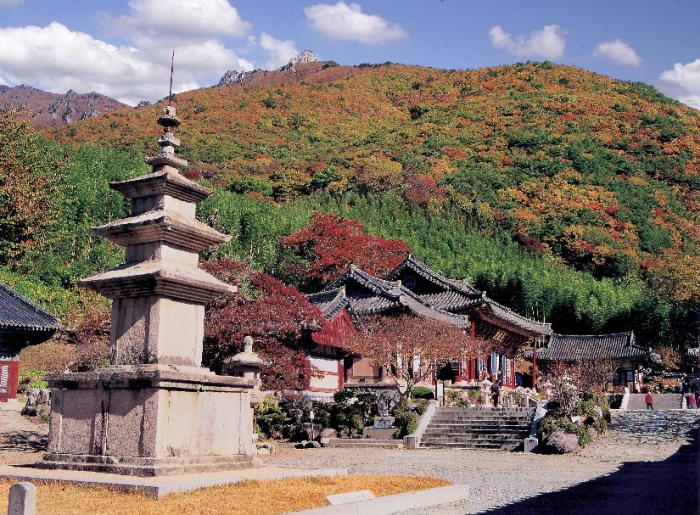
Pyochungsa Temple is located at the base of Jaeyaksan Mountain, 20 kilometers east of Miryang. The temple was originally founded by Monk Wonhyo in the 1st year of King Muyeol in Silla period under the name Junnimgsa Temple, then expanded and renamed by a monk from India in the fourth year of King Heungdeok’s reign of the Silla period. Nearby attractions include Cheungcheungpokpo Falls, Geumgangpokpo Falls, and Eoreumgol Ice Valley, as well as Sajapyeong Plain at the ridge of the mountain.
 English
 한국어
한국어 日本語
日本語 中文(简体)
 Deutsch
 Français
 Español
 Русский


